Philosophy book summaries
Enduring arguments about meaning, ethics, time, agency, and how to live when certainty is unavailable.
Philosophy books do more than offer memorable maxims: they build arguments about knowledge, responsibility, freedom, and a worthwhile life. The summaries here preserve those arguments so apparently similar advice can be compared at the level of first principles.
Beginner introductions and Stoicism have their own lists, so this page stays the full catalog rather than a near-duplicate of them.
Start with a focused list
This page is the complete philosophy catalog. If you already know which question you are answering, these shorter selections narrow it down first.
- Philosophy books for beginners — Five different doorways in: a guided history, a novel, practical consolation, a demanding dialogue or compressed wisdom.
- Stoicism books by starting point — Stoic reading matched to appetite, from a private notebook to classroom transcripts and modern manuals.
Books in this collection

A Guide to the Good Life
How can a person live well when pleasure adapts, status shifts, and loss is unavoidable? William B. Irvine presents Stoicism as a practical philosophy of desire, attention, emotion, duty, and resilience, then adapts exercises such as negative visualization and control triage for modern life.
6 chapters in Wiseley’s philosophy catalog.

Autobiography of a Yogi
Autobiography of a Yogi follows Mukunda from a devotional childhood through the search for a realized guru, disciplined Kriya practice, encounters with saints, and a mission of education and service. It asks how direct spiritual realization can loosen attachment, guide ordinary responsibility, and help East and West meet without abandoning their distinct strengths.
9 chapters in Wiseley’s philosophy catalog.

Being and Nothingness
Jean-Paul Sartre’s Being and Nothingness asks how consciousness can be free while embodied, situated, temporal, and exposed to other people. It distinguishes being-in-itself from the for-itself, then follows nothingness through bad faith, desire, action, responsibility, possession, and the unfinished problem of ethics.
10 chapters in Wiseley’s philosophy catalog.
Being and Time
Martin Heidegger’s Being and Time asks how the meaning of Being can be recovered when inherited frameworks obscure it. This summary follows Dasein’s being-in-the-world, everydayness, anxiety, authenticity, language, and time, showing how human existence can disclose—and conceal—the world it inhabits.
5 chapters in Wiseley’s philosophy catalog.

Beyond Good and Evil
Beyond Good and Evil asks what lies beneath philosophy’s claims to truth and morality. Nietzsche traces how instincts, religion, discipline, scholarship, social identity, and rank shape values, offering a demanding lens for testing inherited judgments and imagining freer forms of thought before a Dionysian closing meditation on transformation.
7 chapters in Wiseley’s philosophy catalog.
Confessions
Confessions follows Augustine from restless childhood, sexual and intellectual error, and attachment to mortal goods toward conversion, self-examination, and dependence on grace. It asks what makes a life truly happy and how a divided will returns to truth. Its intellectual value lies in joining autobiography to memory, time, creation, interpretation, and rest.
10 chapters in Wiseley’s philosophy catalog.
Critique of Pure Reason
Immanuel Kant’s Critique of Pure Reason asks how necessary knowledge is possible in mathematics, science, and experience, and where pure reason must stop. It explains space, time, categories, and experience, then examines the soul, world, and God while redirecting reason toward systematic inquiry and moral hope.
8 chapters in Wiseley’s philosophy catalog.
Discourse on the Method
An English audio-first, source-grounded summary of René Descartes’s Discourse on the Method, with the supplied Meditations and preface as substantive continuation. It follows a search for certainty through disciplined reasoning and asks how clear principles can guide knowledge, science, and practical judgment.
8 chapters in Wiseley’s philosophy catalog.

Discourses
Epictetus asks how a person can remain free when the body, possessions, status, and circumstances are vulnerable to others. This summary follows his answer: examine appearances, govern desire and assent, accept providential order, fulfill human roles, and turn philosophy into practiced conduct.
7 chapters in Wiseley’s philosophy catalog.

Ego Is the Enemy
Ryan Holiday examines how ego distorts ambition, achievement, and adversity: when does confidence become self-deception, and how can people keep doing meaningful work? The book’s answer joins humility with disciplined action, continual learning, purpose, internal standards, and letting go of praise, blame, and resentment.
7 chapters in Wiseley’s philosophy catalog.
Essays
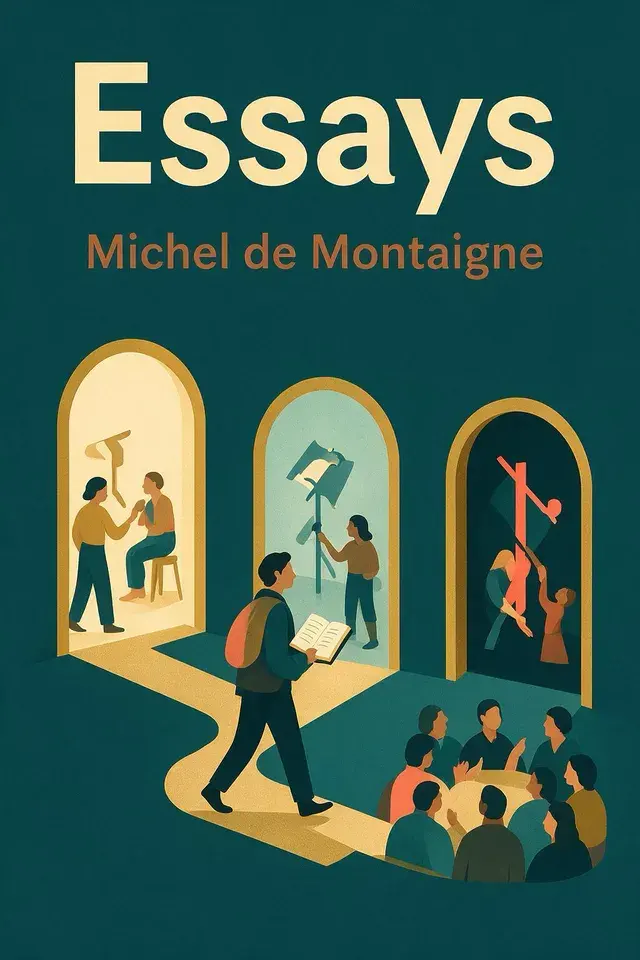
These essays ask how custom makes local habits feel natural, how a ruler should act when fortune defeats calculation, and what education should achieve beyond stored learning. Montaigne connects inwardly independent judgment with civic restraint, clemency, genuine trust, virtue, and practical action, offering an intellectual framework for living and governing amid uncertainty.
4 chapters in Wiseley’s philosophy catalog.
Fear and Trembling
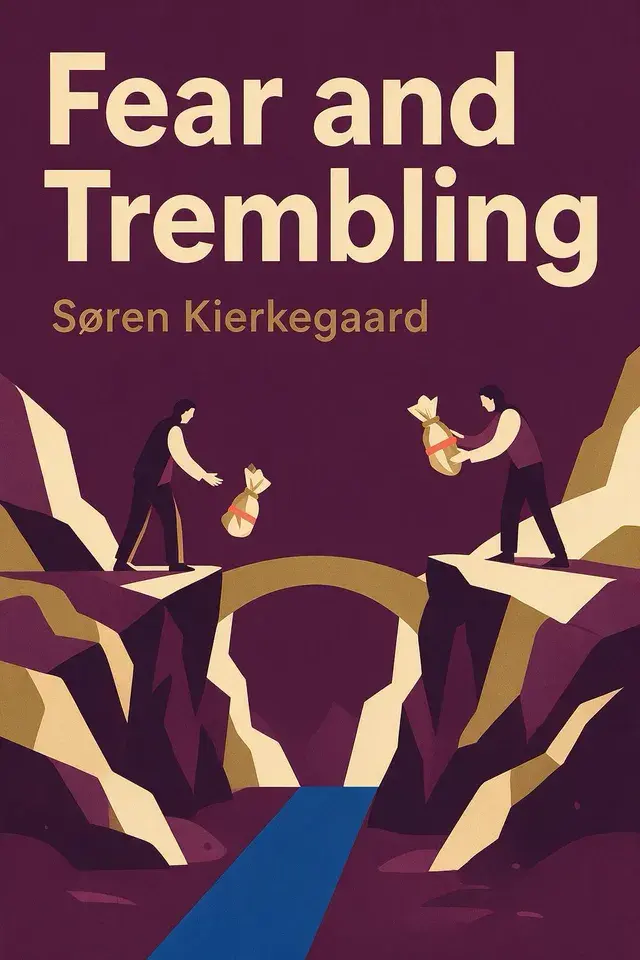
Fear and Trembling asks what Abraham’s willingness to sacrifice Isaac reveals about faith when a divine command conflicts with universal ethics. Through poetic retellings, the double movement of resignation and faith, and debates over silence and duty, it offers a framework for distinguishing religious faith from resignation, tragic heroism, and aesthetic concealment.
7 chapters in Wiseley’s philosophy catalog.
Four Thousand Weeks
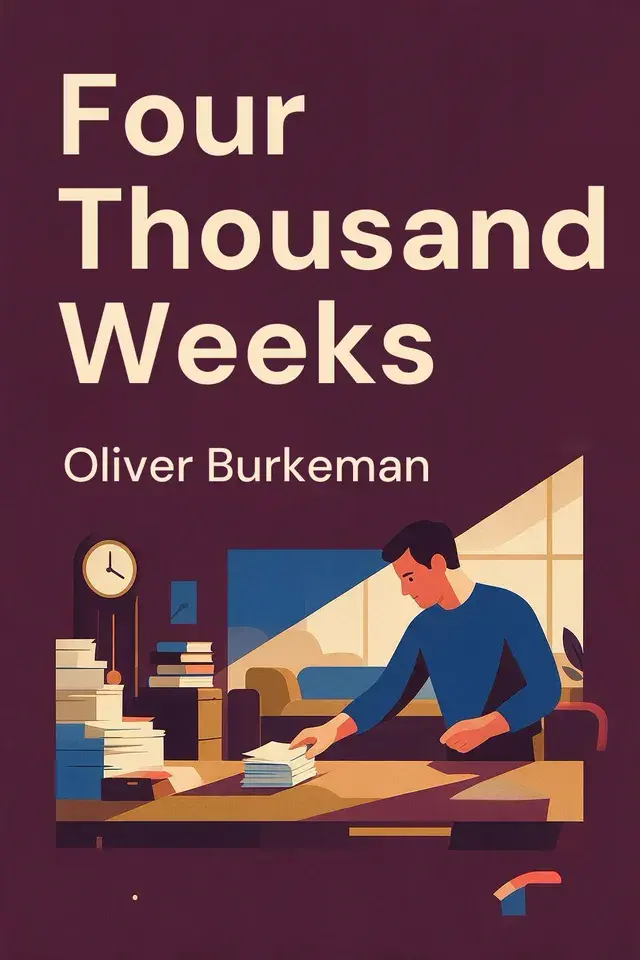
Four Thousand Weeks asks how to live when a human lifespan is brief, demands are effectively unlimited, and no productivity system can create total control. It examines the costs of treating time as a resource and develops a practical philosophy of choosing, attending, resting, waiting, relating, and acting amid uncertainty and unfinished work.
8 chapters in Wiseley’s philosophy catalog.

Hagakure
Hagakure examines what loyalty means when a warrior treats death as already present. Set in the Saga domain, it connects clan memory, daily discipline, practical readiness, private counsel, and battlefield courage. Its contradictions help readers distinguish a historical ethic of service from later uses of sacrifice, obedience, and violence.
8 chapters in Wiseley’s philosophy catalog.

How to Live
Sarah Bakewell follows Michel de Montaigne as he tests one question—how to live—through death, friendship, reading, skepticism, travel, public duty, and the ordinary compromises of embodied life. Its intellectual and practical value lies in showing how attention, independence, sociability, and moderation can become ways of remaining human amid uncertainty.
9 chapters in Wiseley’s philosophy catalog.

Justice: What's the Right Thing to Do?
Michael J. Sandel’s Justice asks how to decide what people owe one another when welfare, freedom, equality, desert, virtue, and loyalty collide. Moving through competing theories and hard cases, it shows why fair institutions require public reasoning about human purposes and the common good, not only calculation or choice.
8 chapters in Wiseley’s philosophy catalog.
Letters from a Stoic
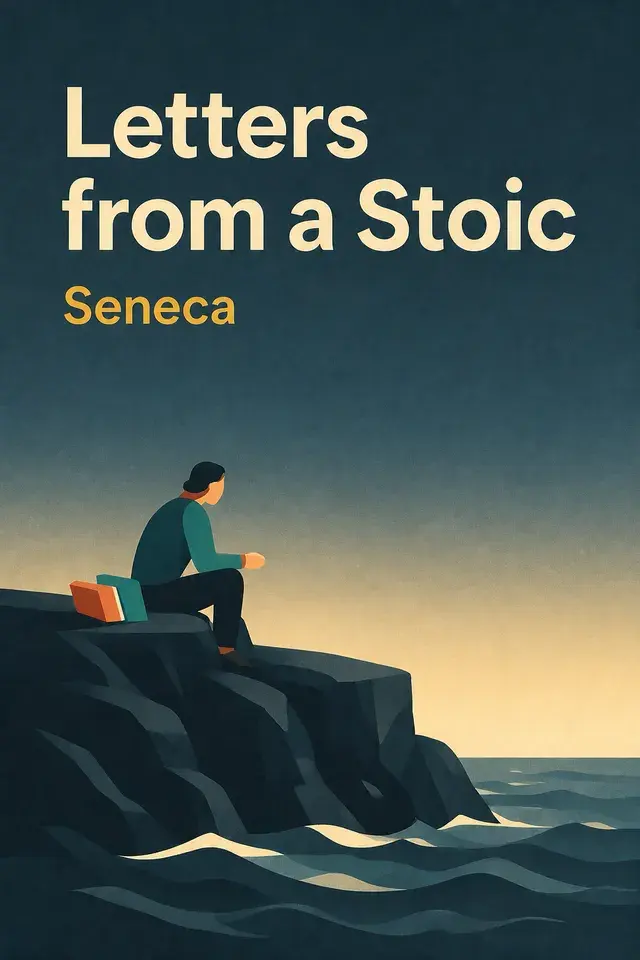
Seneca’s letters ask how to become free and happy when time, Fortune, pain, status, friendship, and death remain unavoidable. They develop Stoic answers through virtue, nature, self-examination, simplicity, disciplined study, courage, and humane fellowship—turning philosophy from abstract doctrine into a practice of living.
10 chapters in Wiseley’s philosophy catalog.
Lives of the Stoics
How does Stoicism look when tested by real lives rather than abstract maxims? Lives of the Stoics follows Greek and Roman thinkers, advisers, dissenters, exiles, and rulers through ambition, grief, political violence, and death, showing how virtue becomes practical judgment, public duty, inner freedom, and an ongoing practice of self-correction.
8 chapters in Wiseley’s philosophy catalog.

Meditations
Marcus Aurelius’s Meditations asks how a person can remain rational, just, and humane while living amid power, pain, uncertainty, and death. It answers with a repeatable discipline: examine judgments, accept nature’s changes, serve the human community, and return to the present duty. The result is inward steadiness without withdrawal from life.
8 chapters in Wiseley’s philosophy catalog.

Mere Christianity
How can people recognize a moral law they repeatedly break, and what follows from that recognition? This concise account traces Lewis’s argument from shared moral experience through guilt, Christ’s rescue, Christian habits, and the transformation of human identity, showing how doctrine and daily moral practice belong to one connected question.
7 chapters in Wiseley’s philosophy catalog.
Nicomachean Ethics
Aristotle’s Nicomachean Ethics asks what makes a human life go well. It traces eudaimonia through rational activity, trained virtue, practical wisdom, justice, friendship, and pleasure, while testing tensions between contemplation and civic action, individual flourishing and community, and general principles and particular circumstances.
10 chapters in Wiseley’s philosophy catalog.
On Liberty
John Stuart Mill asks when society may restrain a person’s thought, speech, choices, and way of life. He argues for a harm-based limit on coercion, defends dissent and individuality as conditions of truth and progress, and tests the principle against social pressure, government, education, and slavery.
8 chapters in Wiseley’s philosophy catalog.

Pensées
How can people hunger for truth and happiness yet remain restless, divided, and unable to secure either? Pascal’s unfinished Pensées examines the limits of reason, the distortions of self-love and society, and the Christian answer in Christ, grace, Scripture, and the Church—clarifying how doubt, faith, and moral transformation fit together.
9 chapters in Wiseley’s philosophy catalog.

Sophie's World
Sophie’s World follows a girl’s introduction to philosophy, from wonder and myth through science, religion, ethics, and existentialism, while a mystery unsettles the boundary between reality and fiction. It asks how to think and live when inherited answers are incomplete, connecting personal freedom with cosmic wonder.
12 chapters in Wiseley’s philosophy catalog.

Stillness Is the Key
Ryan Holiday examines stillness as a trainable condition of clear attention, moral steadiness, and embodied balance. How can a person remain calm and effective amid noise, pressure, desire, and uncertainty? The answer connects mental discipline, spiritual practice, relationships, routines, rest, courageous action, and mortality.
8 chapters in Wiseley’s philosophy catalog.

Tao Te Ching
Tao Te Ching asks how to live and govern when reality exceeds every fixed name. It explores whether yielding, humility, stillness, and enoughness can guide action more wisely than force, offering a framework for desire, leadership, conflict, and limits.
5 chapters in Wiseley’s philosophy catalog.
The Analects
The Analects asks how a person becomes humane and how that character can order family, friendship, and government. Its teachings on learning, ritual, judgment, trust, and responsibility show how moral insight becomes daily conduct and public order—an account useful for thinking about character, relationships, and leadership.
6 chapters in Wiseley’s philosophy catalog.

The Art of War
Sun Tzu’s The Art of War asks how a state can prevail without letting conflict consume its strength. Its answer connects comparative calculation, deception, logistics, terrain, morale, adaptive command, and human intelligence, offering a compact way to decide when to avoid battle, shape an opponent, and act decisively.
10 chapters in Wiseley’s philosophy catalog.
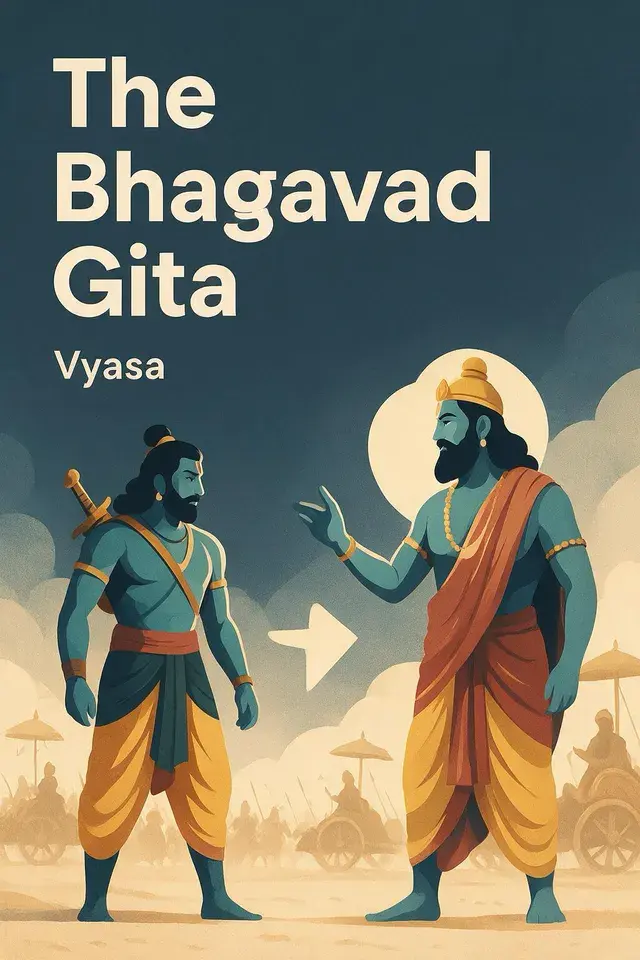
The Bhagavad Gita
On a battlefield, a warrior asks whether duty can be moral when it demands violence against kin. Krishna answers by joining a vision of the imperishable Self to disciplined action, meditation, devotion, and surrender. This summary traces how those paths address desire, suffering, and release from rebirth.
8 chapters in Wiseley’s philosophy catalog.

The Book of Five Rings
How does a warrior learn to act decisively when opponents, terrain, and timing keep changing? Musashi’s manual links swordsmanship to a wider Way of strategy: disciplined practice develops perception, bodily adaptability, initiative, and calm action, while comparison with rival schools and the Void clarify what mastery requires.
5 chapters in Wiseley’s philosophy catalog.

The Celestine Prophecy
The Celestine Prophecy presents a shift from material preoccupation to a spiritual worldview built on synchronicity, energy, and conscious relationships. It asks how people can recognize controlling patterns, receive guidance through questions and coincidences, and contribute to a cooperative, ecologically attentive future. Its value is a framework linking personal habits with cultural change.
7 chapters in Wiseley’s philosophy catalog.
The Consolations of Philosophy
Alain de Botton follows Socrates, Epicurus, Seneca, Montaigne, Schopenhauer, and Nietzsche to ask how philosophy can steady us against unpopularity, frustrated desire, anxiety, bodily shame, cultural judgment, romantic pain, and hardship. The book offers a practical map for questioning inherited beliefs, recalibrating expectations, and turning difficulty into clearer, more durable forms of life.
8 chapters in Wiseley’s philosophy catalog.

The Daily Stoic
The Daily Stoic asks how Stoic philosophy can become a daily practice: what belongs to our choice, how should we examine impressions and desires, and how can adversity become useful action? Its value is a practical framework for steadier judgment, disciplined habits, contentment, and humane conduct.
7 chapters in Wiseley’s philosophy catalog.

The Four Agreements
The book presents human suffering as the result of inherited agreements—fearful beliefs, judgments, and assumptions—that shape a personal dream. It asks how language and daily behavior can loosen that conditioning, and offers four practices for reclaiming self-trust, clearer relationships, emotional freedom, and a more loving way to inhabit life.
7 chapters in Wiseley’s philosophy catalog.

The Heart of the Buddha's Teaching
The Heart of the Buddha’s Teaching asks how suffering arises, how it can end, and what liberation looks like in ordinary life. It connects mindfulness, ethical action, compassion, interbeing, and meditation into a practical path for transforming personal pain while changing the conditions that sustain suffering in communities.
10 chapters in Wiseley’s philosophy catalog.

The Myth of Sisyphus
Why does life feel empty when human beings demand meaning from an uncomprehending world? Camus examines suicide, philosophical escape, revolt, freedom, passion, love, action, art, and Sisyphus to argue that lucid attention to mortality can become a way of living—and even a source of defiant happiness.
5 chapters in Wiseley’s philosophy catalog.

The Obstacle Is the Way
Ryan Holiday’s practical synthesis of Stoic ideas asks how an obstacle can become a route forward rather than a dead end. It explains how clear perception, deliberate action, and resilient acceptance help people find leverage, learn from setbacks, and keep serving a larger purpose under pressure.
7 chapters in Wiseley’s philosophy catalog.

The Power of Myth
The Power of Myth asks what myths do when inherited religions and rituals no longer organize modern life. Through creation stories, rites, heroes, love, the Goddess, the Grail, and images of eternity, it shows how metaphor connects personal change with nature, society, and mystery—and can guide a more conscious participation in life.
8 chapters in Wiseley’s philosophy catalog.

The Prince
The book asks what enables a ruler to acquire, secure, and preserve political power. It connects regime structure, military foundations, public conduct, reputation, counsel, and Fortune, then turns Italy’s crisis into a test of those principles. Its value is a compact framework for judging when authority becomes durable rather than merely successful.
9 chapters in Wiseley’s philosophy catalog.
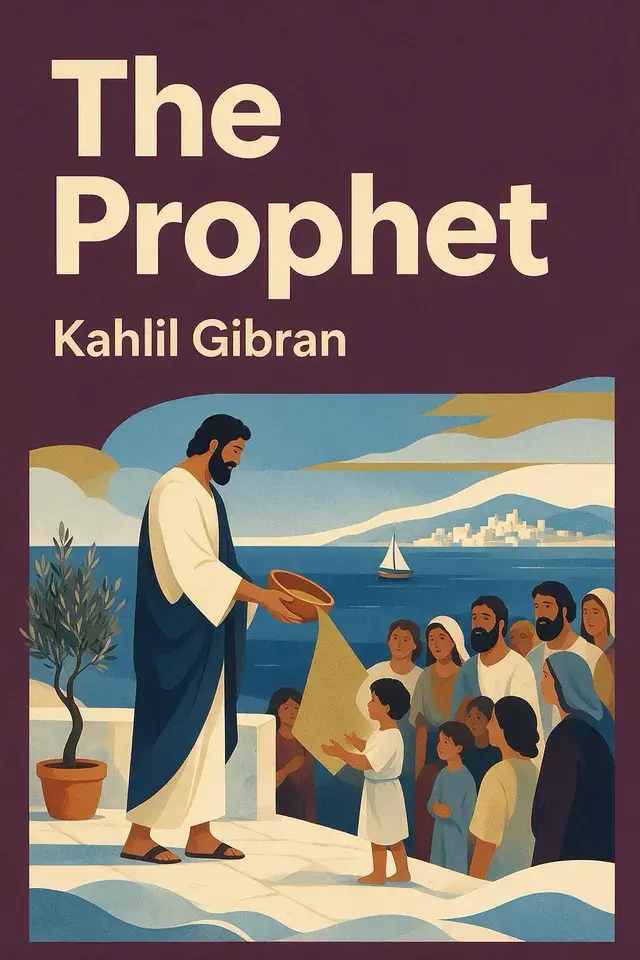
The Prophet
As Almustafa prepares to leave Orphalese, The Prophet asks how people can love without possession, work as part of shared life, hold joy and sorrow together, and meet death without losing their deeper unity. Its value is a poetic, experiential guide to spiritual wholeness in ordinary human choices.
7 chapters in Wiseley’s philosophy catalog.

The Republic
Plato’s Republic asks whether justice is valuable in itself or only for its rewards. By building a model city and comparing it with a soul ruled by reason, it examines education, philosopher-rule, regime failure, pleasure, art, and the soul’s fate. Its value lies in clarifying how political arrangements and inner character shape one another.
7 chapters in Wiseley’s philosophy catalog.
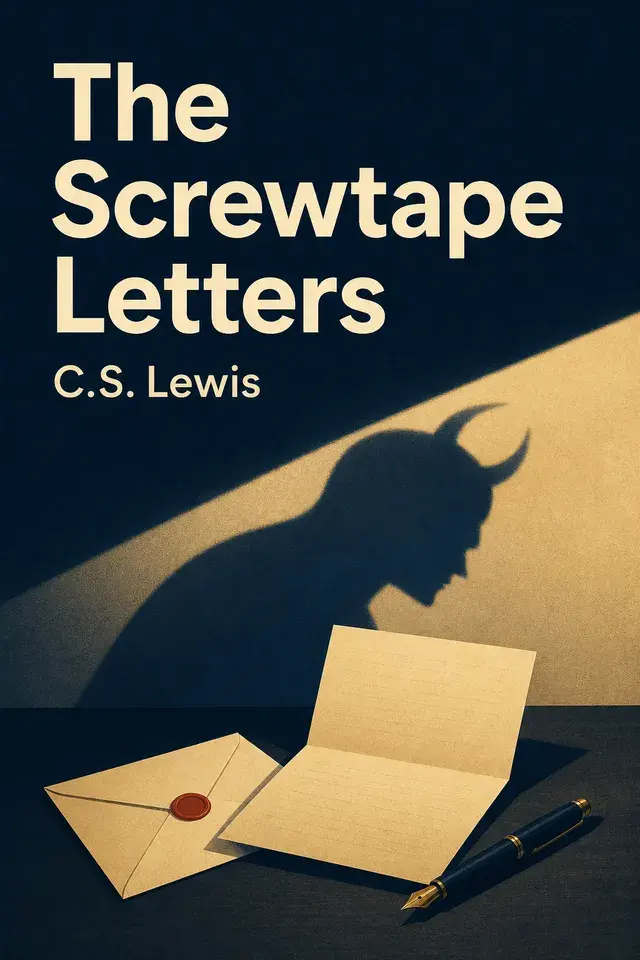
The Screwtape Letters
Through an ironic correspondence from an unreliable infernal perspective, the book asks how temptation turns attention, habits, pleasure, social belonging, and faith against themselves. It maps the counterforces—reality, humility, repentance, charity, prayer, and steady obedience—that restore moral agency in ordinary life.
8 chapters in Wiseley’s philosophy catalog.
The Social Contract
Rousseau asks how people can enter political society without surrendering freedom. He argues that legitimate authority rests on a reciprocal compact, laws expressing a general will, and citizens who remain active lawmakers. The book then tests this ideal against government, representation, civic institutions, history, and religion, clarifying both its power and its risks.
7 chapters in Wiseley’s philosophy catalog.
The Story of Philosophy
Will Durant’s selective history follows major philosophers from Socrates and Plato to James and Dewey, asking how reason, desire, science, faith, freedom, and social order relate. It shows how competing answers can clarify personal conduct and public institutions while exposing the limits of knowledge.
9 chapters in Wiseley’s philosophy catalog.

Thus Spoke Zarathustra
Through Zarathustra’s speeches, parables, songs, and failures, the book asks how people can live and create after inherited religious and moral certainties lose their authority. It offers a demanding way to think about self-overcoming, earth-fidelity, solitude, value creation, and eternal recurrence without reducing them to a final creed.
8 chapters in Wiseley’s philosophy catalog.
Keep exploring
Comparison
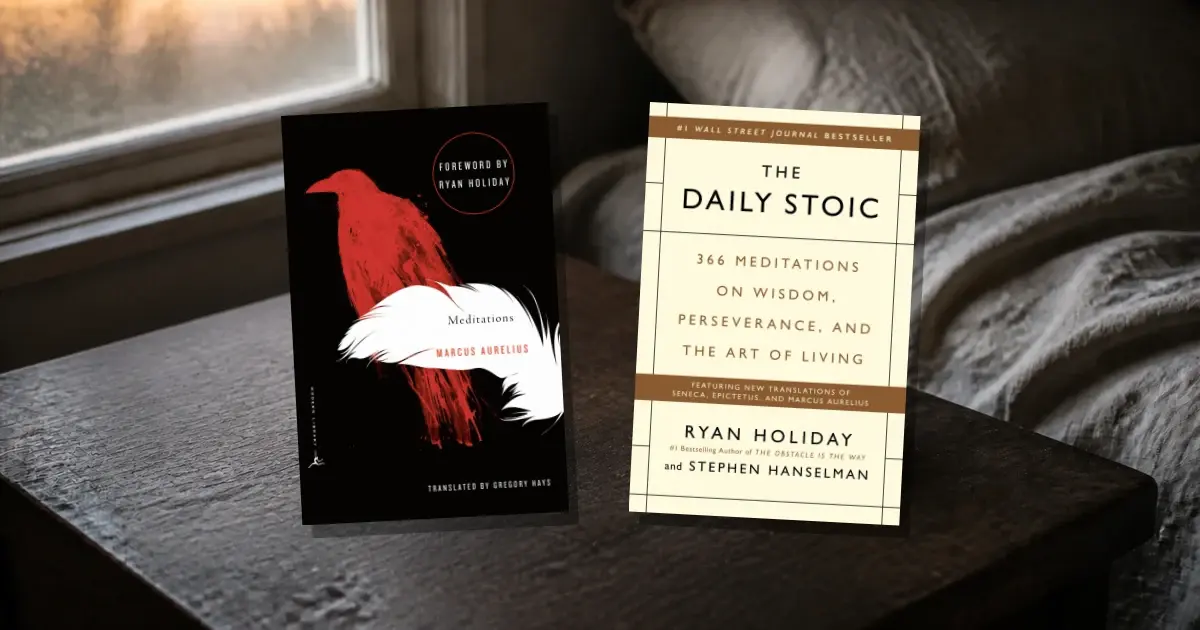
Meditations vs The Daily Stoic: Where Should a Beginner Start?
Choose between a private ancient notebook and a modern daily guide by deciding whether you want encounter, structure, or both.

Comparison
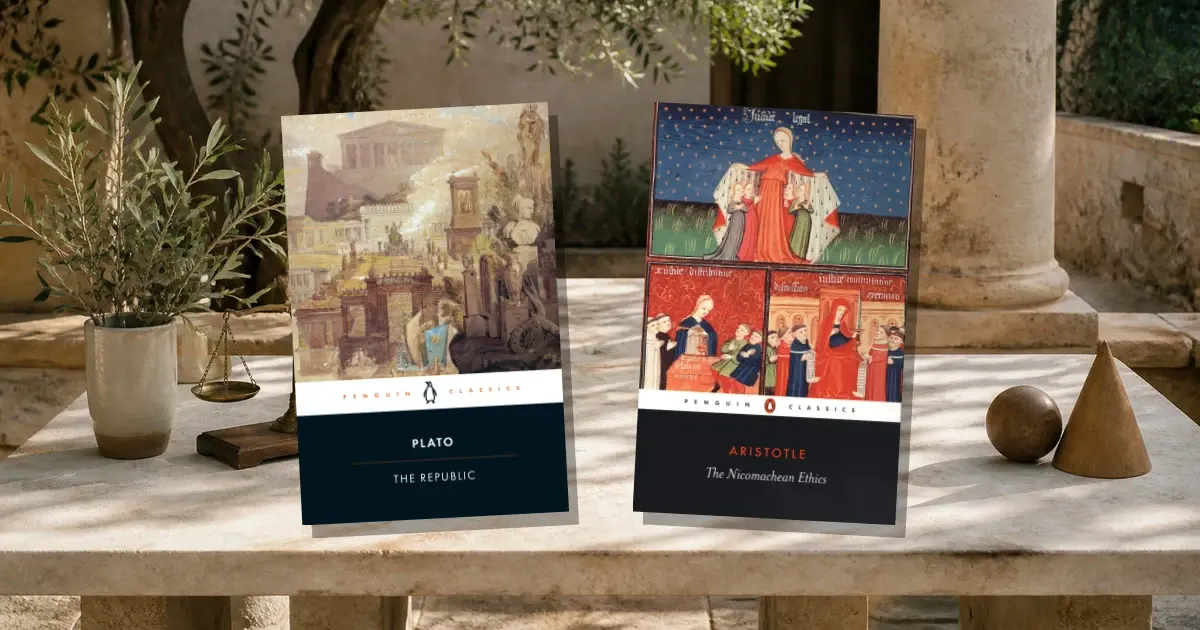
The Republic vs Nicomachean Ethics: Justice or Flourishing?
Plato builds justice across a city and soul; Aristotle studies the activities and relationships through which a life goes well. Choose by question and method.
Comparison
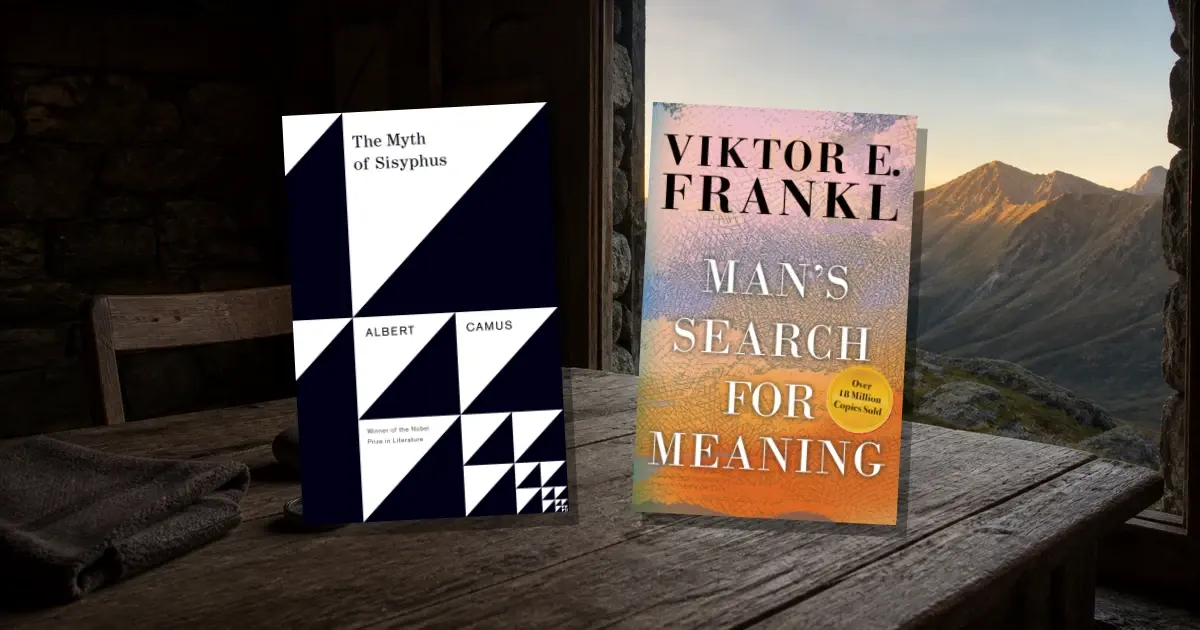
The Myth of Sisyphus vs Man’s Search for Meaning: Can We Make Meaning?
Camus refuses consolation before an indifferent world; Frankl describes meaning through work, love, and responsible response. Their answers are closer—and further apart—than slogans suggest.

Practical guide
How to Read a Difficult Philosophy Book Without Giving Up
Read one question and argument at a time, translate the terms into ordinary language, and test the view before chasing total comprehension.