What you'll learn
Key ideas from Politics
These ideas compress the book's argument without treating the author's view as settled fact. Use them as an orientation before reading the full work or listening in Wiseley.
A city’s unity depends on ordered plurality; complete sameness would undo the associations and functions that make civic life possible.
A citizen in the fullest sense shares in deliberative or judicial office as defined by the city’s constitution.
Law provides a general standard that restrains desire while leaving some particular cases to judgment.
A substantial middle class can balance rich and poor and reduce the conditions that encourage faction.
Constitutional preservation depends on balanced treatment, accountable public funds, restrained offices, and education suited to the regime.
The city’s purpose is shared virtuous activity and happiness; wealth, self-sufficiency, and military strength serve that end.
Common civic education forms habits that support a constitution and prepares citizens for shared ends.
Inside Politics
Read the first chapter in full here. The other 10 continue in the Wiseley app.
Chapter 1 of 11 · 7 min · Audio & text
Experience, Argument, and Political Judgment
Politics, by Aristotle.
Aristotle treats politics as a practical inquiry. He can call it a science in a broad sense because it seeks organized knowledge of principles. But it is not a strict science of the kind that proves necessary truths which cannot be otherwise. Political matters change, and its general claims hold for the most part. They can guide action without determining every case in advance.
That difference shapes how inquiry begins. A demonstration proceeds from starting points; it cannot prove those same starting points without arguing in a circle. Political inquiry therefore begins with what is knowable to us, then tries to clarify the principles that explain it. A starting point may first be a fact or a putative fact. It need not already be a fully explained truth.
In politics, some of this initial material comes from shared life. People learn through speech to recognize and discuss what seems just, unjust, advantageous, or harmful. Those familiar judgments give inquiry something to examine. Their familiarity does not make each belief true. Political understanding must test what people say against experience and against the difficulties their beliefs create.
Two connected forms of reasoning help with that work. Induction begins with particular perceptions. Memories accumulate into experience, and experience can bring a general pattern into view. Further inquiry may make that pattern more precise and explanatory. Dialectic, meanwhile, examines claims through reputable beliefs: views held by everyone, by most people, or by people regarded as wise. These approaches help uncover starting points, though reputable belief is not the same as proof.
Aristotle illustrates the difference between a first description and an explanation with thunder. A nominal account says that thunder is a noise in the clouds. It tells us what the name picks out. An explanatory account says that it is the noise of fire being extinguished in the clouds. That account attempts to explain why the sound occurs. The example shows how inquiry can move from identifying something to asking what accounts for it.
Dialectic tests such accounts by looking for conflicts among beliefs. A proposed definition may fit some familiar cases yet clash with other things a person also accepts. That clash creates a puzzle, or aporia: a knot in thought that calls for closer examination. The aim is not simply to win an argument. An honest dialectical inquiry uses valid reasoning and genuinely reputable premises, and can be turned on one’s own beliefs as well as another person’s. A contentious argument may only appear to rest on good premises or sound reasoning.
This matters because reputable beliefs can be partly right, misleading, or mistaken. Inquiry should look for the truth they may contain, clarify ambiguities, and revise a definition when it fails to fit. Sometimes the apparent conflict disappears once a word is understood in more than one sense. Sometimes a belief must be rejected after its appeal has been explained. Dialectic does not make every popular view a principle; it helps determine which starting points can withstand examination.
The same need to join general understanding with particular experience appears in practical judgment. Knowing that light meat is generally healthy lets us infer that this particular piece is healthy now. It does not tell us whether it will still be healthy tomorrow, since it may have spoiled, or whether it is healthy for someone with a fever, which can make meat of any sort a bad choice. The general claim matters, but action requires someone to recognize what kind of meat is present and what the patient’s circumstances are. Someone with extensive experience may judge the case better than someone who knows only the general statement. Yet experience alone also has limits: political understanding needs to grasp patterns that reach beyond one case. Practical wisdom brings these together in deliberation about what to do.
Politics has a universal task in framing laws and a particular task in deliberating about decisions. General laws can express reason and settle many recurring matters. They cannot give complete instructions for every circumstance, because action concerns particulars and some details vary. The aim is for law to handle as much as it can, while judgment takes over where a general prescription no longer fits.
Aristotle makes this difficulty concrete with an example from medicine. Egyptian doctors were permitted to change a written treatment if a patient had not responded after four days. If they changed it earlier, they did so at their own risk. The rule sets a general course and a point at which the doctor may depart from it. But the doctor still has to judge whether the patient’s case calls for that departure. The example shows why practical expertise cannot be reduced to memorizing a prescription.
Equity addresses a similar gap in law. A law must speak generally, yet a particular case may fall outside what its wording can handle fairly. Equity corrects that shortfall by asking what the legislator would have prescribed if the case had been anticipated. It is a reasoned adjustment to the purpose of the law, not a replacement of law with an individual’s preference.
The image of a builder’s measure makes the adjustment clear. Builders in Lesbos used a lead measure that could bend to the shape of irregular stone. A rigid ruler would fail to measure the stone accurately; the flexible measure adapts to what is there. In the same way, an equitable judgment responds to the shape of a case when fixed wording cannot do so. A decree can state the needed decision for that circumstance.
Political inquiry therefore needs more than general rules and more than accumulated cases. It needs starting points drawn from experience and shared beliefs, methods for examining them, and judgment that can apply what has been learned. Its arguments should be as clear as the subject allows, while remaining answerable to the particulars of action. This is the method and vocabulary needed to follow the political and ethical arguments that come next.
Chapter 2 of 11 · 7 min · Audio & textIn the app
Virtue, Happiness, and Leisure
What should political arrangements ultimately make possible? For Aristotle, survival and material security matter, but they do not define a city’s highest purpose.
Chapter 3 of 11 · 8 min · Audio & textIn the app
Households, Cities, and Wealth
Aristotle opens with a simple premise: every community is formed for some good. The city, because it gathers and governs smaller communities, aims at the highest good.
Chapter 4 of 11 · 11 min · Audio & textIn the app
Testing Plans for Common Life
In Book II, Aristotle tests political proposals by asking what they do to a city and the people who must live under them. The point is not to produce novelty for its own sake, but to find what is useful in existing arrangements and what might improve them.
Chapter 5 of 11 · 7 min · Audio & textIn the app
Who Counts as a Citizen?
To understand a constitution, Aristotle first asks what a city is and who belongs to it. The city is a community made up of citizens, so its character depends on what those citizens are entitled to do together.
Chapter 6 of 11 · 7 min · Audio & textIn the app
Law, Judgment, and One-Person Rule
The question of who should rule cannot be settled just by counting rulers or naming the kind of authority they hold. Aristotle asks what form of rule suits the people governed.
Chapter 7 of 11 · 9 min · Audio & textIn the app
Regimes for Actual Cities
Aristotle turns from asking which constitution is best without qualification to asking what a particular city can attain. Political advice must consider both.
Chapter 8 of 11 · 10 min · Audio & textIn the app
How Constitutions Change and Endure
Aristotle treats constitutional change as a process with different possible paths, not as a cycle that every city must follow. A regime may be replaced, shift into the hands of a different group, or change through the alteration of a single office or rule.
Chapter 9 of 11 · 8 min · Audio & textIn the app
Designing Democratic and Oligarchic Rule
Preserving a constitution is not simply a matter of writing rules that express its principles as fully as possible. Aristotle asks whether its laws and institutions help it endure in the conditions of a particular city.
Chapter 10 of 11 · 10 min · Audio & textIn the app
The Best City and Its Ends
After comparing actual constitutions, Aristotle turns to the city that would be best without qualification. To design it, he first asks what makes a life and a community good.
Chapter 11 of 11 · 10 min · Audio & textIn the app
Education for Civic Leisure
A city’s education should prepare its citizens not only to meet necessities, but to use peace and leisure well. The previous chapter established that the city’s arrangements should serve a life of virtue.
Chapter 1 of 11 · 7 min · Audio & text: Experience, Argument, and Political Judgment
Wiseley supports reading and listening to summaries in the app.
Continue in WiseleyWhat Politics is about
Aristotle’s Politics asks what a city is for, who should rule, and how law and education can help people live well. It moves from household life and wealth through citizenship, competing constitutions, and political change to a best city organized around virtue, peace, leisure, and learning. The work offers a framework for judging political arrangements against human flourishing and local circumstances.
About Aristotle
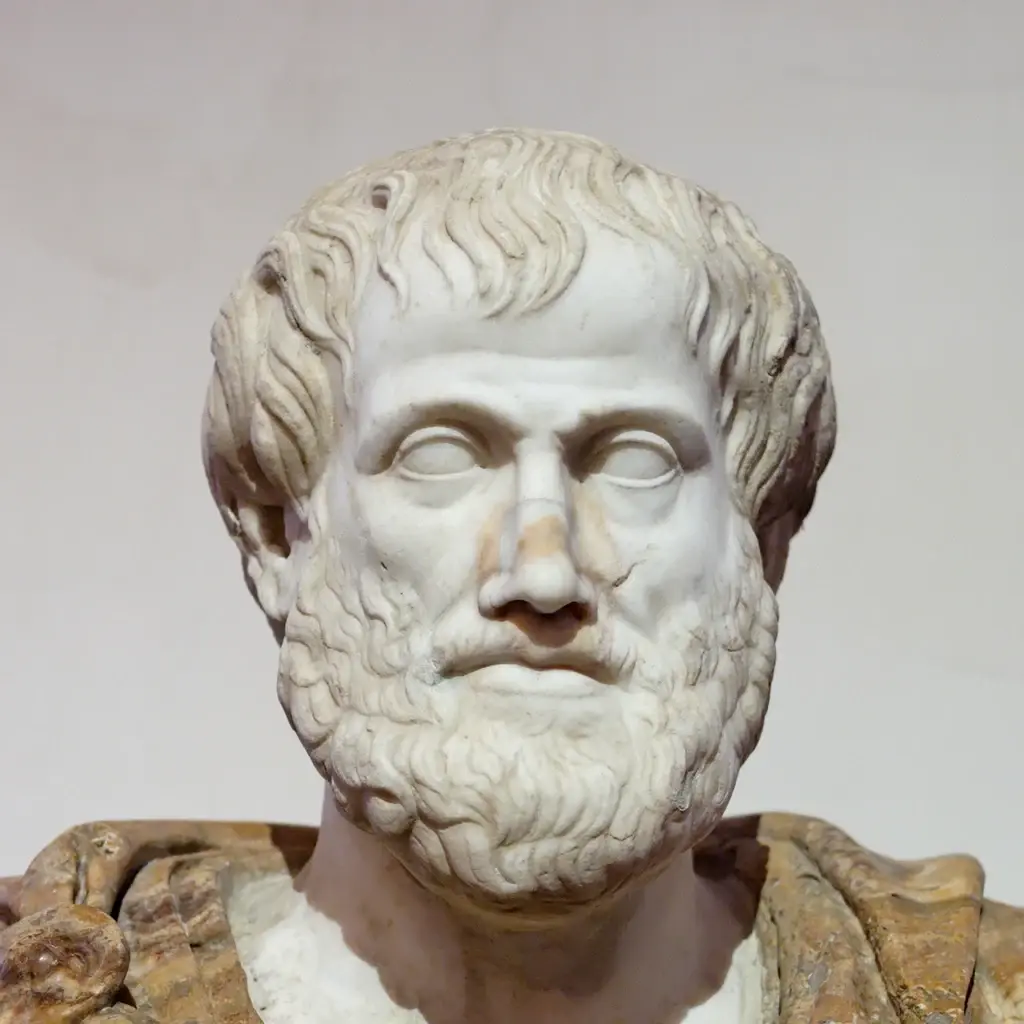
Aristotle was an ancient Greek philosopher and polymath. “Nicomachean Ethics” explores virtue, practical judgment, friendship, and the question of what makes a good life.
Explore more books by Aristotle