What you'll learn
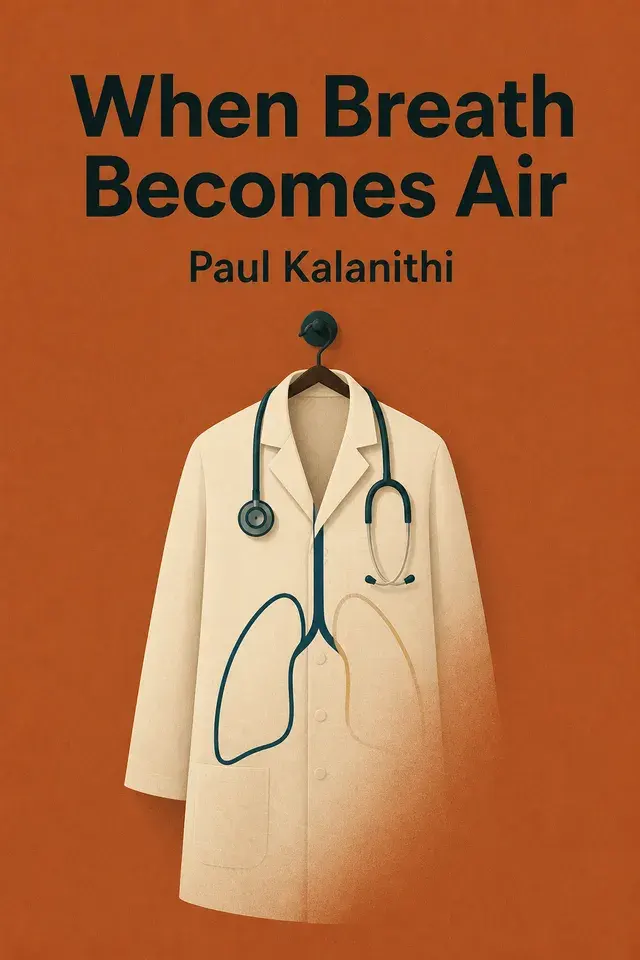
Key ideas from When Breath Becomes Air
These ideas compress the book's argument without treating the author's view as settled fact. Use them as an orientation before reading the full work or listening in Wiseley.
Cancer reverses Kalanithi’s role from neurosurgeon reading scans to patient unable to reason his body back into safety.
Literature locates meaning in relationships, while neuroscience reveals the bodily systems that make those relationships possible and vulnerable.
Treatment decisions must weigh biological survival against speech, independence, suffering, and the kind of life a patient would recognize as worthwhile.
Paul and Lucy choose parenthood without guarantees, accepting possible loss while refusing to organize life solely around avoiding suffering.
Cady’s birth reframes hope as purposeful presence, while limited energy makes slower persistence wiser than frantic attempts to maximize the future.
He chooses comfort-focused care when meaningful recovery seems unlikely, retaining agency while accepting death.
Lucy’s grief shows that love, memory, and posthumous help can continue without canceling mortality.
How When Breath Becomes Air builds its case
Follow how the book develops its argument. Each note is a brief orientation, not a replacement for the chapter.
When the Future Vanishes
The memoir begins before its main story with a question about what death reveals. Its epigraph treats death as a disclosure of what life has concealed.
The Vocation of Meaning
Before college, Paul Kalanithi was certain he would never become a doctor. If forced to name a career, he would have said writer.
The Work of Saving a Life
After his earlier search for a bridge between biology and meaning, Kalanithi reaches a decision that makes the question practical: he will become a neurosurgeon. The choice is not simply about finding work he can tolerate.
A Future Rebuilt Around Cancer
When Paul Kalanithi is diagnosed with lung cancer, the first loss is not only physical. The diagnosis destroys the future he has spent years building: a life as a neurosurgeon, scientist, husband, and eventual father.
The Present Against the Future
After a period of stability had made residency and fatherhood seem possible, Kalanithi reaches what he expects to be his last scan before those plans become real. He delays looking at the images because work still demands his attention.
What Remains After Breath
Lucy brings the memoir to its hardest truth: Paul’s final legacy is both profound love and immense pain. Treatment no longer controlled the cancer.