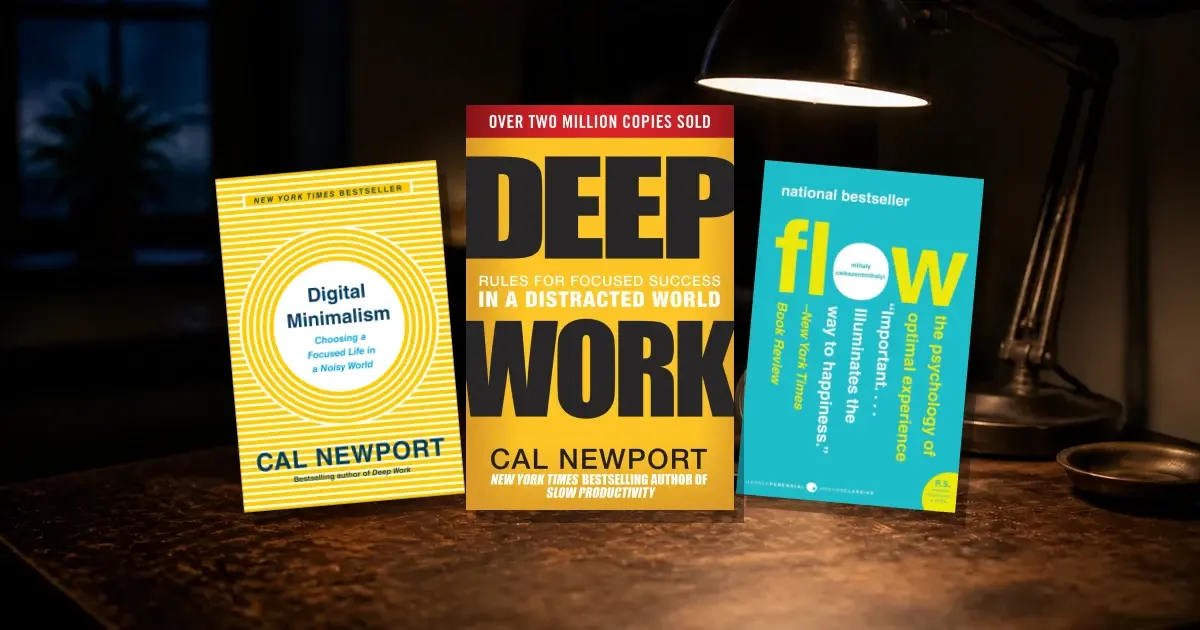
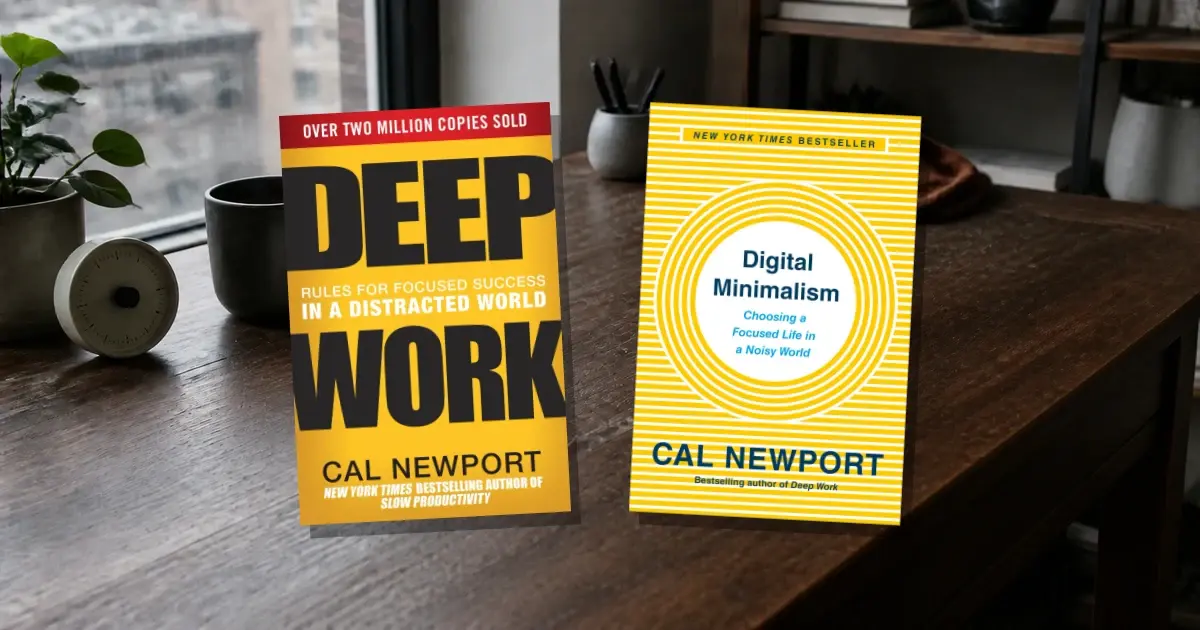
They solve different layers of the same problem
Deep Work is primarily about producing valuable work without distraction. It treats concentration as a skill that needs scheduling, ritual, boundaries, and recovery. Digital Minimalism operates one level higher. It asks which digital tools support values you have chosen, then recommends removing or constraining tools that mainly capture attention. If your calendar has no protected thinking time, start with Deep Work. If protected time repeatedly dissolves into compulsive checking, Digital Minimalism may address the earlier cause.
- Deep Work unit of change: a focused work session.
- Digital Minimalism unit of change: your rules for adopting and using technology.
- Shared premise: attention should be allocated deliberately rather than surrendered by default.
What each book asks you to give up
Deep Work asks you to make shallow work visible and to disappoint some demands for instant responsiveness. Digital Minimalism asks you to tolerate the blank space that appears when habitual technologies are removed. Those costs matter. A focus ritual will fail if teammates cannot predict when you reply, and a digital reset will fail if removed leisure has no satisfying replacement. The useful question is not which book is stricter; it is which tradeoff you are prepared to manage.
- Choose a response window colleagues can understand.
- Name the high-value activity that reclaimed screen time will fund.
- Keep tools that serve a defined value; change the way they are used before deleting them reflexively.
A low-drama combined plan
Begin with three focus blocks in one week, each attached to a specific output. During those blocks, remove only the digital inputs that can interrupt that output. At week’s end, inspect what broke concentration. A tool that repeatedly intrudes outside its intended purpose becomes a candidate for a stronger rule or a short removal experiment. This sequence uses Deep Work to create evidence and Digital Minimalism to redesign the surrounding defaults.
- Schedule the output, not simply “focus time.”
- Record each interruption without judging it.
- Change one technology rule based on the pattern you observed.
Sources and scope
Book ideas are attributed to their authors. External evidence is linked directly when a claim needs more than the source book.
- Deep Work: Primary source for deliberate focus, shallow work, scheduling, and work rituals.
- Digital Minimalism: Primary source for values-based technology selection and intentional leisure.
To report a factual, attribution, rights, or accessibility concern, email hello@wiseley.app.
Questions readers ask
Which book should I read first?
Read Deep Work first if you can control your schedule but use that control poorly. Read Digital Minimalism first if digital habits keep overriding plans you already know how to make.
Does Digital Minimalism require leaving social media?
The book’s central test is whether a tool strongly supports a chosen value and is used in the best way. A deliberate rule can be more faithful to that test than an automatic permanent ban.