What you'll learn
Key ideas from What Is the Bible?
These ideas compress the book's argument without treating the author's view as settled fact. Use them as an orientation before reading the full work or listening in Wiseley.
The Bible took shape through oral storytelling, writing, editing, selection, and later decisions about which books belonged.
Reading across scales connects a passage’s details with its book’s sequence and the Bible’s recurring patterns.
Historical development changes how a practice applies without making earlier biblical material disposable.
The Good Samaritan makes neighborliness a matter of mercy, while the lawyer’s refusal to name him exposes persistent hatred.
Bell understands fulfillment as bringing scripture into lived reality through action, not merely preserving or explaining its words.
For Bell, scripture’s human authorship and the possibility of divine encounter belong in the same honest reading.
For Bell, growth shows in gratitude, compassion, and changed conduct, alongside patience and kind boundaries with others.
Inside What Is the Bible?
Read the first chapter in full here. The other 12 continue in the Wiseley app.
Chapter 1 of 13 · 5 min · Audio & text
A Library with Human Fingerprints
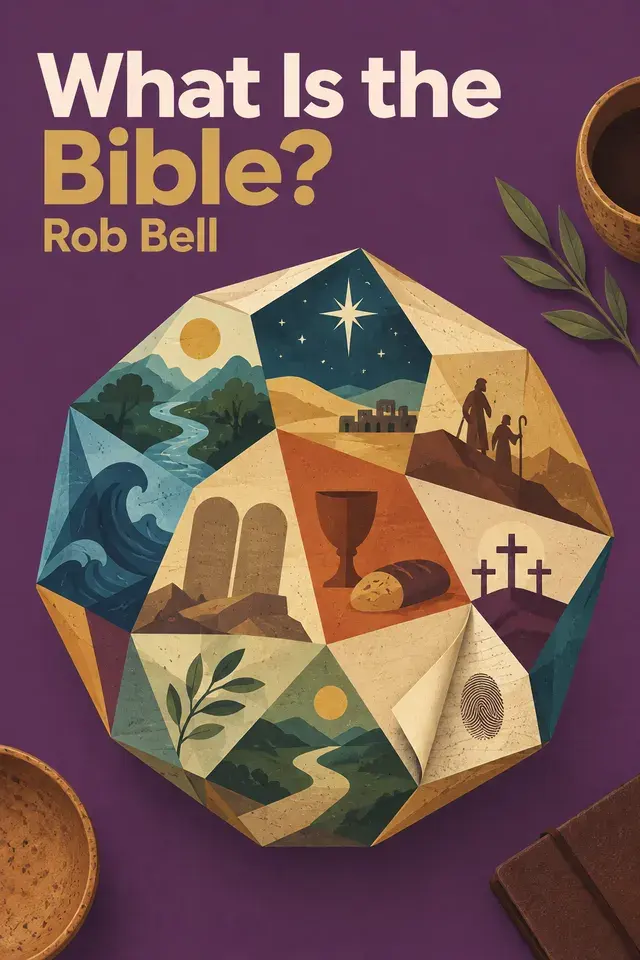
What Is the Bible?, by Rob Bell.
Rob Bell begins by widening the invitation to read the Bible. People who doubt, feel excluded, or struggle with religious claims can still encounter a book concerned with shared human life. Its pages hold loss, anger, worry, fear, joy, and hope, and its writers address people’s wrestling with doubt in their writings. Bell challenges two shortcuts: dismissing the Bible as primitive and outdated, and treating every passage as if it had one simple meaning. He wants readers to take the text seriously enough to notice what it says, including its difficult material.
Bell describes learning how much he had missed when he first preached from the Bible. After one sermon, a man named Richard pointed out background, tension, humor, and history that Bell had not seen. Richard’s reminder that Jesus was Jewish pushed him to learn more about the world Jesus inhabited: its politics, economics, customs, and religious debates. Bell studied languages and the history and interpretation of biblical texts so he could read and preach with greater care.
Friends Richard introduced him to showed Bell familiar passages in new ways, including readings that found political commentary, subversive poetry, and purpose in differences between texts. These encounters did not make the Bible less human or more remote. They gave its stories more texture. Bell says the discoveries changed his sermons and his own life, and helped other listeners find the Bible newly meaningful. His method begins with attention: a small detail, read in its setting, can open a passage beyond its most obvious surface.
One of his examples is the description of Moses’s remaining “strength.” Bell focuses on a Hebrew word he presents as “leho,” associated with moisture or freshness. Bell interprets the phrase as a euphemism for sexual potency. Other renderings, as he notes, describe vigor, natural force, or a lack of wrinkles. His reading is an interpretation of the wording, not the only available translation.
Bell connects this interpretation to the continuation of Abraham’s people. He sees the image of vitality and the possibility of children as part of a larger hope: that a people called to bless others might help bring about a new era shaped by love rather than violence. The point is not that the phrase can be detached from its wording and made to say anything. Bell is showing how a close reading of one word can carry human and historical associations that a quick reading might miss.
That attention to human setting also shapes Bell’s account of how the Bible came to be. He describes it as a library written by many people over a long period, not a finished object delivered all at once. Stories circulated orally before people collected, edited, and wrote them down, sometimes centuries later. The library’s books were composed across about fifteen hundred years, by roughly forty authors, on three continents.
The books themselves point to material that did not make it into them. Bell notes references to Solomon’s annals and to signs and deeds of Jesus that were not recorded. These references suggest that biblical writers knew of accounts beyond the ones they included. Their books are selections from a wider field of stories and records, not exhaustive reports of everything that happened.
Selection continued at more than one stage. Writers chose and shaped material for purposes of their own; later people also deliberated about which writings belonged in the Bible. Those choices took place in real circumstances. Time, place, personal history, economics, politics, religion, and technology all helped shape the worlds in which writers and later selectors worked. Knowing this history changes the reader’s task: a text can be read as testimony from people making choices within particular worlds.
For Bell, recognizing those human fingerprints makes it possible to meet the Bible’s concerns more directly. Its writers addressed experiences that still mark human life: love, fear, debt, doubt, shame, hope, and betrayal. The Bible can therefore speak beyond a narrow religious boundary, even while its history, differences, and difficult stories remain part of what readers must face. Bell’s opening invitation is to approach this diverse library with curiosity, attending both to its human making and to the human questions its stories continue to carry.
Chapter 2 of 13 · 6 min · Audio & textIn the app
Context Changes Jesus’s Kingdom
Context can make a biblical passage sound different without changing its words. Bell follows details into their historical and literary surroundings, then asks what they may mean there.
Chapter 3 of 13 · 7 min · Audio & textIn the app
Meaning Emerges Across the Story
A passage can be read at several scales: in its immediate setting, within its book, and as part of the Bible’s wider patterns. Each scale can show something the others miss.
Chapter 4 of 13 · 5 min · Audio & textIn the app
Questions That Turn the Text
After considering how passages relate to wider patterns, Bell turns to a closer reading habit: ask what kind of writing is in front of you. A poem, a letter, and a story make meaning in different ways.
Chapter 5 of 13 · 7 min · Audio & textIn the app
From Destruction Toward Relationship
The flood, Jonah, and the story of Abraham and Isaac can seem to present a God of destruction and demands. Rob Bell reads them as stories that begin within familiar ideas about divine power, then turn toward preservation, forgiveness, and provision.
Chapter 6 of 13 · 6 min · Audio & textIn the app
Violence and the Tribal Story
In Bell’s account of the ancient world, a tribe was not simply a group someone chose to join. It supplied family, home, identity, work, and protection.
Chapter 7 of 13 · 6 min · Audio & textIn the app
Mercy Crosses Inherited Boundaries
After considering how communities preserve themselves by drawing lines around belonging, Bell turns to encounters that put those lines under pressure. What happens when people treated as outsiders become places where faith, mercy, and blessing appear?
Chapter 8 of 13 · 6 min · Audio & textIn the app
Jesus Fulfills Scripture by Living
Bell describes scripture in Jesus’s world as something a community gathered around, not simply a text read alone. The village synagogue held rare scrolls, including Torah, prophetic writings, wisdom, and history.
Chapter 9 of 13 · 6 min · Audio & textIn the app
Receiving Truth Beyond Our Circle
Paul’s answer to the rivalries in Corinth begins with a change of scale. The Corinthians have attached themselves to particular teachers and turned those loyalties into factions.
Chapter 10 of 13 · 8 min · Audio & textIn the app
Empire, Apocalypse, and Ordinary Lives
The story of Babel begins with a remarkable human achievement: people learn to make bricks and bind them with tar. These materials allow construction on a new scale.
Chapter 11 of 13 · 6 min · Audio & textIn the app
Sacrifice, Grace, and Human Change
Leviticus opens with detailed instructions for five kinds of offerings, including how animals and their blood are handled. To modern readers, those rituals can seem distant from a relationship with God.
Chapter 12 of 13 · 9 min · Audio & textIn the app
Election, Sin, and Scriptural Authority
Election and predestination can sound like detached formulas about who is in or out. Bell instead asks what these words do within the larger story.
Chapter 13 of 13 · 8 min · Audio & textIn the app
Questions That Keep Reading Open
Bell closes by asking readers to meet the Bible as it is: a library with tensions, difficult passages, and different voices. Those differences need not be hidden or dismissed.
Chapter 1 of 13 · 5 min · Audio & text: A Library with Human Fingerprints
Wiseley supports reading and listening to summaries in the app.
Continue in WiseleyWhat What Is the Bible? is about
Rob Bell asks what the Bible is and how it should be read. He presents it as a historically shaped library whose difficult, sometimes conflicting stories gain meaning through context, genre, and changing perspectives on God. Readers get questions for interpreting scripture and a practical test for whether new understanding leads to compassion and changed conduct.
About Rob Bell
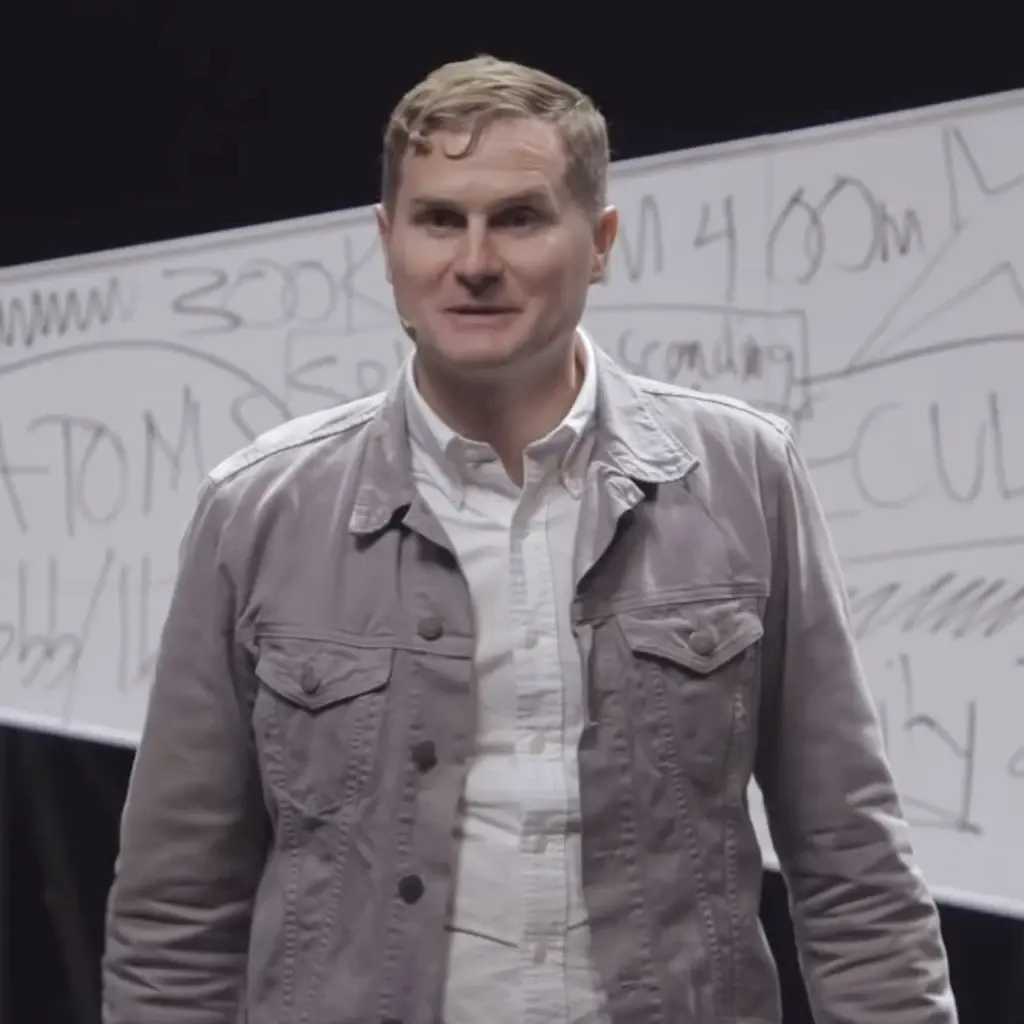
Rob Bell is an American author, speaker, and former pastor. “What Is the Bible?” explores what the Bible is and how it should be read, as a historically shaped library of difficult and sometimes conflicting stories.
Explore more books by Rob Bell