Choose by the kind of overload
Productivity books sit on the same shelf, but they answer different questions. A head full of unrecorded promises is not the same problem as a calendar full of commitments you chose, and neither is the same as knowing exactly which task matters and still not starting it. Name the kind of overload in one sentence before you choose. The five books here are not a ranking; each is the clearest answer in this catalog to one of those problems.
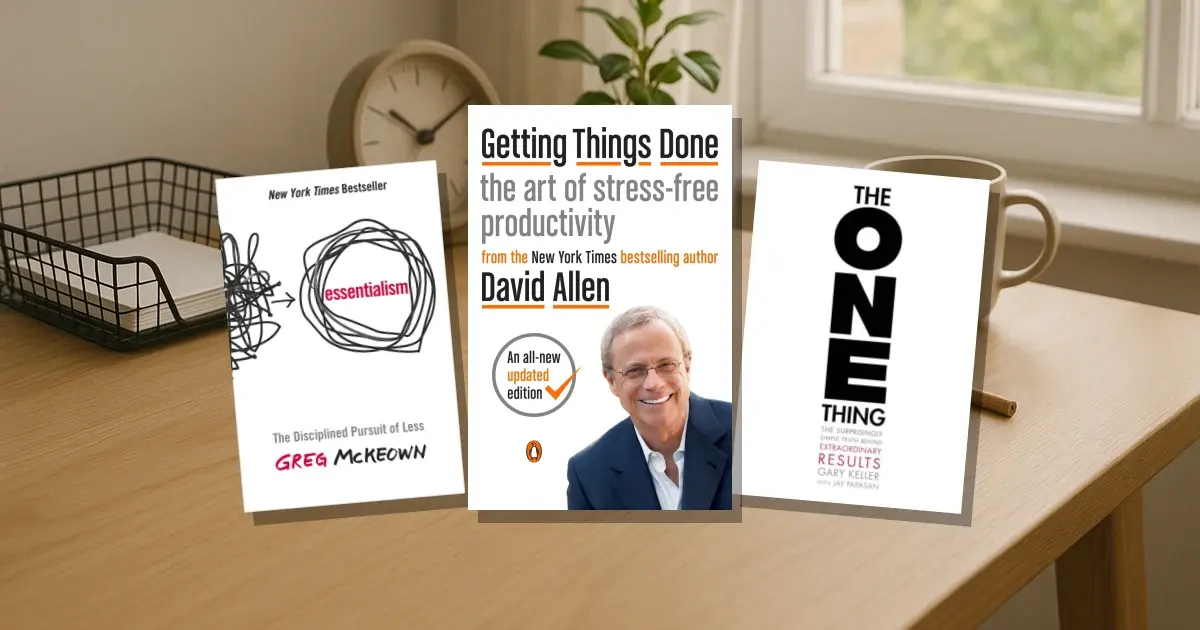
- Unfinished commitments live in your head and keep resurfacing: Getting Things Done.
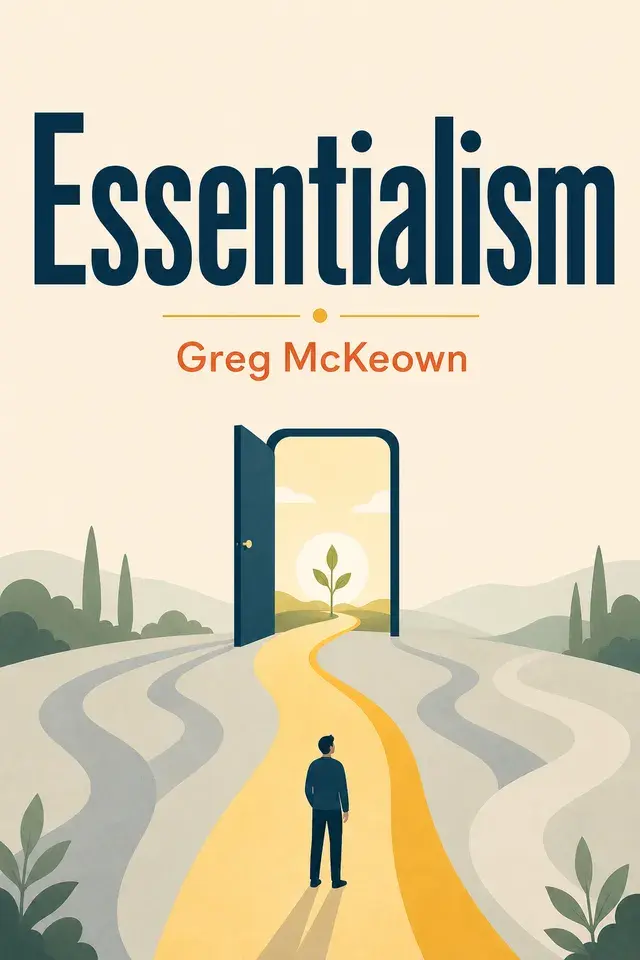
- You have agreed to more than you can do well: Essentialism.
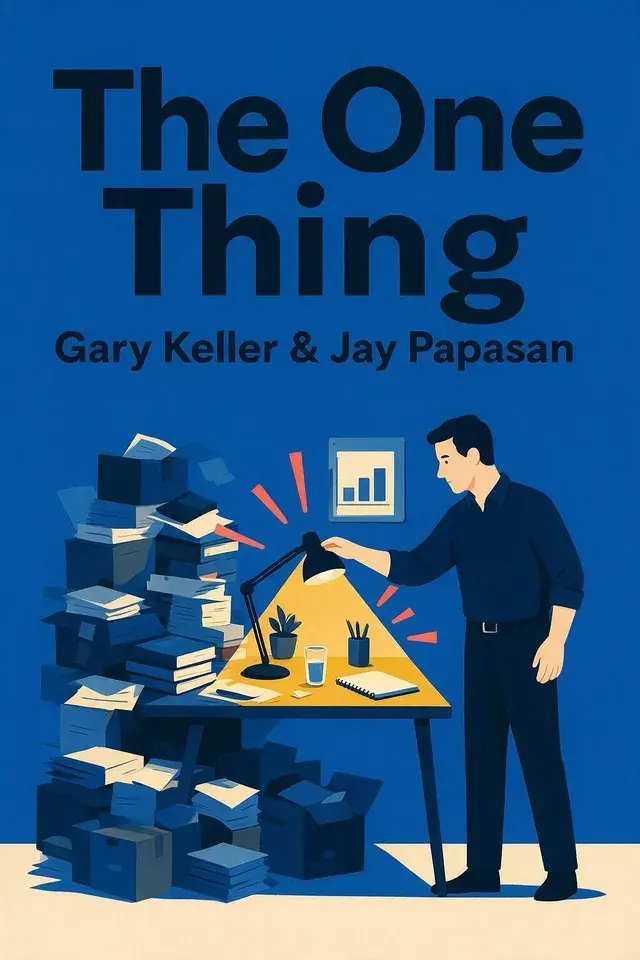
- Everything looks equally urgent, so nothing gets priority: The One Thing.
- You know the important task and keep doing easier work first: Eat That Frog!
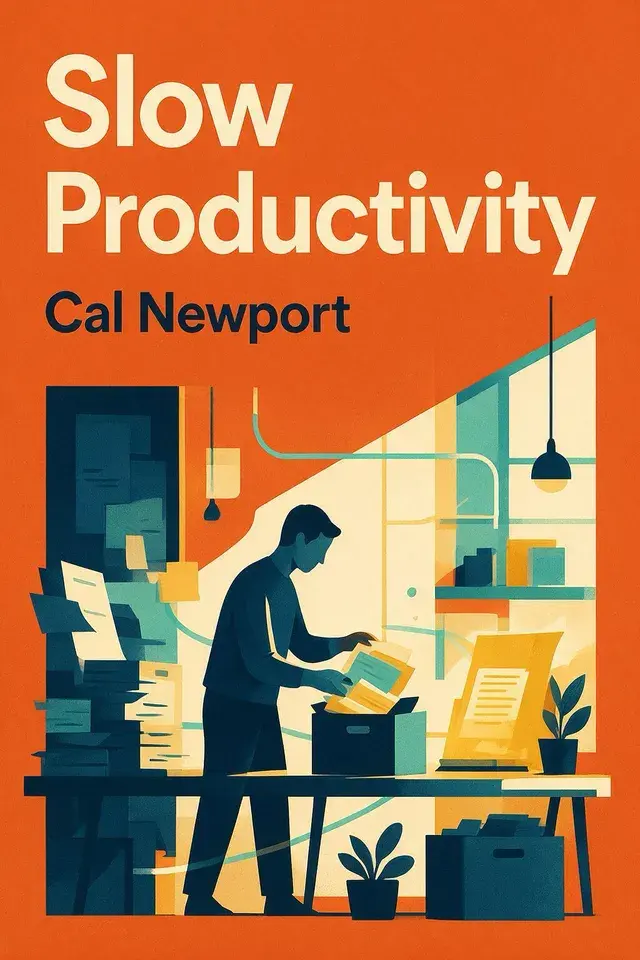
- The volume and pace of work itself has become unsustainable: Slow Productivity.
What each book adds
David Allen’s Getting Things Done treats stress as a symptom of open loops: agreements that stay in memory because their outcome, next action, or reminder is unclear. His workflow captures every incomplete, clarifies each one into an outcome and a physical next action, sorts the results into distinct lists and a trusted calendar, and depends on regular review to keep the system believable. Greg McKeown’s Essentialism starts one step earlier. Effort and results are unequal, he argues, so the real work is choosing the vital few, making trade-offs explicit, saying no, and uncommitting from projects you would not choose today.
Gary Keller and Jay Papasan’s The One Thing narrows further, to a single focusing question about which action would make everything else easier or unnecessary, then protects that priority with an early time block that is rescheduled rather than dropped when something urgent intervenes. Brian Tracy’s Eat That Frog! is the most direct about starting: rank tasks by their consequences, plan the steps, find the constraint slowing the work, prepare the conditions, begin with the hardest high-value task, and stay with it to completion. Cal Newport’s Slow Productivity questions the busyness itself, proposing fewer commitments, a natural pace that varies across the seasons of a year, and close attention to the quality of the work that matters most.
- Best for regaining a complete picture: the capture, clarify, organize, and review cycle in Getting Things Done.
- Best for reducing the load itself: the explore, eliminate, and execute cycle in Essentialism.
- Best for a single decision rule: the focusing question and protected time block in The One Thing.
What these books assume
All five are written largely for knowledge workers with some control over what they accept and when they work. Slow Productivity says so directly and notes that fixed schedules and close supervision call for adaptation. Getting Things Done asks for deliberate setup and a review habit before it pays back, and Allen does not claim the system can tell you whether a destination is right. Essentialism acknowledges that boundaries can carry social and career costs. The One Thing and Eat That Frog! both argue for concentrated effort on one priority; treat them as tools for choosing, not as proof that more output is always the goal.
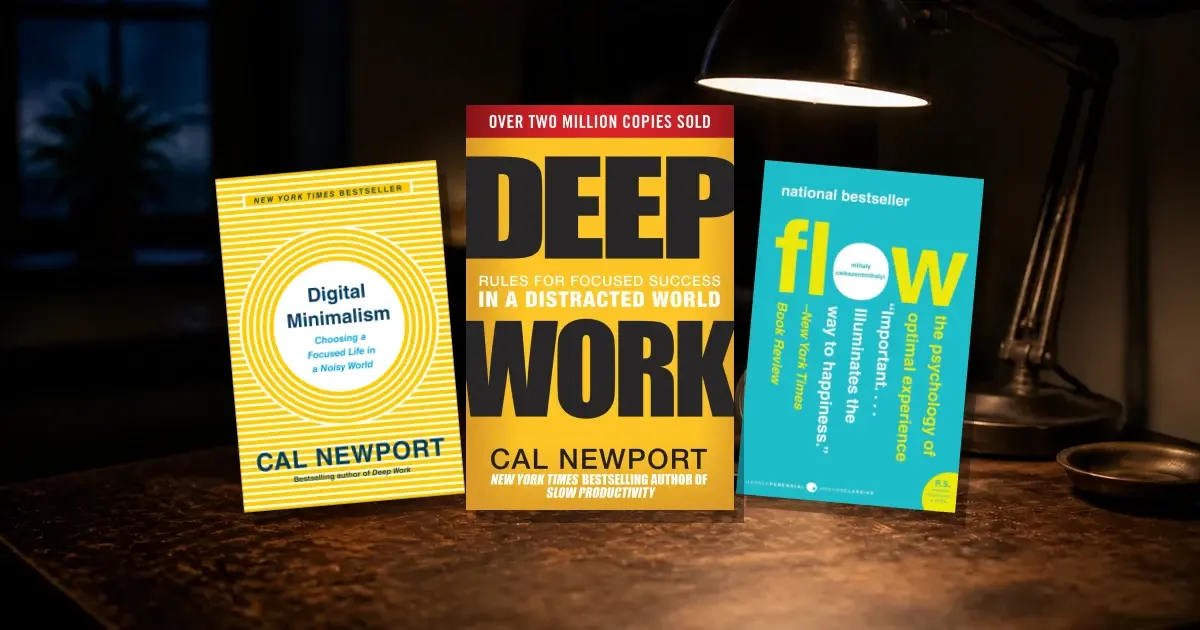
- If distraction inside a task is the problem rather than workload, start with the focus list instead.
- If the difficulty is repeating a routine, choose from the habit list instead.
- If someone else sets your workload, take the trade-off questions from Essentialism or the capacity checks from Slow Productivity into that conversation rather than applying them alone.
A reading path that starts with the inventory
Begin with Getting Things Done if you cannot yet say everything you have agreed to do; the other books assume that list exists. Once it does, read Essentialism to cut it and The One Thing to rank what remains. Keep Eat That Frog! for the moment you know the priority and still avoid it. Read Slow Productivity last, or first if the problem is the pace of your whole working year rather than any single week. Test one method before adding another; a new vocabulary is not the same as a lighter workload.
- Write down every open commitment before deciding which ones to keep.
- Mark each commitment keep, renegotiate, or release, and act on one release this week.
- Put the most important task in the first protected block of the day, and reschedule it rather than deleting it when something urgent arrives.
Sources and scope
Book ideas are attributed to their authors. External evidence is linked directly when a claim needs more than the source book.
- Getting Things Done: Source for open loops, capture, clarifying outcomes and next actions, distinct lists, regular review, and renegotiated agreements.
- Essentialism: Source for the vital few, explicit trade-offs, saying no, uncommitting, and the social and career costs of boundaries.
- The One Thing: Source for the focusing question, ranked priorities, and protected time blocks that are rescheduled rather than dropped.
- Eat That Frog!: Source for ranking tasks by consequence, planning, constraint diagnosis, preparation, hardest-first sequencing, and single-handling to completion.
- Slow Productivity: Source for the busyness proxy, fewer commitments, natural pace and seasonality, quality, and the framework’s fit for autonomous workers.
To report a factual, attribution, rights, or accessibility concern, email hello@wiseley.app.
Questions readers ask
Which productivity book should I read first?
Start with the book that matches your overload. If commitments are scattered across memory, inboxes, and notes, Getting Things Done gives you a complete inventory first. If the inventory is already clear but simply too long, Essentialism is the more useful first read.
Are productivity books only for office work?
Mostly they are written for knowledge workers with some control over their time, and Slow Productivity says its framework needs adaptation where schedules are tightly fixed. The underlying questions of what is open, what matters most, and what to decline still transfer, even when the specific routines do not.
How is this list different from the focus and habit lists?
These books address workload: what you have committed to, in what order, and at what pace. Books on focus address attention within a task, and habit books address repeating a behavior. Many readers need one of each, but rarely at the same time.