What you'll learn
Key ideas from Why Don't We Learn from History?
These ideas compress the book's argument without treating the author's view as settled fact. Use them as an orientation before reading the full work or listening in Wiseley.
History widens individual experience, offering warnings and perspective rather than exact instructions for future events.
No historian reaches complete truth, but willingness to revise conclusions can bring an account closer to it.
Democratic accountability depends on scrutiny of the people and private circles shaping decisions before formal approval.
Reform lasts more securely when ideas spread and minds ripen through persuasion than when change is imposed by decree.
Ambition, pride, expediency, and inaccurate communication can turn political tension into dangerous expectations.
A military victory is lasting only when the peace and the people are better off afterward.
Technical disputes can stall disarmament, while shared procedures may constrain violence before strong legal enforcement exists.
Inside Why Don't We Learn from History?
Read the first chapter in full here. The other 8 continue in the Wiseley app.
Chapter 1 of 9 · 9 min · Audio & text
History as Practical Experience
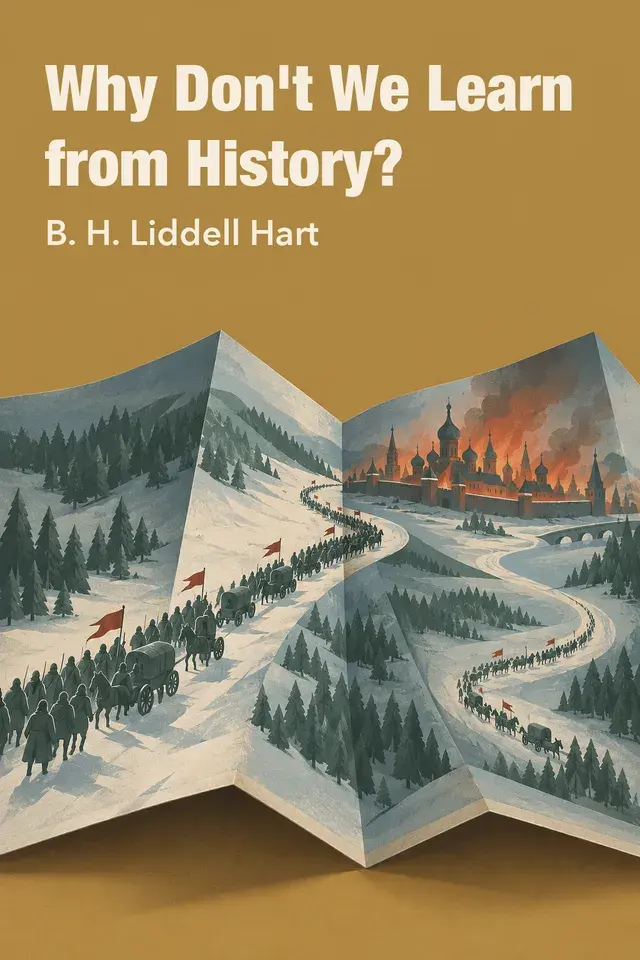
Why Don't We Learn from History?, by B. H. Liddell Hart.
History is a way of enlarging experience. One person sees only a narrow stretch of life, under limited conditions. Historical study brings many people’s choices and misfortunes into view, across a range no individual could experience directly. Its value is practical, but not because the past supplies a ready-made plan for the future. It helps us judge more broadly, recognize recurring errors, and ask better questions about what is happening now.
That distinction matters. History can suggest a direction, but it cannot tell us every condition we will meet along the way. Circumstances change; the people making decisions change them further. So historical examples are not exact instructions, and patterns are not promises. The safer lesson is often negative: an earlier failure may warn us against repeating a familiar mistake. Even then, a warning is not a guarantee that we can avoid it.
This broad perspective is especially valuable when a field becomes too specialized. Detailed study is necessary: it teaches how to handle evidence and understand a particular subject. But detail alone can make a part seem more important than the whole. Wider study supplies context, showing how a finding fits among other periods and kinds of human experience. History, in this sense, is not a narrow specialty. Its breadth can correct the limited view that specialization sometimes creates.
The author illustrates the practical cost of narrow military study with the experience of the General Staffs before the First World War. They were surprised by developments that, he argues, could have been inferred from earlier wars. Detached students, including the banker M. Bloch and the military writer Captain Mayer, did infer those developments. The contrast is not that outsiders possess a special gift for prediction. It is that a broad comparison of past conflicts can reveal changes that a narrower professional outlook may miss.
Hart presents his own forecasting as an extension of the same method: tracing patterns from the past through the present toward possible future developments. He credits that approach with helping him anticipate important developments in the Second World War. Yet the point is not that history makes anyone an infallible forecaster. Its guidance remains conditional. The more carefully a pattern is tested, the more useful it may be; it still cannot remove uncertainty about new circumstances.
To learn from patterns, we must also resist explanations that make events seem inevitable. Social, economic, and physical forces matter, but they do not settle every outcome in advance. A small accident, a change in a person’s circumstances, or a decision made at a critical moment can alter what follows. Counterfactual questions—what might have happened if a particular person had acted differently or an apparent accident had gone another way—help expose how contingent some outcomes are. They do not prove that every event is accidental. They remind us that explanations should leave room for human agency.
At the same time, chance should not become a convenient substitute for explanation. Hart argues that among the causes of sudden historical change, issues of war have been among the least accidental; reason has had greater influence than fortune in wars that most influenced history. A victory credited to sudden inspiration may rest on practices developed over time; defeat may follow from the decay of practices that once worked. Reason, preparation, and creative thought can count for more than fortune or a moment of brilliance. A sound account therefore asks both what could have happened differently and what sustained causes made the actual outcome more likely.
Military history also broadens practical experience because direct practice is limited. Compared with earlier times, major wars had become fewer, though bigger, and peacetime exercises cannot fully reproduce their demands. Even people in active careers cannot rely on personal experience alone to build adequate understanding. The accumulated experience of many conflicts offers a wider basis for learning, provided it is studied broadly and carefully. That is why history can contribute to military education without pretending that reading about war is the same as undergoing it.
This wider view also helps keep claims about war’s human and material conditions in proportion. Hart retains the qualitative point that moral factors predominate in military decisions, while stressing that moral and physical factors are inseparable: inadequate weapons can weaken morale, just as the strongest will is of little use inside a dead body. The familiar three-to-one ratio, he says, may be worthless as literal arithmetic. Moral factors are more constant across wars, while physical factors vary from conflict to conflict and situation to situation. Numbers can clarify when they measure something reliably; they mislead when a complicated judgment is made to look like arithmetic.
Historical inquiry begins with a plain but demanding aim: find out what happened, and investigate why. That requires disciplined attention to evidence. Documents are indispensable, but they are not transparent windows. They may omit events, leave gaps, or present a version shaped by the circumstances in which they were made. A documentary account becomes more reliable when official records are compared with testimony from people who experienced events, and when claims are checked against other evidence and context. Skepticism is useful when it sharpens judgment, not when it turns into the belief that nothing can be known.
The French general’s orders in 1918 make the problem concrete. He issued instructions for a line that had already been lost and called for a counterattack. After the corps commander objected that the line was behind the German front and had been lost the day before, the general replied, “C'est pour l'histoire”—“for history.” The episode shows why a record cannot simply be accepted as an accurate account of what happened. In this case, the written order described action that was no longer possible, so it had to be tested against the situation and other testimony. The practical method is comparison, not automatic trust in either a document or a later recollection.
Care also means keeping a distinction between what is established and what is inferred. Claims deserve scrutiny; an admission may carry a different weight from an assertion, but no single rule replaces evaluation of the evidence. Historians must test causes across a broad range of cases rather than build a sweeping conclusion from one striking example. They should state uncertainty where the evidence does not support certainty. The aim is neither credulity nor cynicism, but the most defensible account the available evidence permits.
This work combines science and art. The scientific side seeks accuracy, tests explanations, and disciplines prejudice. But evidence is too abundant to include everything, so historians must select and interpret. That selection requires judgment, imagination, and a sense of proportion; it should be controlled by careful inquiry rather than disguised as pure objectivity. Clear writing is part of the discipline. A lucid account makes relationships easier to follow and mistakes easier to detect, while cloudy language can hide weak reasoning.
History becomes useful, then, not by promising certainty but by improving judgment. A broad view supplies context; close study tests the evidence; comparison helps distinguish recurring causes from unique conditions; and honest limits keep an interpretation from claiming more than it can show. The past cannot decide what to do in circumstances it never encountered. It can, however, give us a wider store of experience with which to think—and a clearer sense of how much remains uncertain.
Chapter 2 of 9 · 7 min · Audio & textIn the app
Truth Against Institutional Loyalty
Historical records can fail not only because facts are hidden, but because people come to prefer an account that protects their confidence, careers, or group. B.
Chapter 3 of 9 · 11 min · Audio & textIn the app
Power, Democracy, Dictatorial Drift
Political accountability cannot begin and end with the formal vote. By the time a committee or Cabinet approves a proposal, the important choices may already have been shaped elsewhere.
Chapter 4 of 9 · 7 min · Audio & textIn the app
Freedom, Compulsion, and Progress
Authoritarian rule can sometimes produce visible results quickly. A dictator may support public works, art, or archaeology that parliamentary governments neglect.
Chapter 5 of 9 · 9 min · Audio & textIn the app
How Political Germs Become War
Hart traces the beginnings of war to choices made before armies clash: ambition, expediency, prejudice, pride, and inaccurate communication can turn tension into dangerous expectations. These forces do not make conflict inevitable.
Chapter 6 of 9 · 9 min · Audio & textIn the app
Victory, Settlement, and Restraint
When the fighting ends, a military victory can look like a political success. Hart warns that the two are not the same.
Chapter 7 of 9 · 9 min · Audio & textIn the app
Rules, Disarmament, and War Limits
War’s destructive nature can make restraint sound unrealistic. Hart answers that violence has a political purpose: to secure a peace.
Chapter 8 of 9 · 7 min · Audio & textIn the app
Resistance and a Plural World Order
After considering how rules can restrain violence, Hart turns to a form of conflict that is harder to contain: irregular resistance. Guerrilla warfare can weaken an occupying power, but its value cannot be measured only by the damage it inflicts.
Chapter 9 of 9 · 9 min · Audio & textIn the app
Shared Faith and Human Purpose
Hart closes by asking what kind of judgment and conduct can help people live together when their beliefs differ and their power to destroy has grown. His answer joins humility about what can be known with a practical ethic: restrain harm, cultivate kindliness, and let progress grow through free cooperation.
Chapter 1 of 9 · 9 min · Audio & text: History as Practical Experience
Wiseley supports reading and listening to summaries in the app.
Continue in WiseleyWhat Why Don't We Learn from History? is about
Why Don’t We Learn from History? asks how people and governments can recognize repeated failures when evidence is bent by loyalty, ambition, and fear. Liddell Hart connects critical historical inquiry to democratic accountability, restraint in war, and practical habits of truthfulness, moderation, and cooperation.
About B. H. Liddell Hart
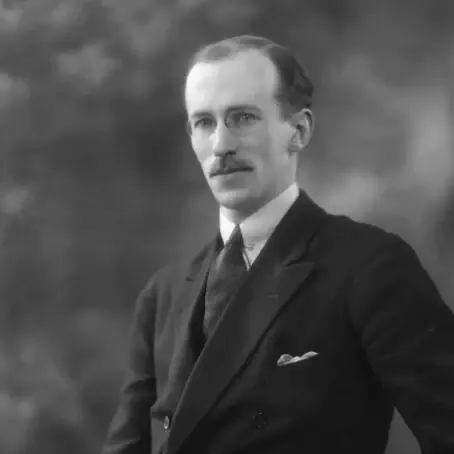
B. H. Liddell Hart was a British historian and military theorist. “Why Don't We Learn from History?” explores why people and governments repeat past failures when evidence is bent by loyalty, ambition, and fear.
Explore more books by B. H. Liddell Hart