
What you'll learn
Key ideas from Metahuman
These ideas compress the book's argument without treating the author's view as settled fact. Use them as an orientation before reading the full work or listening in Wiseley.
Perception combines sensory signals with learned expectations, making a constructed world feel direct and stable.
The ego makes a personal viewpoint by selecting experience and interpreting it through accumulated memories, preferences, and beliefs.
Scientific models can explain material processes, but Chopra argues that they do not settle why conscious experience exists.
Personal and group stories can give meaning, but they do not describe the whole self; ordinary moments may briefly hint at deeper awareness.
The direct path shifts identity from a changing “I am X” to the “I am” Chopra associates with already-present wholeness.
Three small awakenings: clearer perception, getting unstuck from identity, and stopping clinging to expectations and external rewards. One may suffice; two or all magnify it.
Inside Metahuman
Read the first chapter in full here. The other 15 continue in the Wiseley app.
Chapter 1 of 16 · 4 min · Audio & text
The Invitation to Wake
Metahuman, by Deepak Chopra M.D.
What does it mean to know yourself? Chopra begins with two questions about ordinary experience: while you are happy, can you notice yourself being happy? When you happen to get angry, is some part of you totally free of anger? These questions do not ask whether you can avoid emotion. They invite you to notice that a mood can be felt and observed at the same time.
Happiness and anger come and go; roles and self-descriptions can change, too. Chopra calls the capacity to notice them the witnessing self. He asks whether this observing perspective is more basic than the familiar self we associate with current feelings and roles.
This does not require withdrawing from life. Chopra says participation and observation coexist in the present, though the observing capacity is often overlooked. His invitation is to consider whether you can be involved in what is happening while also noticing it.
He uses “metahuman” for a major shift in identity. The word may suggest a superhero, but Chopra means a person grounded in wider awareness and higher values, such as love and self-worth. The possibility, he argues, belongs to human beings broadly. It is not a reward for excelling at a particular skill.
Chopra offers a conference story as a suggestive example. A woman told him she was writing a graduate thesis on communicating with birds. One bird landed unafraid in her lap. Chopra associates the encounter with harmlessness and empathy. The woman later explained that she had mental clarity and inserted an intention for the bird to come to her. For Chopra, the story points toward a quality of awareness and relation. It does not prove that intention can generally control what birds do.
That distinction matters when he discusses exceptional ability. A prodigy or champion may show astonishing performance in a particular field, but such achievement is a specific kind of talent. Chopra invokes Abraham Maslow’s view that human nature can reach beyond everyday functioning. Peak experiences, when limits seem to fall away or insight arrives, can offer a glimpse of that potential. Yet they are not the whole of metahumanity. His subject is a wider possibility: changing one’s sense of who is living and experiencing life.
Chopra acknowledges how large this claim can sound. Connecting everyday activities to the mystery of existence is a leap, especially for readers shaped by a culture that trusts reason and science. He says waking up must be experienced firsthand. It cannot be adequately promised or captured in words, and images can only point toward it. His account may not persuade a skeptical reader; description cannot substitute for the experience itself.
The chapter therefore begins with an ordinary observation: notice a mood as it is happening and consider what the act of noticing reveals. If you can answer yes to both opening questions, Chopra says, you have arrived and gone beyond everyday awareness; self-knowledge will unfold for you every day.
Chapter 2 of 16 · 7 min · Audio & textIn the app
The Mind Builds Reality
Take a familiar room. You do not experience it as a flat pattern of light striking the eyes.
Chapter 3 of 16 · 5 min · Audio & textIn the app
Self Beyond Body and Brain
Experiences that seem to place the self outside the body can feel compelling. Chopra uses them to examine how bodily identity is formed, while leaving open whether consciousness can exist without a functioning brain.
Chapter 4 of 16 · 5 min · Audio & textIn the app
How the Ego Edits Life
The ego is the editor that gives experience a point of view called “me.” It decides which parts of the stream matter, interprets them through previous experience, and retains some as preferences, memories, and beliefs.
Chapter 5 of 16 · 5 min · Audio & textIn the app
Creativity Beyond Habit
Chopra asks whether a description of brain activity can explain creative knowing, rather than simply name processes that accompany it. He turns to rare moments when a capacity seems to appear without the gradual training we expect.
Chapter 6 of 16 · 7 min · Audio & textIn the app
Reason, Science, and Story
The traces left by early people are tangible; the minds that made them are not. Images and tools let us infer skill, attention, and intention, but they do not let us enter the makers’ experience.
Chapter 7 of 16 · 8 min · Audio & textIn the app
Consciousness and Creation
The question now shifts from how experience is assembled to what creation rests on. The Big Bang describes a beginning for the universe, Chopra observes, but leaves open what gave rise to it.
Chapter 8 of 16 · 7 min · Audio & textIn the app
Brain, Perception, and Experience
Chopra describes uses of the mind that do not light up on a brain scan and argues that, unless the brain is burning calories, it is not at work. He asks whether observed brain activity explains knowing itself.
Chapter 9 of 16 · 4 min · Audio & textIn the app
Stories and the True Self
Experience is fluid, yet the mind groups changing sensations into familiar categories and makes them seem continuous. It gives a passing process the appearance of a stable thing.
Chapter 10 of 16 · 5 min · Audio & textIn the app
Stories and Awakening Evidence
A patient’s exchange with psychiatrist M. Scott Peck gives this chapter’s most concrete example of how a person’s explanation can narrow the choices they see.
Chapter 11 of 16 · 6 min · Audio & textIn the app
The Direct Path to Wholeness
The direct path begins by changing the question. Instead of asking how to become a better “I,” it asks what is present before “I” is attached to a trait or experience.
Chapter 12 of 16 · 5 min · Audio & textIn the app
Embodied Awareness and Timelessness
Chopra proposes beginning with the body because it is where many people feel most clearly bounded. It seems like an object one inhabits, subject to pleasure, pain, illness, aging, and death.
Chapter 13 of 16 · 8 min · Audio & textIn the app
Desire, Stillness, and Allowing
The mind can be pictured as a still lake. A sensation, image, feeling, or thought is like a pebble disturbing its surface.
Chapter 14 of 16 · 7 min · Audio & textIn the app
Practical Immortality and One Life
The book contrasts two approaches to immortality. In traditional religious settings, a devout life is often framed as pleasing God by obeying rules and trusting a particular messenger; traditions disagree about which messenger carries authority.
Chapter 15 of 16 · 6 min · Audio & textIn the app
Testing the Construct in Practice
Here the book moves from explaining its view of perception to asking readers to examine it in ordinary life. The first stage of the month-long program is a series of experiments.
Chapter 16 of 16 · 5 min · Audio & textIn the app
Living the Awakening
The closing stretch of the program moves from noticing how the self is constructed toward recognizing awareness as already present. In the last ten days, the exercises return to assumptions, identity, change, and suffering from this new angle.
Chapter 1 of 16 · 4 min · Audio & text: The Invitation to Wake
Wiseley supports reading and listening to summaries in the app.
Continue in WiseleyWhat Metahuman is about
Metahuman asks whether the everyday self is the whole of who we are. Chopra argues that perception and identity are constructed, and that noticing the awareness beneath them can loosen conditioned limits. He develops this claim through examples from creativity, science, and a month of reflective exercises.
About Deepak Chopra
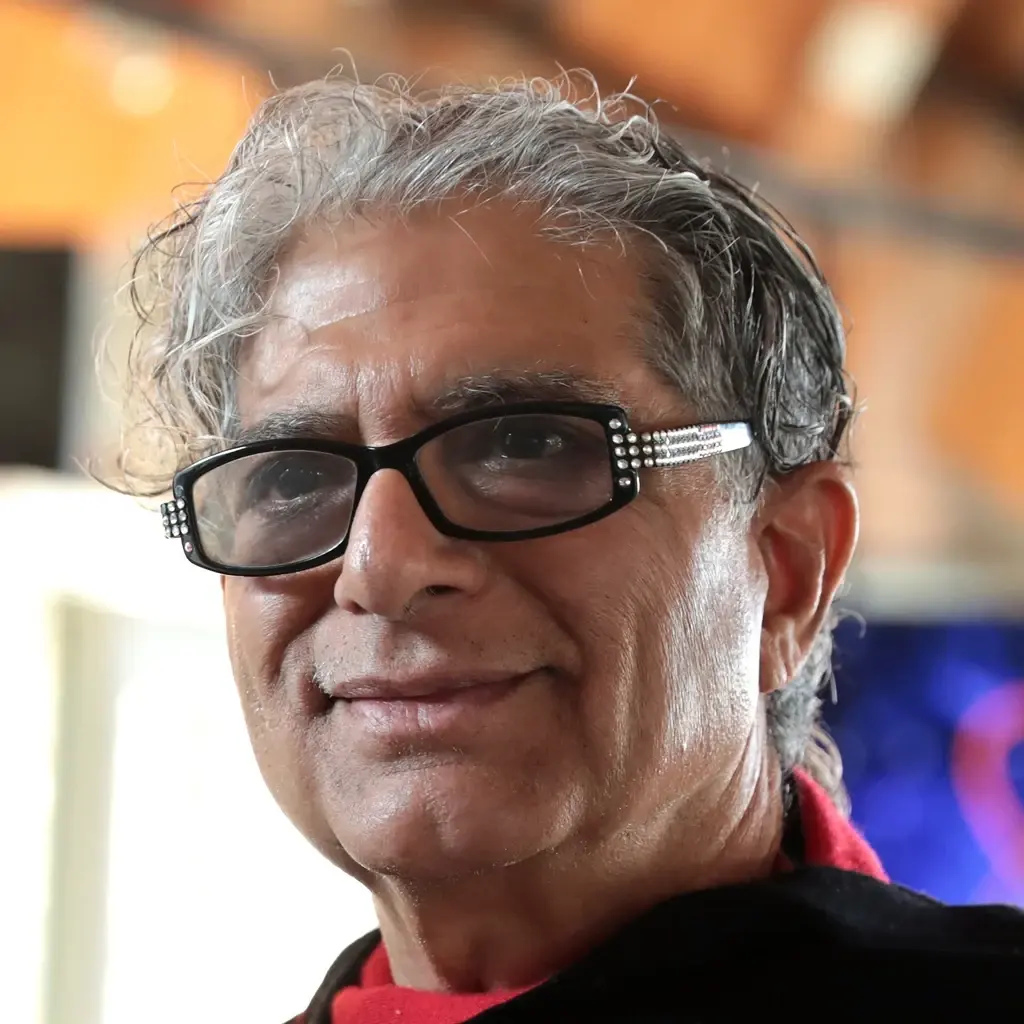
Deepak Chopra is an Indian-American author and alternative medicine advocate. “Abundance” explores what makes a life abundant beyond financial wealth.
Explore more books by Deepak Chopra