What you'll learn
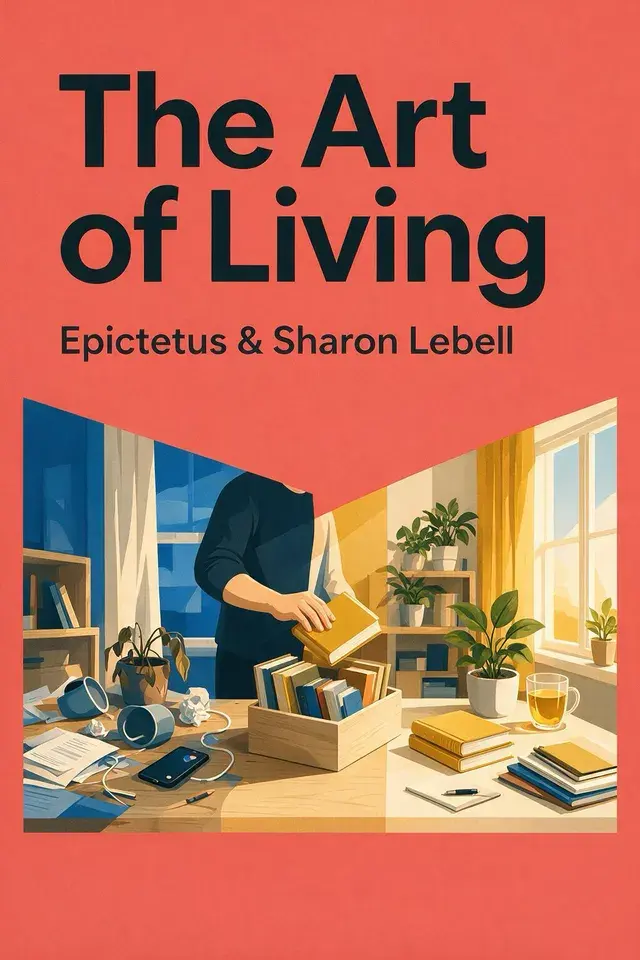
Key ideas from The Art of Living
These ideas compress the book's argument without treating the author's view as settled fact. Use them as an orientation before reading the full work or listening in Wiseley.
Epictetus's example links happiness with virtue and places fulfillment in right action, not status, wealth, fame, or approval.
The control distinction locates emotional disturbance in judgments about external events, not in events alone.
Acceptance does not erase duty; the present role, main purpose, and measured response remain within the person’s care.
Advantages and rewards carry costs, and a price that compromises integrity can make declining them the rational choice.
Deliberate speech, entertainment, company, and pleasure protect attention and character from gossip, degrading influence, cheap thrills, and crowd pressure.
Practice has priority: ideals become dependable only when adopted as rules and enacted without postponement.
Philosophy joins self-sufficiency with humane citizenship, asking people to question convention while extending moral concern to all humanity.
How The Art of Living builds its case
Follow how the book develops its argument. Each note is a brief orientation, not a replacement for the chapter.
Philosophy as Daily Training
The book opens with two practical questions: How can a person live happily and with fulfillment, and how can that person become good? Epictetus answers by making philosophy a discipline for ordinary days.
Desire Meets Reality
The opening distinction becomes practical when life refuses to cooperate. An event arrives, the mind gives it an appearance, and judgment follows.
Character Before Status
Stoic freedom is not merely the ability to endure disappointment. It also provides a standard for deciding what deserves a person’s time, effort, and loyalty.
Freedom With Other People
Stoic freedom is not a retreat from human life. It is tested in the roles that bind us to others.
Think Clearly, Practice Daily
Philosophical principles become dependable only when they survive contact with ordinary conduct. In this section, Stoic wisdom is presented less as a collection of ideas than as a discipline for keeping judgment clear and action aligned.
Why Virtue Still Matters
At the end, the book returns to an awkward question: why be good? Virtue can sound prissy, submissive, or detached from prosperity.