What you'll learn
Key ideas from Life Worth Living
These ideas compress the book's argument without treating the author's view as settled fact. Use them as an orientation before reading the full work or listening in Wiseley.
A nonjudgmental inventory makes lived commitments visible for comparison with the life a person wants.
Longevity, happiness, and health are genuine goods, but they do not provide a complete measure of a worthy life.
The recipe test checks whether ideas that seem good alone can form a coherent vision of flourishing.
Moral action needs a value judgment as well as a description of reality, and uncertainty need not prevent considered action.
Needless affliction calls for resistance; suffering beyond control calls for empathy, time, and concrete care.
Recognizing the good does not by itself overcome habits, incentives, and surroundings that still serve an older vision of success.
Repeated practices give a life vision a recurring form that can shape attention, desire, and conduct.
A community’s goodness remains a question of what its practices cultivate and whom or what its vision includes.
Inside Life Worth Living
Read the first chapter in full here. The other 16 continue in the Wiseley app.
Chapter 1 of 17 · 6 min · Audio & text
The Question of a Worthy Life
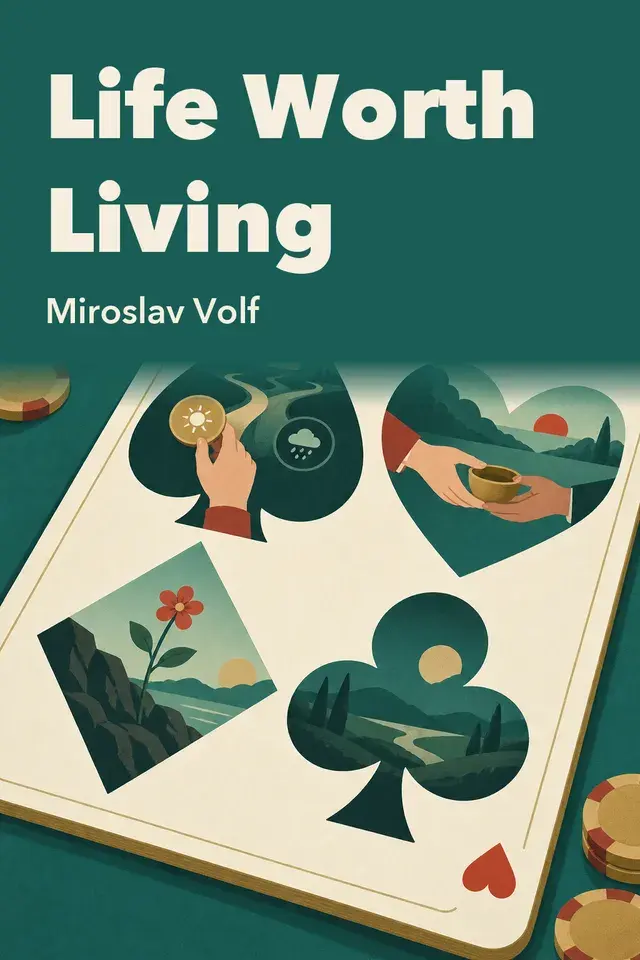
Life Worth Living, by Miroslav Volf.
What makes a life worth living? The question can remain in the background until an encounter makes the familiar seem uncertain. In the book’s account, Siddhartha has wealth, family, power, and privilege. Seeing old age, sickness, and death, then meeting a wandering monk, leads him to leave royal life and seek enlightenment. He comes to understand craving as a source of suffering and spends his life sharing that insight.
Simon Peter’s life changes through a different encounter. A married fisherman with a family and a settled trade, he leaves that life after Jesus calls him. Peter misunderstands and fails, even denying Jesus. After encountering Jesus raised from the dead, he devotes himself to Christian mission. Ida B. Wells is redirected by injustice. After the lynching of Thomas Moss, Calvin McDowell, and William Stewart, she sees that the justification for lynching she had accepted was a lie. She investigates and publishes the truth, continuing her work despite threats and the destruction of her newspaper.
These stories do not settle what makes a life good. They show how suffering, a religious call, or injustice can disrupt what seemed normal and make a person ask what matters enough to shape a whole life. The Question is too large for one definition, but that does not make it unreal. It concerns whether a life, taken as a whole, is worthy of our humanity.
The inquiry is shared, though its answer cannot simply be handed to us. The book invites readers into friendship around an important question: companions need not agree to ask it together. Its conversations bring present readers into contact with particular thinkers and figures from different traditions, without claiming that one person speaks for an entire tradition or that disagreement will disappear. Focused sub-questions make the larger inquiry manageable. They offer possible answers and show what is at stake, while leaving each reader responsible for answering for their own life.
That responsibility is real but limited. A card game of war leaves players no meaningful choices: the cards determine the result. Poker also involves chance, but players see their hands, follow rules, place bets, and decide how to play. They cannot choose their cards or control the final outcome, yet their decisions matter. The book asks where life falls between these models. We do not choose our birthplace or control all the forces that shape us, and effort cannot guarantee success. Still, we can respond to what happens and consider how we ought to respond. Even when circumstances leave little control over outcomes, conduct remains a way of answering for how we live.
The question also concerns whole lives, not only isolated achievements. Albert Speer illustrates why. His devotion to architecture brought him an opportunity to realize his professional ambition, but he also participated in the German war effort, used slave labor, and facilitated the Holocaust. Excellence in a vocation did not make him a good human being. The example asks us to consider whether a life can be called successful by its leading ambition alone, or whether we must also ask what kind of person that life made.
To connect this large question with ordinary life, the authors describe four interrelated modes of living. Autopilot is the level of habit, reflex, and routine. Effectiveness asks whether our actions achieve the ends we have chosen and how to pursue them better. Self-awareness asks what we really want and what broader vision of life organizes those desires. Self-transcendence asks whether that vision is true and worth wanting. These are not stages where one mode simply replaces another. Habits can embody what matters, strategies can serve a considered vision, and deeper reflection can revise both. Insights must also return to practice, or they remain disconnected from daily life.
A useful starting point is to take stock without judgment. Notice the condition of your body and the emotions you experience. Look at how you spend time and money, where you give attention, and what your hopes and fears reveal. These details show how you are already answering the Question in practice, whether or not you have answered it explicitly. Record what comes to mind at first and what emerges after more reflection as observations, not grades.
Then compare these lived commitments with the life you say you want. Ask what your patterns suggest you value and whether those patterns fit your stated vision. A gap does not prove that the vision is wrong. Simply lowering standards to match behavior can hide the conflict; acknowledging the gap may take courage. Nor does the inventory decide which vision is worthy. It makes the present answer visible so that it can be examined.
The route runs both ways: from everyday habits toward deeper questions about what is worth wanting, then back toward the choices and routines through which a vision becomes a life. The examples open that inquiry; they do not settle it. Our circumstances limit what we can shape, but the question remains ours to pursue with others and answer as best we can.
Chapter 2 of 17 · 5 min · Audio & textIn the app
Beyond the Walgreens Vision
Ask what a good life looks like, and a familiar answer comes quickly: live long, be happy, stay healthy. The authors call this the “Walgreens vision,” recalling Walgreens’s slogan, “at the corner of happy and healthy.”
Chapter 3 of 17 · 5 min · Audio & textIn the app
Who Has a Claim on Us
Responsibility raises three connected questions: who is responsible, what falls within that responsibility, and who or what has the authority to define its demands. Leah Sarna’s question, “Who are you responsible to?”
Chapter 4 of 17 · 5 min · Audio & textIn the app
Feeling Beyond Simple Pleasure
A familiar answer to the question of a good life is that it should feel good: plenty of pleasure, little pain. But that answer leaves more to ask.
Chapter 5 of 17 · 6 min · Audio & textIn the app
Conditions for Shared Flourishing
Material conditions matter because a life is lived in concrete circumstances. The question is not simply whether we can acquire what we want, but what those things are for.
Chapter 6 of 17 · 8 min · Audio & textIn the app
Choosing How to Act
Once a person has begun to ask what is worth wanting, another question follows: how should one act? Mohamad Hafez had built a successful architectural career in the United States.
Chapter 7 of 17 · 7 min · Audio & textIn the app
Testing the Whole Life Recipe
A vision of a good life can be assembled from appealing ideas that do not fit together. The recipe test asks whether those ideas, taken together, describe a life that could make sense as a whole.
Chapter 8 of 17 · 5 min · Audio & textIn the app
Creation, Place, and Belonging
An account of a worthy life rests partly on what we think the world is and what kind of beings we are. A big picture can make some answers to how we should live seem possible and others implausible.
Chapter 9 of 17 · 6 min · Audio & textIn the app
Cosmic Scale, Human Obligation
At ordinary scale, Earth feels vast and secure. But Voyager One’s distant image recasts it as a pale-blue speck in a seemingly immense universe.
Chapter 10 of 17 · 7 min · Audio & textIn the app
Failure, Truth, and Repair
An ordinary failure is falling short at a task. A deeper moral failure is becoming someone whose repeated choices betray what matters.
Chapter 11 of 17 · 6 min · Audio & textIn the app
Relieving Suffering Together
Much suffering is not chosen. It can come from malice, negligence, war, or the vulnerability of bodily life.
Chapter 12 of 17 · 7 min · Audio & textIn the app
Living Through Unfixed Suffering
Suffering puts a life vision under pressure. Some affliction can be reduced by changing the conditions that produce it; some fragile conditions remain despite our best efforts.
Chapter 13 of 17 · 6 min · Audio & textIn the app
Mortality and What Matters Most
Death tests what a vision of a worthy life considers valuable. We all die, though we do not know when, and our accounts of death reveal what they say about continuity, care, and the body.
Chapter 14 of 17 · 5 min · Audio & textIn the app
From Insight to Changed Habits
An insight about the good can be clear in reflection and still fail to govern an ordinary choice. Habits, incentives, desires, and surroundings may keep serving an older picture of success.
Chapter 15 of 17 · 6 min · Audio & textIn the app
Working Against Inner Resistance
Seeing what is good does not guarantee that we will want it strongly enough to act. A person can recognize a worthy direction and still feel pulled elsewhere.
Chapter 16 of 17 · 6 min · Audio & textIn the app
Practices That Make Change Stick
Choosing a way of life is only a beginning. A vision has to meet the moments when old desires and habits return.
Chapter 17 of 17 · 5 min · Audio & textIn the app
Communities Worth Joining
For many, community can help sustain the practices considered earlier. Shared commitments give them a setting: people learn together, remind one another, and become answerable to a purpose larger than private resolve.
Chapter 1 of 17 · 6 min · Audio & text: The Question of a Worthy Life
Wiseley supports reading and listening to summaries in the app.
Continue in WiseleyAbout Miroslav Volf
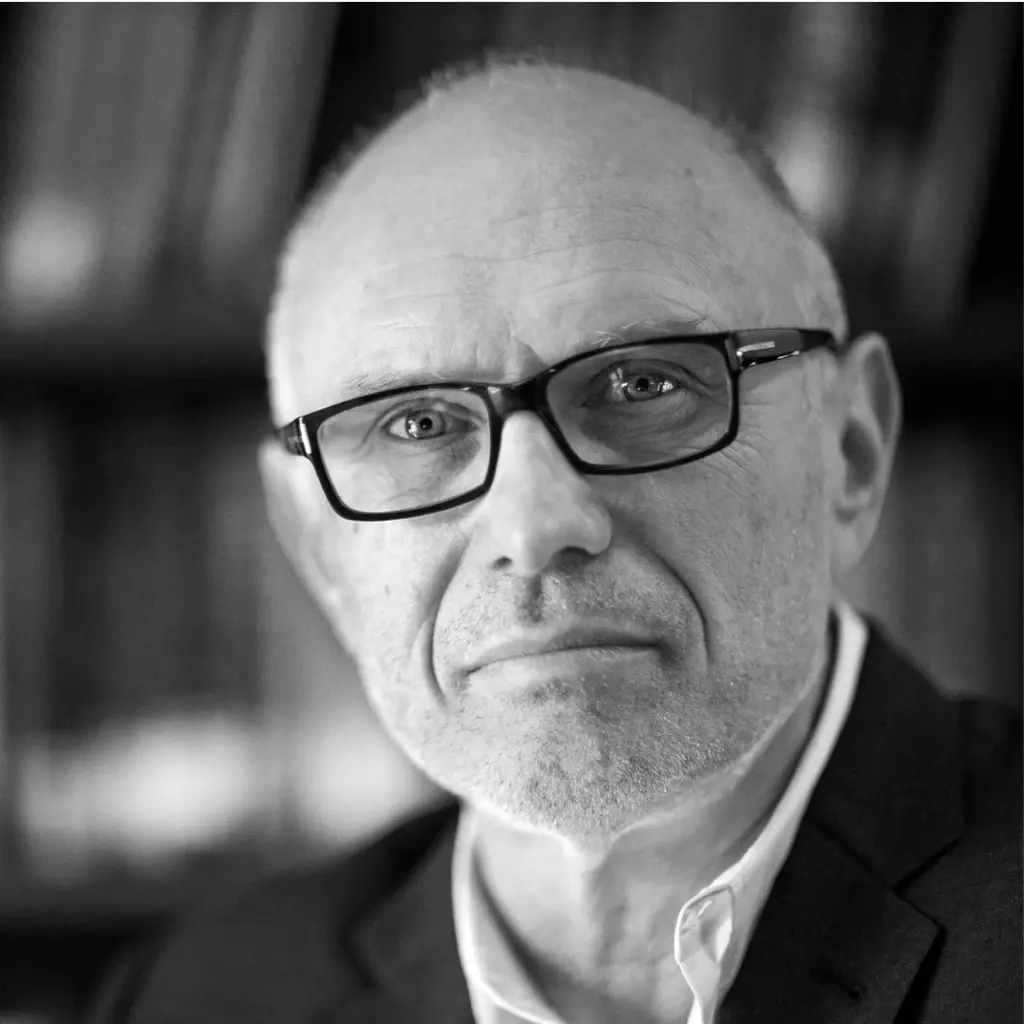
Miroslav Volf is a Croatian-American theologian and academic. “Life Worth Living” explores how to tell whether a life is genuinely worth wanting, beyond happiness, health, and longevity.
Explore more books by Miroslav Volf