
What you'll learn
Key ideas from The Four Loves
These ideas compress the book's argument without treating the author's view as settled fact. Use them as an orientation before reading the full work or listening in Wiseley.
Gift-love gives for another’s good, while Need-love arises from dependence on another for comfort or help.
Need-pleasure answers a lack, while Appreciative pleasure attends to a quality valued for itself.
Love of home can widen loyalty beyond the self while leaving room for other peoples’ equal attachment.
Affection is most life-giving when courtesy and justice help recipients become more capable and free.
Friendship begins when companions recognize a shared insight, pursuit, or beauty that matters beyond practical use.
Eros can inspire sincere lifelong vows, but feeling cannot keep them; commitment requires justice, charity, humility, and daily fidelity.
Nature gives the loves their life and beauty; grace enables the will to tend, prune, and order them toward their fullest form.
Inside The Four Loves
Read the first chapter in full here. The other 6 continue in the Wiseley app.
Chapter 1 of 7 · 5 min · Audio & text
Need, Gift, and Divine Love
The Four Loves, by C.S. Lewis.
Lewis begins from the thought that God is love and asks what this means for human loves. At first, it seems natural to judge them by how much they resemble divine love. He distinguishes Gift-love, which gives for another’s good, from Need-love, which arises when someone depends on another for what is lacking. The distinction describes two directions of love, not a simple division between good and bad.
Consider a parent planning for a child’s future. The parent may spend time and resources on a good the child will enjoy, even if the parent never benefits from the result. The love looks outward, toward the child’s well-being. Need-love appears in a frightened child seeking the mother’s arms. The child turns to her for comfort and safety. That dependence does not make the child’s love false; it makes the need behind it plain.
Human beings begin helpless, discover loneliness, and continue to need others in body, feeling, and thought. Need-love is therefore part of creaturely life. A person may indulge it selfishly, demanding affection without regard for others. But that possibility does not make ordinary need mere selfishness. Wanting company or comfort is not, by itself, a moral failure. Lewis even suggests that being unable to feel any need for others may signal coldness rather than selflessness.
This distinction changes how human love of God is understood. God’s love is giving, while creatures are dependent and incomplete. People ask God for forgiveness and support, and for help with what is disordered or unfinished in them. Their love of God must therefore be largely Need-love. Lewis does not treat this dependence as an embarrassment or an inferior stage to outgrow. A person who approaches God honestly acknowledges need instead of pretending to possess divine fullness or self-sufficiency.
Indeed, the deepest spiritual health may include a profound sense of dependence. Need-love can be greedy or exacting, but its basic presence is not the same as those abuses. The needy person who asks to be filled is not claiming to be the giver. Humility begins with seeing that difference clearly: creatures depend on God, and their dependence does not put God in their debt.
Lewis clarifies spiritual nearness by separating resemblance from approach. Someone can resemble God in a created quality, such as strength, happiness, freedom, or creativity, without moving closer to God in the spiritual sense. Imagine a walker on a cliff-top who can see a village below and seems close to it. The cliff prevents a direct route. A detour may initially lead away from the village’s visible position, yet it is the route that actually approaches it. Apparent proximity and progress toward a destination are not the same.
In the same way, likeness to God does not guarantee spiritual progress. Nearness of approach means movement toward union with God, not simply possessing a quality that resembles a divine one. That movement involves the creature’s participation: humility and obedience, a will increasingly aligned with God. Grace initiates and sustains the movement. Neither giftedness nor great human love, by itself, proves that someone is advancing toward God; natural loves may help, hinder, or have little bearing on that approach.
This framework also guards against two errors. Human loves can be glorious images of divine love, especially when they give generously. But an image is not God. At their noblest, human loves can claim the unconditional authority that belongs to God alone, demanding that every other obligation yield to them. Need-love has a different danger: dependence can harden into a greedy, tyrannous demand. These risks should not be confused. Ordinary dependence is not itself selfish, and natural love does not become divine because it is noble. Nor should love’s imperfect roots be used to dismiss it as nothing but selfishness. Lewis asks us to honor natural love while recognizing its limits: it can resemble divine love, but only God is owed absolute allegiance.
Chapter 2 of 7 · 5 min · Audio & textIn the app
Appreciation and the Attention to Nature
Alongside the distinction between Need and Gift, Lewis identifies appreciation as a third element in love. It begins when we judge something good, attend to it as if our attention were owed, and wish it to continue even when it brings us no personal benefit.
Chapter 3 of 7 · 6 min · Audio & textIn the app
Patriotism and Particular Loyalties
Lewis begins his account of patriotism with attachment to home: familiar places, language, customs, and ways of life. This is a particular love, extending beyond family without becoming pure charity.
Chapter 4 of 7 · 6 min · Audio & textIn the app
Affection’s Warmth and Grip
Affection is the familiar tenderness of people who have come to belong in one another’s daily world. Lewis calls it storge, a love associated especially with parents and children.
Chapter 5 of 7 · 7 min · Audio & textIn the app
Friendship Around a Shared Good
Friendship begins when people discover that they care about the same thing. They may each have treated an insight, pursuit, or beauty as a private interest.
Chapter 6 of 7 · 7 min · Audio & textIn the app
Eros, Promise, and Moral Authority
Lewis uses Eros to mean being in love with a particular person. He distinguishes it from Venus, the bodily element of sexuality.
Chapter 7 of 7 · 8 min · Audio & textIn the app
Charity Orders and Transforms Love
The question is how natural loves can remain themselves without being asked to do what only God can do. Lewis’s answer is that they need ordering and help.
Chapter 1 of 7 · 5 min · Audio & text: Need, Gift, and Divine Love
Wiseley supports reading and listening to summaries in the app.
Continue in WiseleyWhat The Four Loves is about
The Four Loves examines Affection, Friendship, Eros, and divine Charity, asking how human attachments can express goodness without becoming ultimate authorities. Lewis distinguishes need, gift, and appreciative attention, then traces how love can enlarge life, distort into control or idolatry, and be reordered through humility, fidelity, and grace. These distinctions clarify where to honor loyalty and where to resist its claims.
About C.S. Lewis
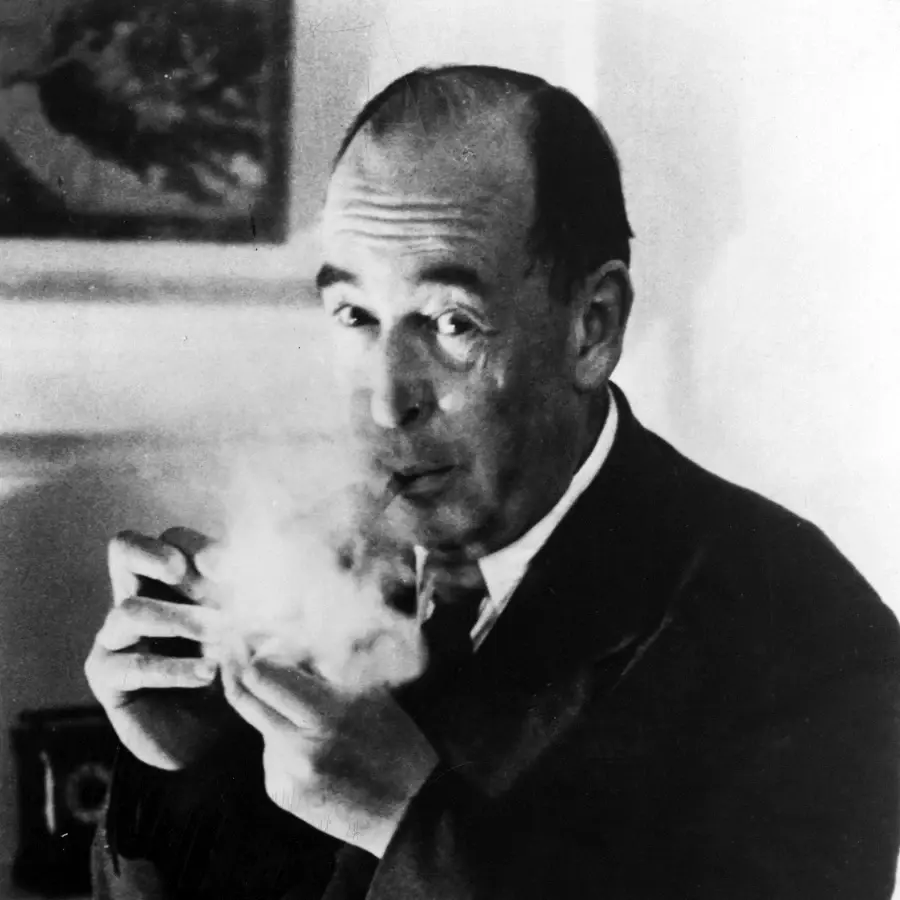
C.S. Lewis was a British writer and scholar whose work spans fiction, literary criticism, and Christian theology. Alongside The Chronicles of Narnia, he wrote nonfiction books including Mere Christianity.
Explore more books by C.S. Lewis