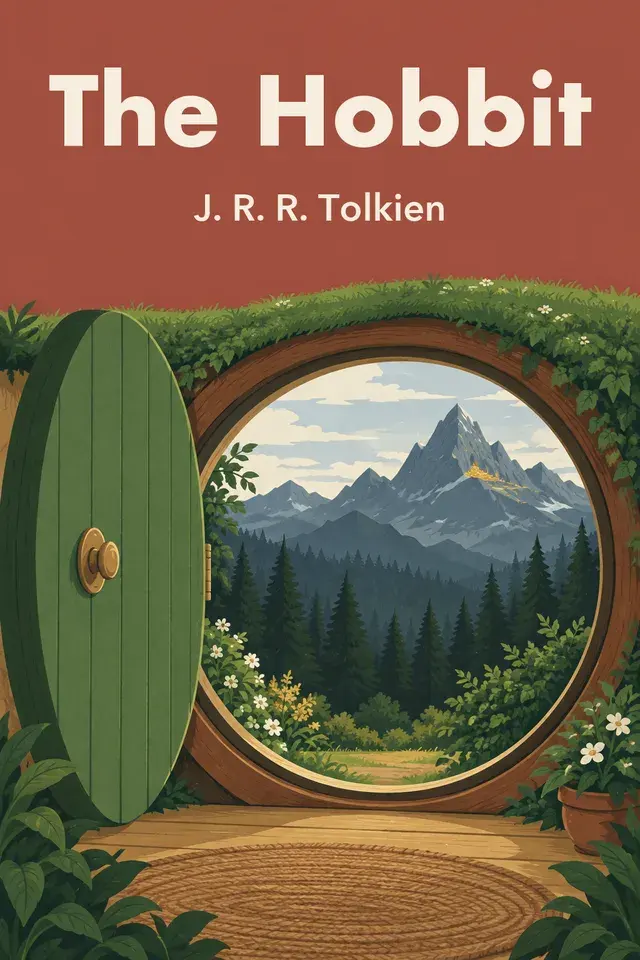
What you'll learn
Key ideas from The Hobbit
These ideas compress the book's argument without treating the author's view as settled fact. Use them as an orientation before reading the full work or listening in Wiseley.
Bilbo’s settled Baggins habits and latent Tookish curiosity make him receptive to adventure while wary of its cost.
Pity for an unarmed Gollum checks Bilbo’s impulse to use an unfair advantage.
By observing Wood-elven routines and the cellar route, Bilbo turns barrel traffic into a dangerous escape plan.
Bilbo’s warning gets the dwarves behind the door before Smaug attacks; later, he argues that escape must come before taking treasure.
Bilbo privately pockets the captivating Arkenstone and doubts it falls within his share; Thorin searches for it while the dwarves’ glimpses renew their desire for the hoard.
Bilbo offers the Arkenstone against his promised share, though he does not own it outright and risks his friendship with Thorin.
Thorin and Bilbo part as friends before Thorin dies, while Thorin’s final wish places food, cheer, and song above hoarded gold.
Inside The Hobbit
Read the first chapter in full here. The other 8 continue in the Wiseley app.
Chapter 1 of 9 · 8 min · Audio & text
Comfort Meets the Call
The Hobbit, by J. R. R. Tolkien.
Bilbo’s life is arranged around comfort. His well-appointed hobbit-hole has rooms on one level and windows looking onto the garden. The Bagginses are known as wealthy and respectable, partly because they avoid adventures and surprises. Bilbo’s mother, Belladonna Took, came from a family with a less predictable reputation. Some Tooks went on adventures, though the story about a fairy ancestor is dismissed as absurd. Bilbo resembles his comfortable father, but the narrator suggests he has inherited something Tookish, waiting for a chance to emerge. The adventure begins as a tension inside him, not as a choice he has already made.
On a pleasant morning, Bilbo meets Gandalf outside his home and says, “Good morning.” Bilbo means the weather is fine, but Gandalf points out that the greeting can carry other meanings, including a wish for the visitor to go away. Bilbo says he means all of them, then offers tobacco and a long conversation. When Gandalf proposes an adventure, Bilbo tries to close the subject by repeating his greeting. His courtesy is genuine, but it also gives him a polite way to resist. Gandalf answers that he will arrange an adventure, perhaps a profitable one if Bilbo survives. Bilbo insists he wants none, yet invites Gandalf to tea the next day before hurrying indoors.
Gandalf marks Bilbo’s door. The next day Dwalin arrives unexpectedly, and Bilbo offers him tea; more dwarves soon follow, leaving the hobbit busy serving the company. Their arrival disrupts Bilbo’s orderly habits, though he continues to act as a host. After the meal, Thorin, their leader, says they have business to discuss and would like music first. The dwarves play together, and their song carries Bilbo’s imagination far from his home. Its words cannot fully convey what the music does, but they tell of dwarven craft, wealth, and a prosperous home beneath the Mountain.
The song turns from beauty to loss. It remembers how Smaug came, destroyed the dwarves’ halls, and took their treasure. The survivors were driven into exile, but they have not forgotten what was taken; they mean to reclaim it if they can. As the dwarves sing, Bilbo feels their love of crafted things and briefly shares their longing. A Tookish impulse makes him want to see mountains, forests, waterfalls, and caves, and even to carry a sword. Then he sees a fire in the distance and imagines a dragon burning his own home. The thought pulls him back toward his settled identity. The song has awakened curiosity, but it has also made the danger vivid.
Thorin follows the music with a formal account of the expedition. He warns that some, or perhaps all of them except Gandalf, may never return. Bilbo shrieks, shakes, and collapses. Gandalf calls him excitable but praises him as fierce in a pinch. After recovering, Bilbo overhears Gloin doubting his suitability, saying he looks more like a grocer than a burglar and that his shriek could wake the dragon. Bilbo re-enters, indignant, and says he will try the work. Only then Gandalf defends his choice, insisting there is more in Bilbo than the dwarves guess. Bilbo’s pledge comes from wounded pride and a stirring of Tookishness; it does not make him fearless. The narrator notes that he later regrets speaking so impulsively.
Gandalf brings out a map of the Mountain, made by Thorin’s grandfather. Thorin initially thinks it will not help because he knows the Mountain and the surrounding lands. Gandalf points out the map’s important feature: runes mark a secret passage to the Lower Halls. The map gives its dimensions as five feet high and wide enough for three people abreast. Thorin first questions whether the passage remains secret after so much time, since Smaug may have learned about the caves. Gandalf says Smaug could not have used it for years because it is too small for him, even as a young dragon. Bilbo finds it surprisingly large and asks how such a door could be hidden. Gandalf cannot know its precise concealment without seeing it, but guesses that it is a closed door disguised as the Mountain’s surface. Thorin agrees this fits dwarven practice. The map offers a route to investigate, not proof that it is safe or undiscovered. Gandalf also reveals a silver key that came with the map. Thorin secures it beneath his jacket.
The map and key change the company’s practical options. Thorin says they had no clear plan beyond traveling east cautiously, perhaps toward the ruins of Dale. They dislike the idea of approaching the Mountain by its Front Gate: the River Running passes through the southern cliff, and Smaug often emerges there. Gandalf says a direct assault would require a powerful warrior or hero, and none is readily available. He had already considered the hidden side-door and decided that a burglar might serve where a warrior could not. The idea is to find a way in without confronting Smaug at the Front Gate. It offers a reason for Bilbo’s place in the company, though it says nothing yet about whether he can do the job.
Thorin turns to Bilbo and invites the “burglar-expert” to offer suggestions. Still inwardly shaky, Bilbo asks for a clearer account of the gold, the dragon, how the treasure got there, and who it belongs to. He also wants to know the risks, expenses, time required, and reward—in other words, whether he might come back alive and what he might get from the expedition. These questions make the adventure concrete in terms he can grasp.
Thorin then describes the family’s history. His ancestors built up a prosperous home beneath the Mountain, expanding the mines and halls and, he believes, finding gold and jewels. They made fine work for the people who lived south of the Mountain, and the dwarves enjoyed wealth and leisure. Smaug’s attack destroyed the halls and Dale. The dwarves rushed out through the main gate, but none escaped that way. Thorin, his father, and his grandfather survived outside the Mountain; when he asked how, they told him to wait until the proper time. The survivors had to earn a living elsewhere, but never forgot their stolen treasure and still meant to recover it if they could. Thorin does not know for certain what now lies near the Mountain.
Thorin also asks how Gandalf came to possess the family map. Gandalf explains that Thror gave it to his son, Thrain, for safekeeping. Later, Gandalf found Thrain imprisoned in the Necromancer’s dungeons. Thrain was confused and remembered little beyond the map and key, but wanted his son to read the map and use the key. Gandalf passed them to Thorin. This inheritance connects the proposed expedition to Thrain’s wish that his son read the map and use the key, though it does not explain exactly how Thorin’s father and grandfather escaped.
When Bilbo hears that Thrain wished his son to use the map and key, he blurts out his agreement. Flustered when the others turn to him, he suggests going east to inspect the side-door and waiting for a chance while the dragon sleeps. It is a practical first proposal, not a settled commitment. Bilbo still tries to end the discussion and steer the evening toward bed, an early start, and breakfast. The expedition now has a plan to examine, but Bilbo’s fear and uncertainty remain part of it.
Chapter 2 of 9 · 8 min · Audio & textIn the app
Plans Tested by Danger
The early journey shows how the company makes progress with incomplete knowledge. A plan can give them direction, and a skilled guide can help them choose a route, but neither can control every danger.
Chapter 3 of 9 · 10 min · Audio & textIn the app
Luck, Pity, and Escape
Bilbo wakes in a goblin tunnel, alone in darkness and unsure where he is. As he crawls forward, his hand finds a small metal ring.
Chapter 4 of 9 · 9 min · Audio & textIn the app
Help with Limits
When the eagles leave the company at the Carrock, rescue has bought the travelers a pause, not a plan. They have lost their food, baggage, and ponies, and they are farther east than Gandalf intended.
Chapter 5 of 9 · 11 min · Audio & textIn the app
Ingenuity in the Forest
Mirkwood wears down the company before it traps them. The path narrows beneath the trees, the light fades, and the travelers ration what little food they have.
Chapter 6 of 9 · 8 min · Audio & textIn the app
Welcome and the Hidden Door
Lake-town receives the company first as cargo on a raft. The barrels are tied beside the bridge, ready to be exchanged between southern traders and the Wood-elves, while the raft crew goes off to feast.
Chapter 7 of 9 · 10 min · Audio & textIn the app
The Dragon and the Hoard
The hidden door gives the company a way into the Mountain, but it does not make the burglar’s task safe. Thorin calls on Bilbo to do the work for which he joined them: enter the lair and take treasure.
Chapter 8 of 9 · 11 min · Audio & textIn the app
Claims, Bargains, and Battle
Smaug’s death seems to end the danger surrounding the Mountain, but it turns the treasure into a new source of conflict. The dragon has destroyed Esgaroth, and its survivors need shelter and food.
Chapter 9 of 9 · 6 min · Audio & textIn the app
Victory, Loss, and Home
Bilbo cannot describe the battle’s decisive moments: he was unconscious, and when he wakes on Ravenhill he is injured, cold, and alone. The ring has made him difficult to find, so Gandalf had sent a searcher after him.
Chapter 1 of 9 · 8 min · Audio & text: Comfort Meets the Call
Wiseley supports reading and listening to summaries in the app.
Continue in WiseleyWhat The Hobbit is about
An audio-first account of Bilbo Baggins’s journey from a comfortable home to the Lonely Mountain and back. It asks how an unlikely burglar learns to act under danger, and what courage means when luck, loyalty, greed, and competing claims shape a quest. The summary traces his choices, the company’s changing dependence on him, and the costs of victory.
About J. R. R. Tolkien
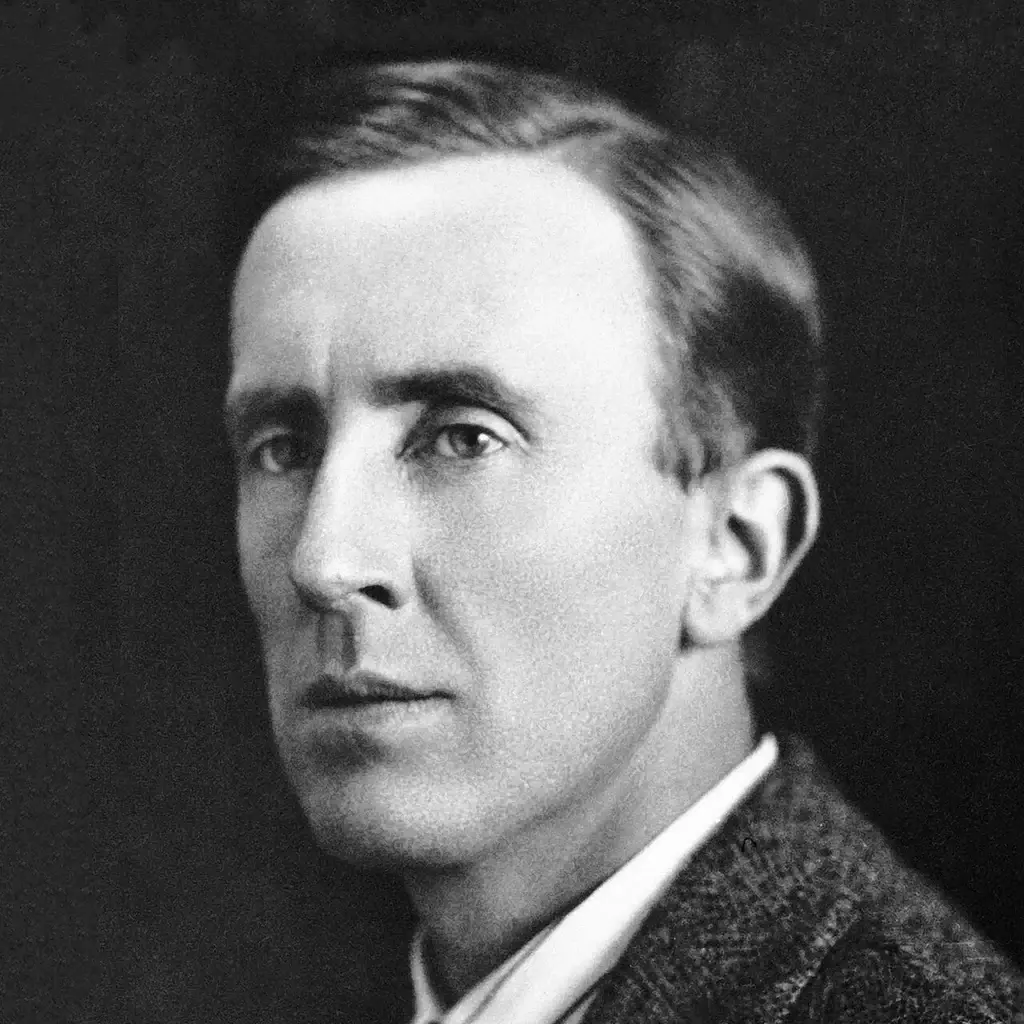
J. R. R. Tolkien was an English writer and philologist. “The Hobbit” explores what courage means for an unlikely burglar, following Bilbo Baggins to the Lonely Mountain and back.
Explore more books by J. R. R. Tolkien