What you'll learn
Key ideas from Humanly Possible
These ideas compress the book's argument without treating the author's view as settled fact. Use them as an orientation before reading the full work or listening in Wiseley.
Humanist confidence in human possibility must remain answerable to critiques of human weakness and human failure.
Botanical gardens and anatomical theaters gave scholars places to test texts against plants and bodies.
Sympathy offers an earthly basis for ethics by making shared feeling and general flourishing morally significant.
Universal humanity requires equal dignity alongside attention to differences in people’s lives and needs.
Bildung treats education as the ongoing development of human capacities through guidance, freedom, and engagement with the world.
Atrocity exposes the failure of education and cultivated taste to guarantee humane conduct, while leaving the case for humanism unresolved.
Humanism treats earthly life as a shared responsibility, not a disposable stage on the way to a speculative future.
Inside Humanly Possible
Read the first chapter in full here. The other 12 continue in the Wiseley app.
Chapter 1 of 13 · 6 min · Audio & text
Humanism as Connection
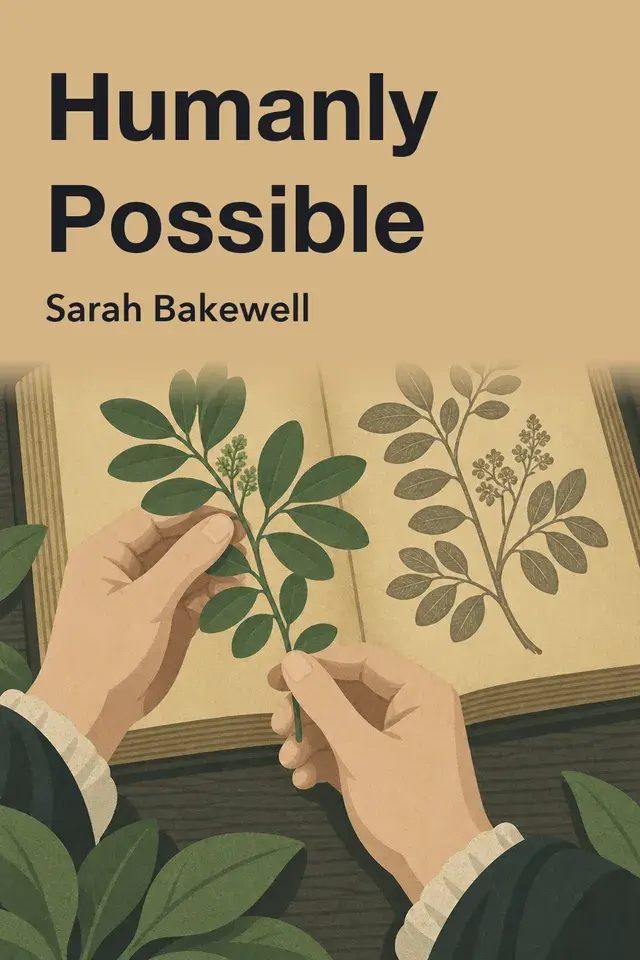
Humanly Possible, by Sarah Bakewell.
Humanism is easier to recognize as a family of related approaches than as a single creed. Its meanings overlap across philosophy, scholarship, education, personal conduct, and ethics. The common thread is attention to the human dimension of life: our relationships, choices, culture, thought, and responsibilities. Some humanists ground ethics in human well-being and empathy without religious belief. Others bring a human focus to life within a faith. Still others set divine questions aside or concentrate on the limits and possibilities of mortal life. Humanism therefore is not simply another word for atheism. Belief and disbelief do not, by themselves, determine whether someone trusts human agency or places it under a higher authority.
The case of Hamza bin Walayat shows why that distinction matters in practice. After leaving Islam and identifying as a humanist, he faced threats from his family and feared being killed if he were returned to Pakistan. British officials assessing his asylum claim asked him to define humanism and treated knowledge of Plato and Aristotle as a test. Humanists UK argued that humanism has no required canon or scriptures that every adherent must know. Hamza eventually won the right to remain, and the case led to humanist thought being included in assessor training. It reveals both the personal stakes of humanist commitments and the difficulty of fitting a varied outlook into a checklist of authorities.
The history that follows is deliberately selective. It concentrates mostly on Europeans across roughly seven centuries, in part because the people discussed responded to one another’s work. That choice does not make Europe the sole home or origin of humanistic thought. Ideas about human choices, relationships, and responsibility have appeared across cultures and periods. The book’s European sequence sits within that wider history, rather than standing for all of it.
Connection is one of the clearest shared themes. In the Southern African idea of ubuntu, a person becomes a person through other people. Desmond Tutu drew on ubuntu during South Africa’s transition from apartheid, emphasizing the repair of relationships between oppressors and oppressed rather than making revenge the center of reconciliation. The point is not that people exist only for one another, but that identity and responsibility take shape within human bonds.
Confucian thought offers another vocabulary for this ethical attention. Ren can mean humanity, benevolence, virtue, or ethical wisdom: the quality of becoming more fully humane. Shu describes reciprocity, often expressed as a test of whether we would want others to treat us as we treat them. These ideas make care a matter of fellow feeling and conduct toward other people, rather than obedience driven only by surveillance or fear of judgment.
Mencius gives this moral potential a concrete beginning. Imagine seeing a child in danger near a pond. The immediate impulse to rescue the child, he argues, is evidence of a natural moral seed. But an impulse is only a beginning. Reflection, experience, education, and widened perspective help develop it into a more considered way of living. Human potential is neither an achievement already complete nor a guarantee that people will act well. It has to be cultivated.
A modern British bus campaign offers a different expression of earthly focus. Its message suggested that uncertainty about God need not stop people from enjoying life. It drew on materialist and nonreligious strands that treat this life as the place for happiness, rather than waiting for certainty about what comes after death. Those strands belong within the larger humanist family; they do not define every form of humanism.
That family’s confidence in human possibility has always met resistance. Anti-humanist views stress human misery, weakness, folly, or corruption, and may argue that people need salvation or must submit to a higher authority. They can arise within religious traditions as well as political ones. Even a tradition can contain competing accounts: Mencius sees education as cultivating an inborn moral capacity, while Xunzi regards spontaneous human nature as bad and education as a way to reshape it. Christian thought, too, can praise human capacities as divine creation while also emphasizing original sin.
This argument is not a simple contest between optimism and pessimism. Criticism of human pride can expose cruelty and foolishness, and keep confidence from becoming complacency. Yet despair about human weakness can also turn people away from responsibility for life on earth. The book’s cautious humanism holds both ideas in view: people are fallible, but they can still do worthwhile things and improve the lives of others. That possibility is a reason for hope, not a promise that history will steadily improve.
Three connected commitments guide the account. Freethinking gives conscience, evidence, and responsibility priority over dogma resting only on authority. Inquiry applies study and critical reasoning even to sources treated as beyond question. Hope means that limited, imperfect people can create, learn, and help living beings. Together, these commitments ask what people can do for one another without pretending that human weakness has disappeared. They also explain why the book follows human beings and their connections, rather than treating humanism as a fixed doctrine.
Chapter 2 of 13 · 10 min · Audio & textIn the app
Recovering a Fragile Past
In the fourteenth century, political conflict, famine, and the plague made life and cultural memory feel precarious. Humanists answered that fragility by finding, copying, editing, translating, and sharing old books.
Chapter 3 of 13 · 9 min · Audio & textIn the app
Questioning Renaissance Authority
Renaissance humanism could treat the past as a source of authority while asking whether that authority had been honestly represented. Lorenzo Valla made this tension vivid.
Chapter 4 of 13 · 7 min · Audio & textIn the app
Testing Books Against Bodies
Medical humanism began with a practical question: what happens when a medical book’s description does not match the living world? Medicine drew on observation and research, but also on patients’ accounts, language, professional memory, and ideas about human beings.
Chapter 5 of 13 · 7 min · Audio & textIn the app
Education for an Open Life
For Erasmus, humanist learning was preparation for life among other people. Its aim was not merely to accumulate classical knowledge, but to form humanitas: the capacity to be at home in the world, make friends, act wisely, share knowledge, and treat others with consideration.
Chapter 6 of 13 · 7 min · Audio & textIn the app
Hope Without Providence
In 1755, Lisbon was struck by successive earthquakes, tidal waves, fires, and collapsing buildings. Tens of thousands died.
Chapter 7 of 13 · 6 min · Audio & textIn the app
Widening the Human Sphere
A promise of universal humanity raises a hard question: who has actually been included? Many earlier humanists spoke of shared human worth while reserving the fullest meaning of humanity for white, able-bodied, gender-conforming men.
Chapter 8 of 13 · 7 min · Audio & textIn the app
Freedom to Unfold
The question now is what helps human capacities develop. The German ideal of Bildung describes education as the unfolding of a many-sided person through learning and engagement with the world.
Chapter 9 of 13 · 7 min · Audio & textIn the app
Meaning After Religious Certainty
In the Victorian decades, geology, paleontology, and Darwinian evolution changed the scale on which people understood human origins. An Earth older than the Bible implied contained species that had vanished, while Darwin described life changing through inherited variation and natural selection.
Chapter 10 of 13 · 7 min · Audio & textIn the app
Hope Made by Hand
A language can mark a boundary even when people share a street. In Białystok, Russian, Polish, German, and Jewish communities lived amid mistrust, and Jews faced the greatest oppression.
Chapter 11 of 13 · 7 min · Audio & textIn the app
When States Remake People
Fascism did not simply promise a different government. It set out to remake what people valued and how they understood themselves.
Chapter 12 of 13 · 8 min · Audio & textIn the app
Rebuilding a Shared World
The war’s end did not restore the civility humanists had hoped for. Nuclear weapons, Cold War hostility, and continuing repression left the question of human possibility unresolved.
Chapter 13 of 13 · 8 min · Audio & textIn the app
A Humanist Practice for Now
The practical question left by this history is how a humanist ethic should shape life now. Bakewell presents humanism as a positive commitment to the lives people share, rather than a creed defined only by what it rejects.
Chapter 1 of 13 · 6 min · Audio & text: Humanism as Connection
Wiseley supports reading and listening to summaries in the app.
Continue in WiseleyAbout Sarah Bakewell
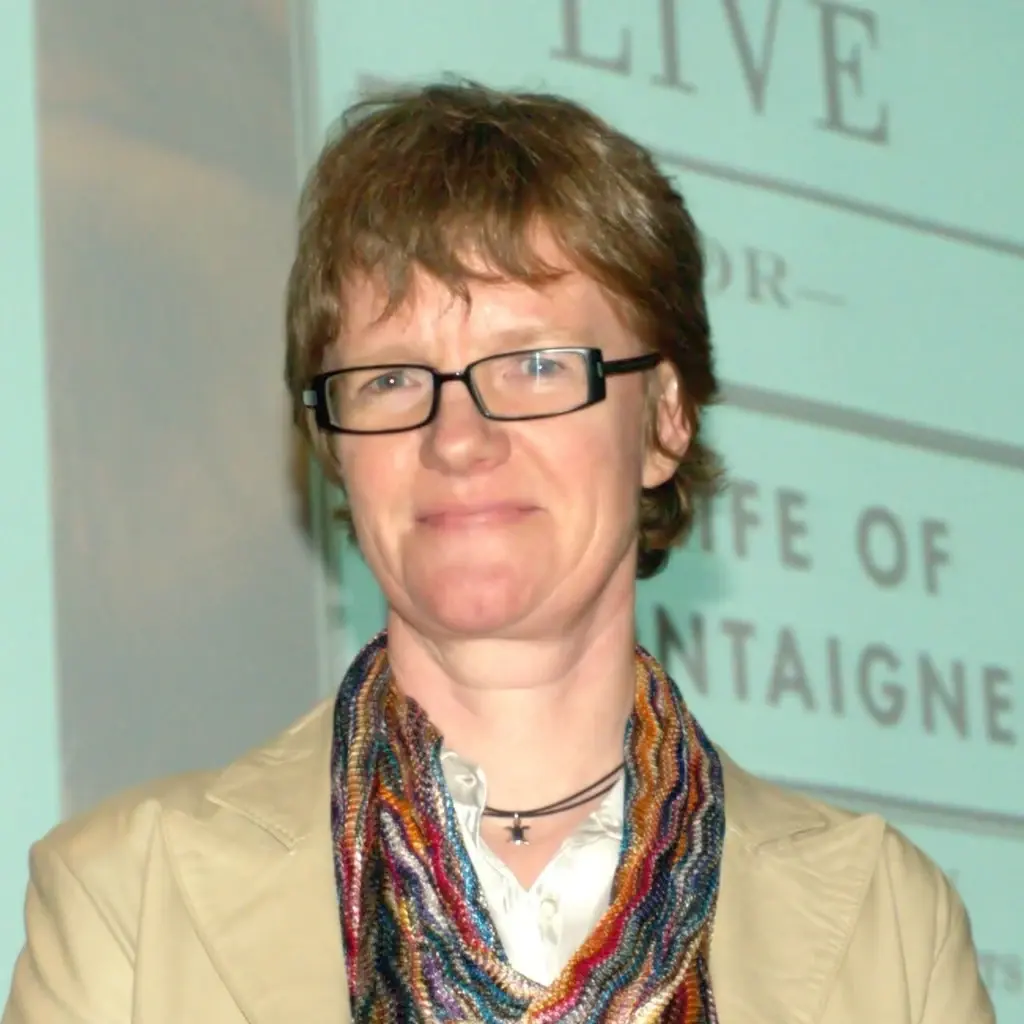
Sarah Bakewell is a British author. “How to Live” explores the life and ideas of Michel de Montaigne as a way of thinking about how to live.
Explore more books by Sarah Bakewell