What you'll learn
Key ideas from The Light We Give
These ideas compress the book's argument without treating the author's view as settled fact. Use them as an orientation before reading the full work or listening in Wiseley.
A chosen response can preserve agency, but it neither guarantees safety nor replaces accountability for racist harm.
Chardi kala and gratitude sustain hope by turning attention toward connection and what supports joy, even when pain and circumstances remain.
Recognizing a person’s humanity leaves their harmful choices and ideology open to condemnation.
Compassion can loosen hatred without denying harm or awaiting an apology, while justice and bridge-building continue.
Humility decenters ego while preserving equal self-worth, and generosity gives that humility a practical form.
Values become observable when time, attention, and choices match stated priorities.
Seva revises the golden rule through listening and weighs action by its intentions, methods, and meaningful outcomes.
Inside The Light We Give
Read the first chapter in full here. The other 9 continue in the Wiseley app.
Chapter 1 of 10 · 9 min · Audio & text
A Visible Life, A Chosen Response
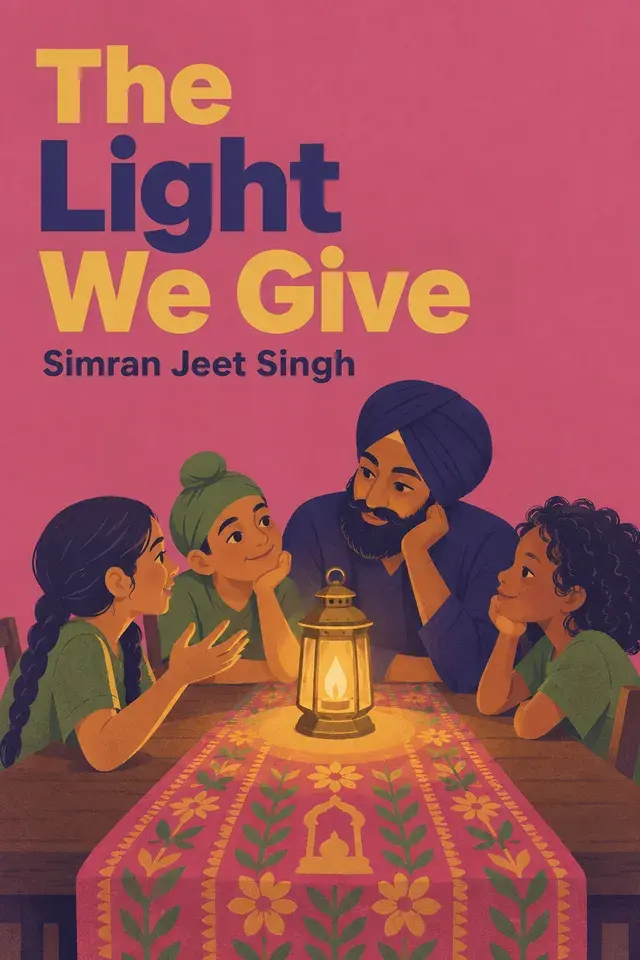
The Light We Give, by Simran Jeet Singh.
Simran Jeet Singh grew up feeling at home in Texas and knowing that other people did not always see him as belonging there. His Sikh identity was visible in his turban and uncut hair. That visibility brought curiosity, friendship, and moments of welcome, but it also drew suspicion and racist attention. His childhood stories show that responding to such treatment was never a simple choice between courage and fear. He was learning how to protect his dignity and stay connected while judging what was safe in each moment.
For Singh, the turban is part of his body and identity, and a public commitment to Sikh values. He began wearing one as a small child, after his hair grew long enough to wrap. His mother prepared his hair and tied his patka before school. He and his brothers sometimes helped one another retie theirs. Singh explains that “Sikh” means student: being Sikh involves trying to practice the tradition’s teachings in daily life. His family’s Sikh faith was not an accessory to their lives in Texas; it shaped how they understood themselves and what they hoped to pass on.
That identity carried a family history of migration and displacement. Singh’s grandparents lived in western Punjab when Partition divided the region in 1947. They became refugees, leaving possessions behind as they moved east. His father later left India at twenty-one to pursue an engineering doctorate at Drexel. He had only eleven dollars, and an omelet during a Paris layover reduced what remained. His brother and a caring adviser helped him, but he still felt isolated in a place where few people knew about his faith. Discrimination and questions about his background led him to reflect on why he wore a turban and how to preserve Sikh life in a new country.
Singh’s father arrived in the United States for graduate study in 1974. After marrying in 1980, his mother joined him, and they made a home in San Antonio. His parents had left India seeking freedom and opportunity for their children, following his grandfather’s advice that his father pursue an education in the United States. Both families had already lived through displacement. Singh describes belonging as something shaped by that inheritance, but also by the home his parents built. He considers the United States home, yet has often been treated as an outsider. India, meanwhile, does not feel like a natural or safe home for him and his community.
His childhood in Texas was not defined only by racism. Singh remembers a secure neighborhood, diverse neighbors, friends, sports, and ordinary interests. He and his brothers felt like American boys, even as their turbans made them stand out. Their parents taught them to explain politely that the turban covered hair kept uncut as part of their faith. The family also gave school presentations about Sikh and Punjabi traditions. Singh felt ambivalent: sharing could be enjoyable, but it also placed the work of easing other people’s discomfort on the family. And explanation did not always stop bullying. His brother Harpreet tried to explain his turban to a classmate who mocked him, without ending the harassment.
A soccer referee made that pressure stark when Singh was eleven. The referee called him a terrorist, made bomb-related slurs, and demanded to pat down his turban. Singh leaned forward and complied because he wanted to play. He was a child, he later emphasized, not someone making a principled choice to stay calm. Afterward, he felt angry at the referee and at himself for not standing up to him. Family conversations helped him see the encounter as a lesson, and he promised himself that he would respond differently next time.
Less than a year later, a friend made a racist joke and pulled off Singh’s turban. Remembering his promise, Singh punched the friend repeatedly and injured him. The group did not discuss what had happened afterward. Singh was left wondering whether he had overreacted and what an appropriate response might have been. The contrast between complying at the soccer field and fighting his friend did not produce an easy answer. It showed how anger, fear, humiliation, and the wish to defend oneself can pull in different directions. Neither reaction gave him a clear guide for the next encounter.
His parents often urged the boys to keep their composure and walk away. Singh did not always agree, but later understood this advice as a way to reduce the chance of a fight or further danger. Humor offered another response as he and his brothers grew older. They sometimes answered stereotypes and slurs with sharp jokes, or played with outsiders’ assumptions. Humor could challenge hostility or break its force, but it was not a duty or a reliable shield. Their experiences also showed the limits of asking targeted people to educate everyone around them. Society, Singh argues, has a responsibility to embrace difference rather than make families prove they are harmless.
Isolation was not the whole story, either. His brothers helped him feel less alone, and friends, teammates, teachers, and coaches sometimes stood with them. When an opposing coach challenged Darsh’s right to play basketball in his turban, Coach Maxwell publicly defended him. Darsh continued playing, later reaching college basketball. The moment mattered as more than an individual opportunity: an adult with authority refused to treat Sikh appearance as a reason for exclusion. Support did not erase the prejudice, but it changed what the brothers had to face by themselves.
As an adult, Singh describes a wider range of possible responses. When it feels safe and appropriate, he may answer a racist remark with humor or apparent earnestness. Sometimes he ignores especially hateful comments and carries on. Calm, he says, comes through perspective and practice, not because racism is harmless. In another encounter, an older woman fell near his apartment and recoiled from his help, telling him to go back where he came from. He called others over and stayed to help her reach safety. That choice expressed care without requiring him to mistake her hostility for kindness. It is one example of what he chose in that situation, not a script others must follow.
A lantern parable offers a modest way to think about what one person can do. As darkness spreads, one lantern lights its own corner; another may follow, and then another. The first lantern does not control whether others join or claim to light the whole world. Its work matters because it meets a need within reach. Singh connects this image to service, which becomes a fuller practice later in the book. Here, the story previews an ethic of acting locally without assuming that one person can carry every burden or guarantee the outcome.
Taken together, these memories establish the judgment involved in living visibly Sikh amid racism. A person might comply, speak, joke, leave, stay calm, ask for help, or offer care. Which response makes sense depends on the person, the danger, and what is at stake. Singh’s experiences do not turn any one response into a cure or an obligation. They show the personal and family stakes behind the questions he continues to ask: how to protect dignity, preserve connection, and act without pretending that every encounter has a safe or satisfying answer.
Chapter 2 of 10 · 9 min · Audio & textIn the app
From Endurance to Public Responsibility
After September 11, the danger Singh’s family had feared became immediate. His mother brought him and his brothers home from school and locked the door.
Chapter 3 of 10 · 9 min · Audio & textIn the app
Feel Pain, Practice Hope
The massacre at the Sikh congregation in Oak Creek brought Singh’s grief together with a familiar experience: being visible, yet misunderstood. In news coverage, reporters misidentified the gurdwara as a mosque or Hindu temple and described Sikhism as a sect of Islam.
Chapter 4 of 10 · 8 min · Audio & textIn the app
See Humanity Without Excusing Harm
After the Oak Creek massacre, Singh’s anger at the killer, Wade Michael Page, felt morally clear. But he began to notice that calling Page evil was changing the way he saw him, and himself.
Chapter 5 of 10 · 7 min · Audio & textIn the app
Connection That Honors Difference
Singh’s third insight is that connection begins with shared worth, but it cannot ask people to hide what makes them distinct. A minister friend advised him to look past differences and recognize the humanity at everyone’s core.
Chapter 6 of 10 · 8 min · Audio & textIn the app
Love Grows Through Daily Practice
When Singh’s daughter was born, he encountered a love that felt new, powerful, and difficult to put into words. He had loved people before; the new experience did not make those bonds false.
Chapter 7 of 10 · 10 min · Audio & textIn the app
Love Beyond the Centered Self
Singh began to question the limits of self-focused love after two ankle injuries ended his soccer career at Trinity. The first fracture sidelined him before his season began.
Chapter 8 of 10 · 9 min · Audio & textIn the app
Make Values Visible in Daily Life
Values become useful when they can be seen in the way we spend our time and make choices. Someone may say that family, health, or honesty matters most.
Chapter 9 of 10 · 11 min · Audio & textIn the app
Practice Courage, Creativity, Discipline
Knowing what matters is a beginning; living by it takes practice. Singh describes authenticity as alignment between thought, speech, and action.
Chapter 10 of 10 · 11 min · Audio & textIn the app
Service as Love in Action
Seva brings the book’s account of love into daily practice. Singh describes it as service shaped by love and selflessness: worship expressed through the hands, and a way to make care real.
Chapter 1 of 10 · 9 min · Audio & text: A Visible Life, A Chosen Response
Wiseley supports reading and listening to summaries in the app.
Continue in WiseleyAbout Simran Jeet Singh
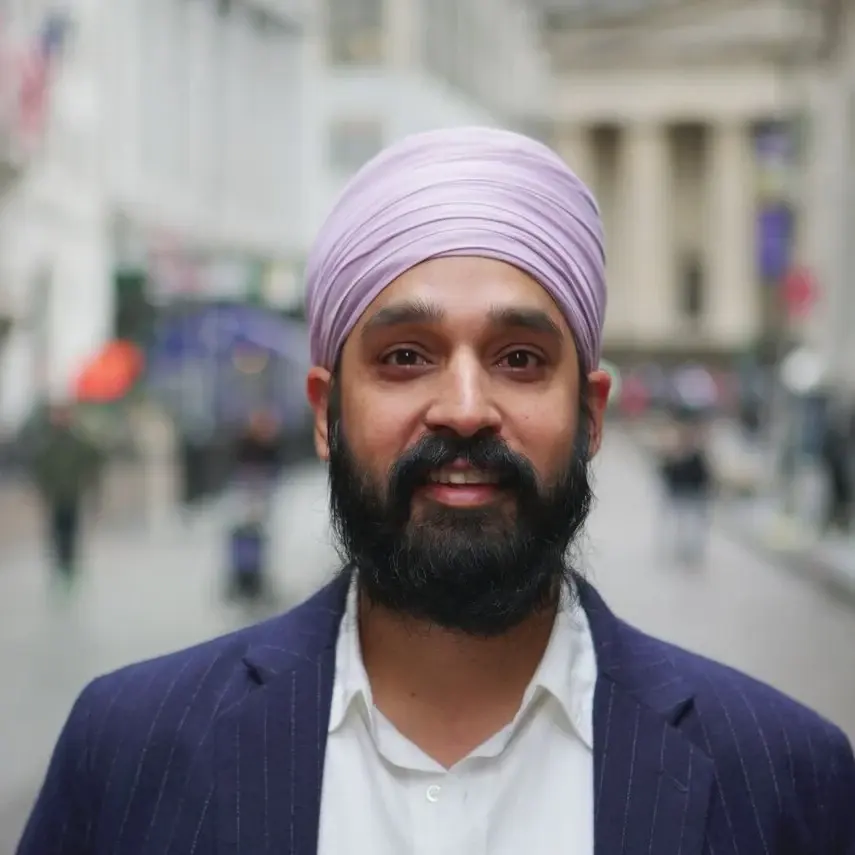
Simran Jeet Singh is an American educator, writer, and activist. “The Light We Give” explores how Sikh teachings can guide a response to exclusion and a life of justice.
Explore more books by Simran Jeet Singh