
Before reading: give the book a job
Start by setting a limit on what you are trying to keep. You will not remember a whole book, and a method that promises you will is selling something. Aim instead for the argument, the evidence behind it, and the places it does not apply.
Then give the book a job. Write one question the book might help answer and one decision or capability that would make the reading useful. Scan the contents and introduction to see how the author intends to build the argument. This is not permission to skip whatever fails to confirm your goal; it gives your attention a working hypothesis and makes surprise visible.
- Question: what do I want to understand?
- Use: what might I decide, explain, or practice differently?
- Counterpoint: what would make the author’s answer incomplete?
During reading: close the page before taking notes
At the end of a meaningful section, look away and write the main claim in your own words. Add the mechanism or evidence, then reopen the source and correct what you missed. Copying a sentence records the author’s availability, not your understanding. Keep quotations rare and clearly marked. A useful chapter note can fit into four lines: claim, support, limit, and question. If you cannot produce the claim, reread a smaller section rather than highlighting more.
- Claim: what is the author asking me to believe?
- Support: why does the author think it is true?
- Limit: where may it not apply?
- Question: what remains unclear or contestable?
One worked example: the easy-action chapter of Atomic Habits
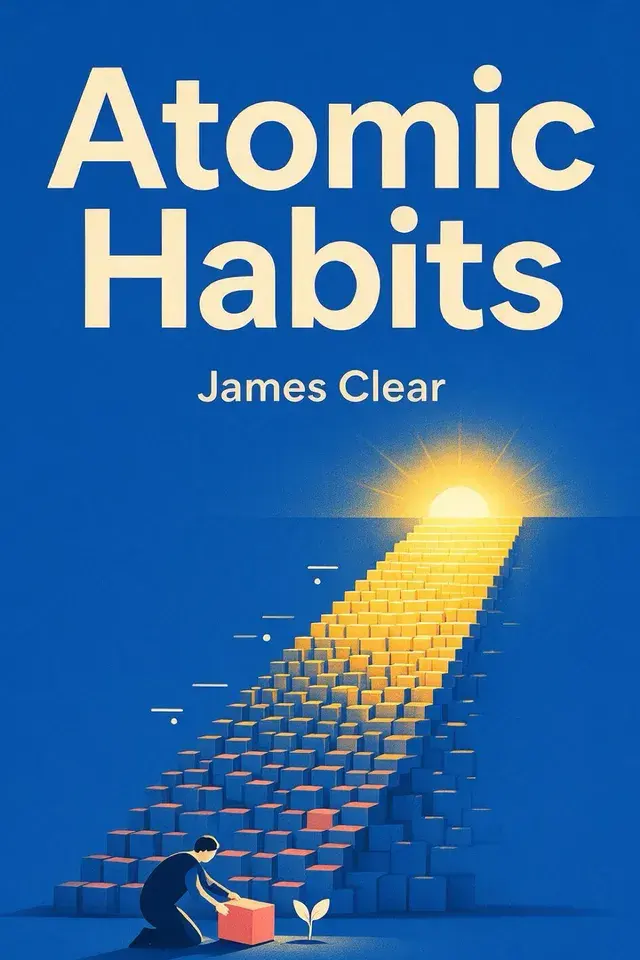
Here is the method run once, by a Wiseley editor, on the chapter of Atomic Habits in which James Clear argues that a behavior has to be easy enough to begin. The question going in was narrow: why does preparing to write feel like progress when no draft appears?
Page closed, the recall was this, in the editor’s own words: Clear separates motion from action. Motion is planning, researching, and choosing a tool; action is the behavior that produces the outcome. Motion feels safe because it cannot fail. The fix is to make the first repetition small enough to start.
Reopening the chapter corrected two things. Clear puts at least as much weight on friction and environment as on size: preparing the environment matters most when motivation is low, and commitment devices and automation shape later choices by raising or lowering barriers in advance. And his small starting behaviors are about establishing the practice of showing up before the full behavior is scaled, which the recall had flattened into make it smaller.
The connection is Wiseley’s own, not Clear’s: our weekly research block reliably produced notes and no draft, because every session began with choosing what to read. Moving the choice to the end of the previous session removed the setup, and the block started producing paragraphs. Ten days later the review prompt was one line — motion or action? — and answering it from memory took under a minute.
- Question: why does preparation feel like progress?
- Recall: motion versus action, written with the book closed.
- Correction: friction, environment, and commitment devices, not only size.
- Use and revisit: one changed work block, reviewed ten days later.
Check the recall before you trust it
A recall that feels fluent is not the same as a recall that is right. Reopen the section and mark three things: what you dropped, what you added, and what you changed. Then check attribution — is this claim the author’s, or your extension of it? Most errors are quiet ones, where a qualification goes missing and the idea sounds stronger than the book made it.
- Dropped: the qualification or condition you left out.
- Added: your inference, kept but labeled as yours.
- Changed: the word the author would not have used.
After reading: retrieve and use
The next day, write the book’s argument without opening your notes. Compare, repair, and choose one application small enough to observe. A practical book may suggest an experiment; a history or science book may change a question, comparison, or explanation rather than a habit. Schedule one later review of the questions you missed. The goal is not permanent recall of every detail. It is a reliable path back to the ideas, evidence, and limits that matter.
- One-paragraph argument from memory.
- Three ideas worth retrieving later.
- One application or new question, with a date to review it.
Sources and scope
Book ideas are attributed to their authors. External evidence is linked directly when a claim needs more than the source book.
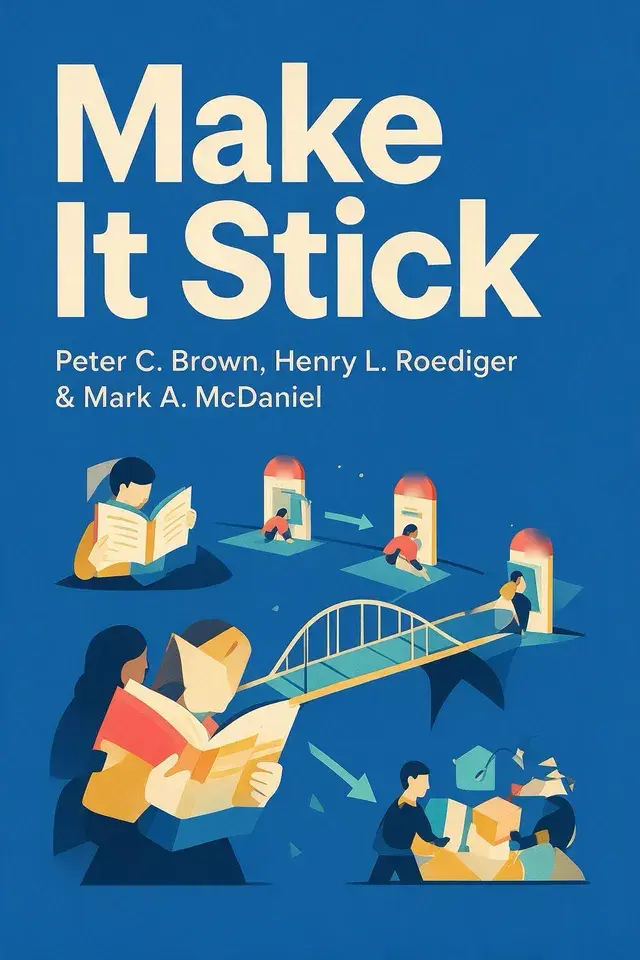
- Make It Stick: Grounds retrieval, spacing, feedback, and the distinction between familiarity and durable learning.
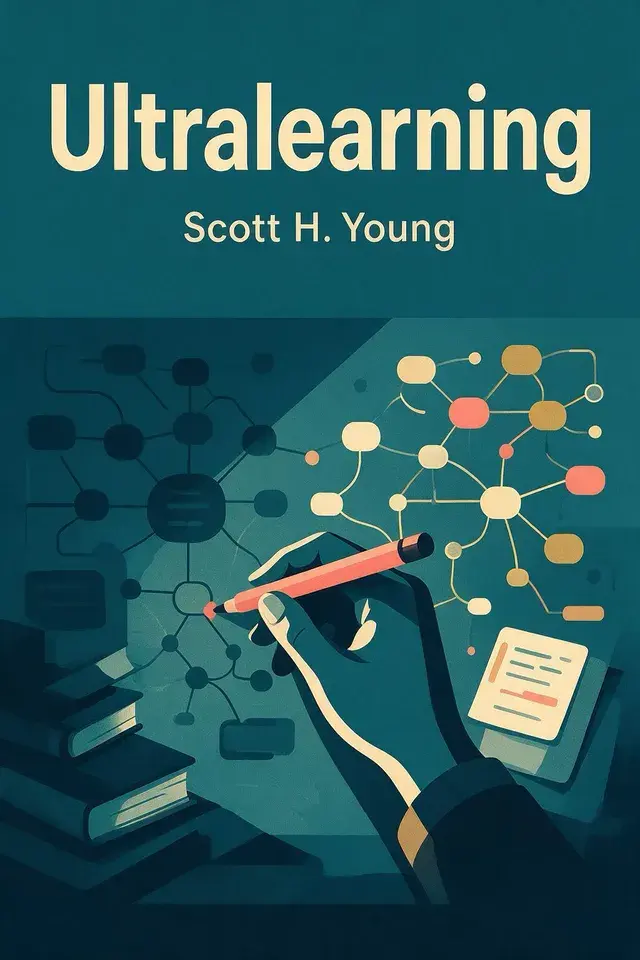
- Ultralearning: Grounds direct practice, feedback, purposeful projects, and focused skill acquisition.
- Atomic Habits: The worked example: James Clear’s separation of motion from action, and his treatment of friction, environment, and commitment devices.
- Reading — Academic Skills toolkit — UNSW Sydney — Academic Skills
To report a factual, attribution, rights, or accessibility concern, email hello@wiseley.app.
Questions readers ask
How do I remember what I read?
Read with a question in mind, stop at the end of a section and state the claim with the page closed, then reopen the book and correct what you missed. Schedule one later review of the parts you could not reconstruct. You will still forget most of the detail; the point is to keep a reliable route back to it.
Should I highlight while reading?
Highlight sparingly after deciding why a passage matters. A highlight is most useful when paired with a note that states the claim or question in your own words.
Do I need to remember the whole book?
No. Aim to reconstruct the central argument, locate important evidence, and retrieve the ideas relevant to your purpose. Good notes are an index back into the work, not a second copy of it.