
What you'll learn
Key ideas from Siddhartha
These ideas compress the book's argument without treating the author's view as settled fact. Use them as an orientation before reading the full work or listening in Wiseley.
Siddhartha’s education, respected place, and family affection do not bring the inner peace he seeks.
Fasting, hardship, breath control, and meditation quiet Siddhartha’s sensations and desires for a time, but do not bring him lasting release.
After parting from Govinda, Siddhartha turns from flight and inherited roles toward learning himself and attending to the visible world.
Worldly success does not give Siddhartha the human bonds he envies, while fear and greed grow familiar to him.
Om interrupts Siddhartha’s attempted drowning, and sleep is followed by a renewal he understands through lived experience.
A parent’s devotion cannot live, suffer, or discover a path in place of a child.
The river gathers distinct lives and opposing joys and pains into one present whole, heard as Om.
Inside Siddhartha
Read the first chapter in full here. The other 7 continue in the Wiseley app.
Chapter 1 of 8 · 5 min · Audio & text
The Thirst Beneath Learned Faith
Siddhartha, by Hermann Hesse.
Siddhartha grows up in a respected Brahman household, surrounded by sacred learning and the affection of his family. He studies with his father and other wise men, learns ritual and meditation, and practices reflection and debate with his friend Govinda. People admire him: his father expects him to become a great sage and priest, and Govinda sees in him a spirit worth following. Siddhartha has the gifts and place that others might consider a fulfilling life. Still, he feels no lasting joy or inner peace. The respect around him cannot answer the restlessness within him.
His unease does not begin as a rejection of his tradition. Siddhartha knows its teachings and takes them seriously. But he wonders whether the practices he has learned reach the source of his distress. Water used for ritual cleansing, he thinks, cannot by itself wash away sin or quiet inner fear. Sacrifices and invocations may honor the gods, yet he asks whether they are enough, or whether there is a more fundamental way to seek truth. These doubts remain questions in his mind. He has not established that the practices are false; he cannot feel that they have given him what he seeks.
That search turns toward Atman, the innermost self that Siddhartha understands as indestructible and bound up with the universe. He tries to identify it within himself, but cannot find it in the body, in thought, or in consciousness as he ordinarily experiences them. His question is not simply what the self is called. He wants to know how to reach it and make its truth real in his own life. The learned answers around him describe what matters, but description has not yet become realization for him.
Siddhartha’s meditation gives this longing a vivid image. He silently recites Om and imagines the soul as an arrow aimed at Brahman. Om is the bow, the soul the arrow, and Brahman the target toward which the arrow must be sent with concentration. The image expresses both the direction of his desire and the distance he feels remains. He is not content merely to repeat that the innermost self is one with the whole. He wants to experience that truth directly.
The Upanishadic verses he remembers carry great authority for him. They speak of the soul as the whole world and of deep sleep as a return to the innermost self. Siddhartha values this wisdom, yet asks a further question: has anyone shown what it means to live that knowledge while awake, in action and speech? He can name the teaching, but he cannot point to someone whose life clearly answers his question. His concern is not that scripture contains nothing true. It is that he does not know whether its truth has been fully embodied by the people who teach and honor it.
This uncertainty reaches into his view of his own father. Siddhartha admires his father’s purity, conduct, and wisdom. Yet he notices that his father continues to seek and to perform daily cleansing. If the teaching has brought peace, Siddhartha wonders, why does the search continue? He does not dismiss his father’s goodness or claim to know that his father has failed. Instead, the question makes his own need harder to ignore. The wisdom he respects has not shown him how to quench the thirst he feels within himself.
When Siddhartha sees three solitary Samanas passing through town, he decides that he will leave and join them. He tells Govinda, who recognizes that Siddhartha has chosen his own path and wants to accompany him. The decision makes the inward question consequential: Siddhartha is prepared to leave the secure life his family and community have shaped for him, though he does not yet know where his search will lead.
He tells his father that he wants to leave. His father is indignant, but Siddhartha remains standing and waiting. Through the night, his father returns to him, distressed by the fixed resolve he sees. Siddhartha’s knees tremble with the strain, yet he does not withdraw his request. By dawn, his father understands that his son has already left inwardly. He consents, asking Siddhartha to return if he finds bliss and teach him, or to return disappointed so they can again make offerings together. The father’s hope leaves both possibilities open. At daybreak, Govinda joins Siddhartha, and the two depart together. Siddhartha leaves not because he has disproved Brahman teaching, but because inherited knowledge has not yet satisfied his desire to experience spiritual truth for himself.
Chapter 2 of 8 · 6 min · Audio & textIn the app
Asceticism and the Returning Self
Siddhartha and Govinda take up the Samanas’ discipline. Siddhartha gives his garments to a poor Brahman and eats only once a day.
Chapter 3 of 8 · 6 min · Audio & textIn the app
Gotama’s Example and Siddhartha’s Choice
In Savathi, households were prepared to fill the alms bowls of Gotama’s disciples, and the rich merchant Anathapindika had given the Jetavana grove to Gotama and his people. When Siddhartha and Govinda reach the grove, they find a place to stay and rest until morning.
Chapter 4 of 8 · 6 min · Audio & textIn the app
Entering Desire and Exchange
As Siddhartha enters city life, he begins to pursue love and worldly aims while listening for an inward direction. Desire does not make him obey every impulse.
Chapter 5 of 8 · 7 min · Audio & textIn the app
When Wealth Becomes a Game
As Siddhartha settles into commerce and comfort, the disciplines he brought with him fade gradually. His habits of thought, patience, and self-command keep turning for a time, like a potter’s wheel that continues after the potter has set it spinning.
Chapter 6 of 8 · 6 min · Audio & textIn the app
Renewal and the River’s First Lessons
When Siddhartha returns to the river, his worldly life feels exhausted and unbearable. He wonders whether anything remains to be tried and moves toward drowning himself.
Chapter 7 of 8 · 6 min · Audio & textIn the app
Love, the Son, and Letting Go
After Kamala’s death, Siddhartha tries to give his son a safe home beside the river. The boy is grieving, withdrawn, and unwilling to accept this new life.
Chapter 8 of 8 · 10 min · Audio & textIn the app
Many Voices in One Present
Siddhartha’s separation from his son does not immediately bring peace. The wound of love still burns, and the sight of parents with their children sharpens his envy.
Chapter 1 of 8 · 5 min · Audio & text: The Thirst Beneath Learned Faith
Wiseley supports reading and listening to summaries in the app.
Continue in WiseleyAbout Hermann Hesse
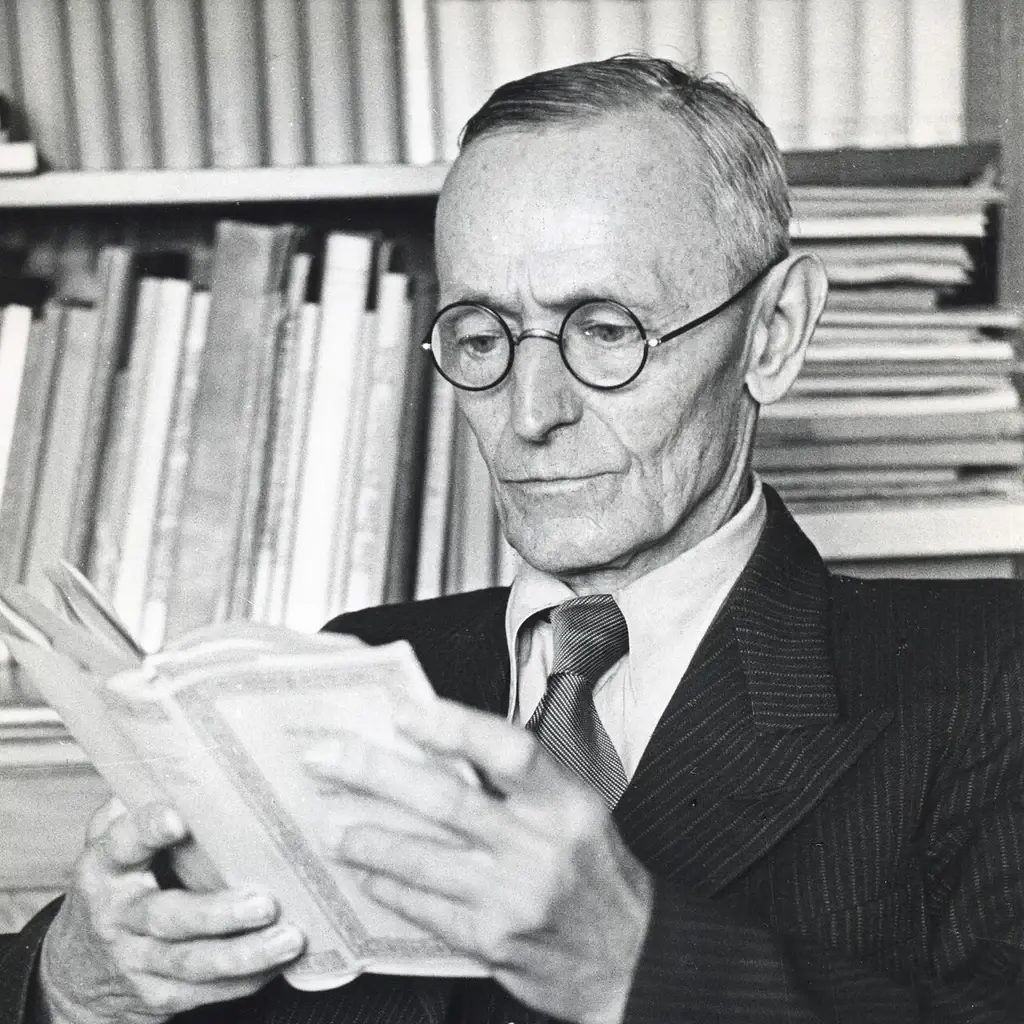
Hermann Hesse was a German-Swiss novelist and poet. “Siddhartha” explores whether wisdom can be transmitted as teaching or must be lived, through the journey of a young seeker.
Explore more books by Hermann Hesse