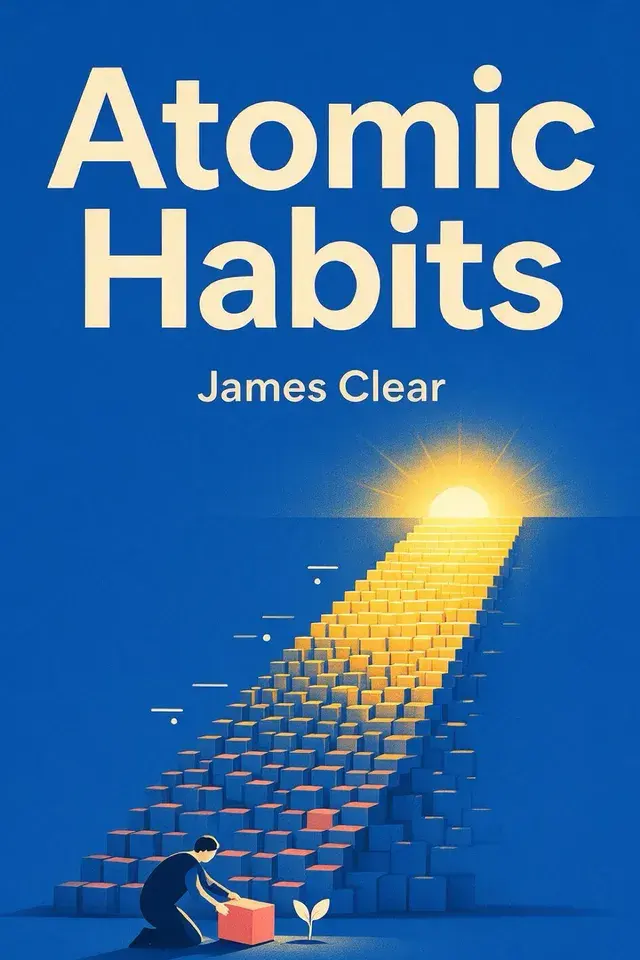
What Atomic Habits is about
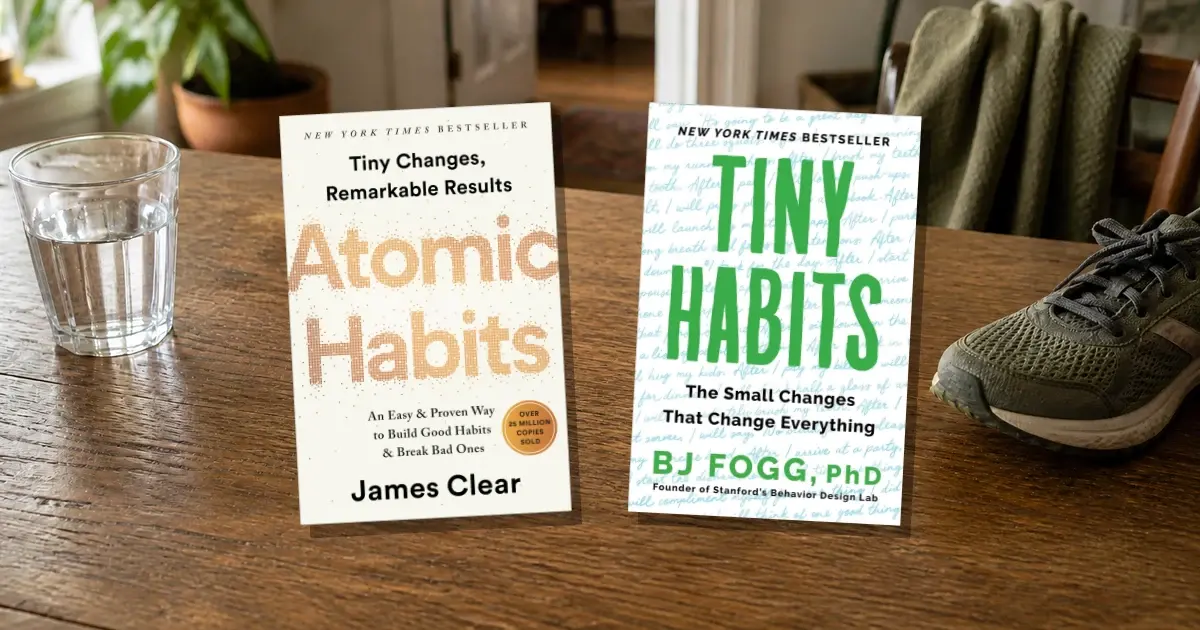
Atomic Habits is James Clear’s argument that lasting change comes from small behaviors repeated inside a system, not from a single dramatic decision. Clear works through identity, cues, craving, friction and rewards, then asks how a habit should be reviewed once it has become automatic. Wiseley’s summary follows that sequence chapter by chapter.
Clear’s central claim is that results lag behind the habits producing them, so the trajectory of a system tells you more than the score on any given day. He argues that goals set direction while systems organize the recurring processes that make progress sustainable, and that the most durable change happens at the level of identity: choose who you intend to become, then let small actions accumulate as evidence of that person.
From there he organizes behavior into cue, craving, response and reward, and turns each stage into a design instruction: make a habit obvious, attractive, easy and satisfying, and invert those instructions for a habit you want to interrupt. Clear treats environment and friction as more reliable levers than motivation, and he expects interruptions rather than perfection. In his account, recovering quickly after one missed day protects continuity better than demanding an unbroken streak.
What you'll learn
Key ideas from Atomic Habits
These ideas compress the book's argument without treating the author's view as settled fact. Use them as an orientation before reading the full work or listening in Wiseley.
Small daily gains can compound into large long-term differences, while equally small declines can move a life toward worse outcomes.
Goals set direction, but systems organize the recurring processes that make progress sustainable.
Durable identity change follows two steps: choose who to become, then accumulate small actions that provide evidence of that identity.
Implementation intentions and habit stacking replace vague intentions with clear cues tied to time, place, or an existing behavior.
Reducing friction and preparing environments makes desired actions easier when motivation is low.
Immediate rewards make beneficial habits repeatable when their larger outcomes remain distant, while immediate costs weaken behaviors with attractive short-term payoffs.
Because interruptions are inevitable, rapid recovery after one lapse protects continuity more reliably than demanding an unbroken streak.
A Wiseley example: designing an evening walk
Wiseley editors wrote this example to show one way to use James Clear’s argument. It is not taken from the book.
Say the habit is a walk after work. Obvious: the shoes sit by the door you actually use, and the walk is stacked onto something that already happens, such as closing the laptop. Attractive: one podcast you look forward to is saved for the walk and nothing else. Easy: the smallest honest version is a walk to the corner and back, which still counts. Satisfying: the day gets a mark on a paper calendar by the door.
The design also has to survive a bad day. Our rule follows Clear’s: when the walk is missed, the next day is the short version, so one gap does not become a pattern. This is an illustration of how the four laws can be arranged, not a claim about what it will do for you.
How Atomic Habits builds its case
Follow how the book develops its argument. Each note is a brief orientation, not a replacement for the chapter.
Small Changes, Lasting Results
Atomic Habits begins with a change in scale. Lasting results rarely come from one dramatic decision.
Identity Is the Engine
Once habits are viewed as systems rather than isolated acts, a deeper question appears: what kind of person is that system building? Clear describes three layers at which change can occur.
Make Good Habits Obvious
Once a behavior feels automatic, the useful question is not whether you are motivated. It is what happened just before it.
Make Habits Attractive
An obvious cue does not automatically produce a habit. It becomes compelling when it predicts an attractive outcome.
Make Action Easy
Once a cue is visible and a behavior feels desirable, the decisive question is whether it is easy enough to begin. Clear separates motion from action: planning, research, and strategy may prepare the way, but they do not produce outcomes.
Make Progress Satisfying
An established habit still has to compete with the timing of its consequences. Exercise, saving, studying, and careful eating may pay off later, while distraction or indulgence can feel rewarding immediately.
Practice, Review, Adapt
Once habits are established, the problem changes. Repetition can make useful behavior effortless, but automaticity can also hide small errors.
Read it with these limits in mind
- Clear writes about individual behavior. The book does not address the structural causes, from illness to caregiving load to unstable work, that make a repeatable routine hard to hold in the first place.
- The mechanisms arrive through research summaries and anecdotes. Treat specific study claims as the author’s reading of the evidence rather than settled science.
- Habit design suits behaviors you can repeat on a schedule. It says much less about one-off decisions, complex skills, or work that needs judgment rather than consistency.
- The identity framing cuts both ways. Clear notes himself that rigid self-descriptions can preserve unwanted behavior, so the lever that builds a habit can also lock one in.
Who it helps, and when to read the whole book
Atomic Habits tends to be most useful to:
- Readers who can already name the behavior they want and keep failing to repeat it.
- Anyone who wants a vocabulary, cue and craving and response and reward, for diagnosing why a routine collapses.
- People redesigning a desk, a kitchen or a phone so the default choice is the intended one.
Read the complete book when:
- You want the extended case studies and the research Clear cites behind each of the four laws.
- You are planning a long stretch of change and need the later chapters on deliberate practice, boredom and reviewing an automatic habit.
- You want his material on matching habits to temperament and keeping a challenge at the right level of difficulty.