What you'll learn
Key ideas from The Symposium
These ideas compress the book's argument without treating the author's view as settled fact. Use them as an orientation before reading the full work or listening in Wiseley.
Pausanias distinguishes common Love, centered on bodily gratification, from heavenly Love, directed toward fidelity and virtue.
Eryximachus extends the two kinds of Love to bodies and nature, where they can foster health or disorder.
The imagined fusion of lovers points beyond sexual satisfaction toward a shared, lasting life.
Socrates challenges praise that assigns Love every excellence without first establishing whether those claims are true.
Love is directed toward good and beauty; desire can seek more of a present good, its continuation, or goodness in another person.
Bodily fertility produces children, while spiritual fertility produces wisdom, virtue, art, and civic order.
The ascent widens love from one beautiful body to bodies, souls, laws, institutions, and forms of knowledge.
Alcibiades’ failed courtship reveals Socrates’ self-command and his own persistent, unsettled desire.
Inside The Symposium
Read the first chapter in full here. The other 8 continue in the Wiseley app.
Chapter 1 of 9 · 4 min · Audio & text
A Banquet Told Through Others
The Symposium, by Plato.
The Symposium reaches us through a chain of memory. Apollodorus is asked to recount the speeches at Agathon’s feast, though he was not there. His source is Aristodemus, a close companion of Socrates who attended. Aristodemus did not remember everything, and Apollodorus admits he retained only the parts that seemed most memorable. He says Socrates later confirmed some details, which supports parts of the account but does not restore a complete transcript. The feast took place years before Apollodorus knew Socrates, so the story remains a second-hand recollection.
These narrators are not neutral recording devices. Aristodemus is described as devoted to Socrates. Apollodorus says that philosophical conversation gives him pleasure and benefit, while he regards the pursuits of wealthy companions as empty. His companion describes him as harsh toward himself and nearly everyone else, with Socrates as the exception. Such preferences do not prove deliberate distortion, but they remind us that the banquet comes through people who care about its subject and judge its value. Apollodorus’s account is also selective by his own admission: what he repeats reflects what stayed with him.
The gathering itself shapes the conversation. The guests had drunk heavily the previous day, and several say they are not ready for another bout. They agree that each person may drink as much or as little as he wants. Then they send away the flute-girl and choose conversation. This is a lighter arrangement for a tired company, not a formal debate held apart from social life. The subject emerges from that change of pace and from a complaint raised by Phaedrus: Love has received less praise than other gods, heroes, and even salt.
Eryximachus turns Phaedrus’s complaint into a plan. The guests will take turns praising Love, with Phaedrus speaking first. Their assignment gives the speeches one shared subject, but it does not require them to agree on a definition or follow one method of argument. They are speaking at a banquet, where eloquence and memorable claims belong to the occasion. The common prompt makes their differences audible: each speaker can bring forward a different understanding of what makes Love worthy of praise.
The discussion of male attachments also belongs to a particular and varied social setting. The introduction connects some such bonds with education and shared life in places like gymnasia, political clubs, and military service. In some communities, an older companion could be expected to guide a youth in exercise and virtue. The account does not treat every relationship or region as alike, and it distinguishes educational attachments from licentious conduct. It also cautions that literary evidence is limited: comic, scandalous, or partisan portrayals cannot by themselves establish how people ordinarily lived. This context makes the speeches’ assumptions more legible without turning them into a general description of all Greek custom.
A useful way to hear the speeches is as varied rhetorical experiments that offer partial insights, not as steps in one settled proof. The introduction describes them as shaped by their speakers and as poetic or rhetorical rather than consistently dialectical. Some claims may be fanciful or playful, yet the speeches can still contain serious thought. Their shifts in manner and argument therefore matter: a speaker’s style helps determine which aspect of Love becomes visible and which remains unexamined. The introduction warns against imposing a tidy scheme on the sequence, since its categories belong to later interpreters, not necessarily to the dialogue itself. The frame leaves listeners to compare the speeches, weigh what each contributes, and keep their incompleteness in view.
Chapter 2 of 9 · 6 min · Audio & textIn the app
Courage, Conduct, and Worthy Love
Phaedrus treats Love as a force that changes what people are willing to do. A lover, he says, fears disgrace in the beloved’s eyes more sharply than ordinary appeals to family, wealth, or reputation can make him fear it.
Chapter 3 of 9 · 4 min · Audio & textIn the app
Love as Cosmic Regulation
Eryximachus accepts the distinction between two kinds of Love, then carries it beyond human attachment. He says Love is at work in animal bodies and earthly productions, and perhaps, he ventures, in all that exists.
Chapter 4 of 9 · 4 min · Audio & textIn the app
Longing for a Lost Whole
Aristophanes explains Love through a myth of division and repair. He offers it as a myth within his speech, not as history established by the dialogue.
Chapter 5 of 9 · 4 min · Audio & textIn the app
When Praise Becomes a Test
Agathon says the earlier speakers praised the benefits Love gives people without first describing Love himself. He proposes to consider Love’s nature before his works, and calls him the fairest and best among the blessed gods.
Chapter 6 of 9 · 6 min · Audio & textIn the app
The Lover Between Need and Wisdom
Socrates turns from praise to a question about what Love is directed toward. A father is a father of a child, and a brother is a brother of a sibling; similarly, Love is love of something.
Chapter 7 of 9 · 5 min · Audio & textIn the app
Making What Can Endure
Diotima now asks what it means to desire good forever when mortal creatures cannot remain forever in the same way. She answers that Love’s work is generation in beauty.
Chapter 8 of 9 · 4 min · Audio & textIn the app
The Ascent to Beauty Itself
Diotima’s ascent turns desire into an education of attention. The lover begins with a particular beauty, then learns to recognize beauty more widely, until the object of contemplation is no longer any single beautiful thing.
Chapter 9 of 9 · 5 min · Audio & textIn the app
Socrates Seen by Alcibiades
After Socrates has relayed Diotima’s teaching, Alcibiades arrives drunk with a noisy group and changes the subject. Instead of praising Love, he proposes to praise Socrates.
Chapter 1 of 9 · 4 min · Audio & text: A Banquet Told Through Others
Wiseley supports reading and listening to summaries in the app.
Continue in WiseleyWhat The Symposium is about
Set at an Athenian banquet and recalled through layers of testimony, Plato’s dialogue asks what Love is and what makes it worth pursuing. The speeches connect love with courage, ethical conduct, cosmic balance, and lost wholeness; Socrates recasts it as desire for lasting good, creative renewal, and beauty. Alcibiades tests that ideal through his attachment to Socrates.
About Plato
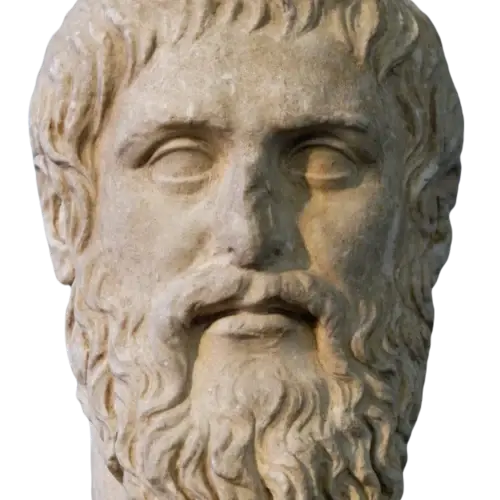
Plato was an ancient Greek philosopher. “The Republic” explores justice, education, and the organization of a good society through philosophical dialogue.
Explore more books by Plato