What you'll learn
Key ideas from The Book of Forgiving
These ideas compress the book's argument without treating the author's view as settled fact. Use them as an orientation before reading the full work or listening in Wiseley.
Forgiveness begins by facing injury and can restore agency without erasing truth, accountability, or safety.
A trustworthy witness listens without cross-examination, and direct contact remains optional when safety or receptiveness cannot be established.
A factual account names what happened; naming hurt reveals what the injury cost in safety, trust, dignity, belonging, or hope.
Understanding an offender’s history can open empathy while leaving responsibility for the harmful act intact.
Forgiveness leaves a decision about the future of a relationship: renewal in a new form or release when connection cannot support healing and safety.
A genuine apology names the wrong, expresses remorse, commits to preventing recurrence, and accepts that forgiveness may never come.
Self-forgiveness accepts responsibility and remaining amends while refusing to make the worst action a permanent identity.
Retributive justice centers state-controlled punishment, while restorative justice centers responsibility, victims’ needs, dialogue, restitution, and repaired relationships.
Inside The Book of Forgiving
Read the first chapter in full here. The other 7 continue in the Wiseley app.
Chapter 1 of 8 · 10 min · Audio & text
Choosing Freedom Without Denying Harm
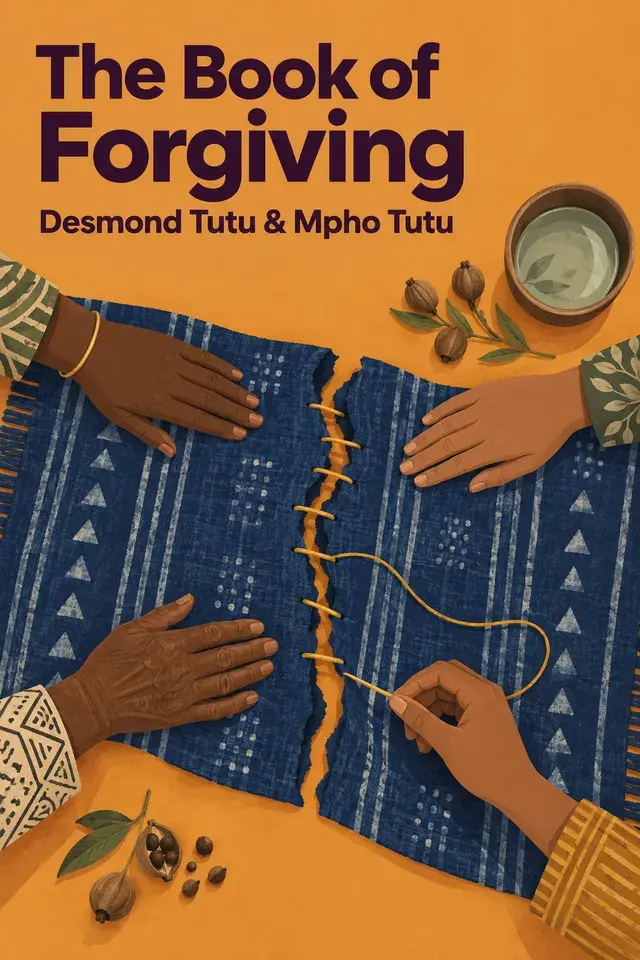
The Book of Forgiving, by Desmond Tutu & Mpho Tutu.
The Book of Forgiving begins with a difficult proposition: forgiveness can restore freedom after harm, but it must begin by admitting the harm. Desmond Tutu and Mpho Tutu do not ask readers to call abuse acceptable, erase loss, or manufacture peace. They present forgiveness as an active choice to face what happened and release the wish for revenge. It can change an injured person’s relationship to the past, but it does not reverse the event, remove accountability, or guarantee a particular outcome. The authors therefore offer a path, not a cure-all or a result anyone can promise.
South Africa’s transition shows why they treat forgiveness as more than a private feeling. After apartheid, the country faced the possibility that grievance would become revenge and retaliation. The Truth and Reconciliation Commission instead made public truth, healing, and forgiveness part of a possible future. Babalwa’s testimony gives that choice a human scale: she is willing to forgive even though the perpetrator remains unidentified and her grief is unresolved. Her willingness does not turn uncertainty into certainty or make the harm smaller. It shows that a victim’s first movement toward freedom need not wait for the offender’s cooperation. At the same time, the authors do not claim that a society’s wounds disappear simply because it chooses a different direction.
Ubuntu supplies the ethical bridge between the individual and the collective. In the South African philosophy as the authors present it, a person is a person through other people. Human dignity is relational: when one person is degraded, the damage reaches the shared human world, including the dignity of the person who causes the damage. A family estrangement can deprive younger generations of relationships; unresolved injury can therefore travel beyond its first scene. Forgiveness matters because it can interrupt that spread, not because it denies the original wrong.
The authors still begin with compassion for the injured person, not with a demand for saintliness. They validate anger and the desire to hurt back, and they say harms are not all equivalent. They also argue that no person is beyond forgiveness. Their reason for proposing forgiveness is practical and moral: retaliation does not lessen the original pain, and bitterness can leave the injured person tethered to the offender. Forgiving, in their account, is chiefly something the injured person receives. It takes back a measure of agency by refusing to let another person’s action decide the shape of the future.
That mechanism is pictured as two diverging cycles. Hurt may be physical, emotional, or social. In the Revenge Cycle, the person rejects vulnerability, turns sadness into anger, denies shared humanity, and imagines that dignity can be bought back by making the offender suffer. Dehumanization makes retaliation easier to justify. Yet retaliation creates more hurt, harm, and loss, giving the next person a reason to retaliate. Families, communities, and nations can carry this pattern across generations.
The Forgiveness Cycle begins at the same place: injury, anger, grief, and shame. Its first difference is acceptance. The injured person allows the pain to be real, gives it a story and a name, and can begin to see that the offender has a human story too. That recognition does not excuse the act. It weakens the belief that revenge is the only way to restore dignity. The cycle then opens toward release, while acknowledging that deep grief may move in waves rather than a straight line.
Onalenna’s family dispute makes conditional forgiveness understandable at an everyday scale. She wants an apology before forgiveness. That condition reflects a real desire for acknowledgment: remorse, restitution, and repair can make forgiveness easier and can help a harmed person feel repaid. But if forgiveness depends on the apology, the injured person remains tied to the offender’s choice. The stalemate can preserve mutual resentment. Tutu and Tutu’s alternative is unconditional forgiveness, described as a grace offered for the forgiver’s release. It does not make an apology unnecessary for accountability; it means the injured person need not postpone freedom until the offender changes.
This distinction clarifies three different wishes. Wanting revenge asks suffering to be answered with suffering. Wanting repair asks for truth, recognition, accountability, or restitution, without necessarily asking for renewed closeness. Becoming willing to forgive is different again. It is not pretending to be ready, abandoning justice, or promising reconciliation. It is a tentative readiness to stop making the offender’s next action the condition for one’s own movement. A person may still be angry, still want the harm recognized, and still need protection. Willingness simply leaves open a choice that revenge would close.
That is why forgiveness is not forgetting. The authors insist on factual truth, honest naming, and recognition that injury, abuse, betrayal, and violation were wrong. Their Christian image of healing preserves the evidence of wounds rather than pretending scars were never there. Forgiveness is also not excusing or condoning. It does not remove responsibility, consequences, or the possibility of justice. A legal pardon or amnesty is a public decision about punishment; it is not the same as an injured person releasing revenge. The authors note that public truth-telling can still expose crimes and alter a perpetrator’s standing. Finally, forgiveness is not automatically reconciliation. The path allows a relationship to be renewed or released.
The authors ground this argument partly in spiritual language. They describe forgiveness as grace and connect it with peace within and between people. Christian images help them express why healing can preserve truth rather than erase scars. Yet the Fourfold Path is also presented as an ancient, cross-cultural human practice. Religious belief is not made the entry ticket. The ethical starting point is shared humanity, truthful reckoning, and the freedom to choose.
Because forgiveness involves vulnerability, it must be voluntary and paced. The authors acknowledge that it may feel impossible when there is no apology, explanation, remorse, or change. Small injuries may be released quickly; severe injuries may require a long, repetitive, nonlinear process. No outsider has the right to prescribe the timetable. Forgiveness does not require direct contact, renewed intimacy, or exposure to further harm. A person can refuse retaliation while taking steps to prevent renewed injury.
To keep this work from becoming a slogan, the authors organize it as the Fourfold Path: Telling the Story, Naming the Hurt, Granting Forgiveness, and Renewing or Releasing the Relationship. The first step establishes what happened; the second distinguishes the event from what it cost. The third is the choice to release revenge when the past cannot be changed. The fourth leaves the future relationship open to renewal or release. The path is not a rigid ladder. Its purpose is to break a difficult movement into parts that can be approached with honesty and willingness.
The chapter’s foundation is therefore neither revenge nor forced reconciliation. It is agency joined to truth. A person can want the offender punished, want the harm repaired, and still be unsure about forgiveness. Becoming willing does not deny that uncertainty. It means recognizing that, even before the offender answers, the injured person may choose the direction of the next step. Freedom begins when the wound is faced without allowing retaliation to become its permanent author.
Chapter 2 of 8 · 9 min · Audio & textIn the app
Finding Words and Safe Witnesses
The first step toward forgiveness is to tell the story of what happened. This is not a demand to produce a perfect argument, prove every detail, or confront the person who caused the injury.
Chapter 3 of 8 · 10 min · Audio & textIn the app
Naming Loss Without Rushing Grief
The facts of an injury are not the whole injury. A factual account tells us what happened.
Chapter 4 of 8 · 10 min · Audio & textIn the app
Granting Forgiveness Through Shared Humanity
After a person has told what happened and named what it cost, the next movement is not pretending the injury was small. It is choosing what the injury will be allowed to govern.
Chapter 5 of 8 · 9 min · Audio & textIn the app
Renewing Relationships or Choosing Release
Forgiveness does not end with an inner decision to stop seeking revenge. In the authors’ Fourfold Path, a further question remains: what, if anything, should happen to the relationship shaped by the harm?
Chapter 6 of 8 · 9 min · Audio & textIn the app
Taking Responsibility and Seeking Forgiveness
When the person seeking forgiveness is the one who caused harm, the work begins in a different place. The offender cannot start with a demand to feel absolved or with an expectation that the injured person will make the past easier.
Chapter 7 of 8 · 9 min · Audio & textIn the app
Self Forgiveness Without Self Excuse
Self-forgiveness begins with a difficult distinction: accepting that you did harm is not the same as deciding that you are beyond repair. The authors describe it as an inward counterpart to forgiving others.
Chapter 8 of 8 · 7 min · Audio & textIn the app
Practicing Forgiveness in Shared Life
Forgiveness becomes a shared practice when it moves beyond a private decision and enters the habits of a family, a community, or a nation. The authors describe the capacity as natural, but not fully formed.
Chapter 1 of 8 · 10 min · Audio & text: Choosing Freedom Without Denying Harm
Wiseley supports reading and listening to summaries in the app.
Continue in WiseleyWhat The Book of Forgiving is about
How can people face serious harm without letting resentment govern their future? Desmond and Mpho Tutu present a fourfold practice of telling the story, naming the hurt, granting forgiveness, and renewing or releasing relationships. Their approach connects personal healing with accountability, self-forgiveness, and the repair of communities.
About Desmond Tutu & Mpho Tutu
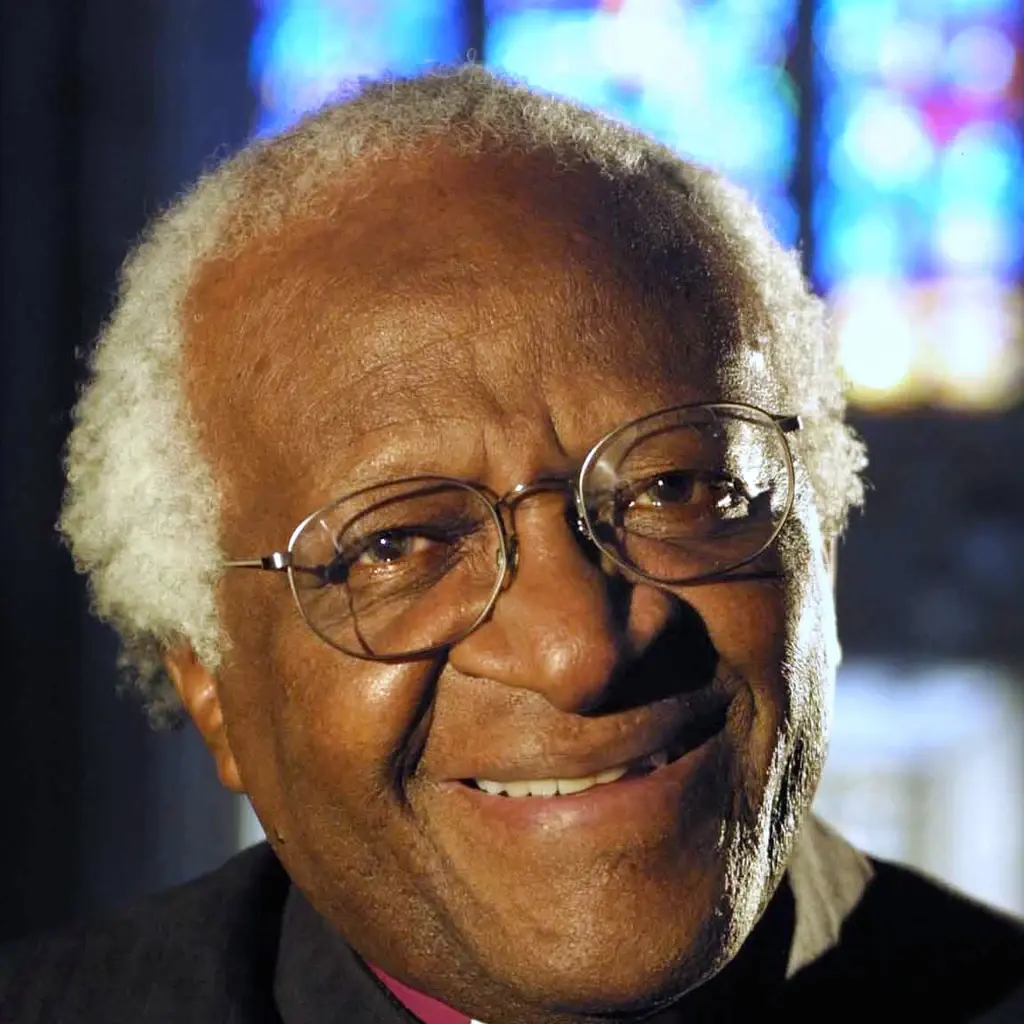
Desmond Tutu
Desmond Tutu was a South African bishop and anti-apartheid activist. “The Book of Forgiving” explores how people can face serious harm without letting resentment govern the future.
Explore more books by Desmond Tutu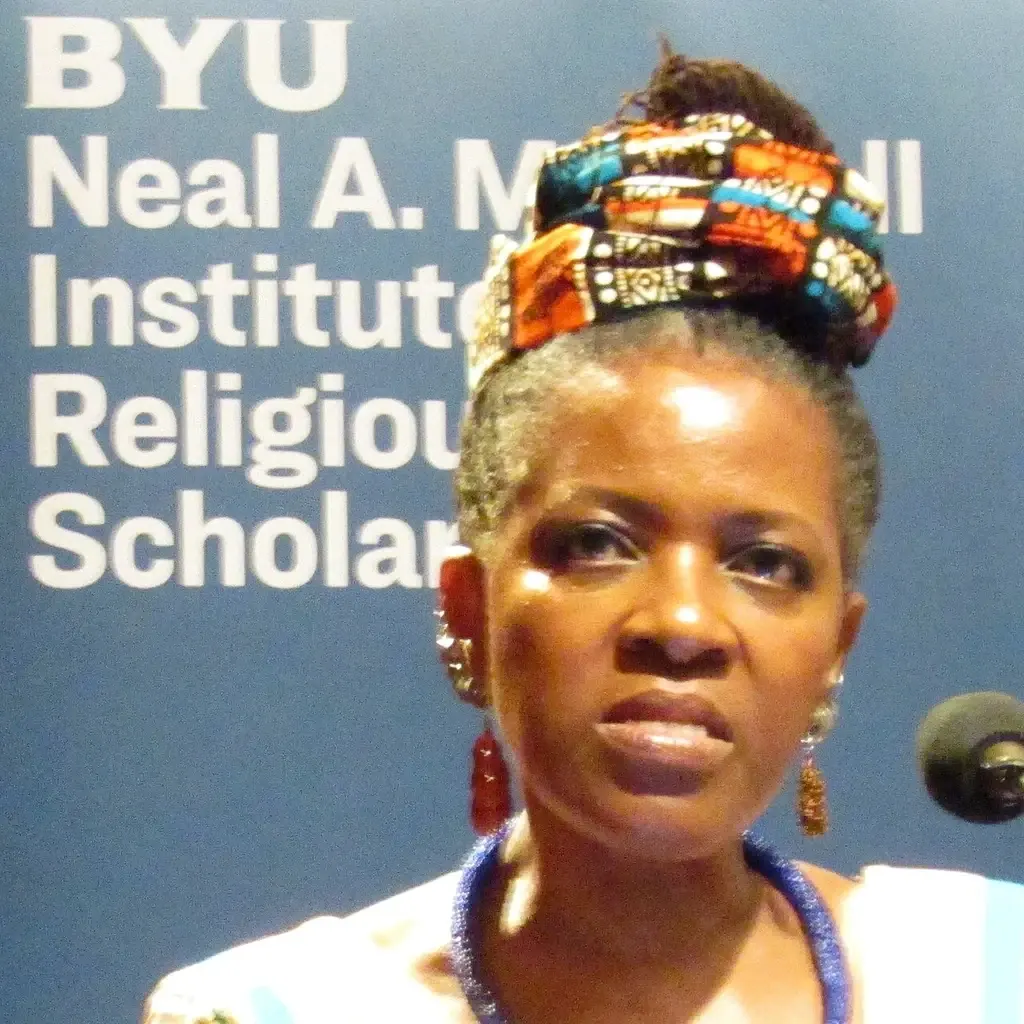
Mpho Tutu
Mpho Tutu is a South African Anglican priest and author. “The Book of Forgiving” explores how people can face serious harm without letting resentment govern the future.
Explore more books by Mpho Tutu