What you'll learn
Key ideas from Abundance
These ideas compress the book's argument without treating the author's view as settled fact. Use them as an orientation before reading the full work or listening in Wiseley.
Abundance is alignment among awareness, values, and daily life, with money serving fulfillment rather than measuring success.
Money karma names recurring financial habits, while awareness matters only when it reaches realistic choices and action.
Sankalpa joins a clarified, ethical desire to quiet awareness, release, attentive response, and responsible action.
Crown-consciousness distinguishes intrinsic enoughness from the ego's comparative cycle of insufficiency, approval-seeking, and acquisition.
Healing interrupts the transfer by pausing, owning one’s response, allowing forgiveness to unfold, and cultivating love and joy without denying history.
Personal power is effective action supported by awareness, not domination or maximal effort.
Repeated pleasure can become a crutch for anxiety and pain, while fulfillment can accompany responsible action without dependence on results.
Inside Abundance
Read the first chapter in full here. The other 9 continue in the Wiseley app.
Chapter 1 of 10 · 8 min · Audio & text
Money in Service of Fulfillment
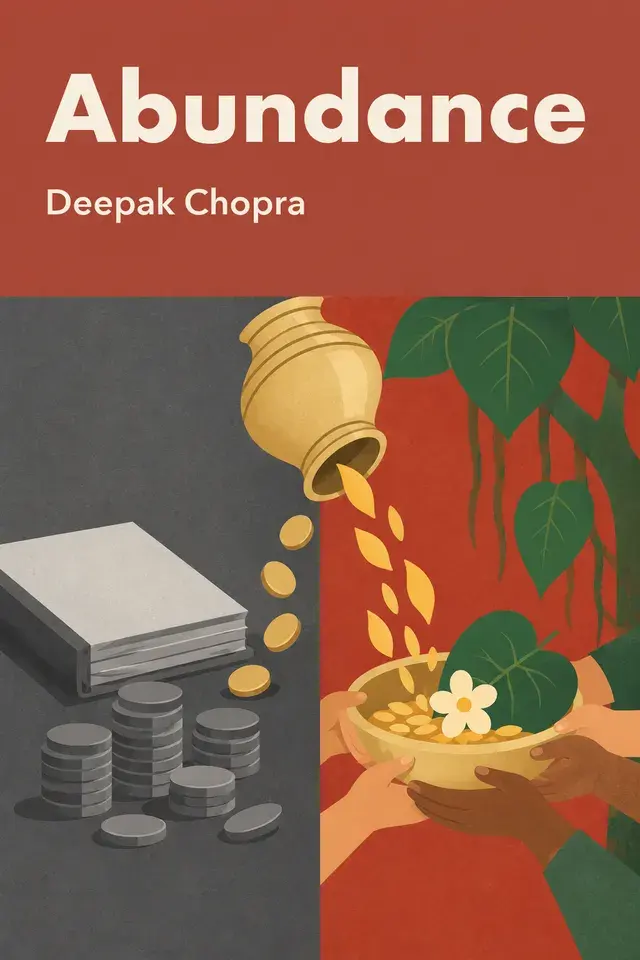
Abundance, by Deepak Chopra.
Abundance by Deepak Chopra begins with a financial question that becomes a question about living: how can money support fulfillment without becoming the measure of success? He acknowledges why his answer may sound implausible. People can work hard, remain anxious, postpone security until retirement, and still lack guarantees. He presents the book as an inner path to abundance, not a technique for acquiring money. Abundance is first a state of awareness. Wealth may support a fulfilled life, but inner joy and lived experience are deeper measures.
Chopra's broad meaning of Yoga anchors the proposal. He is not primarily discussing hatha yoga or physical classes. Yoga means joining the inner world of thoughts, sensations, beliefs, and worries with the outer world of people, objects, work, and circumstances. Separated, each is only half of life: outer conditions can dominate, while inner conflict can make favorable conditions feel empty. Conscious awareness is where the two can be harmonized. In the Vedic framework he describes, artha, or wealth, is life's first attainment. Spirituality need not deny material needs. The practical aim is a sustainable, joyful life, even though Yoga's deeper horizon is enlightenment.
That union changes what money means. Chopra treats money as a tool of consciousness, shaped by how people seek it, value it, and use it. The goal shifts from obtaining money for its own sake to getting more out of life, with money serving needs and chosen values. This is the distinction between abundance and accumulation. Abundance includes generosity, creativity, mercy, love, possibility, and the capacity to give; he calls these qualities true wealth. Accumulation can increase possessions without increasing meaning. Yoga does not automatically bless every desire; individuals remain responsible for judging its consequences and suitability.
Chopra rejects two shortcuts. Greed, exploitation, dishonesty, and putting material success above happiness cannot express dharma. Yet simple living, voluntary poverty, or forced poverty does not automatically make anyone spiritually rich. Money can be useful, and poverty can produce misery. Spiritual language does not erase material needs, and Chopra acknowledges social forces that disadvantage poor people. His claim that lack is unnatural at the level of spirit belongs to his framework; within that framework, following Yoga brings the money needed to support the life one is meant to live. At the same time, he rejects blaming people for poverty.
To connect the framework with ordinary finances, the book separates money's functions. A salary can reward work. A birthday gift can show value. Money can provide access to needed services, such as medical care or education. Fair exchange can bridge unlike goods: if one person offers a mountain bike and another offers only a dozen eggs, money makes up the difference so the bargain is fair. These functions—reward, value, need, and exchange—explain money's presence in work, relationships, opportunities, and setbacks. They also show why money cannot be isolated from the awareness and values guiding its use.
Dharma supplies Chopra's proposed guide. It is a path aligned with a person's deeper nature, not a destiny assigned in advance; choices shape it. Chopra says dharma supports abundance and misalignment produces lack; within that framework, awareness brings happiness and success, with money as needed for both. He asks readers to form their own vision of success, wealth, and fulfillment through values such as happiness, giving, shared success, love, peace, learning, responsibility, curiosity, self-acceptance, and self-worth. Modern life, he argues, pulls attention toward stress, distraction, stimulation, and surface desires. The question is whether visible achievements express a deeper life or merely answer pressure.
That question changes how possessions are judged. A mansion and a cottage have no fixed meaning simply because one is larger. Their significance depends on how they are experienced and what kind of life they support. The same applies to a job, salary, home, or bank account. Circumstances matter, but they do not interpret themselves as measures of fulfillment; outer form has to be related to inner values.
To find those values, Chopra introduces the true self, or soul, as a deeper level of awareness and a proposed source of inspiration, wisdom, love, compassion, creativity, insight, beauty, truth, and inner growth. The ego is an imitation self that projects a public identity. Chopra's emphasis is not on manufacturing worth through self-improvement, but on aligning identity with value already present in the true self. He says this requires awareness, not sainthood.
The recurring soul-profile exercise makes that proposal concrete. It is an introspective aid, not an external assessment. After becoming quiet and centered, readers answer seriously and briefly about peak experiences, life purpose, contributions to family and the wider world, relationship values, heroes, unique talents, unconstrained uses of time and money, and an unfinished accomplishment. The exercise is meant to reveal sources of meaning and fulfillment, not prescribe an identity. Chopra says most people meet the true self only intermittently, then rely on unconscious behavior and a public self-image. Saving and revisiting the answers is intended to deepen self-awareness and clarify the connection he draws between the true self and dharma.
Together, the opening argument defines abundance as alignment among awareness, values, and daily life. Money belongs in that picture because it meets needs, rewards effort, expresses value, and enables exchange. It does not serve as final proof that a life has succeeded. Chopra's account of dharma links the path with abundance and says the money needed for the life one is meant to live will come; it remains an invitation to examine personal fulfillment, not a judgment on poverty. The central question is how material resources can serve a life whose meaning comes from more than possession.
Chapter 2 of 10 · 9 min · Audio & textIn the app
Changing Financial Habits and Work
Chopra connects inner intention with outer circumstance, then calls recurring financial cause-and-effect patterns money karma. Karma is not a simple supernatural verdict: actions have consequences, some unforeseeable and entangled.
Chapter 3 of 10 · 9 min · Audio & textIn the app
From Quiet Awareness to Intention
Chopra’s Yogic framework calls the deeper movement of consciousness creative intelligence. It is the self-organizing impulse toward discovery, complexity, and new forms, and he presents humans as able to participate in it consciously.
Chapter 4 of 10 · 6 min · Audio & textIn the app
Enoughness and the Chakra Map
Abundance here is not another possession to acquire. Chopra introduces a second framework: seven chakras as locations in a map of awareness, not established physical anatomy.
Chapter 5 of 10 · 8 min · Audio & textIn the app
Thinking Beyond Habit and Conformity
After inner stillness, the next challenge is deciding what experience means. In Chopra’s chakra map, the sixth chakra at the forehead, or “third eye,” symbolizes intelligence as perception, interpretation, and judgment.
Chapter 6 of 10 · 7 min · Audio & textIn the app
Changing the Stories We Speak
Within Chopra’s chakra map, the throat chakra concerns speech and self-expression. He associates it with fearless truth-telling and authenticity, but the point is not polished wording alone.
Chapter 7 of 10 · 8 min · Audio & textIn the app
Ending the Transfer of Emotional Debt
In Chopra’s chakra map, the heart chakra is the symbolic center of emotional life. It includes happiness, love, emotional intelligence, empathy, and bonding.
Chapter 8 of 10 · 7 min · Audio & textIn the app
Personal Power Through Attentive Action
Chopra places personal power at the solar plexus, or third chakra, in his map of awareness. Its qualities are health, willpower, determination, and successful activity.
Chapter 9 of 10 · 8 min · Audio & textIn the app
Desire Without Dependence on Outcomes
In Chopra’s chakra map, the sacral, or second, chakra lies at the lower back or sacrum and is associated with the senses, sensuality, sexuality, and fulfilled desire. Desire itself is universal; even renunciation can become a desired state.
Chapter 10 of 10 · 8 min · Audio & textIn the app
Grounding Abundance in a Larger Reality
At the root chakra, the book brings its crown-to-root journey into the body. Located at the base of the spine and associated with Earth, the root represents being grounded, safe, secure, protected, and whole.
Chapter 1 of 10 · 8 min · Audio & text: Money in Service of Fulfillment
Wiseley supports reading and listening to summaries in the app.
Continue in WiseleyWhat Abundance is about
What makes a life abundant beyond financial wealth? Deepak Chopra connects money, work, relationships, and desire with his spiritual account of awareness. This summary explores his practical exercises for examining habits, clarifying intentions, communicating honestly, and cultivating fulfillment, while distinguishing everyday applications from metaphysical claims.
About Deepak Chopra
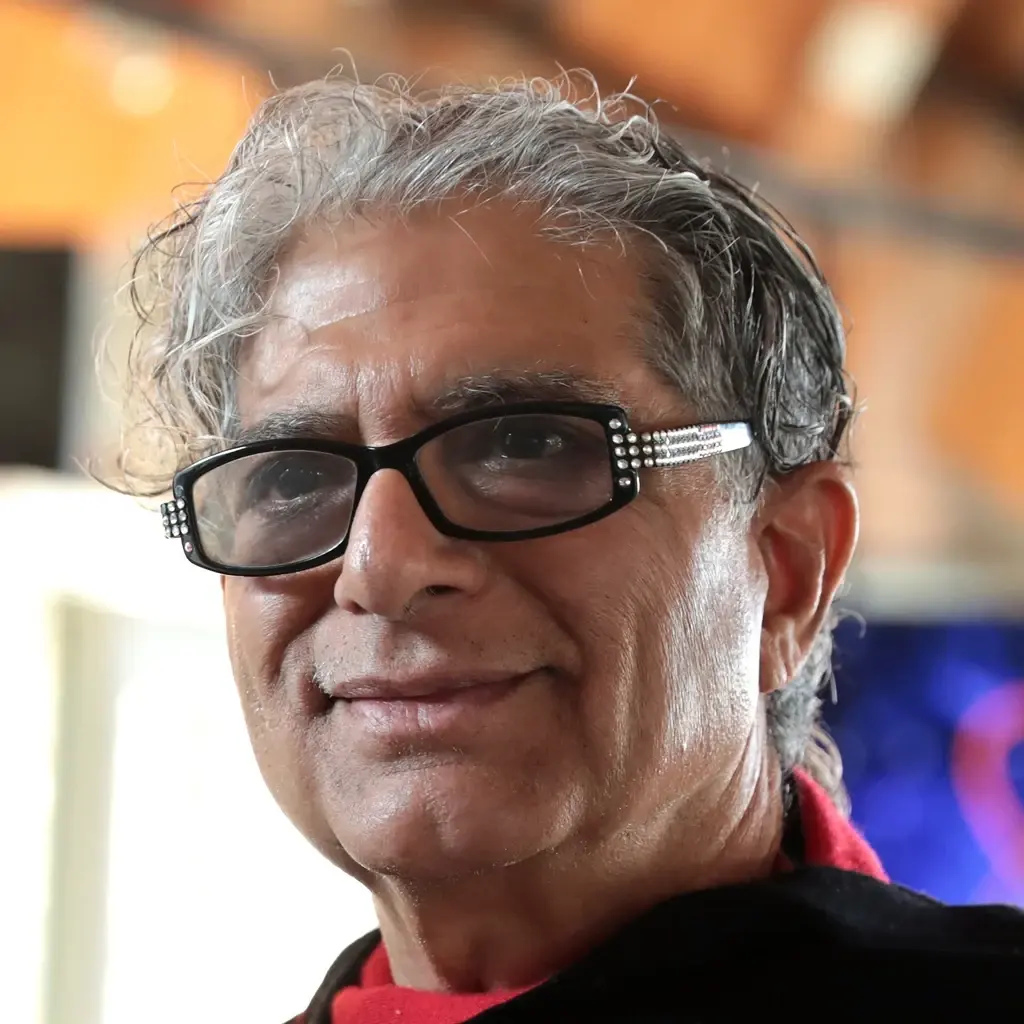
Deepak Chopra is an Indian-American author and alternative medicine advocate. “Abundance” explores what makes a life abundant beyond financial wealth.
Explore more books by Deepak Chopra