What you'll learn
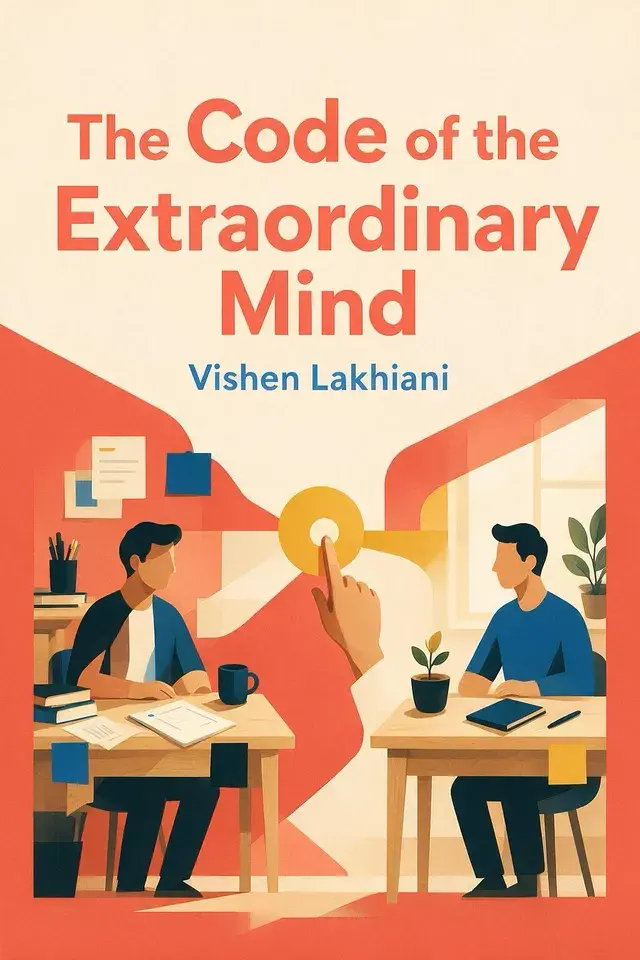
Key ideas from The Code of the Extraordinary Mind
These ideas compress the book's argument without treating the author's view as settled fact. Use them as an orientation before reading the full work or listening in Wiseley.
The Brule Test distinguishes humane, fair, consciously chosen, rationally useful, and happiness-supporting rules from inherited dogma.
Discovery, refresh rates, measurement, and achievable set points make improvement a feedback loop rather than a one-time insight.
Bending reality joins present happiness with a self-authored future vision, avoiding both aimless pleasure and the stress of postponing happiness.
The Three Most Important Questions organize a vision around desired experiences, personal growth, and contribution.
Unfuckwithability relocates peace and self-trust from external validation and goal attainment to an internally sustained base.
A quest is a meaningful contribution that may use employment, family, creativity, service, community, or entrepreneurship as its vehicle.
How The Code of the Extraordinary Mind builds its case
Follow how the book develops its argument. Each note is a brief orientation, not a replacement for the chapter.
Question the Rules You Inherited
Before deciding what to believe, the author asks us to notice how much of life arrives preselected. We grow up inside a culturescape, a shared network of beliefs, identities, practices, and shoulds defining love, work, marriage, education, religion, success, and happiness.
Recode Beliefs and Upgrade Life Systems
Once inherited rules have been made visible, the next question is how to redesign a life without turning every new idea into another unquestioned rule. The book calls the move from Level One to Level Two an awakening.
Practice Happiness While Pursuing Vision
The chapter’s central idea is that bending reality requires two conditions at once: genuine happiness in the present and an exciting, self-authored vision of the future. The vision gives direction, while present happiness gives energy for the journey.
Choose Ends, Not Scripts
The chapter’s central filter is simple: separate the end you want from the script or vehicle presumed to deliver it. Career, money, credentials, and status can be useful means.
Make Worth Self-Sustaining
Once a vision has been chosen, it can become a new dependency. If happiness depends on a relationship, achievement, possession, or approval, the future takes over the job of making you feel secure.
Direct Freedom into a Quest
The book’s final movement asks what inner freedom is for. After questioning inherited rules, redesigning life, cultivating present happiness, and loosening dependence on validation, the author points outward.