What you'll learn
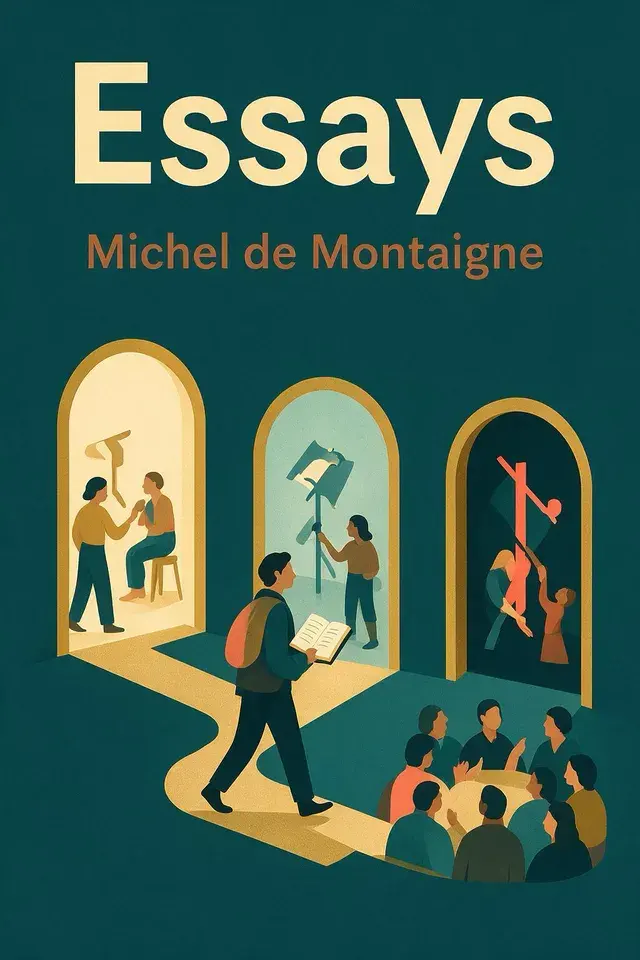
Key ideas from Essays
These ideas compress the book's argument without treating the author's view as settled fact. Use them as an orientation before reading the full work or listening in Wiseley.
Repetition retrains the senses and body, making pain, strangeness, and difficult abilities seem ordinary or attainable.
Communities turn inherited preferences into conscience, so unfamiliar practices often appear irrational simply because they differ from local custom.
Inward freedom of judgment can coexist with outward obedience to established laws and public customs.
Legal innovation carries systemic risks because government is an interconnected order whose altered parts affect the whole.
Fortune limits political prudence, so calculation cannot make safety certain.
Genuine trust can summon fidelity and courage where constant suspicion produces torment.
Education becomes valuable when knowledge is digested into personal judgment, virtue, and useful action.
How Essays builds its case
Follow how the book develops its argument. Each note is a brief orientation, not a replacement for the chapter.
How Custom Becomes Nature
Montaigne’s inquiry into custom begins with a deceptively simple observation: people rarely notice the moment a practice starts ruling them. Custom enters quietly, through repetition, and then accumulates authority.
Judgment, Law, and Reform
Once inherited customs have been recognized as uncertain guides, the political question is not simply whether they are rational. It is how a person should live among people who depend on them.
Trust When Fortune Rules
Political judgment, in Montaigne’s account, begins with accepting how little judgment can command. Fortune enters not only battle but counsel itself.
Education Beyond Mere Learning
Montaigne begins with a familiar contempt for the pedant. In Italian comedy, the learned master is made a fool, and an old maxim says that the greatest scholars are not always the wisest.