What you'll learn
Key ideas from Incognito
These ideas compress the book's argument without treating the author's view as settled fact. Use them as an orientation before reading the full work or listening in Wiseley.
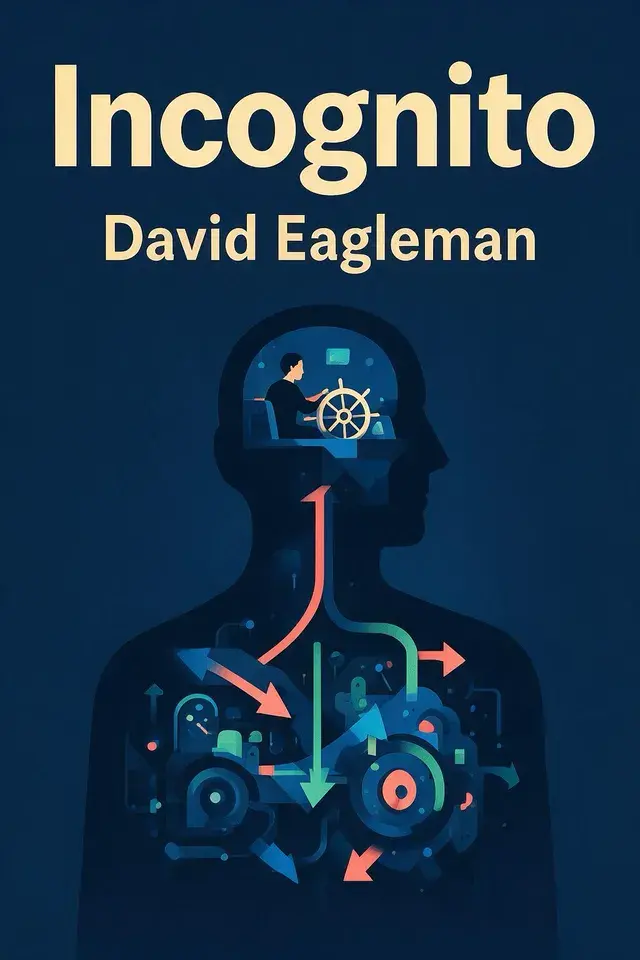
Most neural work remains unconscious, while awareness receives delayed and compressed summaries of larger processes.
Perception selects and fills sparse sensory information instead of copying the world.
Unconscious pattern learning and bodily signals can guide choices before conscious explanation catches up.
Consciousness coordinates flexible goal-setting and post-hoc narratives but remains a negotiator, not a sovereign executive.
Brain conditions can influence conduct without automatically excusing it; legal responses should distinguish causal explanation from exculpation.
Genes influence behavior through developmental and social environments, producing susceptibility rather than inevitable outcomes.
How Incognito builds its case
Follow how the book develops its argument. Each note is a brief orientation, not a replacement for the chapter.
The Mind Behind Awareness
Incognito begins with a challenge to the ordinary picture of the self. Thoughts feel weightless and private, while actions seem to express an inner author.
Experience Is Constructed
Once we stop treating the senses as transparent windows, a different picture appears. Eyes, ears, and skin do not deliver a finished copy of the world.
Programs That Learn Without You
Learning does not require a conscious lesson. Repetition, exposure, and feedback can change behavior while leaving a person unable to explain the machinery involved.
The Machinery of Desire
Desire feels personal because it arrives as a feeling: someone is attractive, love seems natural, a child seems worth protecting. Yet consciousness receives a simplified result.
A Democracy of Neural Rivals
Earlier, the conscious self appeared as a small participant in machinery it does not fully direct. This chapter asks what that machinery looks like.
Responsibility Without Metaphysical Blame
Once behavior is understood as the product of brain condition, development, genetic endowment, drugs, disease, and circumstance, the familiar picture of a freely choosing self becomes difficult to defend. The legal question, however, is not whether people cause harm.
Beyond Neural Reductionism
By the end of Incognito, the argument arrives at a necessary tension. The brain is indispensable to who we are, but a person is not adequately described as a brain, a gene, or a molecule.