
A battle is one scale of the story
A history of war might explain an alliance, reconstruct a campaign, follow a survivor, or examine the settlement afterward. These books do not form a complete world history. Their value is in showing what becomes visible when the scale and evidence change.
Read across the scales
The selection combines historical argument with personal testimony. Treat their different evidential positions as a reason to compare them carefully, not as a reason to expect the same kind of answer.
Listen to the political argument inside the conflict
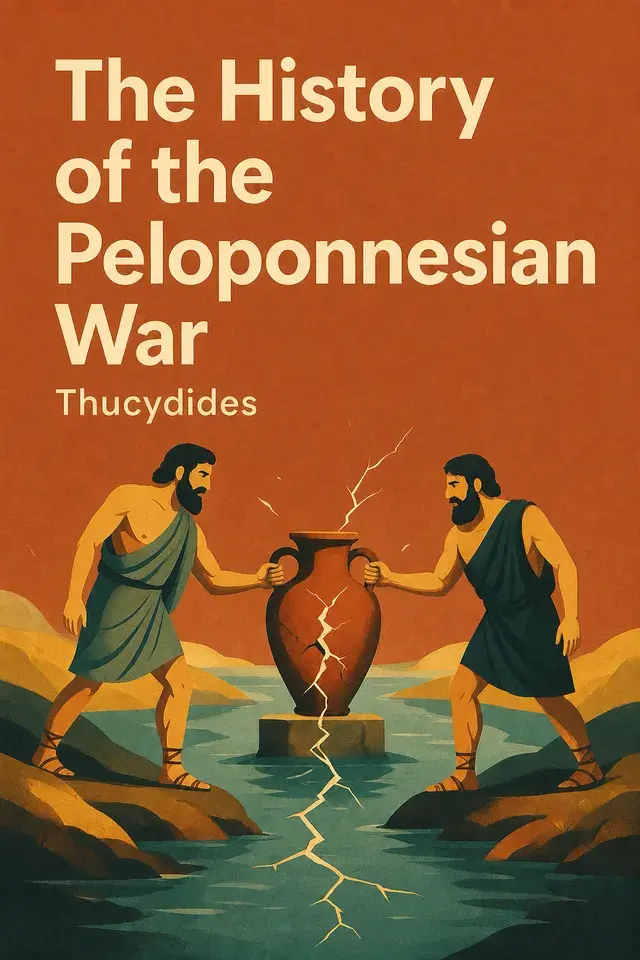
The History of the Peloponnesian War · Thucydides
Thucydides examines the war between Athens and Sparta through decisions, speeches, interests, and the pressures of conflict. The speeches are part of his historical construction; they should not be read as modern verbatim transcripts.
- Read it for
- The relationship between political judgment, power, and war.
- Keep in mind
- The surviving work has a particular ancient perspective and does not offer equal access to every participant.
Slow down the opening decisions
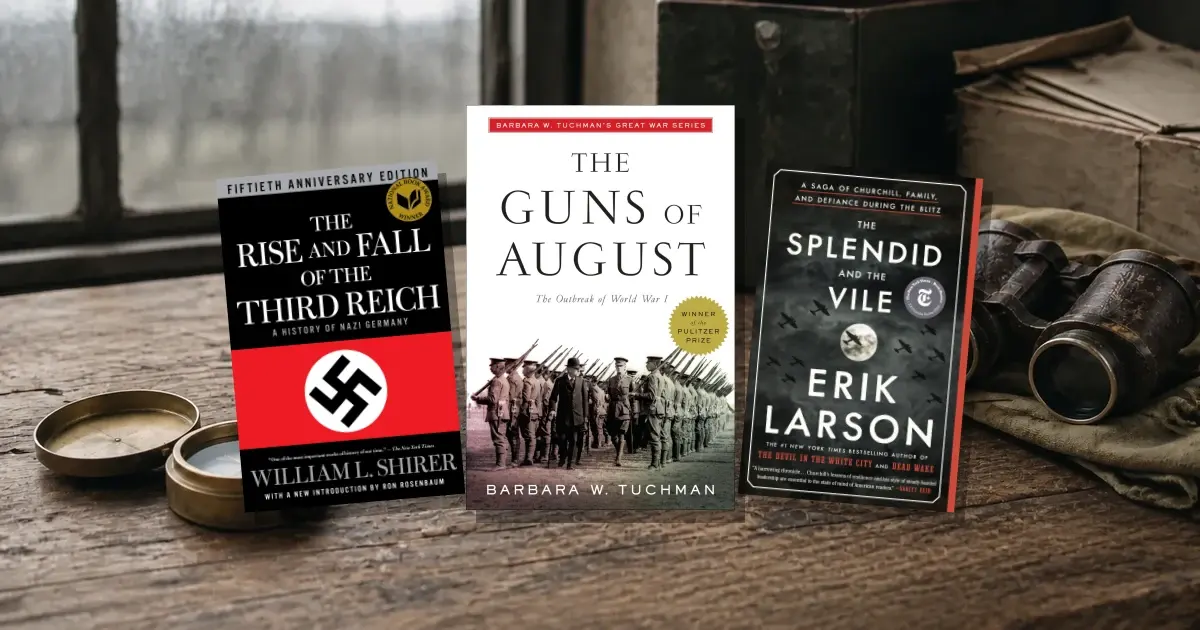
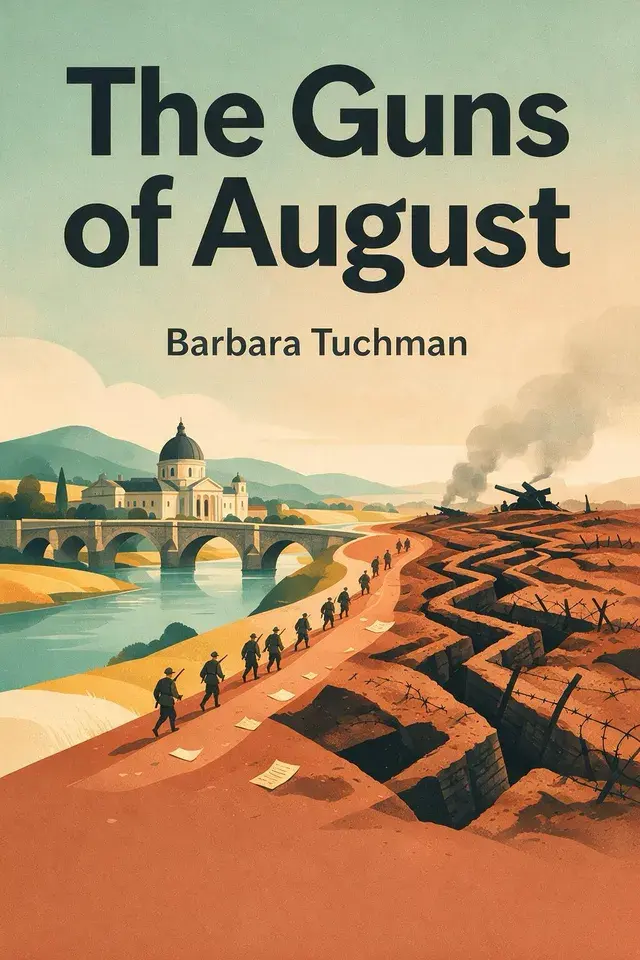
The Guns of August · Barbara Tuchman
Barbara Tuchman concentrates on the opening of the First World War, making plans, assumptions, and decisions visible as events accelerate. The narrow time frame helps resist the illusion that the eventual outcome was obvious at the start.
- Read it for
- An account of early escalation and the assumptions behind military decisions.
- Keep in mind
- It covers a concentrated part of the war, not its whole course or every cause.
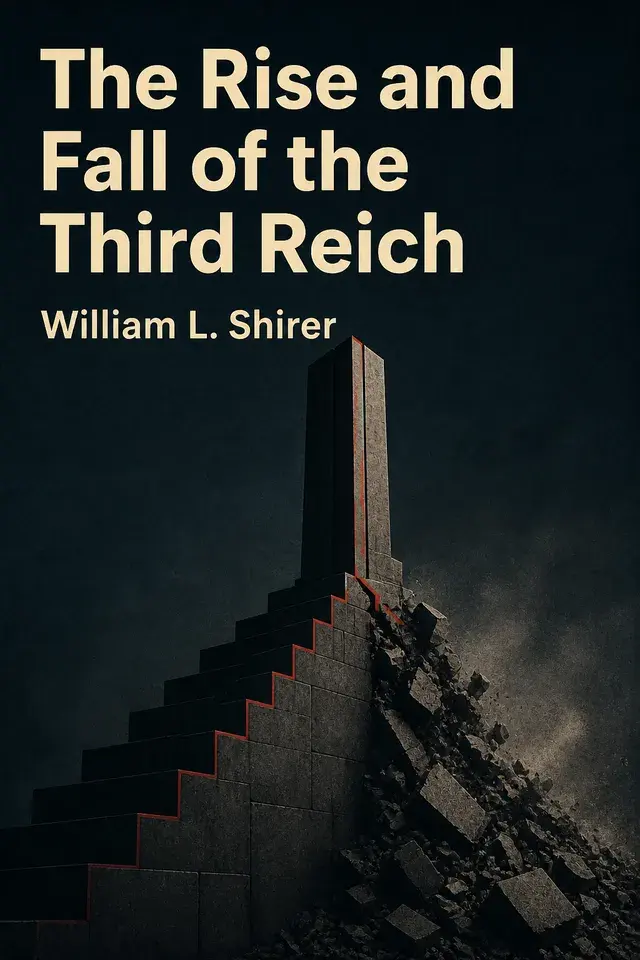
Examine the regime around the fighting
The Rise and Fall of the Third Reich · William L. Shirer
William L. Shirer connects the Nazi regime’s development with war and destruction. Its sweep offers orientation, while its date and authorial position matter. Later scholarship and more focused histories can complicate a broad narrative.
- Read it for
- A substantial narrative of a regime’s development and collapse.
- Keep in mind
- An influential older history should be read alongside later work, not treated as the final account.

Change from the state’s scale to the person’s
A Long Way Gone · Ishmael Beah
Ishmael Beah recounts childhood, war, and his experience as a child soldier in Sierra Leone. The memoir’s scale makes coercion and dislocation personal. It is a witness account, not a comprehensive history of the conflict.
- Read it for
- The remembered experience of a child drawn into war.
- Keep in mind
- Retrospective testimony and a national history answer different questions.

Do not end the reading when the fighting ends
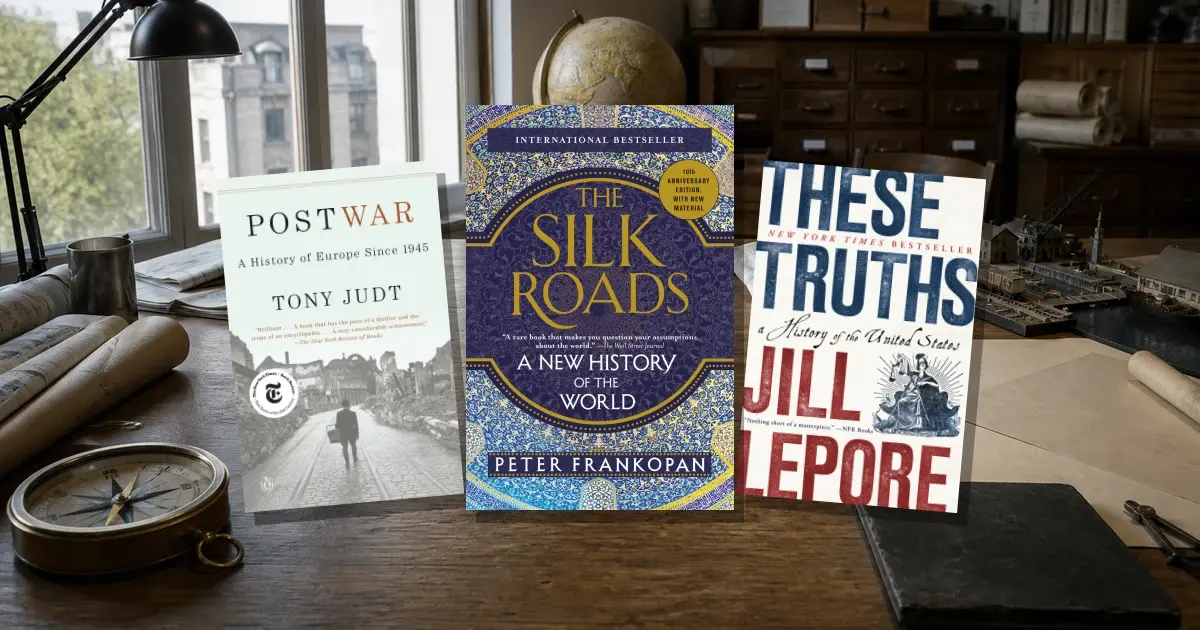
Postwar · Tony Judt
Tony Judt examines Europe after the Second World War through reconstruction, political division, institutions, and changing societies. Including it makes the boundary of this list explicit: understanding war also requires reading about what followed.
- Read it for
- The political and social aftermath of war in Europe.
- Keep in mind
- This is a postwar history, not a military account of the Second World War.
A route through different kinds of evidence
The sequence moves across time but is not a claim of continuous coverage. Pause at each change of scale and ask what the next author can show that the previous one could not.
- Ancient conflict
Power and judgment
Start with the political questions Thucydides makes visible.
Explore The History of the Peloponnesian War - 1914
Plans meet events
Examine decisions before hindsight makes them appear inevitable.
Explore The Guns of August - Twentieth-century regime
Institutions and ideology
Read the state behind the war, keeping the history’s publication context in view.
Explore The Rise and Fall of the Third Reich - Personal testimony
A child’s remembered experience
Change scale rather than assuming a state-centered account tells every story.
Explore A Long Way Gone - After the fighting
Reconstruction and division
Return to the question of what a settlement makes possible.
Explore Postwar
Sources and scope
Book ideas are attributed to their authors. External evidence is linked directly when a claim needs more than the source book.
- The History of the Peloponnesian War: Thucydides examines the war between Athens and Sparta through decisions, speeches, interests, and the pressures of conflict. The speeches are part of his historical construction; they should not be read as modern verbatim transcripts. Scope: The surviving work has a particular ancient perspective and does not offer equal access to every participant.
- The Guns of August: Barbara Tuchman concentrates on the opening of the First World War, making plans, assumptions, and decisions visible as events accelerate. The narrow time frame helps resist the illusion that the eventual outcome was obvious at the start. Scope: It covers a concentrated part of the war, not its whole course or every cause.
- The Rise and Fall of the Third Reich: William L. Shirer connects the Nazi regime’s development with war and destruction. Its sweep offers orientation, while its date and authorial position matter. Later scholarship and more focused histories can complicate a broad narrative. Scope: An influential older history should be read alongside later work, not treated as the final account.
- A Long Way Gone: Ishmael Beah recounts childhood, war, and his experience as a child soldier in Sierra Leone. The memoir’s scale makes coercion and dislocation personal. It is a witness account, not a comprehensive history of the conflict. Scope: Retrospective testimony and a national history answer different questions.
- Postwar: Tony Judt examines Europe after the Second World War through reconstruction, political division, institutions, and changing societies. Including it makes the boundary of this list explicit: understanding war also requires reading about what followed. Scope: This is a postwar history, not a military account of the Second World War.
To report a factual, attribution, rights, or accessibility concern, email hello@wiseley.app.