Business book summaries
Strategy, leadership, entrepreneurship, and the operating choices that help organizations create durable value.
These books disagree about where durable advantage comes from: disciplined operations, clear incentives, customer insight, individual judgment, or the courage to change course. Reading across those disagreements is more useful than treating any one framework as a universal playbook.
The catalog covers strategy, leadership, management and entrepreneurship, so “business books” here means several distinct disciplines rather than one.
Start with a focused list
This page is the complete business catalog. If you already know which question you are answering, these shorter selections narrow it down first.
- Leadership books by bottleneck — Sorted by the constraint you actually have: personal effectiveness, company momentum, honest feedback or courage under pressure.
- Startup books by stage — The thesis, the first customers and mainstream scale fail in different ways, so the list is ordered by stage rather than by fame.
- Marketing books by growth problem — Positioning, memorability, word of mouth and persuasion are separate problems with separate books.
Books in this collection

Antifragile
Taleb’s Antifragile asks why some people, organisms, institutions, and ideas improve under stress, uncertainty, and disorder while others break. Taleb argues that rare consequential events resist reliable prediction, so the useful response is to redesign exposure through optionality, subtraction, bounded downside, and skin in the game.
13 chapters in Wiseley’s business catalog.

Anything You Want
Derek Sivers’s account of building CD Baby asks what a business is for when money, scale, and status compete with happiness and usefulness. It follows a practical path from small customer-led experiments to human service, honest promises, delegation, and a deliberately chosen business shape.
6 chapters in Wiseley’s business catalog.

Bad Blood
Bad Blood follows Theranos from Elizabeth Holmes’s promise of painless, small-sample blood testing to its collapse under technical failures, secrecy, intimidation, and investigative scrutiny. It asks how a persuasive mission and prestigious backing displaced verification—and why medical technology demands stronger evidence than ordinary startup hype.
11 chapters in Wiseley’s business catalog.

Blink
Blink asks when a first impression is wiser than prolonged analysis. It explores how unconscious minds extract patterns from brief encounters, why expertise can sharpen or bias those reactions, and how stress, stereotypes, and decision settings can distort them—then shows how training and better-designed systems can make judgment more reliable.
7 chapters in Wiseley’s business catalog.

Blue Ocean Strategy
Why do some companies escape crowded markets while others sink into price competition? Blue Ocean Strategy presents a business-strategy approach centered on value innovation—creating a leap in buyer value while lowering cost—and offers tools to redraw boundaries, find noncustomers, test profitability, and mobilize execution.
14 chapters in Wiseley’s business catalog.

Bold
Bold examines how exponential technologies and internet-enabled crowds change who can build, fund, and solve problems at global scale. It asks which habits make ambitious action credible, then maps platforms, communities, crowdfunding, and incentive prizes as ways to distribute expertise and risk—while stressing that abundance depends on deliberate, ethical choices.
9 chapters in Wiseley’s business catalog.

Build
Build is Tony Fadell’s experience-based guide to creating yourself, products, companies, teams, and leadership. It asks how to learn through failure, choose problems customers truly need, turn vision into execution, and know when to persist, adapt, or leave—offering practical principles for building better work and organizations.
11 chapters in Wiseley’s business catalog.

Built to Last
Built to Last examines why some companies remain exceptional across generations while comparable organizations fade. Its central question is how an institution can preserve authentic values and purpose without becoming rigid. The answer links enduring identity to bold goals, experimentation, leadership development, continuous improvement, and aligned systems—useful for understanding and designing resilient organizations.
8 chapters in Wiseley’s business catalog.

Capital in the Twenty-First Century
How do growth, saving, inheritance, and public policy determine who owns wealth? This summary follows Piketty’s historical framework from measuring income and capital through global concentration and the social state, clarifying why returns above growth can renew inherited power and why democratic institutions matter.
9 chapters in Wiseley’s business catalog.
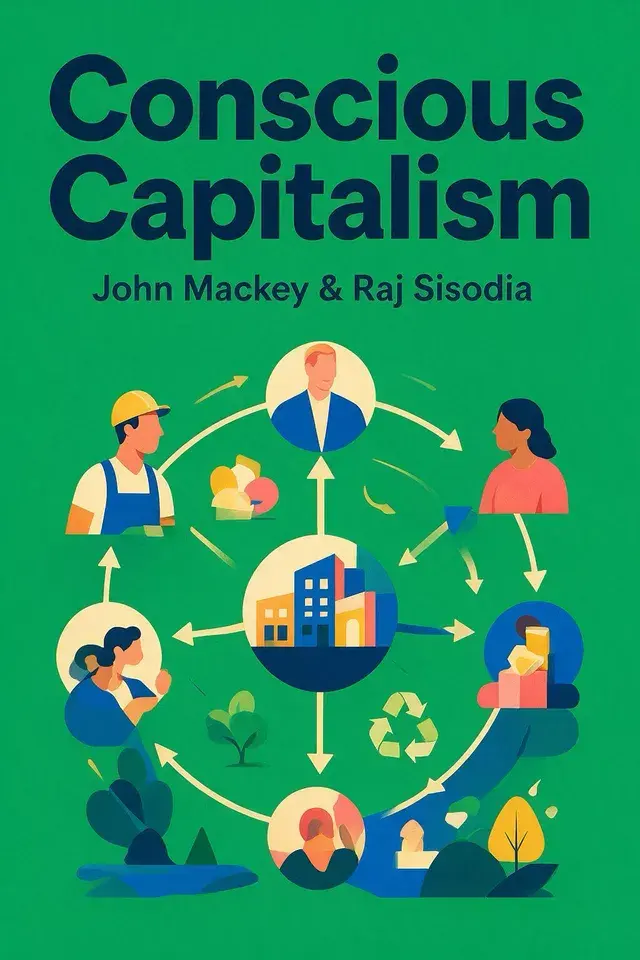
Conscious Capitalism
Conscious Capitalism asks how companies can remain profitable while serving the people and systems that sustain them. Its answer joins higher purpose, stakeholder integration, conscious leadership, and conscious culture and management into a practical account of trust, autonomy, responsibility, innovation, and long-term value creation.
9 chapters in Wiseley’s business catalog.

Contagious
Why do some products, ideas, and behaviors spread while similar ones disappear? Jonah Berger’s Contagious presents six principles—social currency, triggers, emotion, public visibility, practical value, and stories—and shows how they shape word of mouth, sustained attention, imitation, and useful action. The framework also clarifies why visibility, usefulness, or virality can misfire.
7 chapters in Wiseley’s business catalog.

Crossing the Chasm
Crossing the Chasm explains why discontinuous innovations stall between visionary early adopters and pragmatic mainstream buyers. It asks how a company can win credible references, deliver the whole solution, position it for trust, and reorganize for durable growth—turning a memorable model into practical decisions.
9 chapters in Wiseley’s business catalog.

Crucial Conversations
Crucial Conversations asks how people can speak honestly and listen well when stakes are high, opinions differ, and emotions run strong. It explains how to restore safety, question the stories shaping our reactions, create shared meaning, make sound decisions, and turn difficult dialogue into accountable action.
10 chapters in Wiseley’s business catalog.

Dare to Lead
Dare to Lead asks what makes courage usable in workplaces shaped by fear, shame, uncertainty, and competing priorities. Brené Brown’s framework links vulnerability, values, trust, empathy, curiosity, feedback, and recovery to practices for leading with clarity, accountability, and human connection.
9 chapters in Wiseley’s business catalog.

Decisive
Decisive examines why people make poor choices: they narrow the frame, seek confirming evidence, react to short-term emotion, and overestimate the future. It presents WRAP—widen options, reality-test assumptions, attain distance, and prepare to be wrong—as a practical process for making clearer choices under uncertainty.
8 chapters in Wiseley’s business catalog.

Deep Work
Cal Newport’s Deep Work asks how people can learn difficult skills and produce valuable results when constant connectivity fragments attention. It argues for distraction-free concentration as both an economic advantage and a source of meaning, then develops practical systems for routines, attention training, tool selection, leisure, scheduling, and communication boundaries.
9 chapters in Wiseley’s business catalog.

Delivering Happiness
Delivering Happiness traces Tony Hsieh’s path from childhood experiments and LinkExchange to Zappos, asking how profits, passion, purpose, and happiness can reinforce one another. It follows the company’s survival, customer service, culture, values, relationships, talent, and Amazon partnership, then distills three frameworks for applying happiness to work and life.
21 chapters in Wiseley’s business catalog.

Die With Zero
Die With Zero asks how people can convert limited work, money, health, and time into a fuller life instead of postponing enjoyment until opportunities disappear. Bill Perkins’s framework covers experience timing, memory, spending down wealth, giving while alive, life seasons, and calculated risk, offering practical ways to make deliberate trade-offs.
8 chapters in Wiseley’s business catalog.

Drive
Drive examines human motivation beyond biological drives and external rewards, asking what helps people learn, create, persist, and contribute. It contrasts control-based Motivation 2.0 with a Type I alternative organized around autonomy, mastery, and purpose, then applies that framework to work, compensation, education, exercise, and personal practice.
19 chapters in Wiseley’s business catalog.

Eat That Frog!
Eat That Frog! asks how people can make meaningful progress when demands exceed available time. Brian Tracy’s answer is a practical system for clarifying goals, ranking consequences, removing bottlenecks, preparing well, and finishing the hardest high-value task first—turning selective attention and repeated action into more reliable performance.
5 chapters in Wiseley’s business catalog.

Elon Musk
Elon Musk’s biography asks how a childhood shaped by danger, isolation, and science fiction became a method for building companies around electric transport, spaceflight, and artificial intelligence—and what that method costs. This summary maps the recurring mechanisms, evidence, and trade-offs behind Musk’s breakthroughs, conflicts, and expanding public power.
15 chapters in Wiseley’s business catalog.
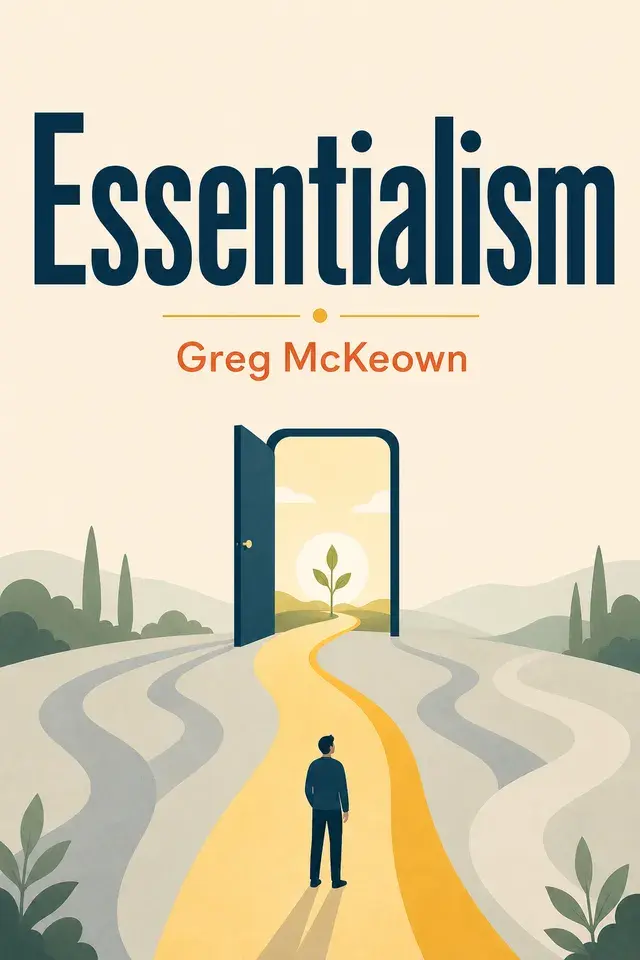
Essentialism
Essentialism asks how to direct limited time and attention toward what matters most when choices, demands, and opinions multiply. McKeown’s method combines discernment, deliberate trade-offs, active elimination, and easier execution, then applies the same logic to personal priorities, daily focus, and leadership.
12 chapters in Wiseley’s business catalog.
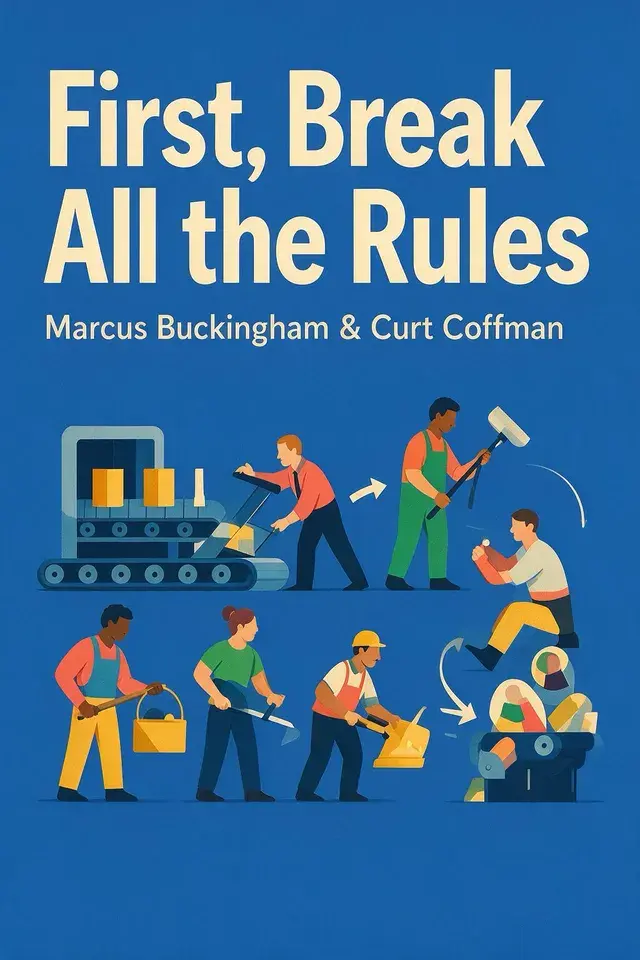
First, Break All the Rules
First, Break All the Rules examines how managers turn individual talent into performance. It asks what to select for, which outcomes to define, how to build on strengths, and how to find a fitting role. The book offers the Four Keys and twelve workplace questions as tools for understanding engagement, performance, and career choices.
14 chapters in Wiseley’s business catalog.
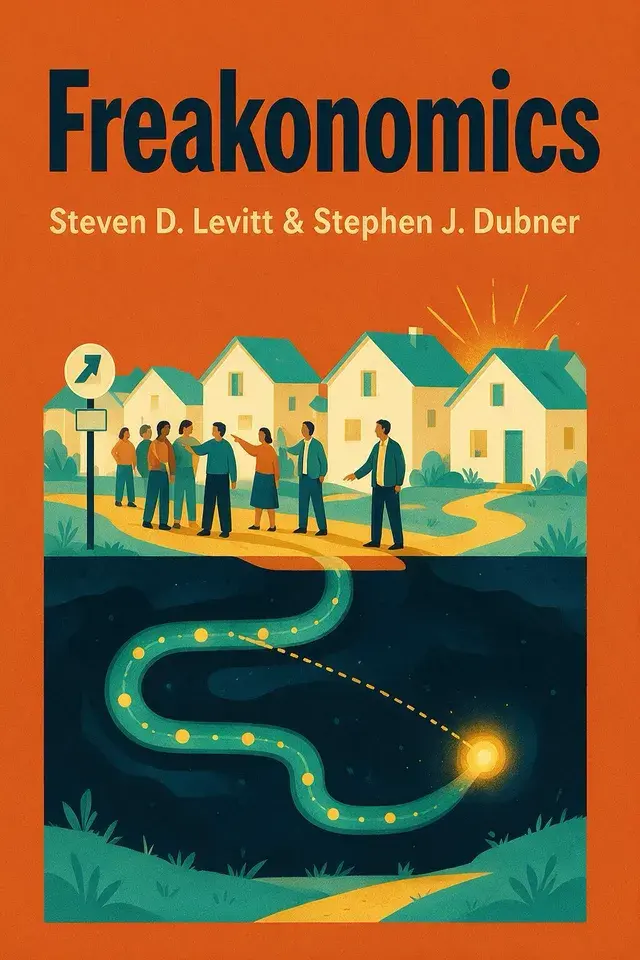
Freakonomics
Freakonomics asks how incentives, information gaps, and delayed causes shape cheating, crime, parenting, names, markets, and social behavior. Its intellectual value is a disciplined way to question conventional wisdom: compare stated beliefs with observed behavior, test correlation against causation, and separate empirical explanation from moral approval.
17 chapters in Wiseley’s business catalog.

Getting to Yes
Getting to Yes asks how people can reach fair, durable agreements without sacrificing legitimate interests or damaging relationships. Its principled-negotiation method shifts attention from positions to interests, creates options for mutual gain, and uses independent standards, then applies those ideas to power imbalances, resistance, dirty tactics, and everyday practice.
10 chapters in Wiseley’s business catalog.
Good to Great
Good to Great asks why some established companies move from good performance to sustained greatness while comparable firms do not. It distills a research program into ideas about leadership, people, truth, focus, discipline, technology, and momentum, then considers how institutions endure and how people can find meaningful work.
11 chapters in Wiseley’s business catalog.

Hooked
Hooked explains how products turn recurring emotional discomfort into repeat behavior through triggers, easy actions, variable rewards, and user investment. It asks when behavior design helps people do what they value—and when it becomes manipulation—then offers a Bible app case study and a behavior-based method for testing habits and finding opportunities.
8 chapters in Wiseley’s business catalog.
I Will Teach You to Be Rich
Ramit Sethi’s framework for making money serve a personally defined rich life asks how readers can reduce costly debt, build low-fee accounts, automate saving and investing, spend deliberately, and handle major choices about work, relationships, cars, and homes. Its practical value is a repeatable system of small actions, trade-offs, and long-term habits.
13 chapters in Wiseley’s business catalog.

In Search of Excellence
Why do some large companies keep innovating and performing when rational plans, controls, and scale alone fall short? In Search of Excellence identifies eight connected practices and explains how they turn ordinary work into adaptive, sustained performance.
5 chapters in Wiseley’s business catalog.

Influence
Influence examines why people say yes, how six psychological shortcuts turn favors, commitments, crowds, liking, authority, and scarcity into compliance, and when those shortcuts fail. Its value is a practical way to recognize manipulation while preserving the cooperation and efficient judgment these social rules normally support.
11 chapters in Wiseley’s business catalog.

Lean In
Lean In examines why women remain underrepresented in leadership despite expanded opportunity, then asks how confidence, career choices, shared domestic responsibility, workplace design, and collective action can change that pattern. It offers a practical lens for pursuing meaningful goals while recognizing bias, unequal care, and limits on individual choice.
9 chapters in Wiseley’s business catalog.
Linchpin
Linchpin examines how work changes when obedience and routine become easy to replace: what makes a person genuinely indispensable? It connects creativity, emotional labor, generosity, judgment, and the discipline of shipping to practical choices about contribution, fear, relationships, and meaningful work.
20 chapters in Wiseley’s business catalog.

Loonshots
Loonshots examines why unconventional ideas are dismissed, mishandled, or transformed into breakthroughs. It asks how organizations can protect fragile product and strategy innovations while still executing established work. The book's value is a systems-based way to diagnose false failures, design incentives, and build conditions in which experimentation can survive and scale.
10 chapters in Wiseley’s business catalog.
Made to Stick
Made to Stick asks why some ideas survive communication while others vanish, and whether truthful messages can be designed to be understood, remembered, believed, and acted on. It presents six complementary tools—simplicity, surprise, concreteness, credibility, emotion, and stories—while diagnosing the Curse of Knowledge that makes experts hard to understand.
8 chapters in Wiseley’s business catalog.
Measure What Matters
Measure What Matters explains how Objectives and Key Results turn broad missions into visible, measurable commitments, and how conversations, feedback, recognition, and culture keep the system humane. It asks how organizations can focus effort, coordinate across boundaries, pursue ambitious change, and learn when metrics or goals stop serving the work.
8 chapters in Wiseley’s business catalog.

Misbehaving
Misbehaving asks what happens when economic models replace psychologically limited Humans with perfectly optimizing Econs. It follows Thaler from early anomalies through mental accounting, self-control, fairness, financial markets, behavioral policy, and nudges, showing how observed behavior can improve theory and decision design.
16 chapters in Wiseley’s business catalog.

Moneyball
Moneyball follows the Oakland Athletics’ attempt to win with a small payroll by finding baseball value that conventional scouting and the market overlook. It asks whether evidence, disciplined spending, and better questions can compete with wealth—and shows what data can reveal, and what it cannot, about people and performance.
14 chapters in Wiseley’s business catalog.

Multipliers
Multipliers asks why some leaders leave people sharper and more capable while others suppress the intelligence around them. Liz Wiseman’s five-discipline framework shows how to attract and grow talent, create space, issue meaningful challenges, debate consequential choices, and invest in ownership—turning leadership into a practice of multiplying capability.
7 chapters in Wiseley’s business catalog.

My Years with General Motors
Alfred P. Sloan’s management-centered account of General Motors asks how a sprawling industrial corporation can innovate, compete, and survive changing markets without losing local initiative. It follows GM from Durant’s expansion and the 1920 crisis through product strategy, financial controls, technology, labor, global operations, and the judgment required to keep adapting.
13 chapters in Wiseley’s business catalog.

Never Split the Difference
Never Split the Difference asks how emotion, perception, and hidden motives shape negotiation. It presents an FBI-derived approach built on attentive listening, labeling, calibrated questions, strategic No, implementation checks, adaptive bargaining, and preparation—tools for reaching workable outcomes without mistaking politeness for commitment.
10 chapters in Wiseley’s business catalog.
No Rules Rules
No Rules Rules examines how Netflix built a workplace around exceptional talent, candid feedback, transparency, and decentralized judgment. Its central question is when removing rules improves adaptation and innovation—and when freedom becomes chaos. The book’s practical value is a conditional framework for matching context, accountability, and cultural adaptation to the work.
10 chapters in Wiseley’s business catalog.

Noise
Noise examines why competent people can disagree about the same case—and why the same person can vary across occasions. It separates bias from unwanted variability, shows how judgment lotteries distort justice and prediction, and presents audits and decision-hygiene practices for making consequential decisions more consistent without erasing necessary discretion.
16 chapters in Wiseley’s business catalog.

Now, Discover Your Strengths
Why do people and organizations spend so much effort repairing weaknesses instead of developing distinctive talents? Now, Discover Your Strengths explains how talents combine with knowledge and skills to form strengths, how StrengthsFinder surfaces recurring themes, and how those themes can inform self-understanding, careers, management, and organizational design.
18 chapters in Wiseley’s business catalog.

Originals
Originals asks how people can challenge defaults, develop ideas that are both novel and useful, and persuade others to adopt them. It connects creativity with risk management, timing, coalition-building, family influence, organizational dissent, and emotional regulation, offering a practical framework for turning unconventional thinking into durable change.
9 chapters in Wiseley’s business catalog.
Outliers
Outliers asks why exceptional success is rarely self-made. Moving from Roseto and hockey birth dates to musicians, lawyers, pilots, mathematicians, KIPP students, and a Jamaican family history, it traces how practice, timing, culture, institutions, and inherited opportunity shape achievement—and why redesigning those conditions can widen who gets to flourish.
13 chapters in Wiseley’s business catalog.

Poor Charlie's Almanack
Poor Charlie’s Almanack distills Charles T. Munger’s thinking on rationality, investing, psychology, incentives, ethics, and lifelong learning. It asks how people can make sound decisions in complex human systems, then offers practical value through mental models, checklists, inversion, disciplined avoidance, and patient action when favorable opportunities appear.
24 chapters in Wiseley’s business catalog.

Positioning: The Battle for Your Mind
Positioning explains how brands and organizations compete for limited space in the prospect’s mind. It asks how a product can become first, distinctive, or memorable amid communication overload, then examines names, competition, line extensions, services, institutions, countries, and careers. Its practical value is a disciplined way to choose and sustain an ownable position.
18 chapters in Wiseley’s business catalog.

Pre-Suasion
Pre-Suasion examines how attention, timing, associations, identity, and shared action shape receptivity before a message arrives. It asks why the same request can succeed or fail depending on what comes first, and maps ways to design, resist, and ethically sustain influence.
12 chapters in Wiseley’s business catalog.

Predictably Irrational
Predictably Irrational examines why people repeatedly misjudge value, choice, effort, risk, experience, and honesty. It asks how comparisons, prices, emotions, expectations, ownership, and social signals redirect behavior, then considers how awareness, precommitment, technology, and choice architecture can bring decisions closer to our goals.
15 chapters in Wiseley’s business catalog.

Principles
Principles asks how people can turn ambition, failure, disagreement, and uncertainty into reusable rules for living and working. It follows the movement from personal learning to better decisions and idea-meritocratic organizations, offering a framework for truth-seeking, accountability, adaptation, and self-authored judgment.
8 chapters in Wiseley’s business catalog.

Purple Cow
Purple Cow examines why ordinary products disappear in crowded markets and asks how an offering can become remarkable enough to attract attention and voluntary word of mouth. It connects niche design, early adopters, experimentation, and reinvestment into a practical framework for creating and renewing growth.
13 chapters in Wiseley’s business catalog.

Radical Candor
Radical Candor asks how managers can care about people as whole human beings while still naming problems clearly. This summary follows the framework from trust and feedback through growth decisions, collaborative execution, team systems, and sustained practice, showing how candor can improve working relationships and collective results.
8 chapters in Wiseley’s business catalog.

Range
Range asks whether excellence is best built through an early, narrow head start or through broad exploration followed by focused practice. Drawing on sport, learning, careers, forecasting, science, and innovation, it shows when specialization helps, when it creates blind spots, and how adaptable thinking transfers across unfamiliar problems.
9 chapters in Wiseley’s business catalog.

Rework
Rework asks how a small company can do meaningful work, become profitable, and stay adaptable without defaulting to growth, outside funding, bureaucracy, or heroic hours. Fried and Hansson offer experience-based principles for solving real problems, narrowing products, launching early, earning attention, hiring carefully, serving customers, and building trust.
16 chapters in Wiseley’s business catalog.

Rich Dad Poor Dad
Rich Dad Poor Dad contrasts two approaches to money: trading time for wages and building financial understanding, assets, and ownership. It asks why education and higher earnings can coexist with financial insecurity, then maps cash flow, risk, skills, and the conversion of earned income into portfolio or passive income.
14 chapters in Wiseley’s business catalog.

Same as Ever
Same as Ever asks what remains reliable when technology, markets, and politics change. Morgan Housel argues that recurring human motives, uncertainty, incentives, expectations, and compounding matter more than precise forecasts. This audio-first summary turns those ideas into practical ways to prepare, endure, adapt, and think clearly.
10 chapters in Wiseley’s business catalog.

Shoe Dog
Shoe Dog follows Phil Knight from a Stanford paper about importing Japanese running shoes through Nike’s public debut and his later reckoning with the company’s cost. It asks how a fragile, debt-dependent venture survives unreliable partners, legal and regulatory threats, flawed products, and family strain—and what persistence, luck, trust, and judgment can teach about meaningful work.
10 chapters in Wiseley’s business catalog.

Slow Productivity
Slow Productivity examines why knowledge work turns visible busyness into a false measure of value, and asks how ambitious people can produce meaningful results without permanent overload. It develops three principles—do fewer things, work at a natural pace, and obsess over quality—then turns them into adaptable practices.
10 chapters in Wiseley’s business catalog.
Smarter Faster Better
Smarter Faster Better asks how people and organizations can achieve meaningful results without equating productivity with busyness or sacrifice. Through cases in motivation, teamwork, focus, goals, management, decisions, innovation, and data use, it shows how choice, mental models, trust, uncertainty, creative recombination, and active learning shape better work and life.
9 chapters in Wiseley’s business catalog.

Start with Why
Start with Why asks why some leaders, companies, and movements inspire voluntary loyalty while others depend on short-term manipulation. It introduces the Golden Circle—WHY, HOW, and WHAT—and shows how purpose becomes a practical filter for trust, culture, innovation, communication, succession, and lasting success.
16 chapters in Wiseley’s business catalog.

Steve Jobs
Walter Isaacson’s biography follows Steve Jobs from adoption, Silicon Valley, and counterculture through Apple, NeXT, Pixar, and the digital ecosystem. Its central question is how a demanding, often harmful personality joined technology, design, and the humanities to create enduring products—and what such intensity costs collaborators, users, and family.
8 chapters in Wiseley’s business catalog.

The 4-Hour Workweek
The 4-Hour Workweek asks how people can replace deferred retirement with a life organized around time, mobility, and chosen experiences. Ferriss’s DEAL framework—Definition, Elimination, Automation, and Liberation—connects dream-setting, selective productivity, automated cash flow, remote work, mini-retirements, learning, and service into a method for redesigning work and freedom.
20 chapters in Wiseley’s business catalog.

The Algebra of Wealth
Scott Galloway’s framework asks how people can turn work, restraint, time, and investment into economic security rather than endless consumption. It connects character, career fit, compounding, budgeting, diversification, and tax-aware choices, then returns to the purpose of wealth: preserving options and making more room for relationships and care.
8 chapters in Wiseley’s business catalog.

The Almanack of Naval Ravikant
An edited guide to Naval Ravikant’s ideas on building wealth, thinking clearly, cultivating happiness, and living independently. It asks how specific knowledge, leverage, ownership, habits, and inner discipline can turn work into freedom—and where money stops helping. Its value is a framework for testing those claims in one’s own life.
9 chapters in Wiseley’s business catalog.

The Big Short
The Big Short traces how easy mortgage credit, opaque securitization, flawed ratings, and misaligned incentives turned a housing boom into a systemic financial gamble—and follows the few investors who recognized the danger early. It shows how to test consensus, models, collateral, incentives, and counterparties when apparent safety may be manufactured.
15 chapters in Wiseley’s business catalog.
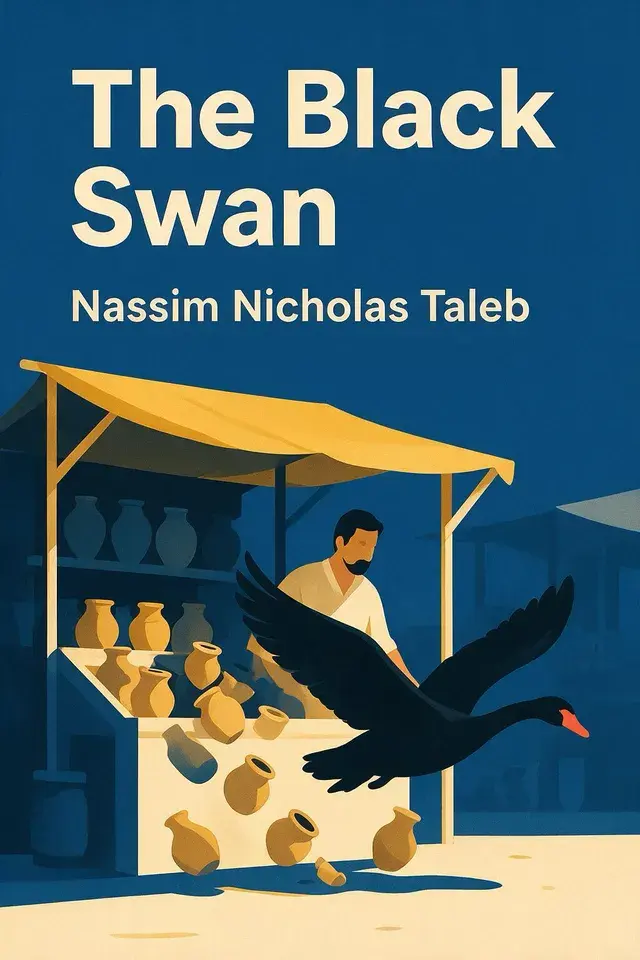
The Black Swan
The Black Swan asks why rare, high-impact events dominate history, markets, careers, and knowledge while hindsight makes them seem predictable. It examines induction, narrative distortion, silent evidence, expert failure, and fragile models, then develops a practical response to opaque uncertainty: limit catastrophic downside, preserve room for favorable surprises, and act with calibrated humility.
25 chapters in Wiseley’s business catalog.

The Coaching Habit
The Coaching Habit asks how managers can help people think and act more independently without becoming bottlenecks. It presents seven questions, habit-design techniques, and attentive listening practices for turning everyday conversations into clearer challenges, wiser choices, and learning.
9 chapters in Wiseley’s business catalog.

The Common Sense of Money and Investments
An accessible guide to making money serve ordinary life: how to save without mistaking stinginess for wisdom, choose securities by purpose and risk, protect dependents, read financial evidence, and resist seductive speculation. Its central question is how disciplined judgment can turn limited income into resilience without losing sight of human needs.
23 chapters in Wiseley’s business catalog.
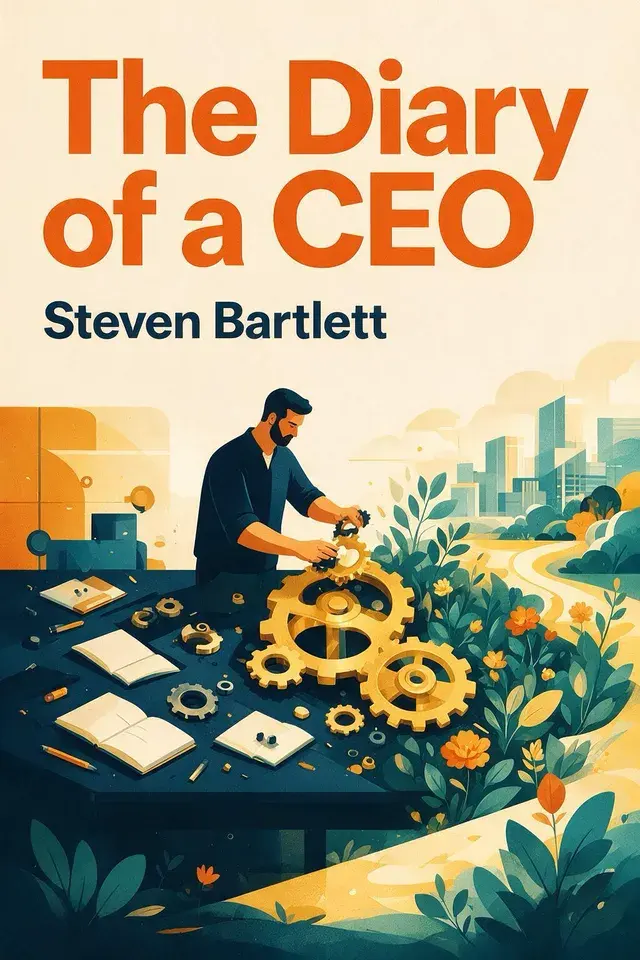
The Diary of a CEO
Steven Bartlett's book asks how people can build greatness that survives changing strategies. It connects self-mastery, learning, belief change, habits, health, attention, experimentation, time, delegation, culture, and leadership into a practical account of how durable progress is created—and how to keep correcting course.
13 chapters in Wiseley’s business catalog.

The E-Myth Revisited
Why do skilled technicians who start small businesses so often become trapped by work they once loved? The book answers by treating the business as a designed system: define the life and customer promise first, then build repeatable people, marketing, and operating practices that let the company grow beyond its owner.
9 chapters in Wiseley’s business catalog.

The Effective Executive
Peter F. Drucker asks how people in knowledge organizations can turn scarce time, specialized knowledge, and distributed responsibility into results. He presents effectiveness as a learnable discipline of contribution, strength, concentration, and decision-making, and connects it to organizational renewal, knowledge-worker productivity, and personal fulfillment.
14 chapters in Wiseley’s business catalog.
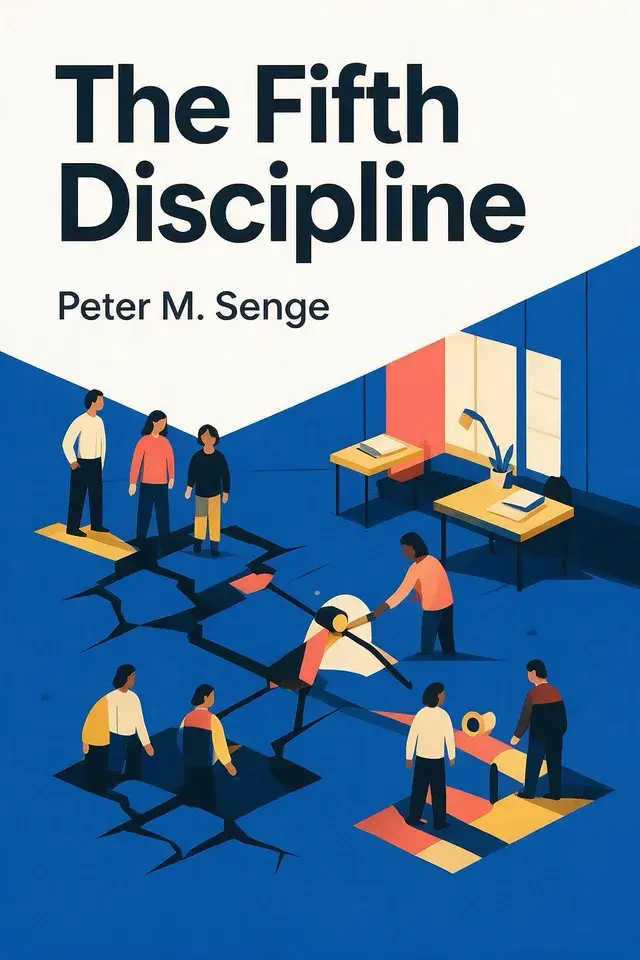
The Fifth Discipline
Peter Senge’s argument asks how organizations can create desired futures instead of reacting to events and repeating inherited failures. It connects systems thinking with personal mastery, mental models, shared vision, and team learning, then extends those ideas to leadership, organizational change, sustainability, and collective responsibility.
15 chapters in Wiseley’s business catalog.

The First 90 Days
The First 90 Days examines how leaders enter a new role, learn the organization, diagnose its situation, build credibility, align people and systems, and manage themselves. It asks how a vulnerable transition can become early momentum and lasting organizational value, offering a practical way to decide what to learn, whom to align, and what to change first.
10 chapters in Wiseley’s business catalog.

The Goal
The Goal follows plant manager Alex Rogo as he tries to save a failing factory while his family life is strained. It asks what productivity means when local efficiency harms the whole system, then develops bottleneck-focused measures and question-led reasoning for improving flow, financial results, and learning.
21 chapters in Wiseley’s business catalog.

The Hard Thing About Hard Things
Ben Horowitz’s account of building Netscape, Loudcloud, and Opsware asks what leaders should do when no option is good: how can they face fear, preserve trust, build capable organizations, decide under uncertainty, and recognize when persistence should yield to a sale? Its value lies in turning hard-won experience into usable questions, not formulas.
12 chapters in Wiseley’s business catalog.

The Infinite Game
The Infinite Game asks how leaders can keep business and other long-lived human pursuits moving when there is no final winner. It contrasts short-term scorekeeping with a Just Cause, then examines stewardship, trust, ethics, worthy rivals, adaptive change, and courageous decisions. The framework offers a way to judge choices by enduring purpose and consequences.
10 chapters in Wiseley’s business catalog.

The Innovator's Dilemma
Clayton Christensen examines why admired companies can lose industry leadership while listening to customers, investing aggressively, and managing well. He asks how sustaining and disruptive innovation differ, then uses disk drives and other industries to show how markets, incentives, capabilities, and organizational design shape strategic choices.
9 chapters in Wiseley’s business catalog.
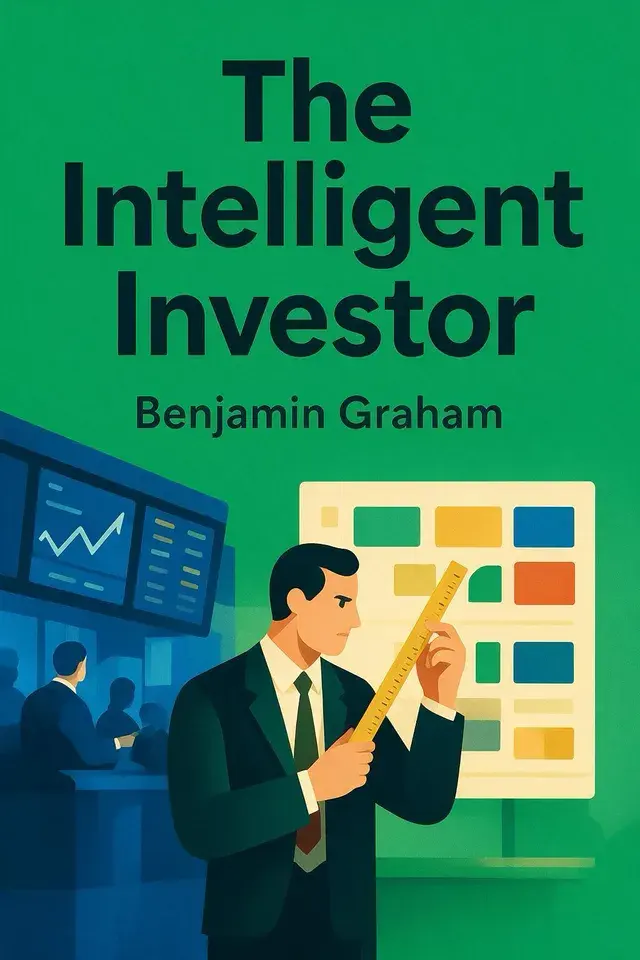
The Intelligent Investor
How can an ordinary person invest without mistaking market excitement for knowledge? Graham’s framework separates investing from speculation, relates price to business value, and builds decisions around diversification, margin of safety, costs, and behavior. The summary follows those principles through portfolio policy, security analysis, and corporate case histories.
10 chapters in Wiseley’s business catalog.
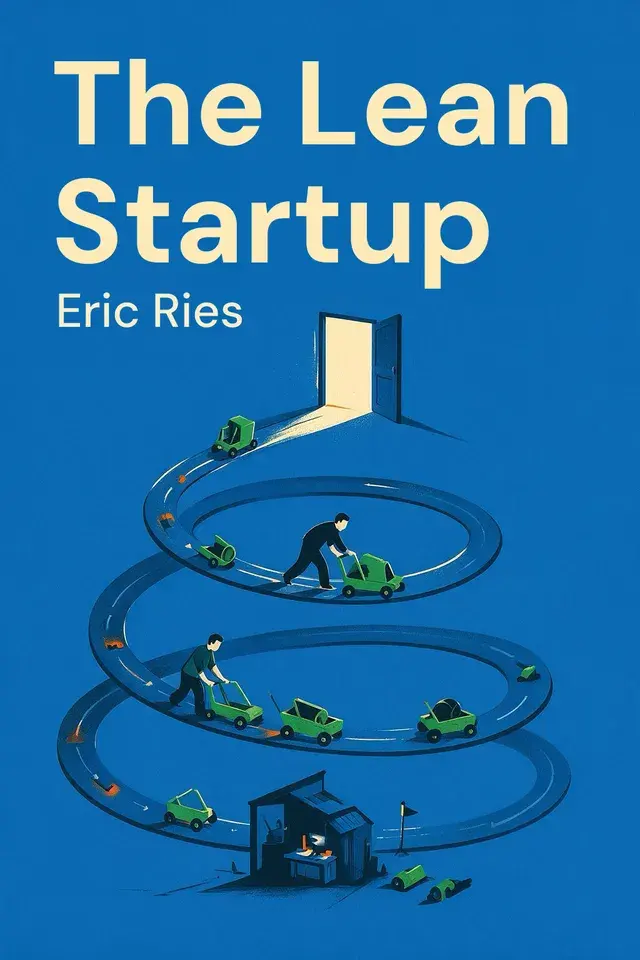
The Lean Startup
The Lean Startup asks how people can build new products and organizations when customers, markets, and outcomes are uncertain. It presents a disciplined cycle of hypotheses, small experiments, customer evidence, metrics, and pivots, giving readers a way to separate useful learning from waste and sustain innovation as organizations grow.
18 chapters in Wiseley’s business catalog.

The Little Book of Common Sense Investing
John C. Bogle’s case for low-cost, broadly diversified, buy-and-hold investing asks whether ordinary investors should try to beat the market or simply capture the returns of businesses. It explains how fees, taxes, trading, fund selection, ETFs, bonds, and asset allocation shape net results, and offers practical principles for disciplined long-term ownership.
17 chapters in Wiseley’s business catalog.

The Long Tail
The Long Tail examines why business and culture once centered on hits, and what changes when digital tools make production, distribution, and discovery cheap. It asks whether millions of niche products can form a market comparable to blockbusters. The framework connects consumer taste, participation, recommendation, and marketing while treating hits as enduring but no longer exclusive.
19 chapters in Wiseley’s business catalog.

The Millionaire Next Door
The Millionaire Next Door asks why some American households build substantial net worth on ordinary incomes while higher earners remain financially fragile. Drawing on survey research and case studies, it examines frugality, planning, investing, consumption, work, and family transfers, offering a framework for distinguishing visible affluence from durable financial independence.
7 chapters in Wiseley’s business catalog.

The Psychology of Money
Why do people make money choices that seem irrational, and how can they build wealth without risking what matters most? Morgan Housel examines personal history, luck, compounding, saving, time autonomy, uncertainty, changing goals, and economic expectations, then turns those ideas into a framework for durable financial behavior.
12 chapters in Wiseley’s business catalog.

The Richest Man in Babylon
Through stories set in ancient Babylon, this book asks how people can acquire, protect, and grow wealth. It links saving, deliberate spending, productive investment, debt repayment, useful work, and decisive action into a practical study of financial self-command.
11 chapters in Wiseley’s business catalog.

The Snowball
The Snowball follows Warren Buffett from a Nebraska childhood of counting, saving, and small businesses to Berkshire Hathaway’s rise through value investing, insurance, and disciplined capital allocation. It asks how wealth compounds—and what that discipline costs in family life, public responsibility, and succession—offering a connected account of method, character, and consequence.
9 chapters in Wiseley’s business catalog.

The Tipping Point
Why do fashions, diseases, crimes, and habits sometimes surge or collapse after a small change? Malcolm Gladwell’s framework explains social epidemics through influential people, memorable messages, and immediate context, using cases from Hush Puppies to smoking to show how small, targeted changes can redirect collective behavior.
11 chapters in Wiseley’s business catalog.

The Total Money Makeover
How can a household move from denial, debt, and paycheck-to-paycheck vulnerability to financial control? The book’s answer is a behavior-first sequence: face the numbers, budget, build emergency reserves, eliminate debt, invest, fund education, pay off the home, and use resulting wealth for enjoyment and giving.
15 chapters in Wiseley’s business catalog.

The Wealth of Nations
The Wealth of Nations asks how labor, exchange, land, and accumulated stock become broad material abundance. It traces division of labor, prices, wages, rent, banking, trade, and political institutions, showing how markets can support growth while privileges, insecure property, and misdirected capital obstruct it.
13 chapters in Wiseley’s business catalog.

Think Again
Think Again examines how to question beliefs, loosen identity’s grip on being right, and revise decisions as circumstances change. Its central question is how to rethink alone and together—through productive disagreement, listening, education, and learning cultures—and pursue meaning without confusing persistence with wisdom.
7 chapters in Wiseley’s business catalog.

Think and Grow Rich
Think and Grow Rich asks how a dominant desire becomes achievement. Hill’s answer combines a definite aim, faith, autosuggestion, specialized knowledge, imagination, planning, decision, persistence, cooperative power, emotional discipline, and freedom from fear. The outline preserves that progression while distinguishing practical advice from the book’s metaphysical claims.
19 chapters in Wiseley’s business catalog.

Tools of Titans
Tools of Titans examines how high performers build health, wealth, and wisdom through habits, questions, experiments, and deliberate choices. Its central question is how to borrow useful principles without copying personalities. The practical value is a framework for testing, adapting, and combining tools into a life-specific system.
11 chapters in Wiseley’s business catalog.
Trillion Dollar Coach
Trillion Dollar Coach examines how Bill Campbell helped ambitious teams turn talent, ego, and conflict into shared success. Its central question is how managers earn real leadership: through trust, coaching, team-first decisions, candid feedback, human care, and high standards. The value is a practical framework for humane, decisive teamwork.
6 chapters in Wiseley’s business catalog.
Up the Organization
Up the Organization examines how leaders can replace control, status, and bureaucracy with trust, accountability, direct communication, and shared ownership. Its central question is how organizations can release human capability without losing performance. The practical value is a framework for diagnosing obstacles and redesigning work around people.
8 chapters in Wiseley’s business catalog.
Working Backwards
Working Backwards asks how Amazon could preserve customer obsession, long-term judgment, and invention as it scaled. It explains the mechanisms behind that effort—hiring, autonomous teams, narratives, PR/FAQs, and input metrics—then tests them through Kindle, Prime, digital video, and AWS, offering a practical way to connect principles with daily decisions.
10 chapters in Wiseley’s business catalog.

Zero to One
Zero to One asks how people can create genuinely new technology and durable businesses instead of copying what already exists. It connects contrarian thinking, monopoly, long-term planning, secrets, team design, distribution, and human–computer complementarity, then asks how deliberate creation can make the future better.
12 chapters in Wiseley’s business catalog.
Keep exploring

Comparison
The Psychology of Money vs Rich Dad Poor Dad: Two Paths to Better Money Decisions
One emphasizes behavior under uncertainty; the other uses a provocative story about assets, work, and ownership. Compare them without treating either as a personal financial plan.

Comparison
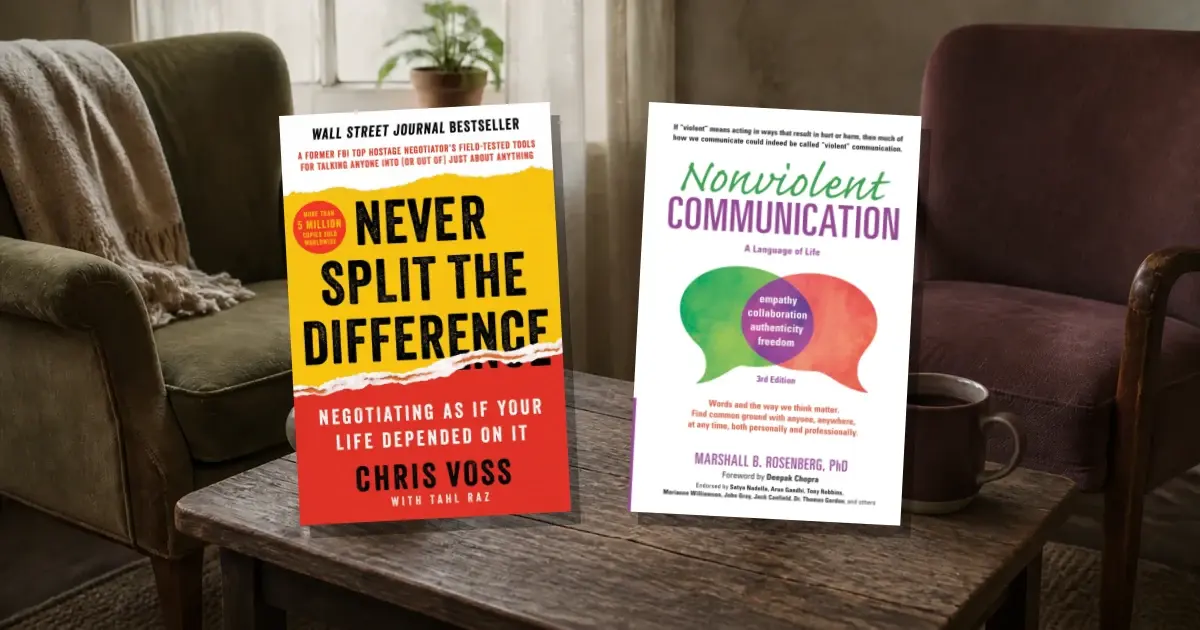
Never Split the Difference vs Nonviolent Communication: Negotiate or Connect?
Both methods listen closely, name emotion, and slow reactive talk. Their goals and ethical center are not the same.


Comparison
Steve Jobs vs Elon Musk: What Do Their Biographies Reveal About Ambition?
Walter Isaacson portrays two founders who turn urgency into products, pressure, and collateral damage. Compare the mechanisms without mistaking intensity for a transferable formula.


Practical guide
How to Prepare for a Difficult Conversation in 15 Minutes
Replace the speech in your head with a one-page map of facts, interpretations, stakes, questions, and a clear next step.


Practical guide
How to Negotiate a Salary Offer Without Bluffing
Prepare evidence, surface the employer’s constraints, and make a precise request without inventing leverage you do not have.
Reading list
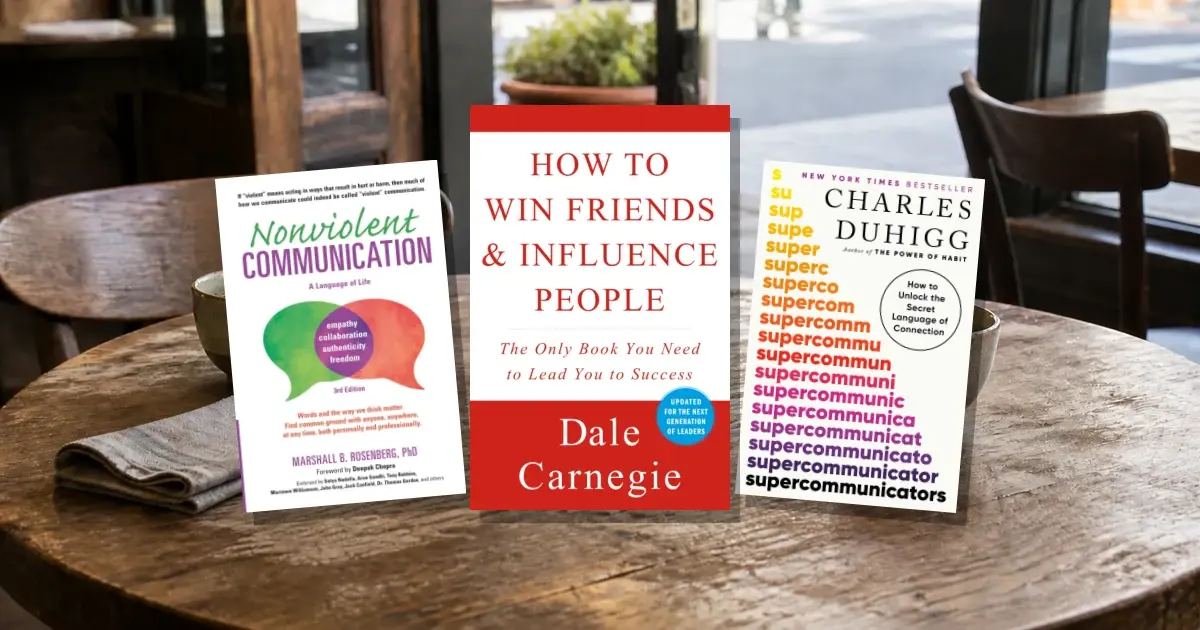
The Best Communication Books for Work and Relationships
Choose a book for the conversation you actually face: rapport, understanding, boundaries, attachment, negotiation, or conflict.