
What you'll learn
Key ideas from Ethics
These ideas compress the book's argument without treating the author's view as settled fact. Use them as an orientation before reading the full work or listening in Wiseley.
Ethical climates shape judgments, feelings, and conduct, often through assumptions people do not consciously notice.
Tolerance checks cultural arrogance, while resistance to oppression should take seriously the voices of people harmed by a practice.
Evolutionary function describes how a trait may have been selected; it does not by itself identify an individual’s psychological aim.
Ethics centers on feasible demands of decency; exceptional self-denial may be admirable without becoming a universal obligation.
Utilitarianism assesses actions by their effects on everyone’s welfare, giving each person’s happiness equal weight.
Rules support trust and cooperation; bending them for predicted short-term gains can destroy the practices they make possible.
Restrictions are best examined by naming the harm, identifying who decides, and asking how that power is checked.
Ethical standards are humanly established and fallible, yet they can guide criticism and be defended through shared concern.
Inside Ethics
Read the first chapter in full here. The other 13 continue in the Wiseley app.
Chapter 1 of 14 · 5 min · Audio & text
Ethics as a Shared Climate
Ethics, by Simon Blackburn.
People notice the physical world around them more readily than the moral one. Yet a shared ethical climate shapes what seems acceptable, admirable, successful, owed, shameful, or blameworthy. It influences not only rules people can recite, but also their expectations, feelings, and judgments about how others should behave.
This climate can work without anyone stating or even noticing its assumptions. An ethical idea may be a disposition: a readiness to accept certain ways of thinking and feeling. The anecdote about Niels Bohr’s horseshoe contrasts superstition with the effective influence of a moral environment. Shared expectations can guide conduct even when people have not consciously endorsed them.
We are ethical animals in this sense, not because we always behave well, but because we keep comparing and evaluating. We admire some lives, blame some actions, assign responsibility, and ask what is owed. Our experiences revise our ideas of guilt, shame, and personal worth. We also want stories about ourselves that make us appear admirable to others and to ourselves. That makes ethical assumptions part of how we understand who we are.
Blackburn uses the climate around Nazism to show the political stakes. It included ideals of racial purity, fear of contamination from within or outside, a sense of national and racial destiny, and promises of transformation through solidarity and military dedication. It also placed an authoritative leader beyond challenge. These ideas had roots in misapplications of Darwinism, German Romanticism, and some aspects of Judaism and Christianity. People did think, but their thinking took place inside an encompassing climate; many of its assumptions could remain unspoken. Stories that cast a system as civilized, rational, deserving, or entitled can help make domination seem acceptable. Blackburn presents an ethic gone wrong as an essential preliminary to concentration camps and death marches.
The example also marks a limit. Philosophy, like art or science, offers little immediate practical help to someone on a death march. Reflection cannot substitute for what a person needs in that crisis. Its political value lies partly in examining the climate that helped make such conditions possible, before the crisis arrives. Ethical environments matter in ordinary arrangements too: some people can benefit while others are deprived, and those who benefit may resist having the assumptions behind that arrangement exposed.
An ethical climate is distinct from moralism. A society can be shaped by judgments about right and wrong while treating moralizing as improper or bad form. The reluctance to discuss what makes a good life is itself part of the climate Blackburn asks us to examine. Reflection can unsettle comfortable arrangements, especially when people would rather enjoy their lives with a clear conscience than hear their assumptions questioned.
The gossip dilemma brings this work down to everyday scale. Should Arlene tell Charlene that Rod knows Tod kissed Darlene, although nobody has told Marlene? The question is whether telling Charlene is required by loyalty to her or would betray Darlene. The fact that the story has not been told to Marlene also brings secrecy into the scene, but it does not settle the choice. The labels alone do not answer it; ordinary life already involves ethical reflection, even when nobody calls it philosophy.
Philosophy makes that reflection more deliberate. It asks what motivates us, how reason and feeling work, and what network of norms sustains our choices. This is a form of self-knowledge, though philosophers cannot step entirely outside the climate they interpret. Their accounts of human nature can still be better or worse, even when they are historically and socially situated.
The book begins by introducing seven threats to ethical confidence. They challenge whether standards can guide conduct, or reduce ideas such as justice, equality, freedom, and rights to power, hypocrisy, or personal opinion. Cynicism can make judgment and action feel paralyzing. Blackburn does not promise that these challenges will be settled once and for all. He leaves readers to judge whether the inquiry defeats them or makes them less dangerous. The first question is why ethics matters: because its shared climate shapes both personal conduct and political possibility.
Chapter 2 of 14 · 7 min · Audio & textIn the app
Authority, Religion, and Custom
Ethics is sometimes grounded in a higher authority: a revealed code tells people what is right, and obedience is rewarded. If that authority weakens, it can seem that morality must weaken with it.
Chapter 3 of 14 · 7 min · Audio & textIn the app
Motives, Genes, and Responsibility
The claim that every generous act is secretly selfish can sound like sober realism. So can the claim that genes have settled our conduct in advance, leaving ethical advice pointless.
Chapter 4 of 14 · 7 min · Audio & textIn the app
Reasonable Demands, Hidden Power
A morality can lose credibility if it asks people to do what they cannot reasonably be expected to do. Ethical reflection must take other people’s needs seriously, but it also has to distinguish an obligation from an ideal of limitless sacrifice.
Chapter 5 of 14 · 7 min · Audio & textIn the app
Birth and the Moral Boundary
Birth-related ethical debate is often presented as a choice between leaving nature alone and giving individuals complete control. Neither slogan settles a case.
Chapter 6 of 14 · 6 min · Audio & textIn the app
Death, Loss, and Responsibility
What could it mean to say that death harms the person who dies? Epicurus offers a stark answer: while we exist, death is absent; when death is present, we no longer exist.
Chapter 7 of 14 · 5 min · Audio & textIn the app
Desire, Meaning, and Perspective
Desire can seem bleak when we describe it only in general terms. We want something, obtain it, and then want something else.
Chapter 8 of 14 · 6 min · Audio & textIn the app
Pleasure, Truth, and Flourishing
What makes a life go well? Pleasure seems an obvious part of the answer. Yet pleasure can mean a passing sensation, while a good life seems to involve more: relationships, activity, achievement, and having one’s wishes fulfilled. Aristotle called such a life eudaimonia, or flourishing. The question is whether happiness can be measured by how pleasant life feels, or whether that leaves out what makes living go well in the first place. Jeremy Bentham tried to make pleasure and pain countable. When weighing an…
Chapter 9 of 14 · 7 min · Audio & textIn the app
Happiness, Rules, and Consequences
Utilitarianism asks ethics to take the welfare of people as a whole as its measure. Its principle of utility directs action toward the greatest happiness of the greatest number.
Chapter 10 of 14 · 6 min · Audio & textIn the app
Freedom, Harm, and Paternalism
People may disagree about the ideal society, yet find it easier to agree on evils that should be avoided: violence, domination, discrimination, deprivation, powerlessness, and arbitrary arrest. This gives political ethics a practical starting point.
Chapter 11 of 14 · 6 min · Audio & textIn the app
Rights as Social Protections
Rights matter because they name protections owed to individuals in relationships where power could leave them exposed. Someone facing private predation or a collective decision that disregards them can appeal to a right as a claim institutions should recognize.
Chapter 12 of 14 · 6 min · Audio & textIn the app
Reasons, Virtue, and Living Well
A moral argument often gives us a reason: someone is suffering, a promise has been made, or a choice will affect other people. Such reasons can be powerful, but they do not work like a mathematical proof.
Chapter 13 of 14 · 8 min · Audio & textIn the app
Duty, Agreement, and Justice
Can ethical obligations bind because they are rationally necessary, rather than because their consequences appeal to our desires? Kant’s answer centers on the good will, which he treats as the only thing good in itself without qualification.
Chapter 14 of 14 · 6 min · Audio & textIn the app
The Common Point of View
To give a reason is to invite someone else to consider it. An explanation meant to justify an action reaches beyond the speaker’s private preference: it asks another person to see why that consideration should count.
Chapter 1 of 14 · 5 min · Audio & text: Ethics as a Shared Climate
Wiseley supports reading and listening to summaries in the app.
Continue in WiseleyAbout Simon Blackburn
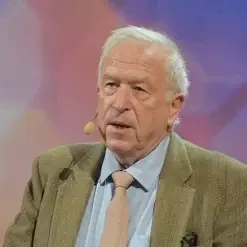
Simon Blackburn is an English philosopher. “Ethics” explores what can make ethical standards matter when religion, custom, self-interest, and skepticism seem to undermine them.
Explore more books by Simon Blackburn