What you'll learn
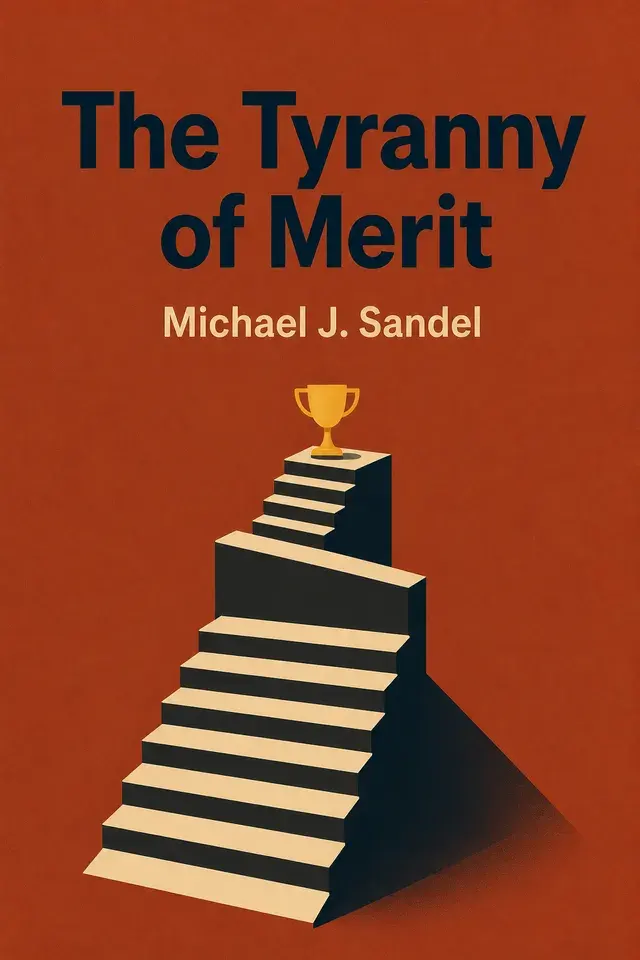
Key ideas from The Tyranny of Merit
These ideas compress the book's argument without treating the author's view as settled fact. Use them as an orientation before reading the full work or listening in Wiseley.
Meritocratic self-making hides luck and dependence, turning success into hubris and failure into humiliation.
Declining mobility made self-reliance punitive: stalled advancement became evidence of personal failure rather than institutional limits.
Credentialism turns college degrees into proxies for intelligence, virtue, and legitimacy, making educational attainment a social ranking rather than merely a qualification.
Talent, effort, family circumstances, and social demand all shape success, limiting claims of self-made desert.
Standardized tests and family resources made meritocratic admissions wealth-linked, while elite colleges remained socially narrow and weak engines of mobility.
A just society must honor contributive work, since market wages and educational credentials do not fully measure a person’s value to the common good.
Democratic humility grows when citizens recognize luck, social dependence, and shared institutions, then deliberate together about the common good.
How The Tyranny of Merit builds its case
Follow how the book develops its argument. Each note is a brief orientation, not a replacement for the chapter.
The Meritocratic Promise Breaks
The book opens with the coronavirus pandemic as a test of competence and character. In 2020, the United States entered the crisis without adequate testing, protective equipment, or coordination, despite earlier warnings.
From Providence to Self-Making
Meritocracy is often presented as a practical rule: choose the most capable person, reward effort, and remove discrimination. Sandel argues that it carries a larger moral promise.
The Promise of Rising
The promise of rising sounds like a modest democratic ideal: if people work hard, follow the rules, and face fair competition, they should improve their position. Sandel argues that over the last four decades, this ideal became something stronger.
Credentials and Democratic Voice
Meritocracy begins with an appealing promise: if opportunities are open, people should advance through effort and ability. Once that promise enters institutions, however, educational credentials can become more than evidence of preparation.
The Moral Limits of Merit
Meritocracy is often defended as a moral improvement over aristocracy. In an aristocracy, birth fixes social position.
When Merit Becomes a Sorting Machine
College admissions were supposed to sever the connection between birth and social position. Instead, they became a gate through which society distributes opportunity, status, and confidence.
Work, Recognition, and Humility
The book’s constructive argument begins where its critique of meritocratic sorting leaves off. A fairer contest for elite places would not be enough.