
What you'll learn
Key ideas from Feeling Is The Secret
These ideas compress the book's argument without treating the author's view as settled fact. Use them as an orientation before reading the full work or listening in Wiseley.
Feeling is the medium that impresses an idea; the subconscious is portrayed as nonselective and as expressing what it accepts as true.
Feeling control means directing attention toward chosen states, while a stronger opposing feeling may counter an earlier impression.
The bedtime practice joins an imagined fulfilled wish with satisfaction and relaxation into sleep.
Goddard locates free will in choosing moods and reactions that shape later expression.
In Goddard’s account, prayer accepts the desired end as accomplished and leaves its means unspecified.
Inside Feeling Is The Secret
Read the first chapter in full here. The other 2 continue in the Wiseley app.
Chapter 1 of 3 · 8 min · Audio & text
The Law of Felt Assumption
Feeling Is The Secret, by Neville Goddard.
Goddard’s central proposal is that the subconscious expresses what a person feels to be true. In his account, a change in experience begins with a change in the inner state a person accepts. Feeling is the way an idea is impressed; the visible world is said to give that accepted idea form. The book asks readers to treat this as a principle to test, not merely an idea to agree with.
The foreword presents the book as an account of how desire may be realized and how the visible world is produced. Goddard says he has left out reasoned arguments and testimonials because a reader might suspect an author of dishonesty or delusion. Instead, he invites open-minded readers to try the principle and judge it by their own success. That invitation frames the book’s claims, but does not itself prove them.
To explain the principle, Goddard treats consciousness as the source and substance of the world. The things a person sees are, in his model, conditioned consciousness made visible. This is the premise behind his claim that inner assumptions shape outer circumstances. It is not a conclusion established through evidence in the foreword; it is the starting point from which he reasons.
He divides consciousness into two roles. The conscious mind is personal and selective: it considers ideas and chooses what to accept. It belongs to the realm of effects, because it meets the world as it appears. The subconscious is impersonal and nonselective, and belongs to the realm of causes. It does not originate ideas. It receives what the conscious mind impresses on it and gives that impression expression.
Goddard describes the process as an idea entering the subconscious through feeling and then taking form in action or experience. The subconscious, he says, does not stop to test the idea against reason or decide whether it is good, bad, or useful. It treats a feeling accepted as true like an existing fact. The conscious mind therefore influences it by managing the ideas and feelings it entertains, not by issuing a command alone.
The master-servant analogy clarifies these functions when taken as a description of their roles. The conscious mind selects what is to be impressed; the subconscious receives it and gives it form. But Goddard qualifies the analogy: the subconscious is not simply forced to obey. It responds to persuasion, and feeling an idea as real is what persuades it. A bare wish or spoken order, without that inward acceptance, does not amount to the impression he describes.
Feeling, in this account, is more than a passing emotion. It is the sense that an idea is true of oneself now. A person may want a different state, but the wish alone does not impress the subconscious if the person continues to feel the opposite. Goddard contrasts “I am” with “I will be”: the first assumes a present identity, while the second leaves fulfillment in the future. His proposed change begins when the desired state is accepted as present in feeling.
The subconscious is described as impartial toward every impression. A felt idea, whether desirable or not, is said to be impressed and to seek expression. Goddard does allow for a qualification: a stronger opposite feeling can counteract an earlier impression. The law is therefore not presented as every passing thought inevitably determining experience. In his model, the influential impression is the feeling that has been accepted and remains stronger than its opposition.
This is why Goddard’s instruction to control feeling does not mean suppressing or restraining emotion. He defines it as disciplining oneself to imagine and entertain feelings that contribute to happiness. The emphasis is on where attention is directed and what the mind continues to rehearse. He advises against dwelling on what is wrong or imperfect in oneself or in others. The task is not to pretend that an unwanted feeling never arose, but to stop giving it the dominant place and deliberately attend to a different state.
The health-and-disease contrast shows how strongly he applies this claim. Goddard asserts an unbroken connection between feeling and the visible world, and says the body bears marks of prevalent emotion. He goes so far as to attribute all disease to emotional disturbance, especially suppressed emotion. He also warns that intensely feeling a wrong while refusing its expression can begin disease in the body and environment. These are sweeping claims made within his theory, not medical conclusions established by argument here. Their role in the chapter is to underline his distinction: he advises directing feeling, not bottling it up.
Goddard extends the same model from bodily experience to a person’s fate. He rejects chance or a fixed destiny as the explanation for personal conditions, arguing instead that subconscious impressions determine the world a person experiences. The visible circumstances are effects and witnesses of what has been impressed. On this account, what a person is conscious of being or possessing matters more than what they merely want. A change in fate begins, in his reasoning, with a change in felt self-conception.
That distinction explains why he gives priority to a present sense of identity over a distant hope. If a person’s active feeling is that a desired state is absent, then simply wanting it leaves the old impression in place. The relevant shift is to feel the state as true now, rather than as something that may become true later. Goddard’s claim is not that desire itself changes circumstances, but that an accepted inner state is expressed outwardly.
For the same reason, he tells readers to disregard sensory appearances when they contradict the state they wish to accept. He regards the visible world as a reflection of subconscious impressions, so present appearances show what has already been impressed; they do not set the final limit on what may be experienced. This is a premise of his method, and he presents it as a way to keep attention from being governed by conditions that the reader is trying to change.
The general practice that follows is to attend to the desired state itself, rather than to the means or difficulties involved in reaching it. Goddard argues that dwelling on barriers or delay may impress those obstacles, while feeling the end as real directs attention toward the condition one seeks. His account requires more than describing a wish: it asks a person to live and act in the conviction that the chosen state is true. The book’s later applications build on this general law, while the present chapter establishes why feeling, rather than desire alone, is supposed to do the work.
The sequence is concise: the conscious mind selects an idea, feeling makes it an accepted state, and the nonselective subconscious is said to express it. Goddard’s central demand is therefore to change the state one feels to be true before expecting the outer world to reflect a different conception.
Chapter 2 of 3 · 7 min · Audio & textIn the app
Entering the Wish Through Sleep
Goddard turns the book’s account of feeling into a bedtime practice. He treats sleep as a receptive moment because, as a person falls asleep, attention naturally withdraws from the waking world.
Chapter 3 of 3 · 6 min · Audio & textIn the app
Prayer as Lived Faith
Goddard presents prayer as a way of becoming receptive, rather than as a verbal request meant to persuade an outside power. Its first task is to quiet attention to the outer world and make room for an inward suggestion.
Chapter 1 of 3 · 8 min · Audio & text: The Law of Felt Assumption
Wiseley supports reading and listening to summaries in the app.
Continue in WiseleyAbout Neville Goddard
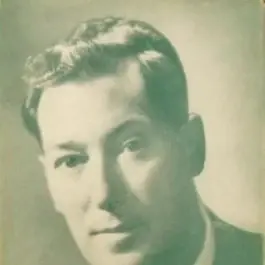
Neville Goddard was a Barbadian-born writer, speaker, and mystic of the New Thought movement. “Feeling Is The Secret” explores the claim that accepted feeling gives form to experience, and how imagination, sleep, and prayer can be used to inhabit a desired state.
Explore more books by Neville Goddard