Choose by reading appetite
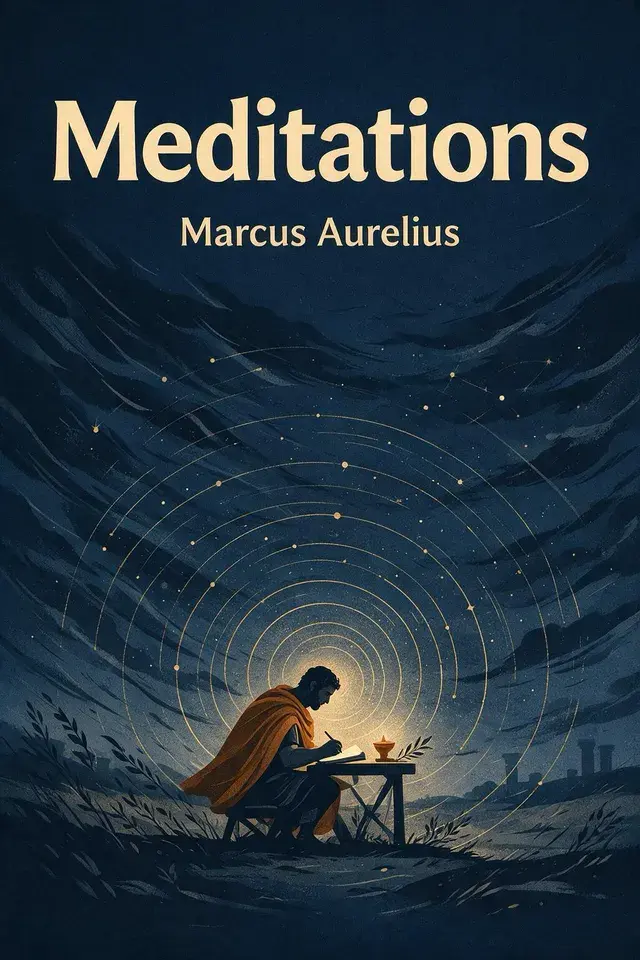
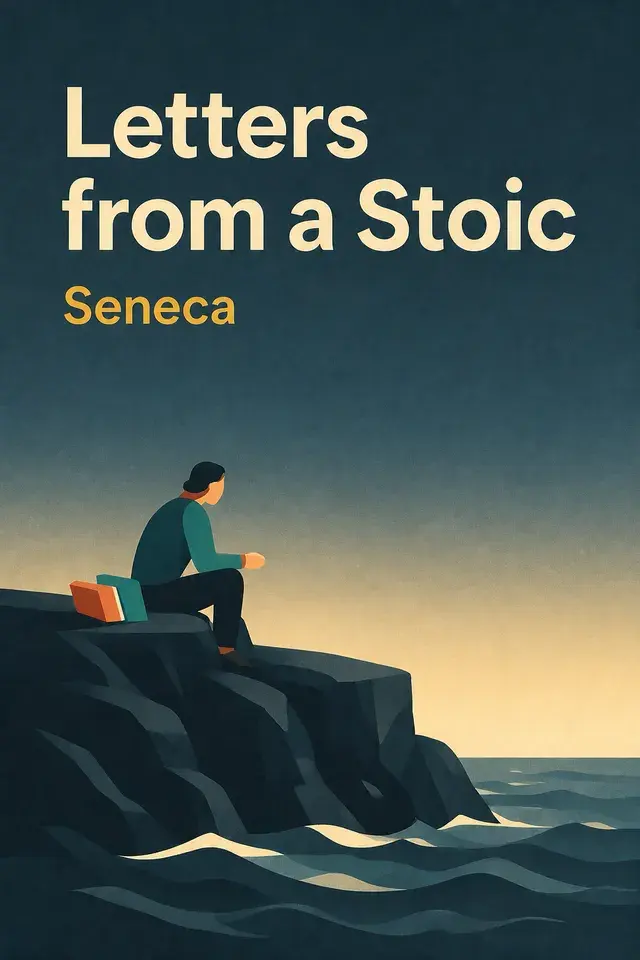
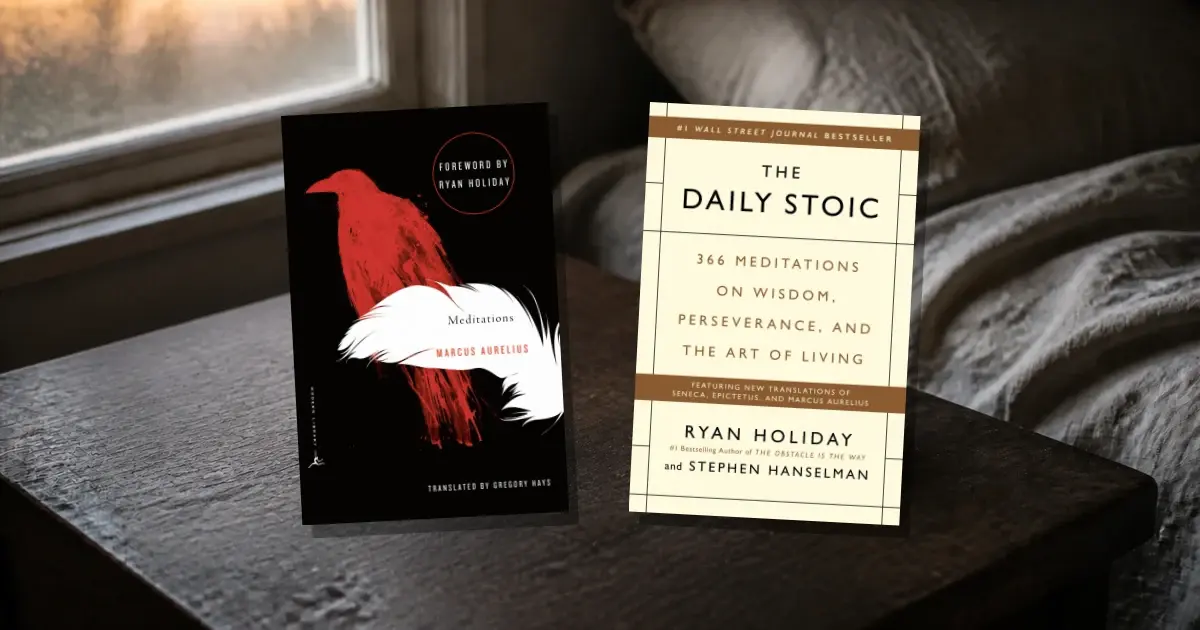
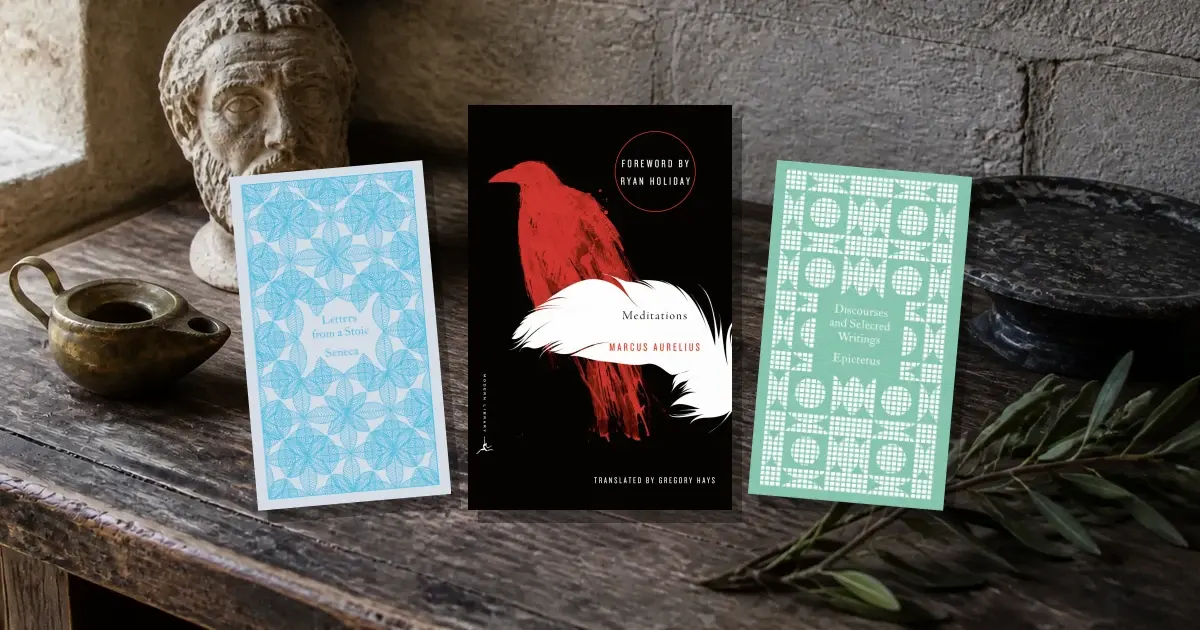
The Stoic canon spans very different experiences of the same ideas. Meditations is private and unpolished — notes an emperor wrote to himself. Seneca is the conversationalist, coaching one friend at a time. Epictetus reads like classroom transcripts: repeated, confrontational, and unconcerned with elegance. Irvine and Holiday are modern renderings that trade originality for accessibility. None is the single correct entry; each suits a different reader.
- Want the source voice in its rawest form: Meditations.
- Prefer warmth, humor, and practical letter-length doses: Letters from a Stoic.
- Want the philosophy argued and pressed until it holds: Discourses.
- Need exercises before doctrine: A Guide to the Good Life.
- Want Stoicism applied to work and setbacks immediately: The Obstacle Is the Way.
What each book adds
Marcus contributes the inner method: examine impressions before assenting, keep the citadel of judgment, treat obstacles as material for virtue, and return to present duty amid power and mortality. Seneca makes the same discipline livable — protecting time, shrinking desires to nature's limits, rehearsing mortality without panic, and turning study into habit through friendship. Epictetus supplies the rigorous core: the distinction between what is up to us and what is not, consent to the cosmic order, and freedom tested under pressure and social roles. Irvine translates all three into modern practice with negative visualization, the control trichotomy, voluntary discomfort, and nightly review. Holiday compresses the tradition into three disciplines — perception, action, will — aimed squarely at career obstacles.
- Most demanding and most rewarding: Discourses, where the arguments are made rather than assumed.
- Gentlest genuine start: Letters from a Stoic, one letter at a time.
- Fastest path to application: The Obstacle Is the Way, ideally read alongside its sources.
A reading order from modern back to ancient
Two routes work. Readers who want practice first can begin with Irvine or Holiday, then follow their citations backward to Seneca, Marcus, and Epictetus with concrete habits already in hand. Readers who want depth can enter directly with Seneca's letters as on-ramp, then Meditations for the interior voice, then Discourses for the philosophical engine underneath both.
- Pick one exercise — negative visualization or the evening review — and run it for a month while reading.
- Keep a page number log wherever a modern author cites an ancient one.
- Return to Book One of Meditations after a year; gratitude reads differently once practiced.
Sources and scope
Book ideas are attributed to their authors. External evidence is linked directly when a claim needs more than the source book.
- Meditations: Source for impression examination, the inner citadel, obstacles as virtue material, and present duty under mortality.
- Letters from a Stoic: Source for time protection, desire economy, fear rehearsal, character over fortune, and philosophy as habit.
- Discourses: Source for the ruling faculty, control distinctions, consent to order, role duties, and freedom tested under pressure.
- A Guide to the Good Life: Source for negative visualization, the control trichotomy, voluntary discomfort, and meditative self-review.
- The Obstacle Is the Way: Source for the perception-action-will disciplines, leverage in constraints, failure as feedback, and amor fati.
To report a factual, attribution, rights, or accessibility concern, email hello@wiseley.app.
Questions readers ask
Should I read Meditations first?
Only if you are comfortable with aphorism instead of argument. Meditations was never written for publication, so it rewards readers who bring context. Many people get more from starting with Seneca's letters or Irvine's guide and coming to Marcus afterward, when the private shorthand has somewhere to land.
What is the difference between Seneca and Epictetus?
Seneca writes as a wealthy retired statesman consoling individuals through ordinary troubles — time, grief, wealth, friendship. Epictetus, a former slave who taught publicly, presses the harder doctrinal core: what is up to us, how assent works, what freedom costs. Seneca persuades; Epictetus drills.
Are the modern books enough on their own?
They are useful on-ramps but incomplete alone. Irvine adds psychological framing and structured exercises the originals never intended; Holiday packages Stoicism for workplace setbacks. Both borrow nearly every load-bearing idea from the ancients, and the summaries' citations make it easy to climb back to the sources.