What you'll learn
Key ideas from Toward a Psychology of Being
These ideas compress the book's argument without treating the author's view as settled fact. Use them as an orientation before reading the full work or listening in Wiseley.
Psychological health concerns the growth and expression of human capacities, not merely symptom absence, emotional calm, or adjustment to prevailing conditions.
Growth gratification can enlarge both the desire and the capacity to keep learning, creating, and mastering.
Healthy development needs basic security and graded frustration; overprotection weakens strength, while overwhelming threat makes retreat protective.
Being-love attends to another person's intrinsic worth, uniqueness, autonomy, and possibilities beyond immediate usefulness.
Being-cognition temporarily loosens need-driven classification so objects and people can appear as concrete, unique wholes.
Peak experience can intensify individuality while temporarily reducing self-consciousness, because fuller identity and relative egolessness can arise together.
Primary creativity supplies spontaneous insight; secondary processes develop it through training, criticism, reality testing, and sustained work.
Human potential is intrinsic but weak; culture enables its expression, and personal choice helps create the form a life takes.
Inside Toward a Psychology of Being
Read the first chapter in full here. The other 10 continue in the Wiseley app.
Chapter 1 of 11 · 8 min · Audio & text
Health Beyond the Absence of Illness
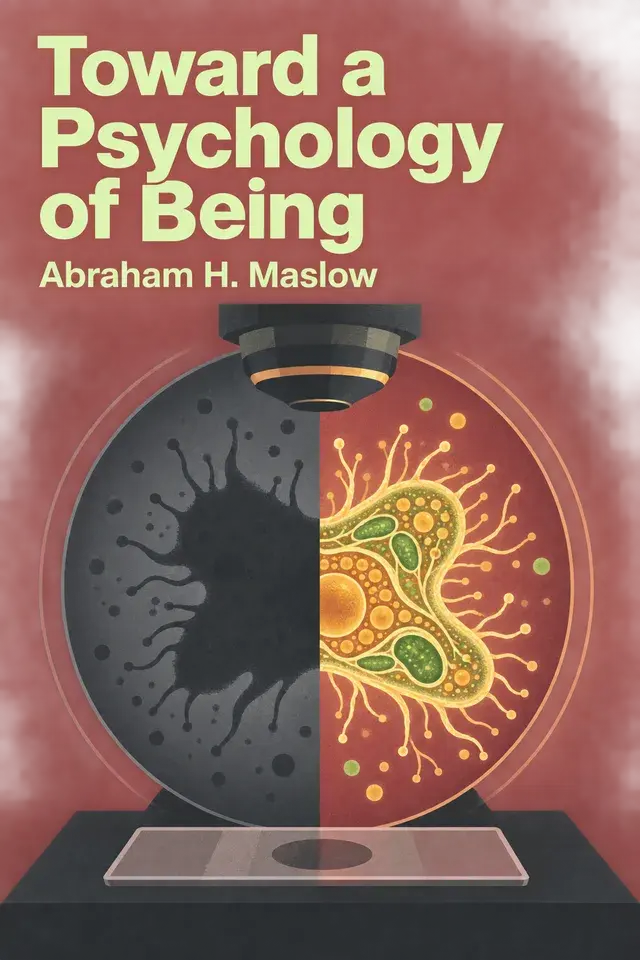
Toward a Psychology of Being, by Abraham H. Maslow.
Maslow begins by questioning a familiar definition of psychological health: when symptoms disappear and a person adjusts to the surrounding world, the person is called well. That definition can identify suffering, but it cannot tell us whether a life is becoming fuller. Conflict, guilt, anxiety, depression, frustration, or shame may reflect illness, yet they may also accompany resistance, moral seriousness, or development. A calm person may have reached that calm by surrendering protest, desire, or self-respect. So the question is not simply whether symptoms exist, but what their presence or absence means in context. These are interpretive questions, not diagnostic tests. Maslow is not saying that every frustration is repression or that every impulse is wise.
This revision belongs to Maslow’s humanistic, or Third Force, psychology. He presents it as an expansion that incorporates useful parts of behaviorism and Freudian thought, along with organismic, Gestalt, phenomenological, and existential concerns. Freud helped psychology study its sick half; Maslow wants it to study the healthy half too. Existentialism sharpens questions of identity, lived experience, potentiality, values, and responsibility. Maslow does not treat existential language as automatically scientific: some of it is too vague to confirm directly. He asks science to widen its subject matter and methods enough to investigate personal experience and values while keeping claims open to public checking.
That status matters. The book offers hypotheses assembled from limited research, observation, deduction, and hunch. Maslow’s observations of psychologically healthy people are intended to illuminate therapy, education, values, and development, but those samples are not a neutral picture of humanity. They require replication, and the investigator may project expectations onto the people studied. The terms health and illness are useful shorthand here, not final scientific categories. The argument is ambitious, but provisional: it asks what a broader psychology might discover rather than announcing a completed theory.
At the center is a proposal about human nature. Each person, Maslow suggests, has an inner nature that is partly shared with the species and partly individual. It has biological, hereditary, constitutional, and early-acquired roots, including needs, capacities, talents, bodily equipment, and temperamental tendencies. This is potential, not a finished self. A child may carry the beginnings of curiosity, creativity, love, care, spontaneity, authenticity, or truth-seeking, but these capacities need development. Family, culture, and teachers can nourish, shape, or suppress them; they provide conditions for actualization rather than creating human potential from nothing. The seed metaphor captures the relation: the environment supplies the conditions, while the kind of growth depends on what the person is.
The inner nature is also weak. Habit, fear, disapproval, mistaken education, and cultural pressure can drown its signals, and a person can lose conscious contact with capacities without erasing them. Maslow therefore describes self-actualization as an ongoing movement toward fuller humanness: realizing capacities, finding a fitting form for talents and vocation, accepting deeper nature, and becoming more integrated. It is not a completed state or a demand to express every passing desire. Nor is it a selfish ideal of isolated autonomy. The word self can mislead, because this development includes love, care, creativity, and relation to a larger human world. Potential usually allows several forms of expression, so self-actualization involves choice and self-making as well as discovery.
That distinction limits a tempting but dangerous reading. The claim that people have a tendency toward self-actualization is not identical to the claim that whatever feels authentic is ethical. Maslow treats the inner nature as generally prior to ordinary moral categories, not as a guarantee of goodness. He also allows that controls, discipline, frustration, and reality-testing can be necessary. A person must learn the limits imposed by other people and the world. Growth may require tolerating difficulty, but overwhelming frustration can injure rather than strengthen. The inner voice deserves investigation and respect, not automatic obedience.
Maslow’s account of conscience develops this argument. He accepts that much conscience is formed through early authority figures, but adds an intrinsic conscience: a partly unconscious awareness of one’s own nature, capacities, possible vocation, and calling. Actions can register for or against the self over time. The born painter who sells stockings illustrates the idea. The example is not a condemnation of selling stockings. Its force lies in the mismatch between a central capacity and a life that repeatedly refuses to use it. The resulting self-disapproval may be deeper than social embarrassment because the person senses a betrayal of what they could become. In the same way, someone who knows a truth yet remains silent may experience an inner accusation. That pain could become neurosis, but it could also summon courage, self-respect, and change. The experience must be interpreted in context; guilt can be inherited and distorted, while some guilt may signal a neglected capacity.
This is why Maslow’s question about apparently untroubled people in concentration camps is so unsettling. If health meant only the absence of conflict, visible distress, or maladjustment, which Nazis at Auschwitz or Dachau were healthy: those with stricken consciences or those with clear, happy consciences? Rather than leaving the choice open, Maslow uses the question to reinforce his denial that symptom-freedom establishes health. Its purpose is interpretive. It asks whether calm, comfort, or conformity can substitute for conscience, agency, and the development of human capacities. It also warns against making adaptation to an environment the sole standard of health. Resistance may be pathological in one situation and a defense of dignity in another; silence may be prudent, fearful, imposed, or self-betraying. No label can be assigned from the surface alone.
Maslow therefore shifts the center of psychological health. The issue is not whether a person is free of every symptom, tension, or painful feeling, but whether the person can develop and express the capacities that make human life more fully human. Distress may accompany refusal of a false adjustment; apparent well-being may conceal surrender of the self. Yet this remains a proposal, not a license for romanticizing pain or treating instinct as authority. It is a starting point for a psychology that studies both diminished and flourishing lives, with enough humility to test its ideals against evidence.
Chapter 2 of 11 · 8 min · Audio & textIn the app
Why Growth Changes What We Want
Maslow’s distinction begins with a change in the question. We should ask not only what motivates a person, but what satisfaction does to motivation afterward.
Chapter 3 of 11 · 9 min · Audio & textIn the app
Making Growth Safe Enough to Choose
Maslow’s distinction between deficiency and growth motivation raises a practical question: if growth is not simply relief from a lack, how does a person move toward it? His answer is developmental.
Chapter 4 of 11 · 7 min · Audio & textIn the app
Why We Resist Knowing Ourselves
If growth includes a genuine wish to know, why do people sometimes turn away from knowledge? Maslow separates two motives that can look identical from outside.
Chapter 5 of 11 · 7 min · Audio & textIn the app
Loving Without Reducing People to Needs
Love can begin as a response to lack. When affection, belonging, or reassurance is missing, another person may become necessary in a real psychological sense.
Chapter 6 of 11 · 10 min · Audio & textIn the app
Seeing Things in Their Own Right
To see something in its own right is to let it appear before deciding what it is for. Maslow calls this Being-cognition, or B-cognition.
Chapter 7 of 11 · 8 min · Audio & textIn the app
Becoming Yourself Through Self Transcendence
Maslow's central paradox is that a person can become more fully himself at the moment he is least occupied with himself. In a peak experience, identity is not erased.
Chapter 8 of 11 · 7 min · Audio & textIn the app
Acceptance Still Requires Responsible Action
Contemplation can reveal another being with unusual clarity, but clarity does not cancel responsibility. Maslow therefore places a practical limit on transcendence.
Chapter 9 of 11 · 9 min · Audio & textIn the app
Creativity Needs Openness and Discipline
In Maslow's account, creativity begins with a distinction. Psychological health, genius, special talent, ordinary productivity, and recognized products are different variables.
Chapter 10 of 11 · 10 min · Audio & textIn the app
Can Human Development Ground Values
Maslow's most ambitious move is to ask whether psychology can do more than describe behavior. Could it investigate values without importing an external moral authority?
Chapter 11 of 11 · 9 min · Audio & textIn the app
Building Conditions for Fuller Human Lives
Maslow’s argument becomes a social question when it asks what kinds of worlds let people become more fully human. Human potential is not manufactured by culture.
Chapter 1 of 11 · 8 min · Audio & text: Health Beyond the Absence of Illness
Wiseley supports reading and listening to summaries in the app.
Continue in WiseleyWhat Toward a Psychology of Being is about
What does psychological health involve beyond the absence of illness? Abraham Maslow explores growth, creativity, love, and peak experiences as expressions of human potential. His account offers a framework for understanding the tensions between safety and development, personal fulfillment and responsibility, while questioning how education, work, and science can support fuller human lives.
About Abraham H. Maslow
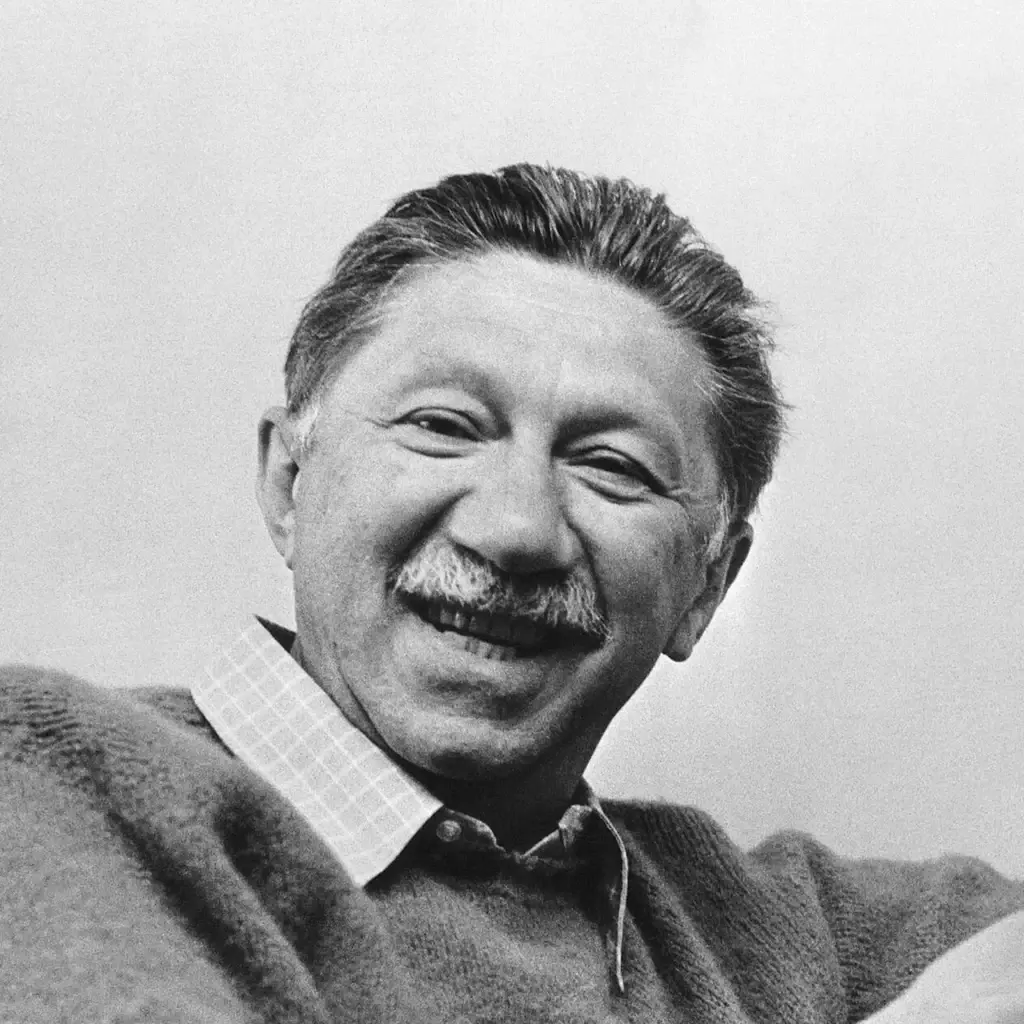
Abraham H. Maslow was an American psychologist. “Toward a Psychology of Being” explores psychological health as growth, creativity, love, and the fulfillment of human potential.
Explore more books by Abraham H. Maslow