
What you'll learn
Key ideas from Meditation
These ideas compress the book's argument without treating the author's view as settled fact. Use them as an orientation before reading the full work or listening in Wiseley.
Meditation is presented as an innate awareness of present experience, without judgment or identification.
Methods can organize practice and release obstacles, but Osho locates meditation in spontaneous, alert witnessing.
During daily activity, the source pairs natural breath awareness with the gaps between breaths while outward tasks continue.
Contemplation attends to thought-free intervals and returns to them after watching each thought pass.
Thoughts and feelings are met through understanding and nonidentification, without forceful suppression or automatic obedience.
Witnessing is deliberate preparation; no-mind is its unforced flowering, with the mind remaining available as a tool.
Inside Meditation
Read the first chapter in full here. The other 13 continue in the Wiseley app.
Chapter 1 of 14 · 5 min · Audio & text
Meditation as Innate Witness
Meditation, by Osho.
Osho begins by treating meditation as something already present, not an achievement waiting in the future. In the introduction, Swami Deva Wadud frames the search for freedom as an outward one, writing that his experiences showed him freedom does not depend on anything outside ourselves. Osho separately describes freedom as living moment to moment in the here and now, neither in memories of the past nor dreams of the future. He says the mind always goes ahead or lags behind, and urges us to remain with the moment.
That meeting is relaxed and alert. You can notice the body, thoughts, memories, desires, or feelings without condemning them as good or bad. This is different from criticizing yourself or anxiously monitoring how others might judge you. Such scrutiny adds another layer of worry. Witnessing, as Osho uses the term, lets an experience be seen without making it a verdict about who you are.
The distinction matters when a strong feeling or thought appears. You do not have to deny it, argue it away, or treat it as your whole identity. The source compares the inner being to an open sky, with thoughts and feelings passing like changing weather. The sky image describes the kind of distance Osho means: experience is present, but awareness is not identical to each passing event.
Baal Shem’s watchman story gives this inward turn a simple form. A watchman guards a palace; Baal Shem says he watches “this watcher”—himself. Attention usually follows what is happening outside or within—the object, thought, or feeling. The story redirects it toward the one who is aware. It does not offer another object to collect or analyze. It points to the quiet fact that experience is being noticed.
For Osho, meditation is therefore a quality of awareness, not a special activity reserved for stillness. The same alertness can accompany sitting, walking, listening, or other ordinary action. Activity itself does not prevent meditation. What matters is whether attention is present to what is happening, rather than running mechanically ahead or becoming lost in inner chatter. This is a broad principle, not a demand to perform every action perfectly.
The source presents increased sensitivity as one sign that this orientation is taking root. A person may feel more connected to existence and more able to recognize the distinctness of what is around them—even something as small as a blade of grass. Osho also describes love changing in quality: instead of possession or a demand for repayment, it becomes a readiness to share. He calls compassion love joined with meditation, expressed as giving without asking for something in return.
He distinguishes this from happiness that depends on favorable circumstances. Pleasure tied to a person, possession, or event can pass when circumstances change. The joy he associates with meditation is described as having no identifiable cause, and so as less dependent on what happens outside. These are the book’s claims about meditation’s fruits, not guarantees that a particular practice will produce them on schedule.
Osho also uses “intelligence” to mean responding to the actual situation through one’s own insight. It is different from repeating a ready-made answer simply because an authority supplied it. He describes meditation as recovering this responsive capacity from habits and beliefs imposed from outside. In the same spirit, he calls aloneness a positive condition: being at home in oneself, rather than feeling lonely or needing another person to supply one’s sense of completeness.
This account leads to a claim about individuality. Osho argues that social conditioning can cover a person’s nature with an imposed personality and direct them toward the crowd’s expectations. Meditation, in his view, makes room for inward guidance and a more individual way of living. The point is not to adopt a new identity called “meditator,” but to become less defined by borrowed identities.
Because the book offers many approaches, readers are invited to choose one that appeals to them and try it for at least three days. If it feels good, they can continue and go deeper; the guidance suggests asking whether the meditation helps joy and sensitivity keep growing. That short trial gives a reader a first, practical way to consider whether a chosen approach fits, while keeping the central measure in view: meditation is the already-present capacity to witness experience without condemning it or being defined by it.
Chapter 2 of 14 · 7 min · Audio & textIn the app
Methods Prepare; Witnessing Emerges
Osho treats methods as bridges toward meditation, not as meditation itself. A practice can organize attention and interrupt habitual activity, but it cannot manufacture witnessing.
Chapter 3 of 14 · 7 min · Audio & textIn the app
Movement, Catharsis, and Stillness
Dynamic Meditation has a clear movement-to-stillness sequence: its first three stages are preparation, the fourth is a frozen witnessing pause, and the fifth returns to celebration. Kundalini is also described as preparation.
Chapter 4 of 14 · 5 min · Audio & textIn the app
Awareness in Ordinary Activity
Osho’s test in these passages is whether attention stays present while an act is happening. Walking, eating, showering, and talking can all become occasions for meditation when they are not carried out mechanically.
Chapter 5 of 14 · 8 min · Audio & textIn the app
Heart, Suffering, and Self-Remembering
These practices shift attention from thinking about experience to receiving it through the heart. Osho contrasts the head, which calculates and divides, with the heart as a way of feeling connection.
Chapter 6 of 14 · 6 min · Audio & textIn the app
Turning Attention Toward the Knower
Osho divides knowing into three parts: what is known, the one who knows, and the act of knowing that connects them. In ordinary perception, attention travels toward the object and the knower goes unnoticed.
Chapter 7 of 14 · 6 min · Audio & textIn the app
Feeling Life Beyond Concepts
An idea about sensation can name what is present without meeting it. Osho frames meditation here as a recovery of direct sensitivity.
Chapter 8 of 14 · 8 min · Audio & textIn the app
Sound, Space, and Inclusion
Osho groups these practices around a shift from controlling attention to receiving experience. Sound arrives from the world without needing to be summoned, so listening can turn birds, wind, music, or traffic into an anchor.
Chapter 9 of 14 · 6 min · Audio & textIn the app
From Sensation Toward Emptiness
Here attention moves from what is sensed to what remains when it disappears. In the bird-song exercise, the meditator listens so fully that traffic and other sounds fall to the edges.
Chapter 10 of 14 · 6 min · Audio & textIn the app
Thought Gaps and Wordless Silence
Osho begins with a practical arrangement of the eyes. Sit comfortably upright and leave the eyelids half open.
Chapter 11 of 14 · 6 min · Audio & textIn the app
Love, Union, and Nonduality
The book now carries meditation into intimate partnership. It describes attraction as arising between masculine and feminine opposites, whose differences can turn closeness into conflict.
Chapter 12 of 14 · 7 min · Audio & textIn the app
Ego, Language, and the Experiencer
Osho presents ego and the chattering mind as two obstacles to meditation, and links both to the way identity is assembled. Society rewards achievement, ambition, and status, teaching a child to make an assertive self out of success.
Chapter 13 of 14 · 8 min · Audio & textIn the app
Acceptance Without Suppression
To meet the mind meditatively, Osho says, first stop treating it as a defect that must be corrected. Hostile observation has already decided what it will find: an unpleasant thought must be pushed away, while a calm moment is welcomed.
Chapter 14 of 14 · 8 min · Audio & textIn the app
Witnessing Blossoms into No-Mind
When silence or happiness is already present, Osho says to enjoy and celebrate it instead of immediately doubting it. He compares celebration to watering a plant: it nourishes what is here, while worry about its disappearance can undermine it.
Chapter 1 of 14 · 5 min · Audio & text: Meditation as Innate Witness
Wiseley supports reading and listening to summaries in the app.
Continue in WiseleyAbout Osho
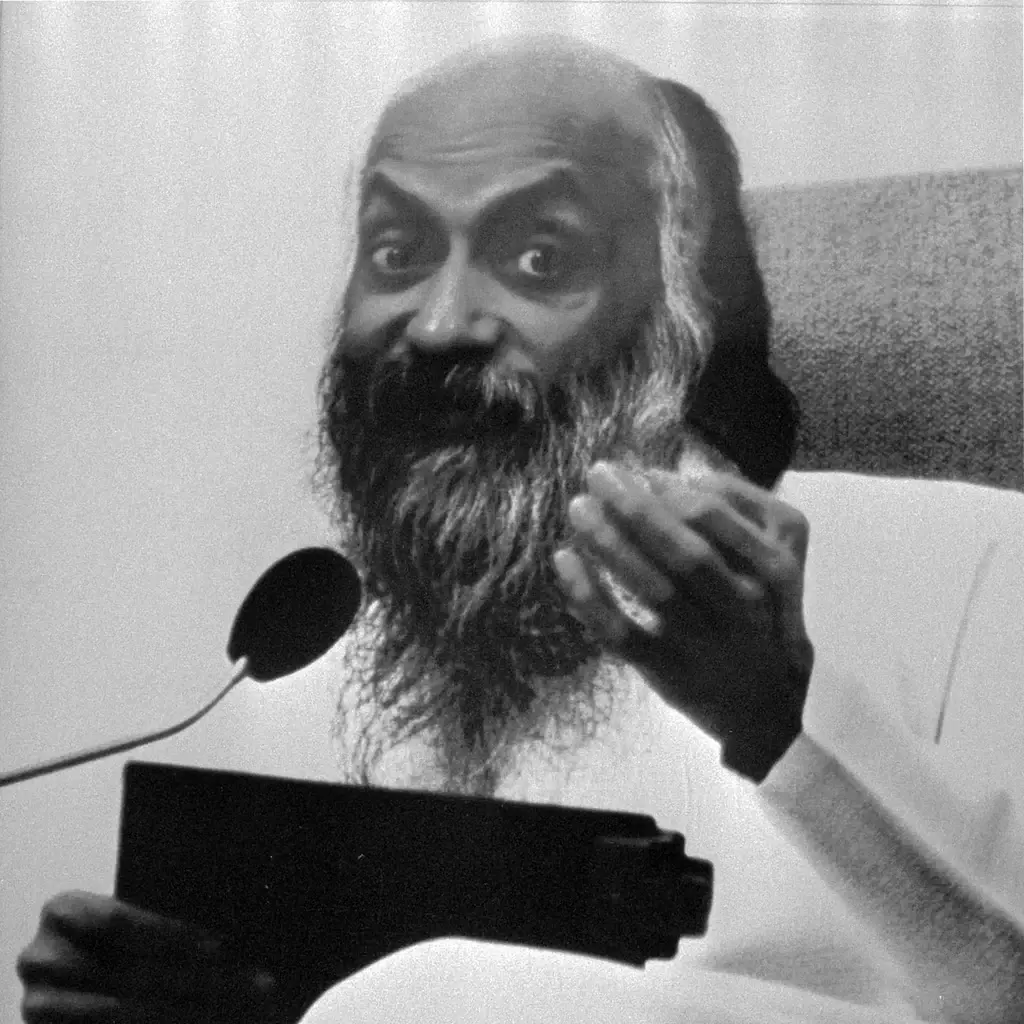
Osho was an Indian mystic. “Meditation” explores meditation as relaxed witnessing that moves attention beyond identification with thought and sensation.
Explore more books by Osho