What you'll learn
Key ideas from Learning to Pray
These ideas compress the book's argument without treating the author's view as settled fact. Use them as an orientation before reading the full work or listening in Wiseley.
For Martin, wanting to pray reveals a longing for relationship with God and, in his Christian view, God’s call.
A good request is voiced honestly within a relationship with God, without a guarantee of the desired result.
The examen is a flexible conversation with God that reviews the day through Presence, Gratitude, Review, Sorrow, and Grace, without requiring strong emotion.
Martin’s tests include whether an impression increases love and charity and fits a Christian understanding of God through Scripture and Jesus.
Its four questions move from comprehension to personal response, prayerful speech, and changed conduct.
Its purpose is silent companionship with God, not a supply of thoughts, images, or insights.
Dryness is a lack of felt consolation, not proof of failed prayer; a different setting or method may help without guaranteeing a result.
A peak spiritual experience becomes part of discipleship when it is carried into ordinary responsibilities.
Inside Learning to Pray
Read the first chapter in full here. The other 13 continue in the Wiseley app.
Chapter 1 of 14 · 6 min · Audio & text
Prayer Begins With Desire
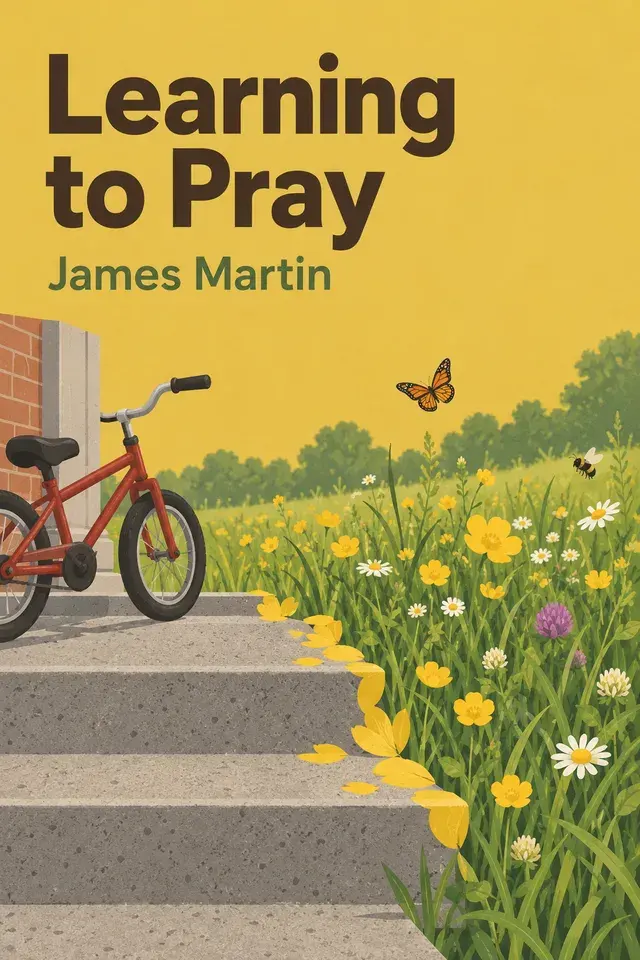
Learning to Pray, by James Martin.
For many people, prayer feels like something other people know how to do. They worry that they are saying the wrong things, getting distracted, or failing to feel anything. Some were never taught how to pray. Others came to think it was only for especially holy people, or stopped when someone told them they were doing it incorrectly. When prayer seems dull or unanswered, they may conclude that they are no good at it. Martin sees these judgments as barriers, not proof that a person cannot pray. His starting invitation is that prayer can be learned and is open to everyone.
Part of the difficulty is that people may carry a narrow picture of prayer from childhood. Martin remembers that his own early prayers were occasional and ordinary. He asked for help with things he wanted, and sometimes tried to talk to God. Those beginnings mattered, but he later understood that prayer could be wider than asking for particular outcomes or repeating familiar words. Growing into adulthood can bring new questions and experiences that a childhood understanding of prayer does not know how to hold. Martin presents this as a common limitation, not a personal failing: people can only begin with what they have been taught and experienced.
One childhood memory helped Martin see how prayer might begin before someone has a name for it. On one warm morning on his way to elementary school, he hoisted his bicycle to the top of the concrete steps near his school and pedaled across a meadow. He noticed the flowers, insects, sunlight, and grass, then felt a powerful longing to belong to and understand the whole of life. He also felt loved, held, and understood. Martin says it was not a vision and that he had not left himself. As a boy, he could not say exactly what he desired. Fifty years later, he saw how God was trying to reach him. His memory shows that a person may feel longing before knowing what it means.
Martin’s larger point is not that every intense feeling should be labeled a complete prayer experience. It is that people may already be turning toward God without recognizing what is happening. Prayer, in his view, is not mainly a performance judged by how correct or impressive it sounds. It belongs to a relationship. A person may speak, ask, wonder, or simply find themselves wanting to be close to God. Martin’s Christian understanding is that God desires this relationship and may be the source of the desire within us. Someone uncertain about God can still begin honestly with the wish to know whether such a relationship is possible.
That idea changes how ordinary moments can be understood. A spontaneous appeal for help can be prayer, even if a person does not stop to prepare or reflect on it. So can a quiet wish that God would help, especially during sadness or difficulty. Wonder may turn a person toward God: beauty in nature, a question about why suffering happens, or uncertainty about what gives life meaning. Compassion, gratitude, and conscience can do so as well. A person might feel moved by an act of kindness, give thanks without knowing whom the thanks addresses, or struggle over what the right thing is to do. Each moment can become an opening toward prayer, though it may remain brief or undeveloped.
Martin describes a man who was walking beside a river when he experienced a moment of clarity. He felt the sunlight, sensed that his chosen professional path was right, and found himself wanting a relationship with God. The man had not set out to pray. Martin helped him consider the experience as a possible confirmation from God. It became the beginning of a more intentional spiritual search. The story does not make every feeling of certainty a divine message; it shows how an ordinary moment can raise a question about God and draw someone toward relationship.
A passerby’s response to a homeless person offers another kind of opening. The passerby may feel a sudden compassion, then wonder why the encounter affected them so strongly. Perhaps they recall something Jesus said or begin asking whether God was present in the moment. The feeling itself need not settle those questions. But pausing over it can turn attention toward another person, toward God, or toward what the feeling asks of them. In Martin’s account, that pause and consideration are themselves a start of prayer.
These examples invite listeners to notice their own lives. A wish to pray, a moment of wonder, an unexpected kindness, a pang of conscience, or gratitude that seems to need somewhere to go may be worth attending to. None has to be forced into a spiritual explanation. Martin’s claim is gentler: these moments may be invitations, and recognizing them can be a first step. Prayer can begin before a person knows the right words or feels confident in their faith.
The desire for prayer, then, is not evidence that someone has already mastered it. It can be the beginning of a relationship that grows as they learn. Martin asks readers to take that desire seriously, even when it arrives mixed with hesitation or uncertainty. What feels like an inability to pray may sometimes be an unrecognized longing to begin.
Chapter 2 of 14 · 5 min · Audio & textIn the app
Friendship With God Grows
Prayer can be understood as a relationship with God, and friendship offers a useful way to picture how that relationship grows. The comparison is not exact: God is not simply another human friend, and prayer is one way of expressing the relationship, not the relationship itself.
Chapter 3 of 14 · 5 min · Audio & textIn the app
Asking, Waiting, and Trust
Some people feel uneasy asking God for help. They worry that petition is childish, selfish, or beneath a mature faith.
Chapter 4 of 14 · 4 min · Audio & textIn the app
Learning to Pray With Words
Memorized prayers can seem impersonal when they are recited without attention. But familiar words can also become a store of language, ready when fear, illness, fatigue, or distraction makes it hard to form a prayer.
Chapter 5 of 14 · 6 min · Audio & textIn the app
The Daily Examen of Life
The examen is a way to review the day with God. It is not a private audit in which you stand alone and grade yourself.
Chapter 6 of 14 · 9 min · Audio & textIn the app
Listening to Prayer’s Inner Movements
Prayer can bring many kinds of inward experience. Feelings may rise; an idea may become clear; a memory, desire, or image may appear.
Chapter 7 of 14 · 7 min · Audio & textIn the app
Testing What Seems Like Guidance
A striking thought in prayer can feel like an answer, but its vividness alone cannot show where it came from. Martin presents discernment as the patient work of testing what an inner movement means.
Chapter 8 of 14 · 6 min · Audio & textIn the app
Entering the Gospel Through Imagination
Many people know Gospel stories well enough to anticipate what comes next. Martin describes a way of praying that lets a familiar scene become a personal encounter.
Chapter 9 of 14 · 5 min · Audio & textIn the app
Reading Scripture as Conversation
Lectio divina, or sacred reading, treats a text as more than something to understand and put aside. It joins reading with meditation and prayer, allowing what is read to become part of how a person lives.
Chapter 10 of 14 · 5 min · Audio & textIn the app
Resting in Wordless Presence
After prayer with words, texts, or imagined scenes, Martin turns to centering prayer: a quiet practice with very little mental content. Its aim is to rest in God’s presence, not to create an image, follow a chain of ideas, or collect insights.
Chapter 11 of 14 · 5 min · Audio & textIn the app
Finding God in the Natural World
Prayer in the natural world can begin by allowing what surrounds us to draw our attention. Martin describes nature as capable of quieting the body and easing a person into prayer, but no dramatic landscape is required.
Chapter 12 of 14 · 7 min · Audio & textIn the app
Companions for the Spiritual Life
Prayer is supported by more than the moments a person spends alone. Spiritual direction, retreats, faith sharing, and journaling create space to notice God in prayer and in ordinary life, and to carry insights forward.
Chapter 13 of 14 · 6 min · Audio & textIn the app
Staying Through Dryness and Distraction
Prayer has its uneven days. Attention wanders, familiar practices feel empty, and the consolation someone hoped for may not come.
Chapter 14 of 14 · 5 min · Audio & textIn the app
From Prayer Into Daily Action
At the end of his account of many ways to pray, James Martin asks what prayer does to a life. Prayer’s inward gifts—closeness to God, consolation, insight, a clearer sense of who one is—matter in themselves.
Chapter 1 of 14 · 6 min · Audio & text: Prayer Begins With Desire
Wiseley supports reading and listening to summaries in the app.
Continue in WiseleyAbout James Martin
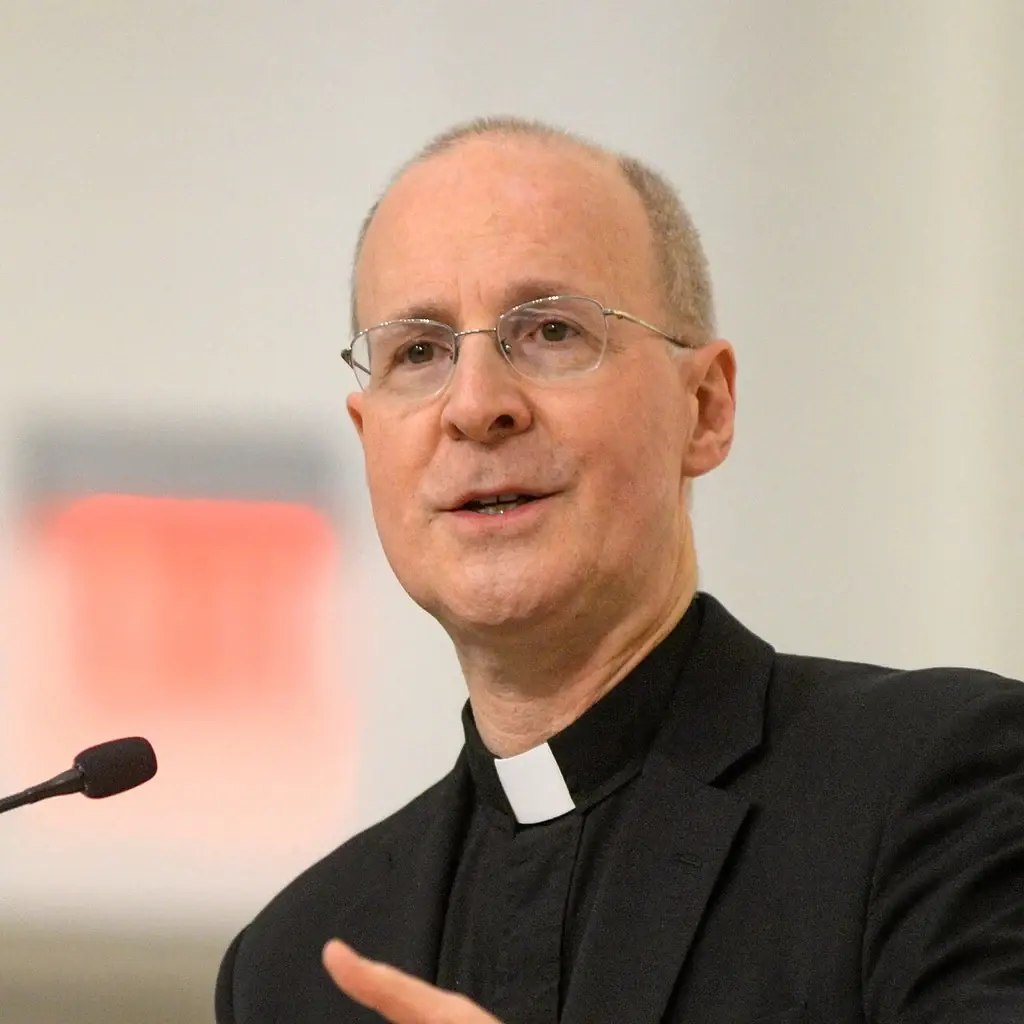
James Martin is an American Jesuit priest and writer. “Learning to Pray” explores prayer as a relationship anyone can learn, beginning in desire and everyday moments.
Explore more books by James Martin