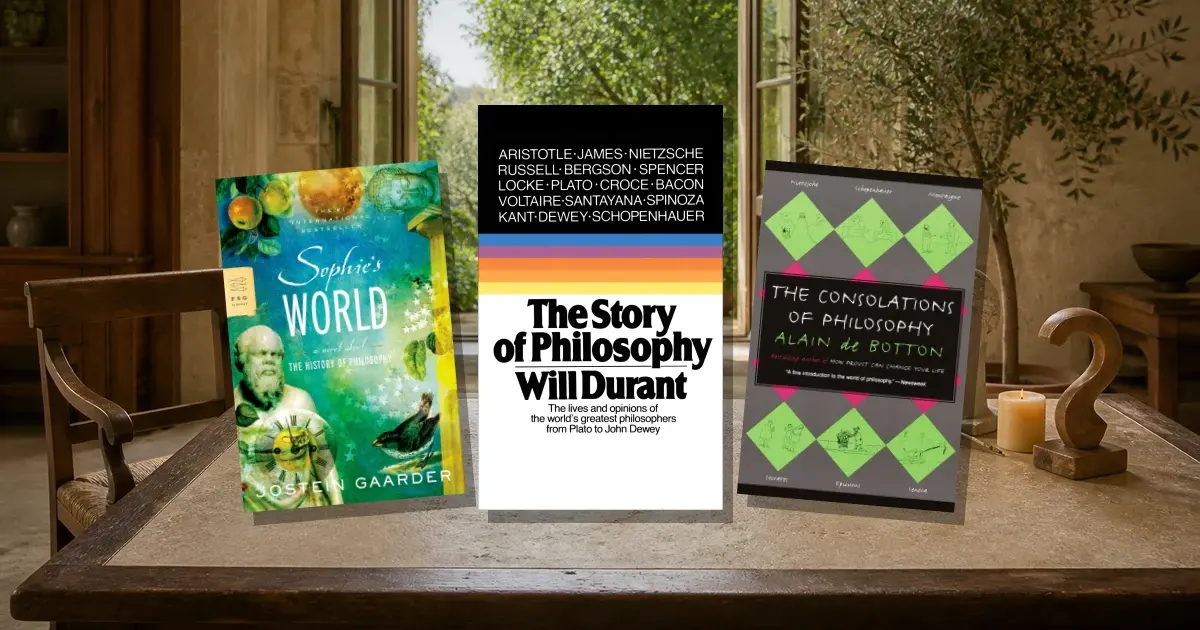

Start with a question, not a mood
Existentialism is often used as shorthand for unease or a search for meaning. These texts are more specific and do not form one doctrine. They differ in religious commitment, philosophical method, vocabulary, and what they think needs explaining. Camus also resisted the existentialist label; the shelf is a reading neighborhood, not a claim that every author accepted membership.
Four difficult books with different tasks
Choose a text for its question and form. A shorter book may still demand close attention, while a major philosophical work may require introductory material alongside it.
Remain with the conflict the essay names
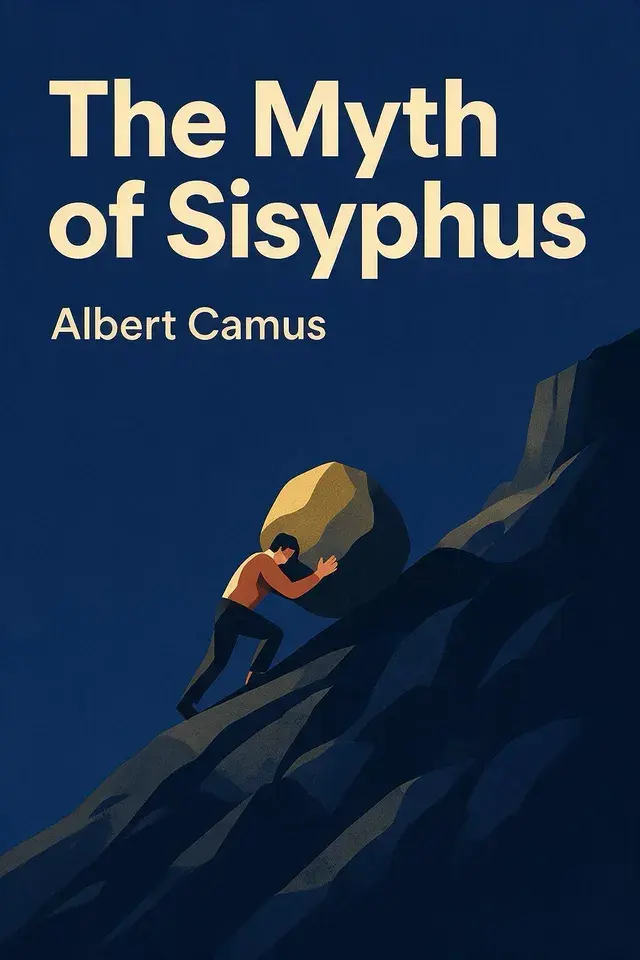
The Myth of Sisyphus · Albert Camus
Albert Camus examines the absurd through the clash between a human demand for meaning and a world that does not provide the answer sought. Read for the argument about how to live with that tension, rather than reducing the essay to its final image.
- Read it for
- A concentrated philosophical essay about the absurd and the response it invites.
- Keep in mind
- The essay is not interchangeable with all existentialist writing or with a therapeutic account of meaning.
Do not rush past the difficulty of the story
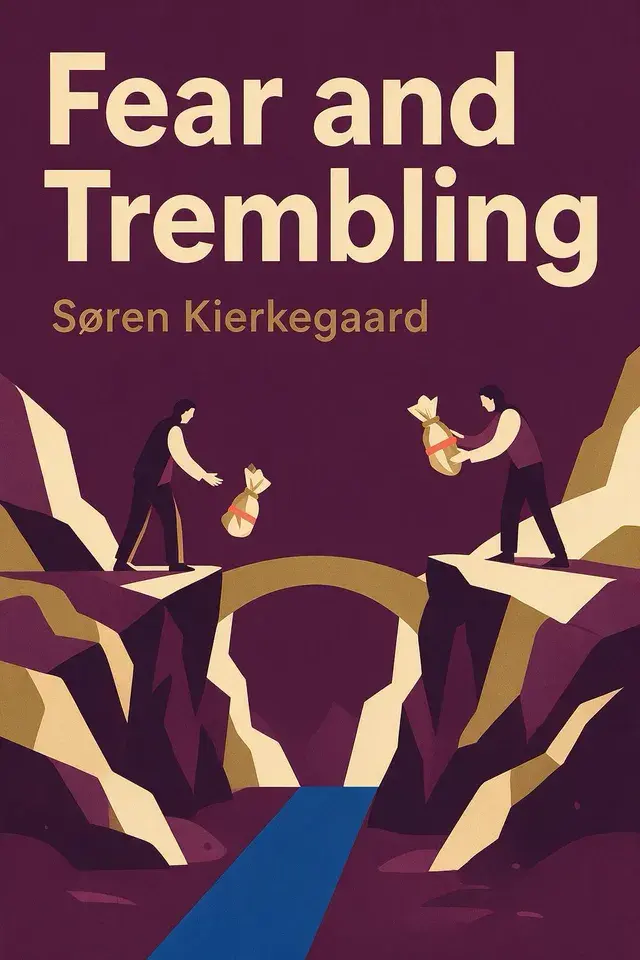
Fear and Trembling · Søren Kierkegaard
Søren Kierkegaard’s pseudonymous work returns to Abraham to explore faith and its relation to ethical life. The narrator’s position and repeated approaches to the story matter. A neat lesson about taking risks would miss the text’s central difficulty.
- Read it for
- A demanding encounter with faith, ethics, and the limits of explanation.
- Keep in mind
- The pseudonymous voice complicates direct attribution; the work is not a simple statement of a practical rule.

Give the vocabulary time to become usable
Being and Nothingness · Jean-Paul Sartre
Jean-Paul Sartre examines consciousness, freedom, bad faith, and relations with others through sustained philosophical analysis. Terms that resemble ordinary language take on technical roles. The book becomes more readable when those roles are tracked instead of replaced with slogans.
- Read it for
- A major account of consciousness, freedom, and self-deception.
- Keep in mind
- A summary can orient the reader but cannot reproduce the arguments of a large technical work.

Notice which question is being reopened
Being and Time · Martin Heidegger
Martin Heidegger investigates the question of being through an analysis of human existence, everydayness, and temporality. Its terminology and method differ from a general guide to finding purpose. Read slowly enough to notice when a familiar word has acquired a specialized meaning.
- Read it for
- A difficult philosophical investigation of being and temporality.
- Keep in mind
- The philosophical text needs historical context, including Heidegger’s political commitments; this guide does not resolve that relationship.
A route that increases the demand on the reader
Begin with Camus’s relatively concentrated essay. Approach Kierkegaard for a very different use of narrative and religious difficulty. Take Sartre and Heidegger as substantial projects rather than quick next steps. This order is a reading suggestion, not a claim that the authors build a single cumulative system.
- An essay
Identify the tension
Track what Camus means by the absurd before deciding whether you agree.
Explore The Myth of Sisyphus - A pseudonymous voice
Stay with the question
Notice how the narrator approaches and fails to settle the story.
Explore Fear and Trembling - A sustained analysis
Build a glossary
Follow Sartre’s technical distinctions through examples.
Explore Being and Nothingness - A major project
Revisit the starting terms
Allow repeated reading when Heidegger changes an ordinary word’s role.
Explore Being and Time
Sources and scope
Book ideas are attributed to their authors. External evidence is linked directly when a claim needs more than the source book.
- The Myth of Sisyphus: Albert Camus examines the absurd through the clash between a human demand for meaning and a world that does not provide the answer sought. Read for the argument about how to live with that tension, rather than reducing the essay to its final image. Scope: The essay is not interchangeable with all existentialist writing or with a therapeutic account of meaning.
- Fear and Trembling: Søren Kierkegaard’s pseudonymous work returns to Abraham to explore faith and its relation to ethical life. The narrator’s position and repeated approaches to the story matter. A neat lesson about taking risks would miss the text’s central difficulty. Scope: The pseudonymous voice complicates direct attribution; the work is not a simple statement of a practical rule.
- Being and Nothingness: Jean-Paul Sartre examines consciousness, freedom, bad faith, and relations with others through sustained philosophical analysis. Terms that resemble ordinary language take on technical roles. The book becomes more readable when those roles are tracked instead of replaced with slogans. Scope: A summary can orient the reader but cannot reproduce the arguments of a large technical work.
- Being and Time: Martin Heidegger investigates the question of being through an analysis of human existence, everydayness, and temporality. Its terminology and method differ from a general guide to finding purpose. Read slowly enough to notice when a familiar word has acquired a specialized meaning. Scope: The philosophical text needs historical context, including Heidegger’s political commitments; this guide does not resolve that relationship.
To report a factual, attribution, rights, or accessibility concern, email hello@wiseley.app.