
Begin with a difference you want to understand
Spirituality is a broad shelf label, not a single doctrine. A poetic text about the Dao, a dialogue about duty, a Buddhist teaching on suffering, and a modern account of personal agreements bring different assumptions. The aim of this selection is orientation, not a claim that every tradition reaches the same conclusion.
Five ways a spiritual text can address its reader
Pay attention to genre as well as belief: poetry, dialogue, teaching, practical interpretation, and autobiography ask to be read differently.

Let a compact passage remain open
Tao Te Ching · Lao Tzu
The Tao Te Ching uses compression, paradox, and images of yielding to examine action, power, and the Dao. Its brevity does not make it a set of simple instructions. Reading two translations of a difficult passage can reveal how much interpretation a familiar English phrase carries.
- Read it for
- Poetic reflection on action, restraint, and power.
- Keep in mind
- Translations differ, and isolated lines can lose the tension of their context.

Keep the dialogue inside its dilemma
The Bhagavad Gita · Vyasa
The Gita begins within Arjuna’s crisis and develops teachings on action, knowledge, devotion, and liberation. Duty is not an abstract slogan here: it is addressed through a particular dramatic and religious setting. Read the dialogue rather than extracting a general productivity lesson.
- Read it for
- The relationship between action, duty, and spiritual understanding.
- Keep in mind
- Hindu interpretive traditions are diverse; one translation does not settle them.
Understand practice as part of a wider path
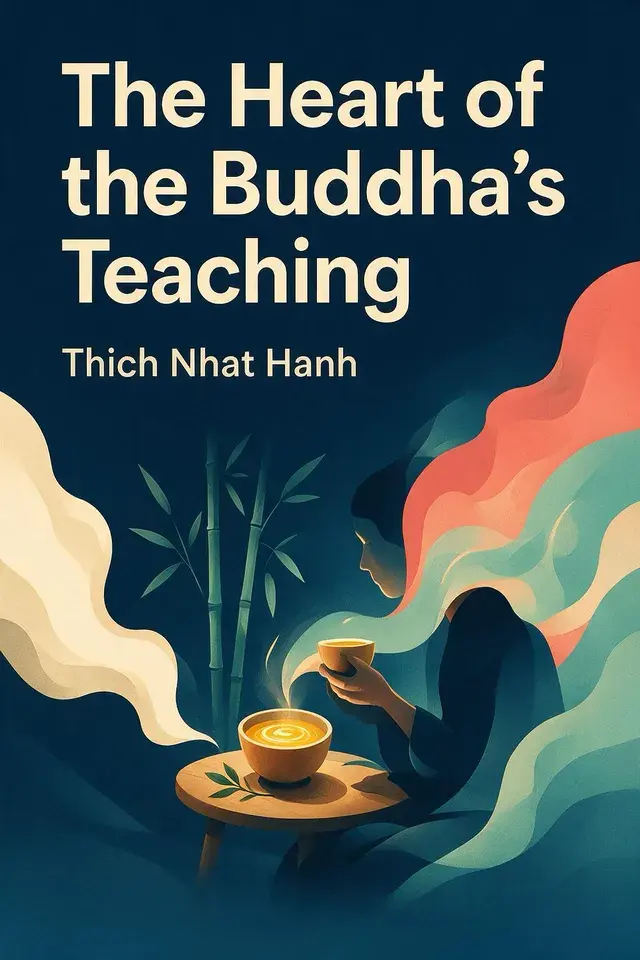
The Heart of the Buddha's Teaching · Thich Nhat Hanh
Thich Nhat Hanh connects suffering and its conditions with mindfulness, ethical action, compassion, and interdependence. Meditation is not isolated from how people live with others. The book offers a structured entrance into Buddhist teaching through that connection.
- Read it for
- A connected account of Buddhist ideas and ordinary practice.
- Keep in mind
- It is a particular teacher’s presentation, not a survey of all Buddhist schools.

Read a contemporary practical interpretation
The Four Agreements · Don Miguel Ruiz
Don Miguel Ruiz organizes his guidance around speech, assumptions, personal reactions, and effort. Its memorable structure makes it easy to revisit. The stronger reading asks what each agreement clarifies in a situation and where literal application might obscure context.
- Read it for
- A concise modern framework for examining habitual reactions.
- Keep in mind
- Its spiritual claims and account of tradition should not be mistaken for independently demonstrated psychological findings.

Separate testimony from explanation
Autobiography of a Yogi · Paramahansa Yogananda
Paramahansa Yogananda’s spiritual autobiography presents teachers, encounters, and experiences through a devotional understanding of yoga. Its first-person form is part of its appeal and also part of its evidential limit. Read for the worldview the narrator inhabits.
- Read it for
- An influential spiritual life narrative and its account of discipleship.
- Keep in mind
- Extraordinary experiences are presented as testimony, not independently verified demonstrations.
Compare the question before comparing the answer
Make a small glossary as you read: self, action, suffering, liberation. Write the meaning each author gives a term rather than assuming an English word makes the concepts identical. This preserves the productive difficulty of reading across traditions.
Sources and scope
Book ideas are attributed to their authors. External evidence is linked directly when a claim needs more than the source book.
- Tao Te Ching: The Tao Te Ching uses compression, paradox, and images of yielding to examine action, power, and the Dao. Its brevity does not make it a set of simple instructions. Reading two translations of a difficult passage can reveal how much interpretation a familiar English phrase carries. Scope: Translations differ, and isolated lines can lose the tension of their context.
- The Bhagavad Gita: The Gita begins within Arjuna’s crisis and develops teachings on action, knowledge, devotion, and liberation. Duty is not an abstract slogan here: it is addressed through a particular dramatic and religious setting. Read the dialogue rather than extracting a general productivity lesson. Scope: Hindu interpretive traditions are diverse; one translation does not settle them.
- The Heart of the Buddha's Teaching: Thich Nhat Hanh connects suffering and its conditions with mindfulness, ethical action, compassion, and interdependence. Meditation is not isolated from how people live with others. The book offers a structured entrance into Buddhist teaching through that connection. Scope: It is a particular teacher’s presentation, not a survey of all Buddhist schools.
- The Four Agreements: Don Miguel Ruiz organizes his guidance around speech, assumptions, personal reactions, and effort. Its memorable structure makes it easy to revisit. The stronger reading asks what each agreement clarifies in a situation and where literal application might obscure context. Scope: Its spiritual claims and account of tradition should not be mistaken for independently demonstrated psychological findings.
- Autobiography of a Yogi: Paramahansa Yogananda’s spiritual autobiography presents teachers, encounters, and experiences through a devotional understanding of yoga. Its first-person form is part of its appeal and also part of its evidential limit. Read for the worldview the narrator inhabits. Scope: Extraordinary experiences are presented as testimony, not independently verified demonstrations.
To report a factual, attribution, rights, or accessibility concern, email hello@wiseley.app.