The same move can serve a different purpose
Naming an emotion illustrates the distinction. A negotiation label—“It sounds like timing is the real concern”—tests a hypothesis and encourages more information. An NVC reflection may try to hear the need beneath a statement without steering toward a bargain. The words can sound similar while the intention differs. Before choosing a phrase, decide whether you are diagnosing the situation, making a request, changing terms, or repairing connection.
- Observation: what happened without adding motive.
- Label: a tentative name for a dynamic or emotion.
- Request or calibrated question: the next move, stated without pretending it has no goal.
Choose by scenario, not personality
For a vendor renewal, job offer, or project scope, begin with the negotiation framework and add NVC’s discipline of separating observation from accusation. For a recurring relationship conflict, begin with needs and requests, then borrow calibrated questions when the real constraint remains unclear. In either case, summarize the other person’s position before proposing a solution. A method is working when understanding increases—not merely when its vocabulary appears in the room.
- Define the decision that must be made.
- Name the relationship cost you are unwilling to ignore.
- Choose one listening move and one honest request instead of stacking techniques.
Sources and scope
Book ideas are attributed to their authors. External evidence is linked directly when a claim needs more than the source book.
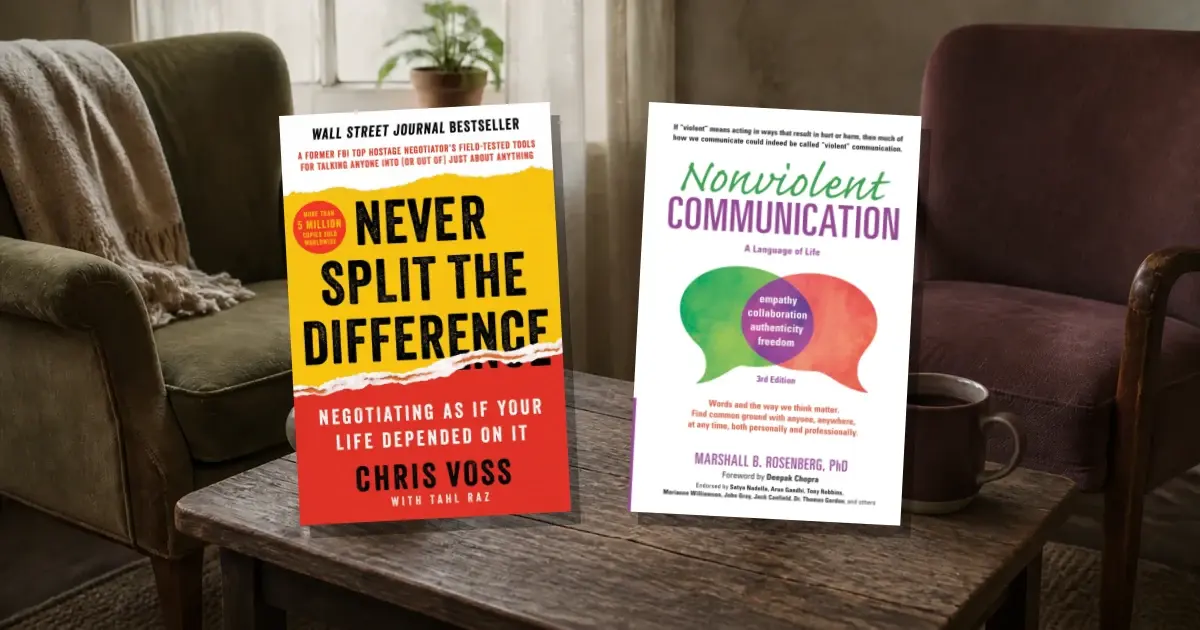
- Never Split the Difference: Primary source for tactical empathy, labels, summaries, and calibrated questions.
- Nonviolent Communication: Primary source for observation, feeling, need, request, and non-coercive connection.
To report a factual, attribution, rights, or accessibility concern, email hello@wiseley.app.
Questions readers ask
Is tactical empathy manipulative?
It can become manipulative if understanding is performed only to conceal intent or remove the other person’s agency. State your goal honestly and treat empathy as information plus respect, not a trick.
Can Nonviolent Communication be used in business negotiation?
Yes. Its distinction between observation, feeling, need, and request can reduce accusation. A business conversation may still require explicit terms, alternatives, and constraints that NVC alone does not organize.