
What does this book mean by happiness?
A book may investigate pleasure, satisfaction with a life, absorption in an activity, or a spiritual idea of presence. Comparing its advice before clarifying the definition creates false agreement. These five selections make the different questions explicit; this is a reading guide, not a treatment plan or a promise of better well-being.
Five questions that belong on the same shelf
Read the mechanism each author proposes and the kind of support offered for it. Reporting research, synthesizing traditions, and making a spiritual argument are different ways of writing.

Can you trust the future you imagine?
Stumbling on Happiness · Daniel Gilbert
Daniel Gilbert examines how imagination, memory, and judgment shape predictions about future happiness. The interest is in the gap between a vivid forecast and a later experience. The book asks a descriptive question before offering a route to a better decision.
- Read it for
- An account of why predictions about future feelings can mislead.
- Keep in mind
- Limits in prediction do not imply that every long-term preference is mistaken.

Compare an old idea with a modern explanation
The Happiness Hypothesis · Jonathan Haidt
Jonathan Haidt brings philosophical and religious ideas into conversation with psychology. Read the bridges he builds and where the source traditions remain different. A productive synthesis should invite a return to sources rather than replace them.
- Read it for
- A wide-ranging comparison of ideas about flourishing and human psychology.
- Keep in mind
- A synthesis reflects the author’s selection and cannot speak for every tradition it discusses.

Concentrate on the quality of an activity
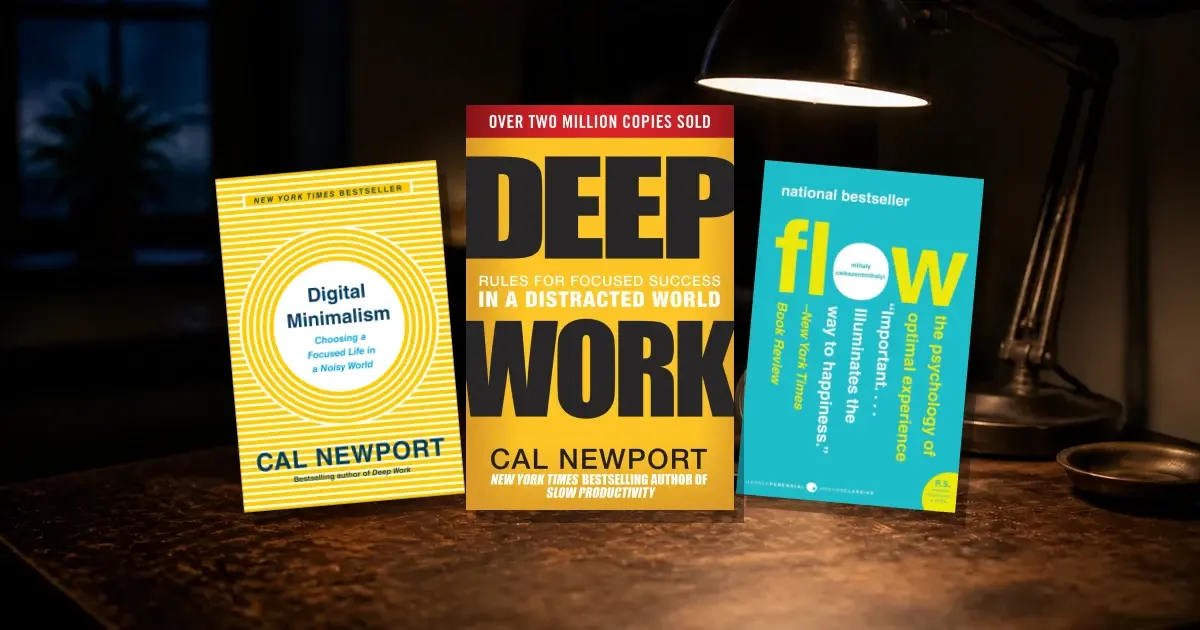
Flow · Mihaly Csikszentmihalyi
Mihaly Csikszentmihalyi examines absorption and the conditions under which attention becomes organized around a demanding activity. This changes the scale of the question from evaluating an entire life to describing an experience within it. The two scales should not be confused.
- Read it for
- A framework for understanding absorption and engagement.
- Keep in mind
- Being absorbed does not by itself establish that an activity is worthwhile or a life is satisfying.

Read the proposed practices with their conditions
The How of Happiness · Sonja Lyubomirsky
Sonja Lyubomirsky presents research-informed approaches to intentional activity and well-being. A careful reading attends to fit, evidence, and context rather than treating a memorable numerical claim or suggested activity as an individual forecast.
- Read it for
- A discussion of intentional activities and the research the author uses to support them.
- Keep in mind
- Population-level findings and proposed activities do not predict an individual’s outcome.

Recognize when the conversation becomes spiritual
The Power of Now · Eckhart Tolle
Eckhart Tolle develops an account of presence and identification with thought. Including it makes a distinction visible: a spiritual account may interest the same reader as psychology while using a different kind of reasoning and evidence.
- Read it for
- A contemporary spiritual interpretation of present-moment awareness.
- Keep in mind
- Its metaphysical claims should not be converted into established scientific explanations.
Keep a definition beside every recommendation
For each book, finish two sentences: happiness means this here, and the author supports the claim this way. You may find that two books answer different questions rather than disagree. You may also discover a real disagreement that deserves more than a blended list of tips.
Sources and scope
Book ideas are attributed to their authors. External evidence is linked directly when a claim needs more than the source book.
- Stumbling on Happiness: Daniel Gilbert examines how imagination, memory, and judgment shape predictions about future happiness. The interest is in the gap between a vivid forecast and a later experience. The book asks a descriptive question before offering a route to a better decision. Scope: Limits in prediction do not imply that every long-term preference is mistaken.
- The Happiness Hypothesis: Jonathan Haidt brings philosophical and religious ideas into conversation with psychology. Read the bridges he builds and where the source traditions remain different. A productive synthesis should invite a return to sources rather than replace them. Scope: A synthesis reflects the author’s selection and cannot speak for every tradition it discusses.
- Flow: Mihaly Csikszentmihalyi examines absorption and the conditions under which attention becomes organized around a demanding activity. This changes the scale of the question from evaluating an entire life to describing an experience within it. The two scales should not be confused. Scope: Being absorbed does not by itself establish that an activity is worthwhile or a life is satisfying.
- The How of Happiness: Sonja Lyubomirsky presents research-informed approaches to intentional activity and well-being. A careful reading attends to fit, evidence, and context rather than treating a memorable numerical claim or suggested activity as an individual forecast. Scope: Population-level findings and proposed activities do not predict an individual’s outcome.
- The Power of Now: Eckhart Tolle develops an account of presence and identification with thought. Including it makes a distinction visible: a spiritual account may interest the same reader as psychology while using a different kind of reasoning and evidence. Scope: Its metaphysical claims should not be converted into established scientific explanations.
To report a factual, attribution, rights, or accessibility concern, email hello@wiseley.app.