
Read for the question before the answer
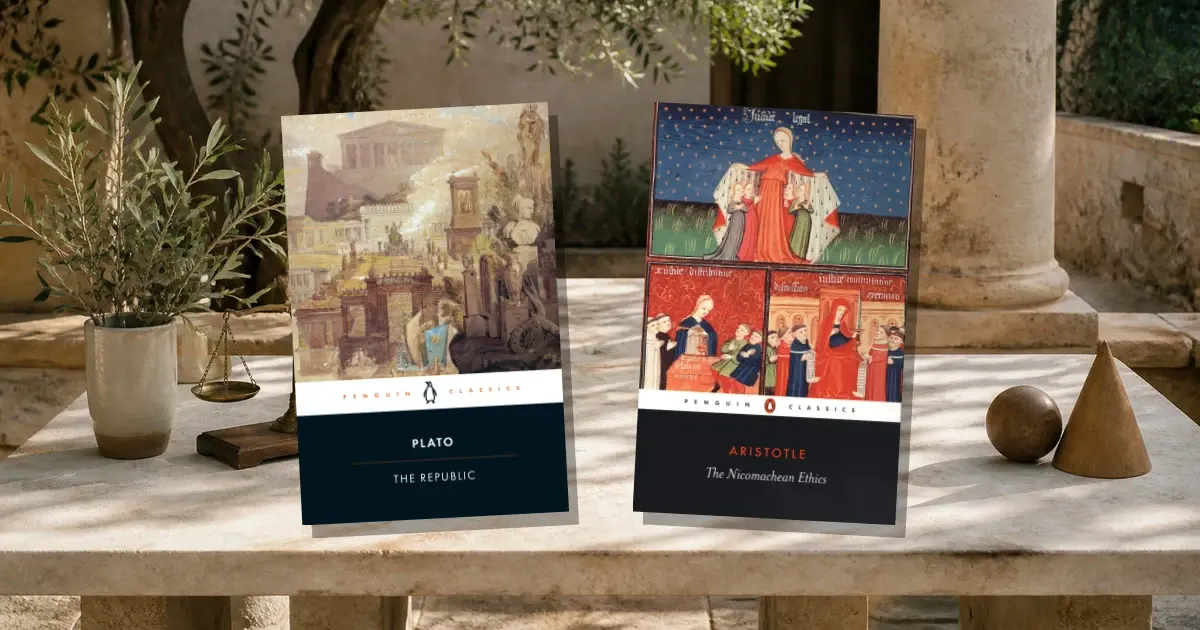
Before taking notes on a chapter, write the problem the author appears to be solving. The Republic moves through questions about justice, education, political order, and the soul by means of a dialogue; Nicomachean Ethics builds an inquiry into flourishing, character, choice, and practical wisdom. Knowing the active question prevents every unfamiliar term from feeling equally urgent. Read a short unit, stop, and state what changed in the argument.
- Write one question at the top of the page.
- Read to the next clear turn in the argument, not to an arbitrary page count.
- Summarize the move in one sentence before continuing.
Translate terms, then map the argument
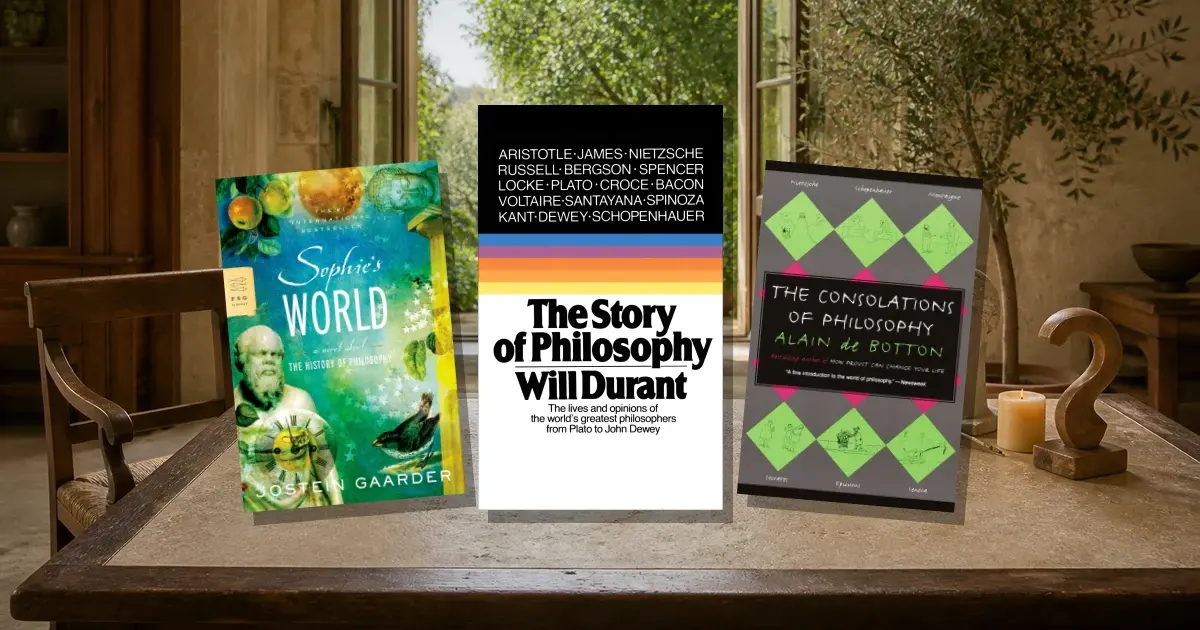
Keep a small glossary with the author’s meaning, an ordinary-language paraphrase, and one example. Then map the argument as premises, conclusion, and the objection it is meant to answer. Translation is provisional: words such as justice, virtue, form, or happiness may carry technical meanings that change across contexts and translations. The Story of Philosophy can orient you to a thinker and period, but return to the primary text before treating a guide’s summary as the argument itself.
- Define only terms doing real work in the current passage.
- Separate what the author claims from why the author thinks it follows.
- Use a guide to regain orientation, not to replace the source.
Test the view and permit a second pass
Create the strongest example supporting the argument and the strongest case that strains it. Ask how the author might reply before deciding the view is obviously right or wrong. End the session with three notes: what you can explain, what remains unclear, and the exact passage to revisit. Difficult philosophy often becomes legible through return rather than uninterrupted completion. A first pass that identifies the structure is successful even when it leaves interpretive questions open.
- Test the argument with a concrete case from ordinary life.
- Write the best objection without caricaturing the author.
- Schedule one targeted reread instead of restarting the whole book.
Sources and scope
Book ideas are attributed to their authors. External evidence is linked directly when a claim needs more than the source book.
- The Republic: Grounds the examples about dialogue, justice, political order, education, and following an argument across speakers.
- Nicomachean Ethics: Grounds the examples about flourishing, virtue, choice, practice, and practical wisdom.
- The Story of Philosophy: Grounds the advice about using historical orientation while distinguishing a guide from a primary philosophical text.
To report a factual, attribution, rights, or accessibility concern, email hello@wiseley.app.
Questions readers ask
Should I read an introduction before the original philosophy book?
A short introduction can supply context and a map. Keep the primary text open and verify the guide’s interpretation against the passage being discussed.
Is it acceptable not to understand every paragraph?
Yes. Track the central question and argument, mark local uncertainty, and return selectively. Total clarity on a first pass is an unrealistic standard for many classics.