
What you'll learn
Key ideas from Napoleon Hill’s Golden Rules
These ideas compress the book's argument without treating the author's view as settled fact. Use them as an orientation before reading the full work or listening in Wiseley.
A definite aim functions like an architectural plan: it organizes effort around service, equitable ends, and deliberate action.
Auto-suggestion is Hill’s proposed practice of rehearsing an emotionally charged aim until it guides confidence and conduct.
Books, associates, work, clothing, and surroundings are treated as impression-sources to assess against a chosen aim.
Memory is described as retention, recall, and recognition, with vivid attention creating the record that later association can retrieve.
Bertsche's cultivated trust shows that the same receptive state that supports encouragement can also enable fraudulent investment suggestions.
Hill's practical sequence is to control the first response, offer the treatment sought, and save energy otherwise spent on quarrels.
Progressive argument can guide judgment or overwhelm it, especially when status appeals replace scrutiny.
The institutional Golden Rule joins useful service with repeated fair dealings, reputation, and scrutiny of effects on people in every transaction.
Inside Napoleon Hill’s Golden Rules
Read the first chapter in full here. The other 8 continue in the Wiseley app.
Chapter 1 of 9 · 8 min · Audio & text
From Inherited Impressions to Chosen Aims
Napoleon Hill’s Golden Rules, by Napoleon Hill.
Napoleon Hill’s program begins with a question: how much of character and achievement is inherited, and how much can a person deliberately shape? Hill does not treat a person as either a fixed product of birth or an entirely self-created being. He says birth supplies a physical inheritance, while surroundings and chosen mental direction help determine the person who develops from it. Change begins when someone notices which forces have been directing life without conscious choice.
Hill calls bodily traits physical heredity. Body size, hair and eye color, and skin texture are presented as qualities largely beyond deliberate control. Social heredity is different. It is the accumulation of impressions, teachings, and experiences that form personality, beliefs, habits, and tendencies. From birth, songs, poems, books, sermons, conversations, and sights enter the mind. Home, church or Sunday school, public or private school, newspapers, magazines, and other reading all contribute.
This distinction matters because received impressions are not automatically reliable. Hill says beliefs may be true or false according to the soundness of the impressions behind them. Accurate thinking therefore requires examining inherited prejudices and allowing facts and truth to replace distorted ideas. He compares the mind with a fertile field: it produces according to the seeds planted in it. The metaphor shifts attention from what a person was given to what those impressions are producing now.
Hill places particular weight on early conditioning. He says qualities formed before about age ten can become deeply set and may require substantial willpower to change. An ideal or habit planted early may, in Hill’s account, remain throughout life except in very rare instances when stronger influences counteract or erase it. This is Hill’s account of why old impressions resist revision, not a universal rule that change is impossible. His larger claim is that social heredity can be deliberately modified, so long as a person introduces influences strong enough to redirect thought and conduct.
The preface gives that redirection a four-part sequence called R2A2: Recognize, Relate, Assimilate, and Apply. First, recognize a principle or method that may be useful. Then relate it to a personal aim and to the circumstances in which it might matter. Assimilate it by making it part of one’s understanding rather than leaving it as an interesting sentence. Finally, apply it through conduct. The preface recommends reading as though the author were addressing the reader directly, marking important passages, and writing useful ideas in the margins. Yet it treats application as the decisive step. The preface, signed by The Napoleon Hill Foundation, says that without action, self-help material will not be worth the price of the book.
That sequence moves a person from absorbed impressions toward a chosen direction. The aim is not merely to replace one slogan with another. It is to select a purpose, test ideas against it, and let the chosen purpose organize behavior. Hill says people can develop strengths, overcome weaknesses, and change their thoughts, environment, purpose, and life aim. These possibilities do not erase the past. They establish a field in which deliberate choice can begin.
His building-project analogy makes the requirement concrete. Someone who wants a building needs more than enthusiasm. The structure must be defined, and the work must be arranged according to a plan. Hill applies the same logic to character and achievement. A definite aim should be written and described as carefully as architectural plans. It gives organized effort a direction, a standard for choosing tasks, and a way to distinguish relevant work from distraction.
Hill also presents character as something that can be built or rebuilt according to a plan. He describes it as the sum of habits and ethical conduct, with the time required for change depending on determination and desire. An aim therefore cannot remain a private wish. It must organize knowledge, faculties, time, and effort. Hill defines power as organized knowledge directed toward just and equitable ends. He also says that a sound plan should benefit everyone affected, and he calls service and sacrifice passwords to the highest success. The plan is not complete until it becomes useful action.
At this point Hill presents attraction as part of his explanatory framework. He says the brain is a magnet, that a universal law makes like seek like, and that like attracts like is indisputable; dominant thoughts therefore draw compatible people and opportunities. Elsewhere he asks who is wise enough to affirm or deny a law that brings people what they believe they can attain, provided the demand is possible, equitable, just, and backed by a clearly defined plan. Hill also acknowledges that some results seem miraculous and that he cannot trace all their causes. The claims he states are categorical: a person who organizes a sound, equitable plan that benefits everyone affected and develops the confidence to complete it cannot be defeated, and he describes the resulting force as one no power on earth can stop. His examples illustrate his belief but do not independently prove these laws.
Hill’s account of a $100,000 aim supplies an important qualification. He says he revised his written aim to earn $100,000 a year for an educational program. Within six months, he reports receiving an offer for $105,200, with the extra $5,200 designated for travel. He accepted the offer and says that, in less than five months, he created an organization and other assets for the concern, estimated at more than $20 million. He says the employer later used a loophole to avoid paying the agreed salary. Hill nevertheless claims that he actually earned the $100,000—and in fact many times more—by creating that organization and those assets, even though he never collected it.
That failed outcome separates stating a goal from securing its result. A definite aim can give thought and effort a direction, and Hill interprets the offer as evidence that direction may matter. But the offer was not payment: the employer’s conduct determined whether Hill collected the salary. Hill’s own conclusions remain categorical: he says a person with a sound, equitable plan benefiting everyone affected and confidence to carry it through cannot be defeated, and describes the resulting force as one no power on earth can stop. His example, however, is not independent proof of those claims; despite the offer and the work through which he says he earned the salary, he did not collect it. The chapter’s foundation is a sequence: recognize the impressions that shaped you, relate useful principles to a chosen purpose, assimilate a definite plan, and apply it through organized, equitable action. A chosen aim is a condition for deliberate change, while the example shows that stating it and acting on it still do not ensure collection of the desired result.
Chapter 2 of 9 · 7 min · Audio & textIn the app
Rehearsing Confidence Through Deliberate Thought
Auto-suggestion, in Hill’s vocabulary, is deliberate self-suggestion: repeatedly holding a selected aim or quality before the mind until it influences feeling and conduct. He says thoughts direct bodily movement and produce associated feelings.
Chapter 3 of 9 · 8 min · Audio & textIn the app
Building Habits and Supportive Surroundings
With an aim already chosen, the next problem is making it durable. Hill’s answer is that conduct and surroundings must keep reinforcing each other.
Chapter 4 of 9 · 8 min · Audio & textIn the app
Training Attention for Useful Memory
Useful memory, in Napoleon Hill’s account, is not a single faculty. It has three stages.
Chapter 5 of 9 · 6 min · Audio & textIn the app
How Suggestion Opens or Exploits Trust
Hill now shifts from auto-suggestion to suggestion directed at another person. In his terminology, auto-suggestion is influence exerted on oneself: a person holds an aim or quality before the mind and lets it guide action.
Chapter 6 of 9 · 6 min · Audio & textIn the app
Interrupting Hostility Through Reciprocal Conduct
Hill's law of retaliation begins with a simple but broader idea than revenge: people tend to return treatment in kind. Injury, insult, or injustice invites a matching response.
Chapter 7 of 9 · 8 min · Audio & textIn the app
Moving an Audience Toward Action
Hill now shifts from receptivity to sequence. He describes persuasion as a four-stage movement: attention, interest, desire, and will.
Chapter 8 of 9 · 7 min · Audio & textIn the app
Protecting Judgment Within Emotional Crowds
Influence changes when it operates through a group. Hill says people who share an image, interest, fear, or hope do more than add reactions together.
Chapter 9 of 9 · 9 min · Audio & textIn the app
Cooperation as the Measure of Success
By the end of Hill’s program, a chosen aim is not judged only by the money, attention, or influence it produces. It must also be judged by the conduct used to pursue it, the service it provides, and the cooperation it creates.
Chapter 1 of 9 · 8 min · Audio & text: From Inherited Impressions to Chosen Aims
Wiseley supports reading and listening to summaries in the app.
Continue in WiseleyWhat Napoleon Hill’s Golden Rules is about
How can deliberate thought become effective action and fair dealing? Napoleon Hill connects definite aims, self-suggestion, habits, memory, and persuasion with cooperation and the Golden Rule. His practical exercises and illustrative stories offer a system for personal development while revealing tensions between constructive influence, manipulation, and claims of universal mental laws.
About Napoleon Hill
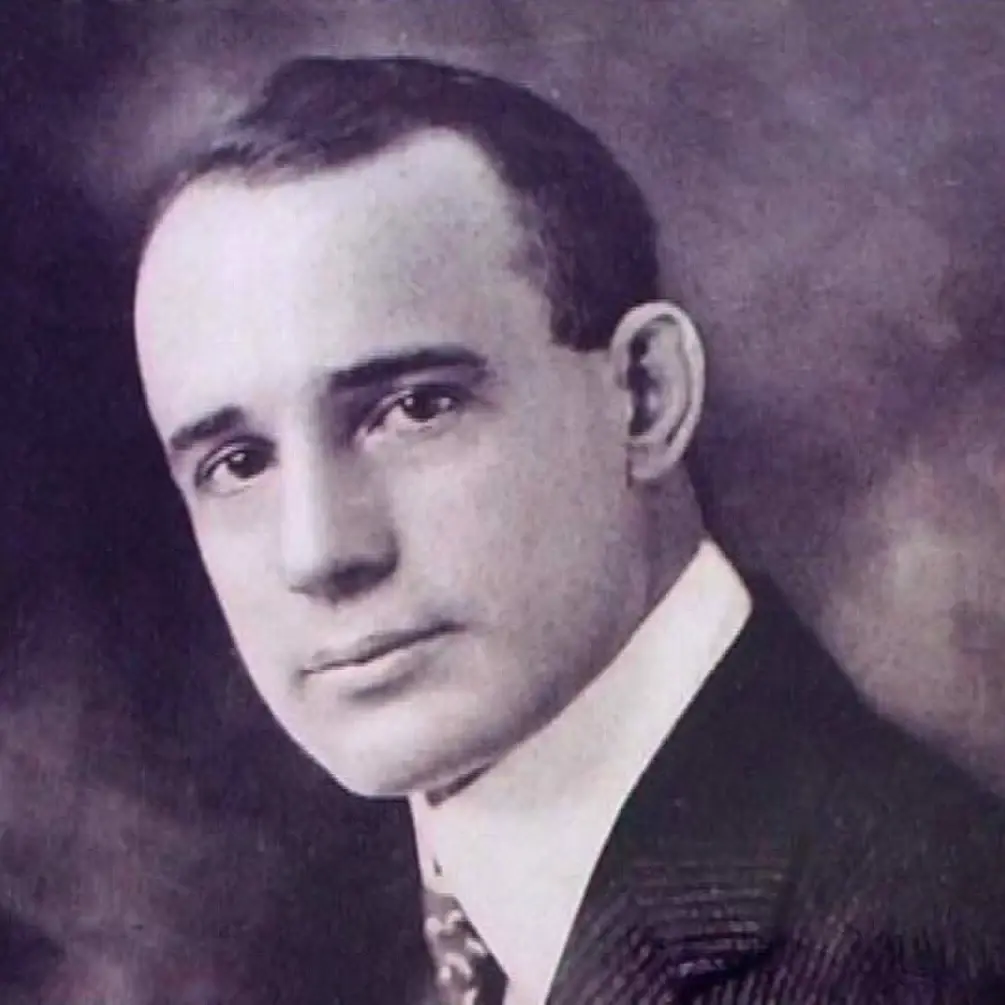
Napoleon Hill was an American author. “Think and Grow Rich” explores the author's philosophy of ambition, persistence, and the pursuit of financial success.
Explore more books by Napoleon Hill