What you'll learn
Key ideas from The Hero with a Thousand Faces
These ideas compress the book's argument without treating the author's view as settled fact. Use them as an orientation before reading the full work or listening in Wiseley.
Campbell compares myths across cultures to reveal recurring psychic patterns while acknowledging that cultural differences remain significant.
The call to adventure interrupts ordinary identity through a chance event, dream, herald, or sign that opens an unknown field of danger and treasure.
The Road of Trials strips away status and self-sufficiency through ordeals, descent, symbolic death, and help from powers beyond the isolated ego.
Emptiness is presented as freedom from egoic fires that makes compassion and service possible, not as nihilistic denial.
Return tests whether transformed insight can renew communal life.
Participation and inward quest are complementary paths toward unity of self, society, and world.
Inside The Hero with a Thousand Faces
Read the first chapter in full here. The other 9 continue in the Wiseley app.
Chapter 1 of 10 · 5 min · Audio & text
Myth as a Shared Psychic Map
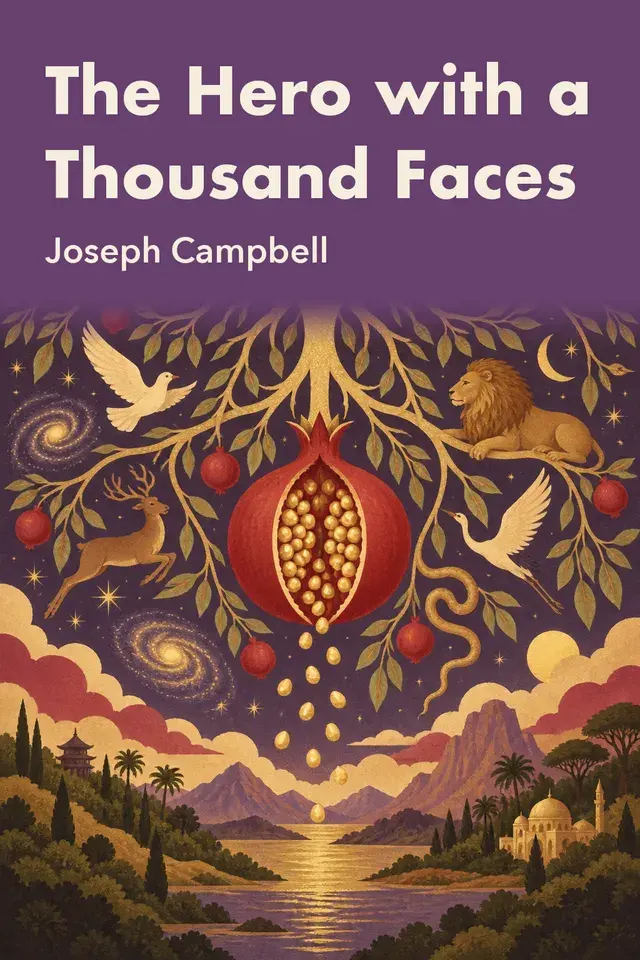
The Hero with a Thousand Faces, by Joseph Campbell.
Campbell begins by asking how myths should be read, not merely collected. He is less interested in proving whether a god, monster, or miracle occurred than in understanding what people express through such figures. His approach is humanist: he asks why people tell stories about whatever transcendent reality may exist, while leaving that reality’s objective nature open. Myth becomes a picture-language through which the psyche gives form to experiences ordinary explanation cannot contain.
His method is comparative. He places stories from different societies beside one another and looks for recurring structures beneath different names, settings, and cultural costumes. Campbell acknowledges that this emphasis can seem to neglect difference, because it deliberately studies correspondences. Similarity does not mean identity or erase history. His qualified claim is that people facing recurring problems of fear, loss, desire, change, and renewal may produce related symbolic forms. Comparison is meant to support mutual understanding, not impose one religion, culture, or political order.
Myths provide the book’s recurring symbolic grammar. They are channels through which inexhaustible life energies enter culture, feeding religion, philosophy, art, social forms, science, technology, and dreams. A small tale can carry the imaginative force of a large mythology. The costume varies, but the symbolic charge can remain. Campbell calls this recurring human story the monomyth. Its broad movement is separation, transformation, and return. The formula organizes the book, but it does not require every tradition to tell one identical story. It is a lens through which many stories can speak to one another.
Dreams show why this pattern is psychological rather than merely literary. Campbell links public myths with private dreams, arguing that both use images to express psychic processes. Ancient dramatic forms can reappear in modern dreams, while unconscious images may emerge as strange, frightening, or misleading figures. They can threaten established personal security, yet also open a path toward self-discovery. Their meaning is not guaranteed by one simple formula; they require attention and interpretation. Psychoanalysis offers a useful modern key because it teaches attention to dream images and gives developmental crises a protected setting. Yet Campbell does not treat it as final authority: individual interpretations can be detailed and contradictory. He uses it to show that mythic logic survives modern life, not to reduce every myth to one clinical explanation.
Ritual gives related psychic movement a public and social form. Rites mark transitions that can unsettle conscious and unconscious patterns, helping communities recognize that an old identity has changed. Campbell compares ritual images with dreams that arise when people loosen infantile fixations and move toward the future. Myth and rite thus provide symbols that pull the spirit forward against fantasies binding it to the past. When shared mythology weakens, powerful symbolic material may remain private, unrecognized, and difficult to integrate.
Tragedy and comedy reveal renewal from opposite directions. Tragedy breaks forms and exposes attachment to what must pass. Comedy, in its deeper mythic sense, does not simply deny suffering or death. Its happy ending changes the subject’s vision, allowing enduring life to be seen beneath temporal conflict. The downward movement into catastrophe and the upward movement into renewal become complementary halves of one revelation. This is why Campbell asks readers not to literalize mythic adventures. The fantastic events of myth and fairy tale represent psychological victories that must occur inwardly before their consequences can appear in the world. Supernatural imagery may carry psychological and spiritual meaning without serving as literal proof that supernatural events happened as narrated.
Read this way, the book’s many stories become a connected argument rather than a catalogue. Their similarities do not cancel their differences; they let distinct traditions illuminate a recurring human problem: how a familiar form of life gives way, how hidden powers are encountered, and how renewal becomes imaginable. The hero is a symbolic image of the psyche staging separation, transformation, and return. Myth is neither a literal report nor a decorative fiction, but the shared picture-language through which inner change can be interpreted.
Chapter 2 of 10 · 6 min · Audio & textIn the app
Call, Refusal, and Threshold
Departure begins with a disturbance that breaks the surface of settled life. Campbell calls this the call to adventure: a chance blunder, a dream, a strange visitor, or a disturbing sign shifts the hero’s spiritual center from the familiar social world toward an unknown zone.
Chapter 3 of 10 · 8 min · Audio & textIn the app
Trials, Goddess, and Father
After the threshold crossing, the hero enters the Road of Trials, a dreamlike landscape of ambiguous forms, repeated barriers, and apparently impossible tasks. Campbell treats these ordeals as tests of whether the old ego can yield.
Chapter 4 of 10 · 8 min · Audio & textIn the app
Apotheosis and the Life-Giving Boon
After reconciliation with the father, the journey reaches apotheosis. The sacred is no longer only an external judge or parent; it is recognized as the ground of the seeker’s own being.
Chapter 5 of 10 · 6 min · Audio & textIn the app
The Difficult Return
For Campbell, the quest is incomplete when the hero wins the boon but keeps it beyond human reach. The life-transmuting trophy must return to the community, where it can renew human life.
Chapter 6 of 10 · 7 min · Audio & textIn the app
Creation from the One
Once the hero’s journey has been traced from departure through return, Campbell widens the lens. The same pattern can be read as the cosmogonic cycle: an unmanifest source becomes a world of forms, and the world eventually returns toward that source.
Chapter 7 of 10 · 5 min · Audio & textIn the app
Virgin Birth and Heroic Emergence
Once the unmanifest has unfolded into a world of forms, myth asks how creative power becomes visible in a person. Campbell marks two transitions: from the Uncreated Creating to timeless mythological beings, and from those beings to human history.
Chapter 8 of 10 · 6 min · Audio & textIn the app
The World-Making Hero
Once the hero emerges from obscurity, myth asks what this power will do in human life. Campbell presents a playful divine child, warrior, lover, ruler, redeemer, and tyrant.
Chapter 9 of 10 · 5 min · Audio & textIn the app
Death, Dissolution, and Cosmic Endings
The heroic cycle does not end with victory. It turns toward dissolution, when the saint, the individual, and the world relinquish visible form.
Chapter 10 of 10 · 5 min · Audio & textIn the app
Modern Myth and Human Renewal
Campbell closes by refusing a final meaning for mythology. Like Proteus, it changes form according to the question asked.
Chapter 1 of 10 · 5 min · Audio & text: Myth as a Shared Psychic Map
Wiseley supports reading and listening to summaries in the app.
Continue in WiseleyAbout Joseph Campbell
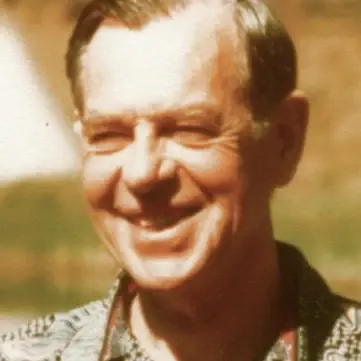
Joseph Campbell was an American mythologist, writer, and lecturer. “The Power of Myth” explores the role of myth in human life through conversations with journalist Bill Moyers.
Explore more books by Joseph Campbell