What you'll learn
Key ideas from Living Buddha, Living Christ
These ideas compress the book's argument without treating the author's view as settled fact. Use them as an orientation before reading the full work or listening in Wiseley.
Deep dialogue asks practitioners to embody their traditions, listen truthfully, and remain open to change.
Conscious breathing gathers body and mind in the present, interrupting the drift into past memories and future concerns.
Monastic and lay communities sustain practice through daily structure, retreats, and mutual encouragement.
Compassionate nonviolence requires active responses to injustice, guided by understanding rather than anger.
The precepts make interdependence practical by linking personal choices with consequences for families, communities, living beings, and future generations.
Faith becomes durable through direct experience cultivated by steady practice, while concepts, names, and images remain supports rather than endpoints.
The orange and mango comparison shows how traditions can share conditions and spiritual fruits while remaining different in form.
Inside Living Buddha, Living Christ
Read the first chapter in full here. The other 9 continue in the Wiseley app.
Chapter 1 of 10 · 6 min · Audio & text
Faith Without Exclusive Ownership
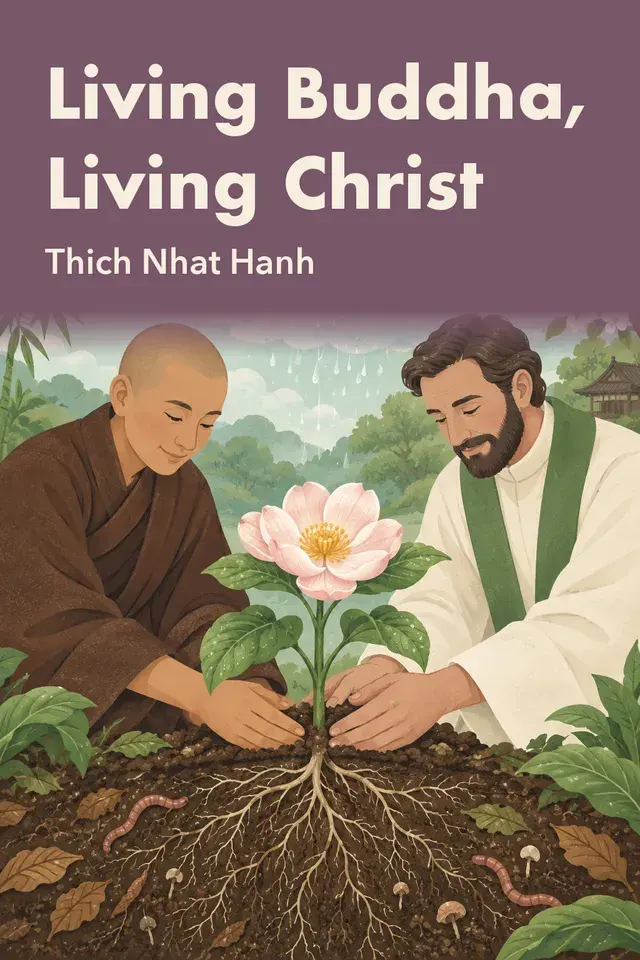
Living Buddha, Living Christ, by Thich Nhat Hanh.
For Thich Nhat Hanh, a central obstacle to religious peace is the belief that one community owns the truth completely. When people hold a view as beyond question, others can seem mistaken or dangerous. During the Vietnam War, he saw communists and anticommunists treat their positions as the only truth, while Buddhists and Christians sometimes fought instead of cooperating against the war. The problem is not commitment itself. It is attachment so rigid that people cannot listen, learn, or correct their course.
Hanh’s alternative asks people to practice their own traditions deeply while admitting that their understanding is incomplete. Nonattachment to views keeps a person receptive to other perspectives. In his account, truthful dialogue lets people examine what they have inherited and discover where their knowledge has been shallow. A stronger understanding of one’s own tradition can make respect for another tradition grow. Listening does not require leaving one’s faith behind; it asks practitioners to embody its best qualities and stay open to learning.
The book’s foreword, by Brother David Steindl-Rast, offers one Christian frame for this openness. It describes genuine witness to God through aliveness and presents the Holy Spirit as a life-giving presence that Christians cannot claim as their possession. This gives readers a point of contact with Hanh’s argument, but it does not establish that Buddhist and Christian concepts are identical. Elaine Pagels’s introduction also discusses early Christian texts that place the kingdom both within and beyond the person, and connect self-knowledge with spiritual understanding. These sources broaden the picture of Christianity available for comparison. They do not prove that the traditions are interchangeable or that Hanh drew his ideas from those texts.
Hanh’s own encounters with Christianity show why openness can take time. The history of French colonialism and missionary hostility toward Buddhism, along with political discrimination against Buddhists in Vietnam, made it difficult for him to see the beauty in Jesus’ teachings. Friendships with Christians who embodied Jesus’ compassion helped him encounter the depth of their tradition and recognize Jesus’ presence in their lives. His openness did not require overlooking Christianity’s history of intolerance or domination. It made room for both an honest account of harm and a real encounter with Christian compassion.
The wartime episode with his disciple makes this way of seeing concrete. An American soldier spat on one of Hanh’s disciples. Hanh turned to meditation: stopping, calming himself, and looking deeply at what had happened. He came to see both the disciple and the soldier as victims of the war. That view did not erase the soldier’s act. It changed how the disciple could respond. Instead of joining armed resistance, the disciple remained committed to peace work. Seeing a person within the suffering that shaped the conflict opened a response beyond retaliation.
For Hanh, dialogue requires this kind of inner work. Conflict between religions cannot be addressed only by exchanging arguments if people are still ruled by defensiveness, prejudice, or conflicting perceptions. Recognizing those states and their causes is part of preparing to listen. Deep dialogue also asks each person to speak truthfully about their tradition, including its shortcomings, and to hear what the other person has understood from theirs.
Openness must not become assimilation. Hanh describes dialogue as allowing what is beautiful and meaningful in another tradition to change you, without absorbing that tradition into your own or pretending the differences have disappeared. He connects this receptivity with non-self: loosening the idea that personal or religious identity is a sealed, independent possession. A living tradition can be enriched through contact and internal change while retaining its own history and perspective.
Interbeing gives Hanh a way to explain why such contact is possible. Looking deeply at a flower reveals that it depends on clouds, rain, earth, minerals, and time. The flower has its own form, but it does not exist independently of these conditions. Hanh applies this insight to people and religious traditions: Buddhism and Christianity have distinct roots, yet neither is sealed off from everything beyond itself. Seeing these relationships loosens rigid boundaries without making the traditions the same.
Religious peace, then, asks for two things together: commitment deep enough to bring a tradition’s compassion to life, and humility deep enough to be changed through listening. Interbeing means that encounter is not simply a meeting between isolated sides. Each is already connected to conditions beyond itself. For Hanh, that recognition opens dialogue that can preserve difference while making a less divided response possible.
Chapter 2 of 10 · 7 min · Audio & textIn the app
Presence in Ordinary Life
Mindfulness begins with noticing what is happening now. Hanh describes it as knowing that you are sitting, walking, or eating, instead of being carried away by memories or plans.
Chapter 3 of 10 · 8 min · Audio & textIn the app
The Teachers Continue in Us
A teacher can be remembered by name without being present in the way that matters most. Thich Nhat Hanh distinguishes the historical Buddha and Jesus from the living realities their lives opened.
Chapter 4 of 10 · 6 min · Audio & textIn the app
Communities Carry the Way
Religious practice is tested not only by what a person understands in meditation, but by what happens when that understanding enters shared work and public life. Thich Nhat Hanh asks whether mindfulness can accompany ordinary responsibilities and whether a church or Sangha makes its teachings visible in how people live together.
Chapter 5 of 10 · 8 min · Audio & textIn the app
Understanding as Peacemaking
Thich Nhat Hanh treats understanding as the force that turns peace from a wish into a practical response. Conflict is not sustained only by visible weapons or harmful acts.
Chapter 6 of 10 · 9 min · Audio & textIn the app
Ethics Rooted in Interdependence
Ethics in this account begins with seeing that life is connected. The precepts are practical jewels: guidance for transforming suffering and learning to live beautifully.
Chapter 7 of 10 · 6 min · Audio & textIn the app
Refuge as Daily Transformation
When Hanh asks what it means to take refuge, he shifts attention from a declaration to an experience. A person may say, “I take refuge in the Buddha, the Dharma, and the Sangha,” but those words express willingness; they do not prove that practice is already happening.
Chapter 8 of 10 · 8 min · Audio & textIn the app
Death, Renewal, and the Ultimate
When people ask what continues after death, they may picture an unchanged soul leaving one body and entering another. Thich Nhat Hanh redirects the question.
Chapter 9 of 10 · 10 min · Audio & textIn the app
Faith Becomes Lived Experience
Faith, in Thich Nhat Hanh’s account, begins with teachings, names, images, and familiar forms, but it cannot remain only an idea. These forms can bring comfort and steadiness, much as tools help cultivate the soil.
Chapter 10 of 10 · 7 min · Audio & textIn the app
Shared Ground, Distinct Paths
Hanh’s closing comparison asks how Buddhist and Christian traditions can illuminate one another without becoming interchangeable. The answer depends on noticing what kind of likeness is being claimed.
Chapter 1 of 10 · 6 min · Audio & text: Faith Without Exclusive Ownership
Wiseley supports reading and listening to summaries in the app.
Continue in WiseleyAbout Thich Nhat Hanh
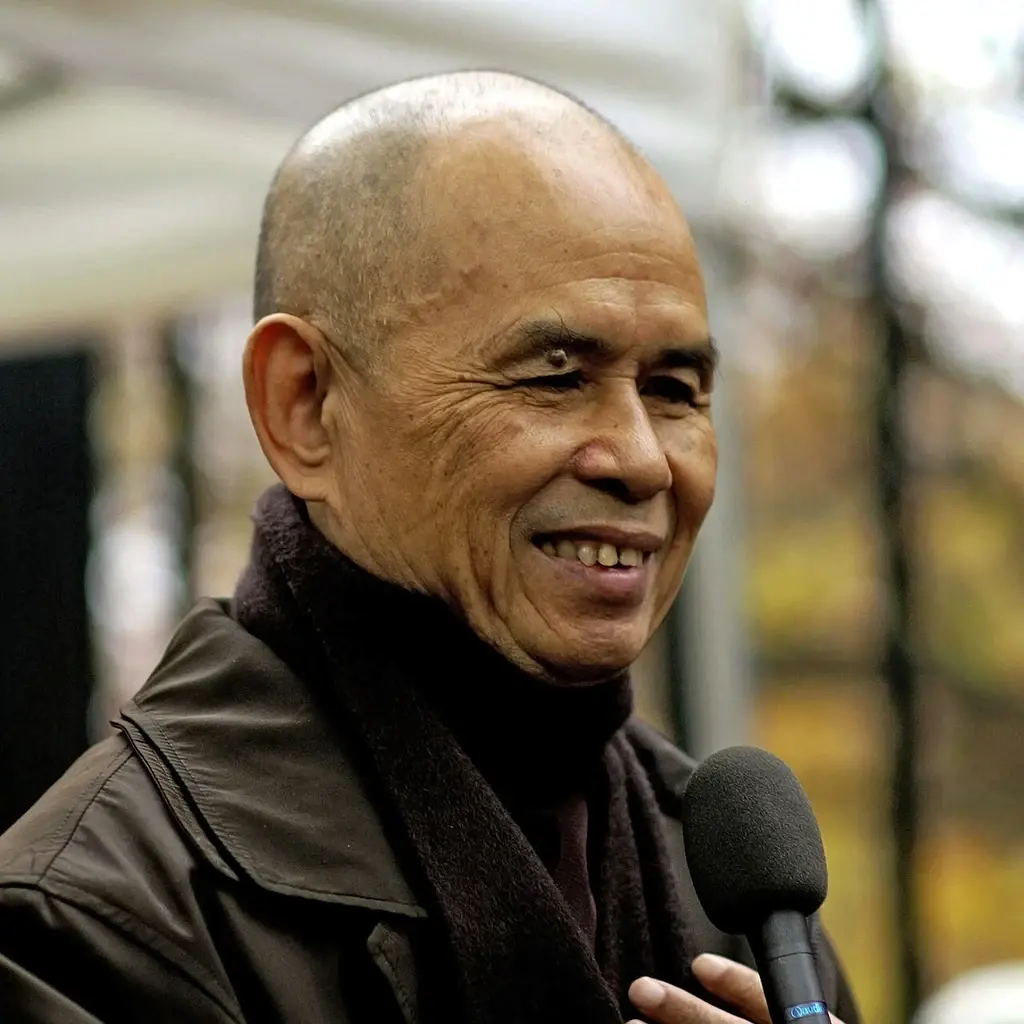
Thich Nhat Hanh was a Vietnamese Buddhist monk and activist. “The Heart of the Buddha's Teaching” explores central Buddhist teachings and their application to suffering, mindfulness, and everyday life.
Explore more books by Thich Nhat Hanh