
What you'll learn
Key ideas from The Stoic Mindset
These ideas compress the book's argument without treating the author's view as settled fact. Use them as an orientation before reading the full work or listening in Wiseley.
Stoic practice preserves natural emotion while creating room to examine its assumptions and choose a response.
Acceptance is active: it recognizes unchangeable facts, preserves rest and grief, and searches for workable possibilities.
The control distinction directs attention from external results to choices, preparation, courage, and the next available action.
Eudaimonia locates flourishing in meaningful effort, growth, and inner calm rather than guaranteed victory, wealth, or status.
Stoic self-development joins personal excellence to obligations of justice, so both the goal and the means used to pursue it matter.
Mortality turns limited time into a test for present priorities, relationships, and commitments.
The compass metaphor frames direction as a workable bearing that guides action without requiring a complete life plan.
Chosen goals become credible when their required routines, sacrifices, and hardships are accepted in practice.
Inside The Stoic Mindset
Read the first chapter in full here. The other 6 continue in the Wiseley app.
Chapter 1 of 7 · 8 min · Audio & text
Create Space Between Feeling and Judgment
The Stoic Mindset, by Mark Tuitert.
Mark Tuitert presents Stoicism as practical training for people who want to stay engaged with life, not as a retreat from ambition or feeling. He writes from experience and says his book is not an exact handbook. It is an invitation to develop a Stoic mindset that fits a person’s circumstances. The starting point is a small but consequential distinction: an event can arrive with an involuntary impression, while the judgment attached to that impression is a further mental step. That distinction creates space between what is felt first and what is chosen next.
Epictetus captures the idea by saying that events themselves do not trouble us; our judgments about them do. This does not mean that Stoics switch emotions off. Pain after a fall, or adrenaline during a near collision, can appear before thought has time to intervene. Fear and anger are natural experiences, and emotions connect us to other people. The practice begins after that first impression. We can ask what we are concluding about it, instead of automatically turning the impression into a lasting emotion or impulsive action.
Tuitert uses a storm image to make the distinction vivid. A wise person may look pale or frightened while danger is unfolding. That first reaction is not a moral failure. The difference is that the person can regain composure rather than feed the reaction into sustained panic. Calm, in this account, is not the absence of a physical response. It is the ability to examine the response before allowing it to direct thought and conduct.
Judgments often hide inside ordinary emotional language. When a soccer player says the team deserved to win, anger may be carrying the belief that victory was owed. Staying inside that belief keeps attention on the injustice rather than on what can be learned or done next. The useful question is not whether anger is forbidden. It is what the anger assumes, and whether that assumption deserves to govern the next move.
Seneca describes emotional pain as a wound: something to treat by examining the judgment beneath it, rather than letting it become a lasting scar. Tuitert connects this image with the old idea of philosophers as doctors of the soul and with the related logic of modern cognitive behavioral therapy. The point is practical: understanding a reaction can be part of changing what follows.
Tuitert came to this question through his relationship with his father. During his parents’ divorce, he judged his father to be the bad party, sided with his mother, supported her materially, and distanced himself from his father. He eventually broke contact without examining the situation deeply. At first, that judgment felt like a settled description of reality. Later, he saw that it had also organized his emotions, his choices, and the attention he gave to the conflict.
Five years after cutting contact, he concluded that his difficulties were not only about skating. They also involved judgments and choices in his life. He decided that becoming a better skater required becoming a better person, and he recognized that the unresolved conflict was consuming energy. He delayed calling his father because he feared anger or sadness. Yet he also saw that nothing would change without contact. When he finally called, his father responded with happiness, not the reaction Tuitert had predicted. The prediction had been an interpretation, not a fact discovered in advance.
The deeper change came from examining the expectation beneath his anger. Tuitert had expected unconditional paternal love and believed his father should have acted differently. He also recognized that he had not understood what it meant to be a father, or the powerlessness his father had experienced. Admitting that he did not know enough allowed him to appreciate what his father had done and redirect energy toward his own struggle. Four years later, his father attended an Olympic race and cheered for him. The reconciliation illustrates what changed understanding made possible: attention that had been tied up in judgment became available for living and acting.
This example is not a claim that every relationship should be repaired, or that reflection excuses harmful behavior. Reconsidering a judgment does not require denying what happened or abandoning sensible boundaries. Its point is narrower and more practical: Tuitert found that his own interpretation had become part of the burden, and that changing it altered his freedom to respond. The event did not change retrospectively. His relationship to it did.
That freedom is not passivity. Epictetus makes a person responsible for deciding whether to join a provocation, not responsible for pretending nothing matters. Seneca’s pursuit of the people who robbed and killed his father is presented as deliberate action motivated by love and a wish to prevent future victims, rather than by rage. Reflection can therefore lead to firm action or restraint suited to the situation. What matters is that the response follows examination instead of being dictated by the first surge.
Tuitert turns the distinction into an ABC exercise. At A, describe the activating event as objectively as possible, without smuggling in the verdict. At B, identify the belief, thought, or judgment attached to it. At C, name the resulting feeling, and notice what that feeling makes more likely to do or avoid. The exercise makes the sequence visible: the same event can produce a different emotional consequence when the belief changes.
His project-management example shows how this works in ordinary life. If a task requires help, the belief might be that asking exposes weakness. That belief can produce frustration and encourage someone to struggle alone. Reframing the request as a practical option changes the meaning of the event; when a colleague helps, the result can move from frustration to relief. The outside circumstance has not necessarily changed. The interpretation and the available action have.
The exercise is not a demand to find a cheerful explanation for everything. It is a disciplined pause. First separate what happened from the story attached to it. Then ask what the story makes you feel, what it inclines you to do or avoid, and whether another judgment fits the evidence better. That alternative need not erase the original feeling immediately. It gives the feeling something to be examined rather than obeyed.
This is the psychological mechanism on which Tuitert’s later practices depend. We do not control the arrival of every impression, but we can investigate the judgment that follows it. In that gap, a reaction can become a considered response. For Tuitert, freedom begins not by feeling less, but by allowing feeling and judgment to be told apart.
Chapter 2 of 7 · 8 min · Audio & textIn the app
Prepare for Setbacks and Accept Reality
Setbacks become more usable when Stoic practice begins before the crisis and continues after it. Before adversity arrives, imagine plausible ways a valued plan could fail and pair each fear with a response.
Chapter 3 of 7 · 8 min · Audio & textIn the app
Pursue Excellence Without Depending on Victory
Ambition becomes unstable when winning is not merely desired but required for peace of mind. People naturally want success, but competition offers more opportunities for disappointment than victory.
Chapter 4 of 7 · 8 min · Audio & textIn the app
Build Character Through Service and Competition
Stoic self-development becomes incomplete when it is treated as a private performance project. It asks not only whether a goal is achieved, but whether the goal is worth pursuing and whether the means respect the people affected by it.
Chapter 5 of 7 · 6 min · Audio & textIn the app
Let Mortality Clarify What Matters
Mortality can sound like an invitation to fear the end. In Tuitert’s account, it is more useful as a way of seeing the present.
Chapter 6 of 7 · 7 min · Audio & textIn the app
Find Direction Through Exploration and Reflection
A map promises a destination, a route, and perhaps a timetable. A compass offers something different: a direction without claiming to reveal the whole journey.
Chapter 7 of 7 · 8 min · Audio & textIn the app
Turn Chosen Goals Into Daily Practice
Choosing a direction is only the beginning. The next question is what that direction will require from an ordinary week.
Chapter 1 of 7 · 8 min · Audio & text: Create Space Between Feeling and Judgment
Wiseley supports reading and listening to summaries in the app.
Continue in WiseleyAbout Mark Tuitert
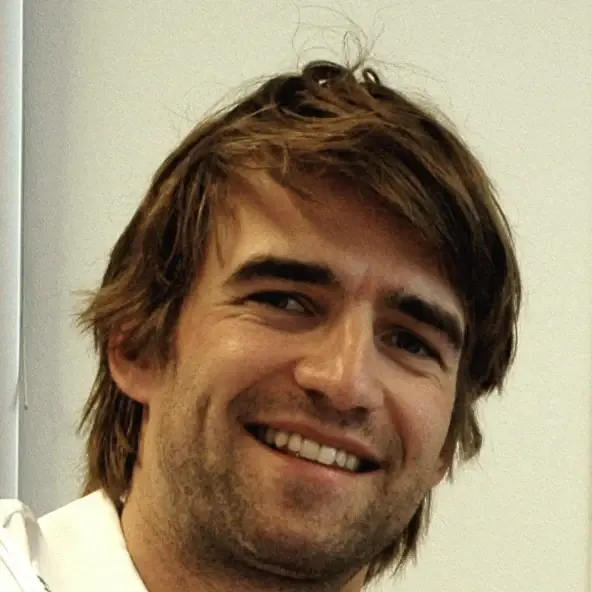
Mark Tuitert is a retired Dutch speed skater and Olympic champion. “The Stoic Mindset” explores how to pursue ambitious goals without letting outcomes govern life, using Stoic practices.
Explore more books by Mark Tuitert