What you'll learn
Key ideas from Mythology
These ideas compress the book's argument without treating the author's view as settled fact. Use them as an orientation before reading the full work or listening in Wiseley.
Zeus’s authority is great but limited, and his stories preserve both moral grandeur and compromised conduct.
Eleusinian worship joins grain’s harvest to secret rites and hope for a better life after death.
Prometheus aids mortals with fire and a favorable share of sacrifice, then faces Zeus’s punishment and an uncertain release.
Theseus’s surrender of kingship and defense of burial place civic authority in service of the common good.
Priam’s grief moves Achilles to recognize their shared humanity, and Hector’s funeral closes the Iliad.
Orestes faces conflicting sacred duties, then admits guilt before Athena, whose decision and mercy interrupt retaliation.
Hamilton frames Norse heroism as resistance that remains meaningful even when survival is impossible.
Creation and destruction are linked in a world built from Ymir that is fated to fall, though renewal remains imaginable.
Inside Mythology
Read the first chapter in full here. The other 19 continue in the Wiseley app.
Chapter 1 of 20 · 6 min · Audio & text
Power and Contradiction on Olympus
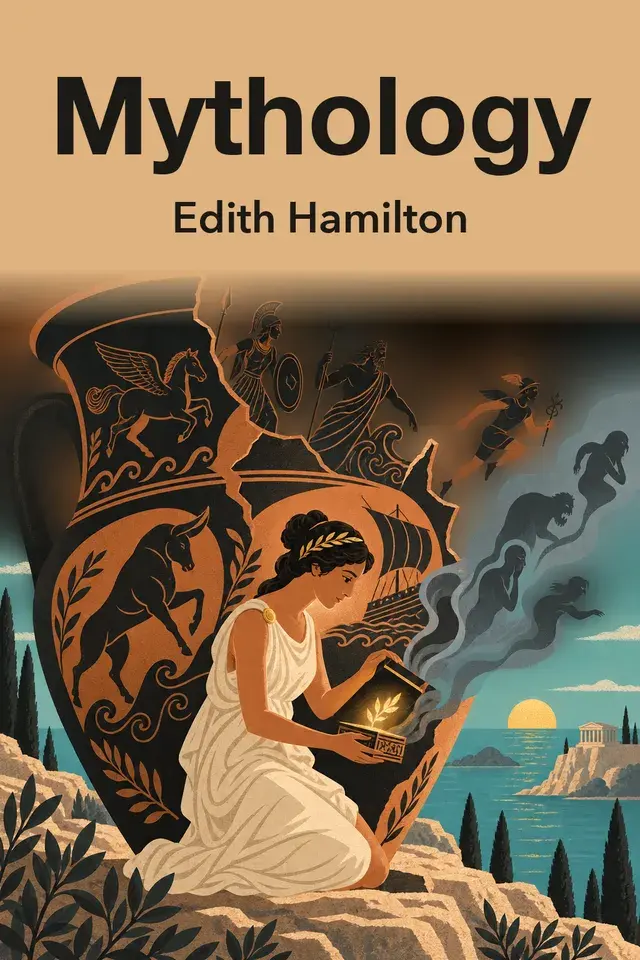
Mythology, by Edith Hamilton.
Greek gods are not simply characters with powers; their domains also give shape to natural forces, civic life, and household practice. Hamilton presents the Olympians as a differentiated divine family, succeeding the Titans and headed by Zeus. Their home, Olympus, shifts in imagination from a mountain to a mysterious realm beyond earthly heights. The order helps make the world intelligible, but its stories preserve gods with conflicting motives and changing identities. A god’s office does not guarantee a consistent character.
Zeus rules the sky and its rain and thunder, yet his authority is not absolute: other gods deceive him, and some tellings place Fate beyond his control. He is also a moral ruler who demands right conduct. At Troy, the Greek army is told that Zeus never helps liars or those who break their oaths. Alongside that majestic role, myths make him repeatedly unfaithful. Hamilton reports the scholarly explanation that these affairs preserve the absorption of local gods and their wives into Zeus’s cult; the resulting stories could trouble later Greeks too. Grand authority and compromised conduct remain together.
Hera, Zeus’s sister and wife, protects marriage and married women, but stories often present her through unrelenting anger at Zeus’s lovers and their children. The Golden Fleece story gives her another role: she supports and inspires its heroes. This exception sits beside her harsher portrayals, while her continuing worship reflects a place in household life beyond those plots.
Poseidon rules the sea’s storms and calms, and his trident can shake the earth. Greeks on both sides of the Aegean were seamen, and Poseidon was all-important to them. He was also honored as giver of the horse. Nature, livelihood, and a human craft meet in one god.
Athena, born fully grown and armored from Zeus’s head, protects the city and civilized life. Her sphere includes craft, agriculture, and the taming of horses. Many accounts restrict her warfare to defense of the state and home, while the Iliad first shows a fiercer, ruthless goddess. Later poetry makes her a figure of wisdom, reason, and purity; the change reveals how a divine identity can be recast without erasing earlier portrayals.
Apollo gathers music, archery, healing, light, truth, and prophecy. At Delphi he serves as mediator of divine will and purifier, with the priestess delivering the oracle in a trance. Yet he can be pitiless in some stories. Hamilton also separates him from Helios, the actual Sun god, although Apollo is often treated as the sun. His associations with truth and guidance therefore coexist with a residual cruelty and a blurred identity.
His twin Artemis protects young creatures as a maiden huntress, but her protection is not gentleness without limit. She can be fierce and vengeful; one story has her hold the Greek fleet until a maiden is sacrificed. Later identification with the Moon belongs to changing traditions around her, not a single fixed portrait.
Aphrodite likewise has distinct origins across tellings. In the Iliad, Zeus and Dione are her parents; later poets make her born of sea foam near Cythera and carried to Cyprus. Poets celebrate her as beauty that makes life lovely, yet other works portray her as weak in war or treacherous and destructive. Love and beauty can animate the world, but the goddess is not always benign.
Hermes is Zeus’s swift messenger, shrewd thief, patron of commerce, and guide of the dead. The story of his first-day theft of Apollo’s cattle ends in reconciliation: he returns them and gives Apollo a lyre made from tortoise shell. Hamilton tentatively connects the clever theft with Hermes’s commercial role. His identities join wit and exchange to service among gods and mortals.
Ares has little distinct personality beyond war. Hamilton describes him broadly as a symbol of war, while the Iliad makes him murderous and cowardly. The difference warns against treating a god’s domain as a full moral description.
Hephaestus is lame, yet Homer honors him as the immortals’ smith, making their homes, furnishings, and weapons. His parentage and expulsion from heaven vary across accounts. Alongside Athena, he supports the crafts on which city life depends. His place is marked by making rather than rule: skill serves both Olympus and civic life.
Hestia has little personal mythology, yet the hearth gives her central household and civic importance. Meals begin and end with offerings to her; cities keep public fires burning, and colonies kindle their new hearths with coals from the mother-city. She shows that divine significance need not depend on dramatic adventures. Across the Olympians, power becomes legible in particular work and ritual, while poems preserve tensions between a god’s role and conduct.
Chapter 2 of 20 · 5 min · Audio & textIn the app
Lesser Gods and the Underworld
Beyond the Olympians’ familiar domains, lesser divinities give form to shared experiences and natural powers. Eros changes in the telling: early accounts make him a serious, beneficent force, while later poetry turns him into Aphrodite’s mischievous or cruel boy, whose arrows suggest love can overwhelm judgment.
Chapter 3 of 20 · 7 min · Audio & textIn the app
Grain, Seasons, and Dionysian Risk
Hamilton presents Demeter, goddess of grain, and Dionysus, god of the vine, as earth’s great providers who know grief. Demeter’s story turns a mother’s loss into a crisis for every household.
Chapter 4 of 20 · 7 min · Audio & textIn the app
Creation, Humanity, and Defiance
Hamilton names Hesiod as her chief guide to the beginnings of everything and turns to Aeschylus for Prometheus’s punishment. Her opening does not begin with a maker shaping a finished world.
Chapter 5 of 20 · 4 min · Audio & textIn the app
Nature, Transformation, and Story
Europa’s story begins with a dream: Asia claims her as a daughter, while another continent says Zeus will give her to it. At dawn, she gathers flowers with her companions beside the sea.
Chapter 6 of 20 · 5 min · Audio & textIn the app
Love, Trust, and Irreversible Loss
These tales give love several outcomes: it may be restored, survive separation, or end in irreversible loss. Hamilton presents distinct literary tellings: Apuleius for Cupid and Psyche, Ovid for Pyramus and Thisbe, and, for Orpheus, Apollonius of Rhodes for the Argonaut episode, with Virgil and Ovid telling the rest.
Chapter 7 of 20 · 5 min · Audio & textIn the app
The Fleece and Medea's Betrayal
Jason returns to claim the throne taken by his cousin Pelias. Pelias fears an oracle’s warning about a kinsman and a man wearing one sandal.
Chapter 8 of 20 · 4 min · Audio & textIn the app
Human Limits and Daring
These stories distinguish daring from mastery: ability can meet a real obstacle, but confidence alone cannot control forces beyond a mortal’s skill. In Ovid’s account, Phaëthon first seeks to settle his parentage: his mother Clymene calls the Sun his father, while schoolmates mock the claim.
Chapter 9 of 20 · 5 min · Audio & textIn the app
Heroes, Justice, and the Common Good
Perseus’s story has the shape of a fairy tale: an impossible task, divine helpers, and gifts matched to danger. But it also turns on human choices.
Chapter 10 of 20 · 5 min · Audio & textIn the app
Strength, Judgment, and Remorse
Theseus and Hercules represent different heroic strengths in Hamilton’s account. Theseus suggests thought and compassion; Hercules, the strongest man on earth, confidence and force.
Chapter 11 of 20 · 8 min · Audio & textIn the app
Troy: Honor, Fate, and Grief
Hamilton’s Trojan story is wider than the Iliad. The poem begins after the Greeks reach Troy and ends with Hector’s funeral, before the city falls.
Chapter 12 of 20 · 6 min · Audio & textIn the app
Troy's Fall and Its Survivors
Hamilton’s account of Troy’s fall moves beyond the Iliad. Virgil’s Aeneid supplies most of the capture story; Sophocles contributes the episodes of Philoctetes and Ajax, and Euripides gives the women’s lament afterward.
Chapter 13 of 20 · 6 min · Audio & textIn the app
Odysseus Finds His Way Home
Odysseus’s homecoming begins after Troy’s victory has turned into divine punishment. The Greeks have neglected their duties to the gods, and the lesser Ajax drags Cassandra from Athena’s altar.
Chapter 14 of 20 · 7 min · Audio & textIn the app
Aeneas and Rome's Future
The distinction from Odysseus is one of purpose: his story is a homecoming, while Aeneas’s journey leads toward a people and a home not yet established. Aeneas escapes Troy with his father and young son, then leads survivors who want to settle but do not know where.
Chapter 15 of 20 · 5 min · Audio & textIn the app
Atreid Violence and the Turn to Mercy
Edith Hamilton presents the House of Atreus as a family whose history makes revenge seem inherited. A crime is followed by punishment, yet descendants who did not commit the first offense suffer too.
Chapter 16 of 20 · 8 min · Audio & textIn the app
Thebes: Prophecy and Unwritten Law
The Theban stories begin with a founding and unfold as a history of family loss. Sent to search for Europa, Cadmus goes to Delphi and asks Apollo where she is.
Chapter 17 of 20 · 6 min · Audio & textIn the app
Athens, Families, and Changing Belief
Athens’s origin stories do not give the city one settled beginning. Hamilton presents Cecrops as Attica’s first king, with no human ancestry and a form partly human, partly dragon.
Chapter 18 of 20 · 7 min · Audio & textIn the app
Brief Myths, Uneven Justice
Hamilton gathers these brief Greek accounts as contrasting encounters with divine power. Their consequences do not make one consistent moral code: a wish can be reversed, a rescue can become punishment, and an injury may be answered by an explanation for a natural form.
Chapter 19 of 20 · 3 min · Audio & textIn the app
Norse Heroes Against Doom
Hamilton presents Norse heroism as resistance under foreknown defeat. Courage cannot guarantee survival, but a person retains the choice to yield or face death without surrender; in this sense, resistance can be a triumph.
Chapter 20 of 20 · 4 min · Audio & textIn the app
Ragnarök, Renewal, and Practical Wisdom
Hamilton draws a broad contrast between Greek Olympians, whom she presents as immortal and invulnerable, and Norse gods who face enemies destined to defeat them. Odin, highest among gods and people, is solemn because he knows the Giants’ victory is coming.
Chapter 1 of 20 · 6 min · Audio & text: Power and Contradiction on Olympus
Wiseley supports reading and listening to summaries in the app.
Continue in WiseleyAbout Edith Hamilton
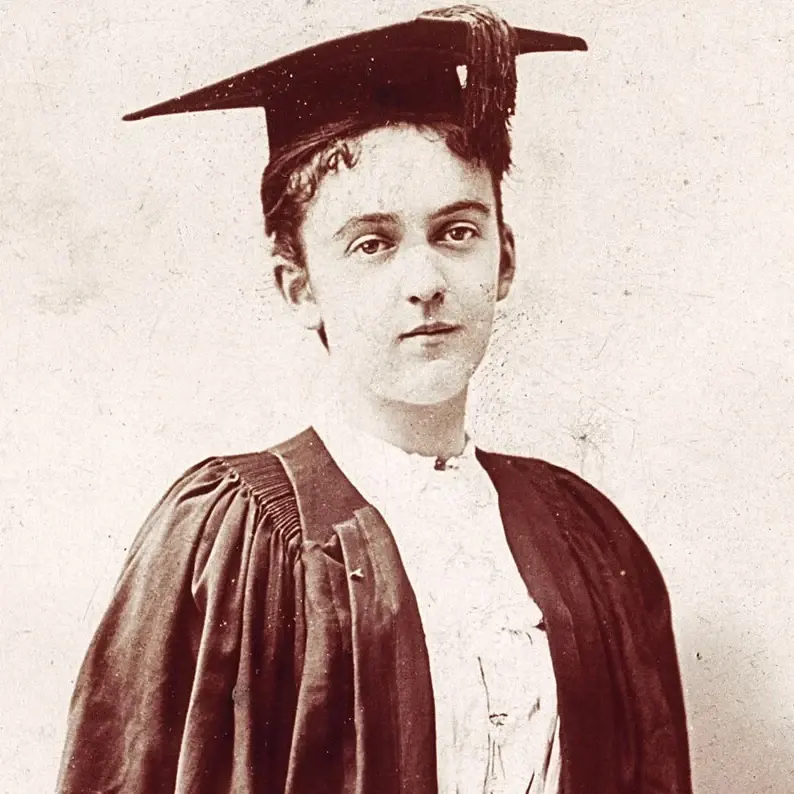
Edith Hamilton was an American educator and classicist. “Mythology” explores Greek and Norse myth, from divine origins through heroic quests, the Trojan War, and tragic family houses.
Explore more books by Edith Hamilton