
What you'll learn
Key ideas from Psychological Types
These ideas compress the book's argument without treating the author's view as settled fact. Use them as an orientation before reading the full work or listening in Wiseley.
Introversion and extraversion name relative orientations toward the subject and object, and everyone has both in differing proportions.
Differentiation lets society concentrate capacities for common work, while collective success can identify people with useful functions and narrow individual development.
Jung treats the instincts’ opposition as productive: each can enable and limit the other, while suppressing either one deepens division.
Jung’s transcendent function describes how unconscious material can join conscious awareness and mediate opposed tendencies.
A living symbol gathers libido, gives unconscious material an image, and can make a renewed conscious relation to the world possible.
Compensation usually supplements conscious selection, while strong one-sidedness can build a more oppositional unconscious counter-attitude.
Psychological theories carry the theorist’s standpoint because the psyche is both the subject and object of inquiry.
Inside Psychological Types
Read the first chapter in full here. The other 17 continue in the Wiseley app.
Chapter 1 of 18 · 6 min · Audio & text
Why Psychological Types Matter
Psychological Types, by Carl Jung.
Psychology begins with a question: when a person meets an event, how much authority belongs to the event, and how much to the person’s inner response? Jung calls external persons and conditions the object, and the individual’s psychic standpoint the subject. This distinction asks where a person’s interest settles and what they treat as decisive.
Jung calls a habitual movement of interest toward the object extraversion. It gives greater weight to objective events and conditions. Introversion gives greater weight to the subject and its psychological processes. These are relative orientations, not separate kinds of people. Everyone has both, though one may predominate as a habit. Secondary traits can complicate the picture, making it hard to recognize one’s own habitual standpoint.
That distinction matters because the observer is also part of psychological inquiry. Jung argues that people notice and interpret what they are best equipped to recognize. Even scientific concepts reflect the investigator’s standpoint: observation involves choices about what to attend to, how to describe it, and what patterns to draw from it. Psychology therefore needs to consider both the person being studied and the person doing the studying. An interpretation may fit the part of experience it addresses without being universally valid.
The translator’s preface presents Freud as an empirical investigator whose attention to observable facts produced valuable therapeutic results, while also describing that empirical stance as a limitation. Separately, it describes Jung’s elaboration of word-association experiments as yielding objective criteria for recognizing unconscious complexes. From his formulation of the complex, Jung advanced to repression, a concept Freud had reached by the clinical route. The translator contrasts Freud’s focus on empirically ascertainable facts with Jung’s view of the person as a self-creating subject, and stresses that empirical observation and abstraction can correct one another. These are the translator’s pointed judgments, not a settled verdict on Freud.
To explain why inner life might exceed an individual’s personal history, the translator offers an analogy. An infant does not have to learn to breathe or sustain a heartbeat through instruction. Bodily functioning depends on inherited organization shaped before that individual’s experience. The translator asks whether psychic life, too, may carry inherited structures. Jung’s idea of a collective unconscious gives a name to such structures and images beyond personal biography; the bodily comparison makes the possibility easier to grasp.
The preface also describes a delirious patient who experiences snakes and frogs that are not objectively present. Those creatures are subjectively real to the patient as experiences, even though they are not external facts. Taking the experience seriously does not require treating the hallucinated animals as objectively real. It means recognizing that an account limited to what an outside observer can verify leaves something out.
This distinction changes how we think about adaptation. The translator describes neurosis as failed adaptation, then asks what reality the person has failed to adapt to. Attention to physical and social conditions matters, but those conditions cannot by themselves explain every inner conflict. The psyche makes its own demands. Inner and outer realities are distinct, yet connected; treating either one as the only reality can produce a partial account. For the same reason, a therapy that works from one standpoint may not fit every person, and an analyst’s own perspective can shape an interpretation.
A practical starting point is to notice the standpoint behind an explanation before extending it to someone else. Ask what the account treats as decisive: observable conditions, inner experience, or both. When considering adaptation, include the demands of the person’s circumstances and the claims of their subjective life. Jung’s typology begins as a way to recognize differences in orientation and limits in observation. Its value is in making judgment more careful, not in supplying a formula that decides who someone is or how they must live.
Chapter 2 of 18 · 7 min · Audio & textIn the app
From Concrete Experience to Universal Ideas
Jung traces a recurring conflict from early Christian controversies into medieval philosophy: does reality reside chiefly in particular, perceptible things, or in ideas that can stand beyond any one example? He uses this contrast to interpret the disputes, while allowing that doctrine and politics also shaped them.
Chapter 3 of 18 · 7 min · Audio & textIn the app
When One Explanation Takes Over
A theory can be useful because it isolates a real process. It becomes distorting when it treats that process as the explanation for everything in the psyche.
Chapter 4 of 18 · 6 min · Audio & textIn the app
Culture and the Divided Person
Jung turns to Schiller to ask what happens when a society develops people mainly for what it needs them to do. Differentiation is the strengthening of one capacity beyond the others, until it becomes a person’s leading way of working.
Chapter 5 of 18 · 6 min · Audio & textIn the app
Opposites, Play, and Living Form
The previous chapter showed how specialization can strengthen one capacity while leaving others undeveloped. Schiller turns that social problem inward: what happens when opposing needs within one person are treated as if only one can lead?
Chapter 6 of 18 · 7 min · Audio & textIn the app
The Symbol as Transcendent Function
Schiller’s account of opposing instincts left a practical question open: what actually brings them into relation when the will cannot reconcile them? Jung’s answer begins with the limits of conscious choice.
Chapter 7 of 18 · 7 min · Audio & textIn the app
Understanding Others Across Orientations
How do we understand someone whose priorities differ from ours? Jung begins with conscious orientation: the direction that gives a person’s awareness its leading value, whether toward outer objects and circumstances or toward inner thoughts and images.
Chapter 8 of 18 · 6 min · Audio & textIn the app
Myths of Renewal and Reversal
When Jung speaks here of a symbol, he means a newly formed image that gives shape to a possibility conscious values cannot yet express. The opposites at stake are not simply good and evil conduct.
Chapter 9 of 18 · 7 min · Audio & textIn the app
Libido and the Middle Path
When someone clings to one way of life, the capacities left outside it do not simply disappear. Jung calls the changing intensity and direction of the life process libido.
Chapter 10 of 18 · 9 min · Audio & textIn the app
Symbols That Give Energy Form
Jung’s account of symbol formation begins with libido, his term for psychic energy or value. A living symbol does more than point to something already known: it gathers energy, gives unconscious material a shape, and cannot be exhausted by a neat explanation.
Chapter 11 of 18 · 7 min · Audio & textIn the app
Type in Psychiatry and Aesthetics
Gross proposes a “secondary function”: a period of restitution or assimilation after an initial psychic act, such as forming an idea. He supposes that recovery lasts in proportion to the energy spent and shapes what follows.
Chapter 12 of 18 · 6 min · Audio & textIn the app
Temperament Shapes Philosophical Judgment
Philosophical arguments are built from reasons, but also from judgments about which reasons matter most. William James noticed that philosophers may try to set temperament aside, yet their preferences still shape what evidence feels convincing.
Chapter 13 of 18 · 4 min · Audio & textIn the app
Attitudes Across Biographies
After tracing how temperament can color philosophical judgment, Jung turns to biographies as a bridge toward a more systematic account. A general attitude type is defined by the direction of a person’s interest, or libido, and by how that person relates to the object.
Chapter 14 of 18 · 8 min · Audio & textIn the app
Four Extraverted Functions
Jung calls an attitude extraverted when objective conditions chiefly determine a person’s conscious attention, judgments, and actions. Extraversion is a habitual priority for what comes from the object or situation, not simply a liking for concrete things.
Chapter 15 of 18 · 7 min · Audio & textIn the app
Four Introverted Functions
To understand introversion in these four functions, ask what sets the decisive value in a person’s response. The object is present, but it does not alone govern what the person notices, concludes, or does.
Chapter 16 of 18 · 7 min · Audio & textIn the app
Functions, Attitudes, and Compensation
Jung’s type language is easiest to use when its terms describe processes, not fixed traits. An attitude is the psyche’s readiness to act in a direction.
Chapter 17 of 18 · 5 min · Audio & textIn the app
Phantasy, Persona, and Symbol
A dream or phantasy may present a person or thing, yet the visible object does not exhaust what the image means. Jung distinguishes conscious contents, which are related to the ego, from unconscious contents, which are not perceptibly related to it.
Chapter 18 of 18 · 4 min · Audio & textIn the app
Psychological Pluralism and Humility
Psychology faces a peculiar problem: the psyche is both the object of inquiry and the means by which inquiry proceeds. Jung argues that no psychological observer can step outside psychic life or record it through an independent apparatus.
Chapter 1 of 18 · 6 min · Audio & text: Why Psychological Types Matter
Wiseley supports reading and listening to summaries in the app.
Continue in WiseleyAbout Carl Jung
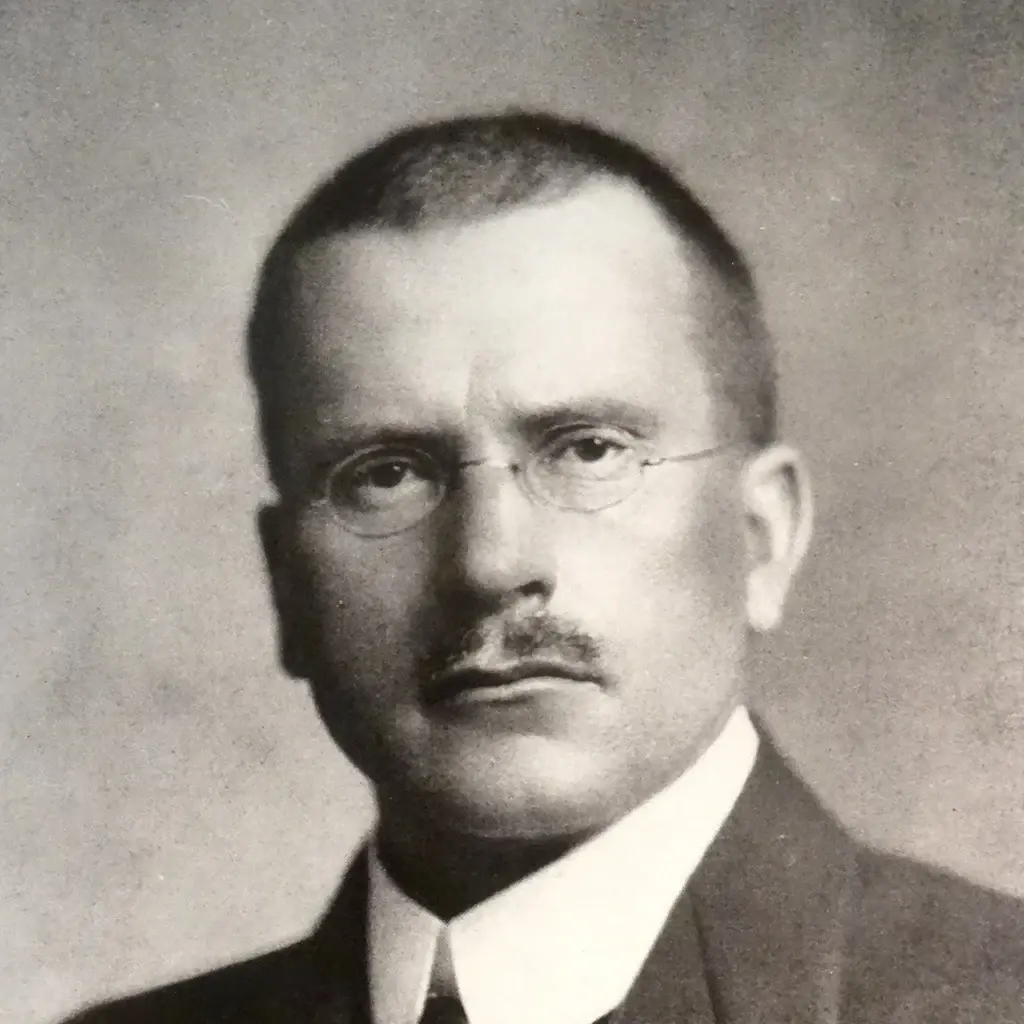
Carl Jung was a Swiss psychiatrist and psychotherapist. “Memories, Dreams, Reflections” explores the experiences, dreams, and ideas that shaped Jung's understanding of psychological life.
Explore more books by Carl Jung