
Persuasion is more than the final sentence
Before changing a pitch, ask what is failing. The listener may be attending to a different problem, unable to retain the idea, unconvinced by the evidence, or unwilling to accept the terms. These books examine different parts of that process. None removes the other person’s right to refuse.
| Difficulty | Book | Question to bring |
|---|---|---|
| The request seems persuasive for the wrong reason | Influence | What is doing the convincing? |
| The setup directs attention elsewhere | Pre-Suasion | What is salient before the request? |
| The idea is hard to remember | Made to Stick | What makes the meaning concrete? |
| The terms remain contested | Never Split the Difference | What concern has not been understood? |
Four places to look
The selection combines explanations of influence with writing about communication and negotiation. Keep descriptions of how people may respond separate from claims about how they must respond.

Recognize the shortcut before relying on it
Influence · Robert Cialdini
Robert Cialdini examines recurring principles of influence, including reciprocity, social proof, and authority. The defensive use is as important as the persuasive one: identify which cue is doing work and whether it is relevant to the claim being made.
- Read it for
- Recognizing influence mechanisms in requests and decisions.
- Keep in mind
- A mechanism can explain susceptibility without making a particular claim true or an application ethical.
Look at what happens before the request
Pre-Suasion · Robert Cialdini
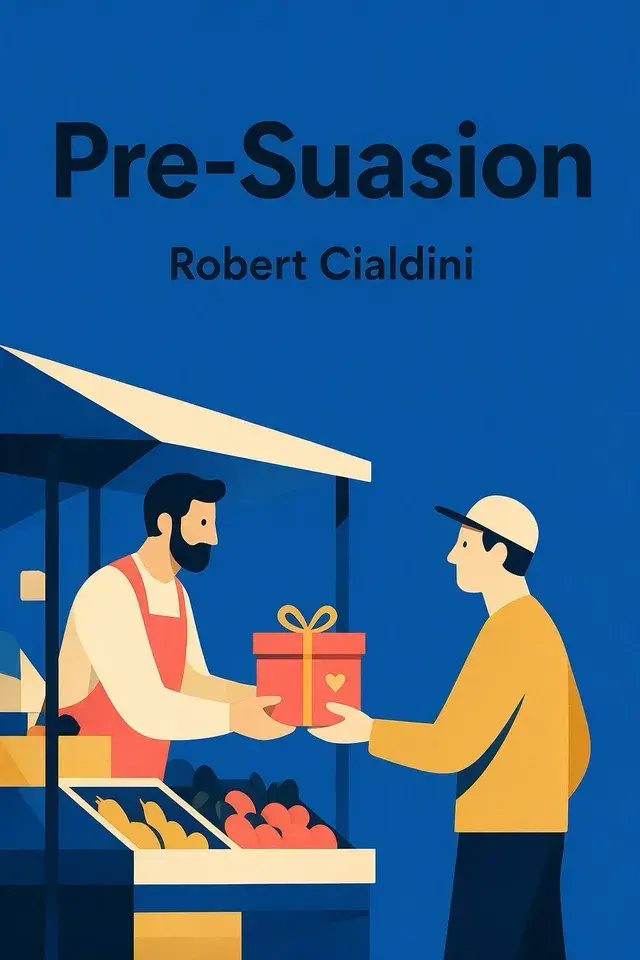
Cialdini turns toward the arrangement of attention before a message arrives. It shifts the reader’s focus from a clever closing line to the context in which the listener receives it. Ask whether that context clarifies the decision or distracts from relevant facts.
- Read it for
- Examining the framing and timing around a message.
- Keep in mind
- Effects described in a book do not predict an individual listener’s response.
Make the meaning easier to retain
Made to Stick · Chip Heath & Dan Heath
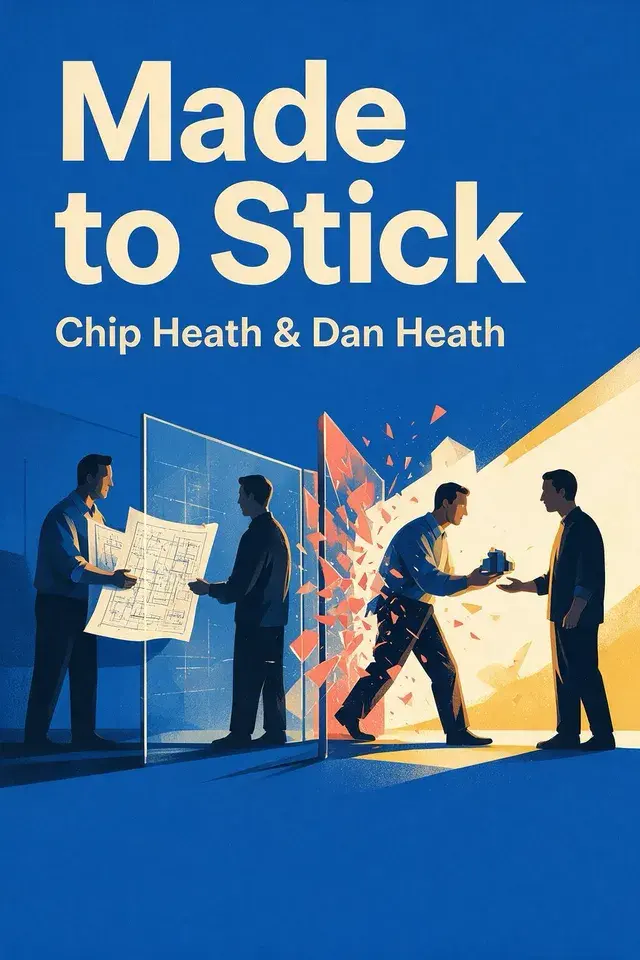
Chip and Dan Heath examine why some ideas remain memorable through concreteness, unexpectedness, credibility, emotion, and story. A useful application is explaining a real idea more clearly. Memorability and truth remain separate tests.
- Read it for
- Making an explanation specific enough to remember and discuss.
- Keep in mind
- A sticky claim can still be false, incomplete, or misleading.

Treat a negotiation as an exchange of information
Never Split the Difference · Chris Voss
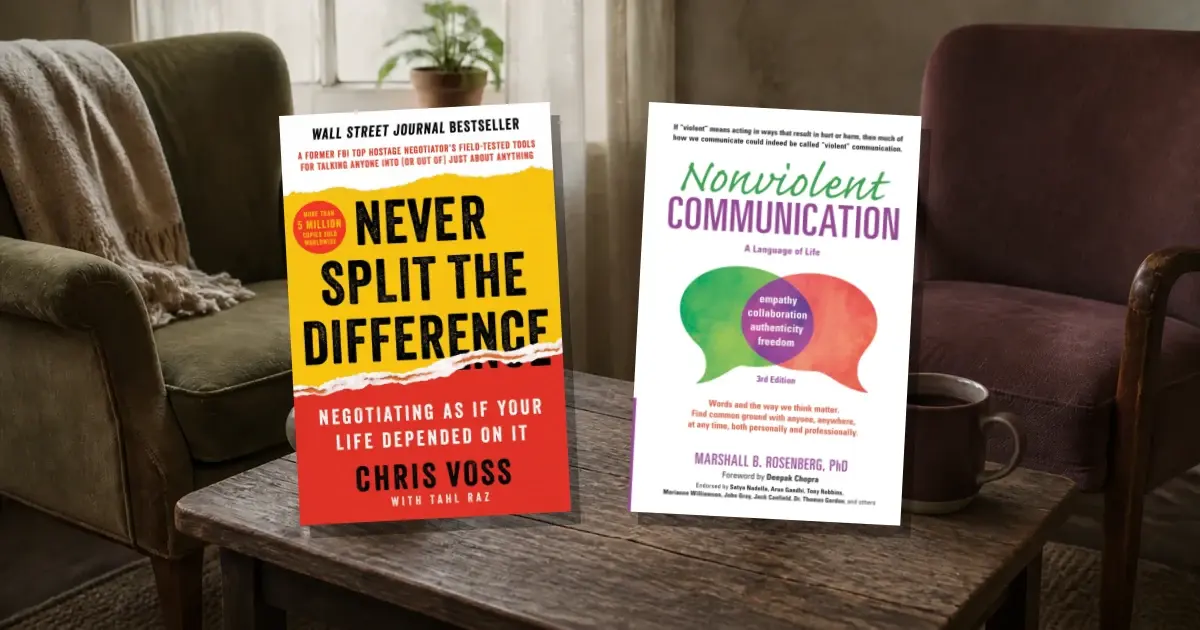
Chris Voss, with Tahl Raz, presents listening, labeling, and questions as ways to understand a counterpart and negotiate terms. The negotiation stories give these tools texture, but the stakes and relationships of an ordinary conversation may differ sharply.
- Read it for
- Listening for constraints and concerns when terms are contested.
- Keep in mind
- High-stakes negotiation experience does not make every personal relationship a bargaining exercise.
Try changing the explanation before increasing the pressure
Imagine proposing a new meeting schedule. Made to Stick invites a concrete explanation of the problem; Influence asks whether status is substituting for evidence; Pre-Suasion turns attention to the setup; Voss directs attention to the other person’s constraints. A better proposal may emerge from understanding the objection, not defeating it.
Sources and scope
Book ideas are attributed to their authors. External evidence is linked directly when a claim needs more than the source book.
- Influence: Robert Cialdini examines recurring principles of influence, including reciprocity, social proof, and authority. The defensive use is as important as the persuasive one: identify which cue is doing work and whether it is relevant to the claim being made. Scope: A mechanism can explain susceptibility without making a particular claim true or an application ethical.
- Pre-Suasion: Cialdini turns toward the arrangement of attention before a message arrives. It shifts the reader’s focus from a clever closing line to the context in which the listener receives it. Ask whether that context clarifies the decision or distracts from relevant facts. Scope: Effects described in a book do not predict an individual listener’s response.
- Made to Stick: Chip and Dan Heath examine why some ideas remain memorable through concreteness, unexpectedness, credibility, emotion, and story. A useful application is explaining a real idea more clearly. Memorability and truth remain separate tests. Scope: A sticky claim can still be false, incomplete, or misleading.
- Never Split the Difference: Chris Voss, with Tahl Raz, presents listening, labeling, and questions as ways to understand a counterpart and negotiate terms. The negotiation stories give these tools texture, but the stakes and relationships of an ordinary conversation may differ sharply. Scope: High-stakes negotiation experience does not make every personal relationship a bargaining exercise.
To report a factual, attribution, rights, or accessibility concern, email hello@wiseley.app.