Technology and AI book summaries
Computing, artificial intelligence, engineering, and the changes technology brings to everyday life.
Technology books explain how tools are built, what they make possible, and who bears their costs. Compare technical explanations with arguments about innovation, agency, work, and the institutions shaping digital life.
Explore computing, artificial intelligence, engineering, and the social choices behind technological change.
Start with a focused list
This page is the complete technology & ai catalog. If you already know which question you are answering, these shorter selections narrow it down first.
- Understand AI, power, and risk — Compare books on machine intelligence, governance, and the consequences of AI.
- Compare two views of AI risk — See how Superintelligence and The Coming Wave approach different scales of technological risk.
Books in this collection

A Crack in Creation
A Crack in Creation explains how CRISPR emerged from a bacterial defense and became a programmable way to alter DNA in cells, crops, animals, and ecosystems. It asks when repairing disease becomes redesigning life, and how safety, equity, public consent, and global rules should shape that power.
8 chapters in Wiseley’s technology & ai catalog.
Abundance
Abundance asks whether technology can turn contextual scarcity into broadly shared conditions for possibility, not universal luxury. It traces a chain from exponential tools and cooperation to water, food, energy, learning, health, freedom, and innovation, while testing the access, governance, and safety conditions that determine whether technical promise becomes lived progress.
12 chapters in Wiseley’s technology & ai catalog.

Adrift
Adrift traces how postwar public investment and a broad middle class gave way to shareholder-first incentives, while innovation, globalization, and technology brought real gains alongside concentrated power and unequal access. It asks what can restore broadly shared opportunity, and lays out reforms in markets, public services, education, and civic life.
11 chapters in Wiseley’s technology & ai catalog.

AI 2041
How might AI reshape learning, healthcare, work, relationships, and public life by 2041? Kai-Fu Lee and Chen Qiufan pair fictional scenarios with technical analysis to explore how these systems work, where their limits lie, and which human choices could turn greater capability into shared well-being.
12 chapters in Wiseley’s technology & ai catalog.
AI Superpowers
Kai-Fu Lee traces AI from deep-learning breakthrough to mass implementation, asking why China and the United States developed different advantages. He then examines automation’s effects on work, inequality, and meaning, and considers how policy, business, and human relationships might shape a more humane coexistence with intelligent machines.
8 chapters in Wiseley’s technology & ai catalog.

Attention Span
Why is attention so hard to manage in digital life? Gloria Mark examines how cognitive limits, platform design, social expectations, and personal rhythms shape distraction. Her account offers practical ways to regain agency, balance demanding work with recovery, and make well-being a goal of technology use.
10 chapters in Wiseley’s technology & ai catalog.
Bad Blood
Bad Blood follows Theranos from Elizabeth Holmes’s promise of painless, small-sample blood testing to its collapse under technical failures, secrecy, intimidation, and investigative scrutiny. It asks how a persuasive mission and prestigious backing displaced verification—and why medical technology demands stronger evidence than ordinary startup hype.
11 chapters in Wiseley’s technology & ai catalog.
Being and Time
Martin Heidegger’s Being and Time asks how the meaning of Being can be recovered when inherited frameworks obscure it. This summary follows Dasein’s being-in-the-world, everydayness, anxiety, authenticity, language, and time, showing how human existence can disclose—and conceal—the world it inhabits.
5 chapters in Wiseley’s technology & ai catalog.
Bold
Bold examines how exponential technologies and internet-enabled crowds change who can build, fund, and solve problems at global scale. It asks which habits make ambitious action credible, then maps platforms, communities, crowdfunding, and incentive prizes as ways to distribute expertise and risk—while stressing that abundance depends on deliberate, ethical choices.
9 chapters in Wiseley’s technology & ai catalog.
Build
Build is Tony Fadell’s experience-based guide to creating yourself, products, companies, teams, and leadership. It asks how to learn through failure, choose problems customers truly need, turn vision into execution, and know when to persist, adapt, or leave—offering practical principles for building better work and organizations.
11 chapters in Wiseley’s technology & ai catalog.
Cloudmoney
What changes when money moves from cash into bank accounts, payment apps, and corporate platforms? Brett Scott examines how digital payments reshape power, privacy, and access, then tests cryptocurrency’s promise of independence. The book offers a framework for understanding monetary infrastructure and the value of preserving cash and community alternatives.
12 chapters in Wiseley’s technology & ai catalog.
Co-Intelligence
Co-Intelligence asks how people can work with generative AI when it is capable, uneven, and not fully understood. It explains how these systems produce responses, then applies that account to creativity, jobs, teaching, and expertise, offering ways to use AI while weighing error, bias, dependence, and uncertain futures.
10 chapters in Wiseley’s technology & ai catalog.
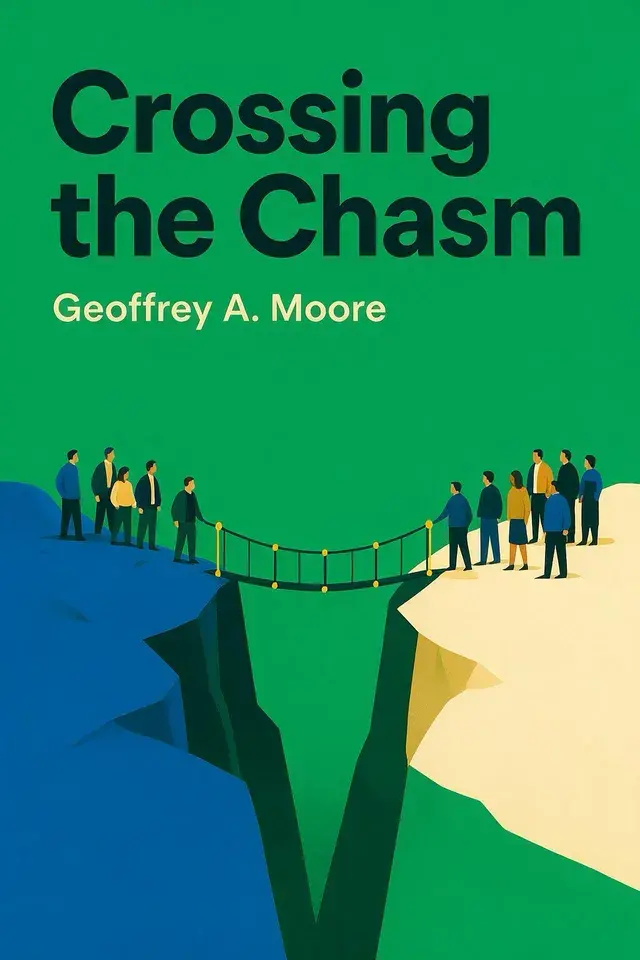
Crossing the Chasm
Crossing the Chasm explains why discontinuous innovations stall between visionary early adopters and pragmatic mainstream buyers. It asks how a company can win credible references, deliver the whole solution, position it for trust, and reorganize for durable growth—turning a memorable model into practical decisions.
9 chapters in Wiseley’s technology & ai catalog.
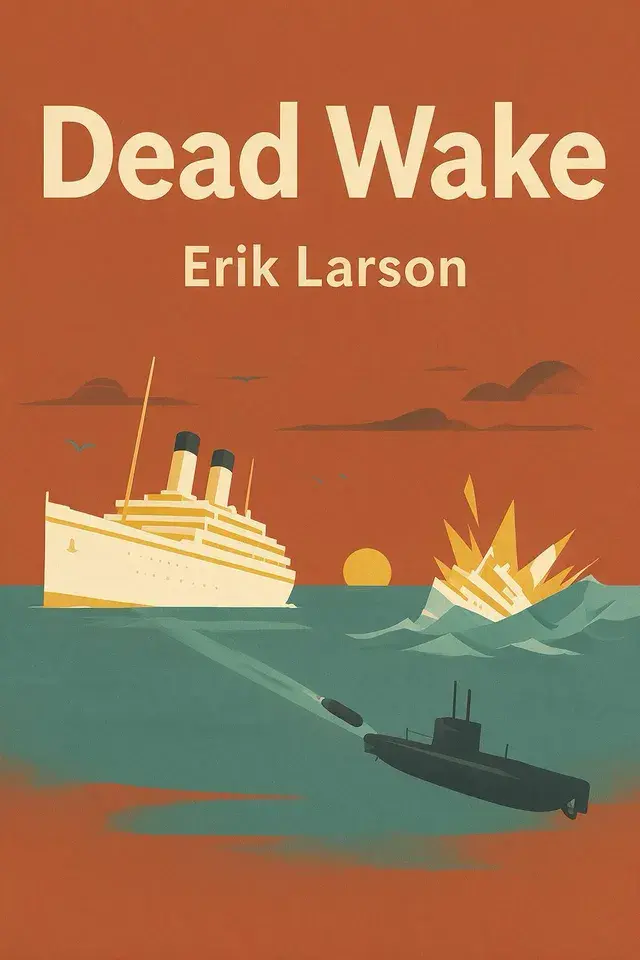
Dead Wake
Dead Wake asks how a celebrated ocean liner, carrying civilians through a war zone, became the site of a preventable-seeming catastrophe—and why its sinking did not immediately bring America into the war. The answer connects technology, intelligence, institutional choices, human routine, chance, and memory.
6 chapters in Wiseley’s technology & ai catalog.
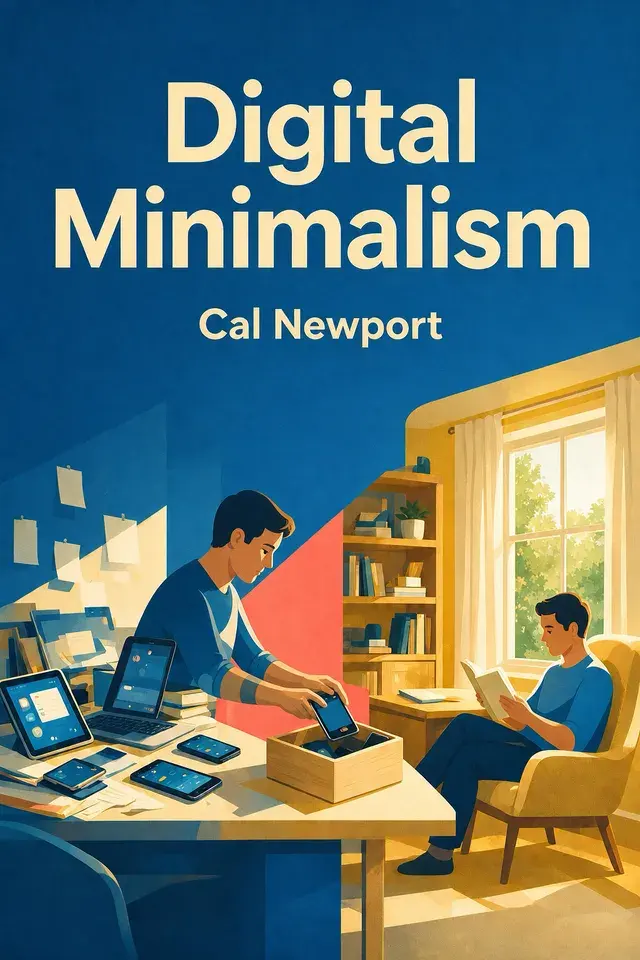
Digital Minimalism
Cal Newport’s Digital Minimalism asks how to use connected technologies without surrendering attention, solitude, conversation, or meaningful leisure. This audio-first summary follows the attention arms race, a values-based declutter, and practical ways to choose, constrain, and replace digital habits so technology serves a deliberately chosen life.
6 chapters in Wiseley’s technology & ai catalog.
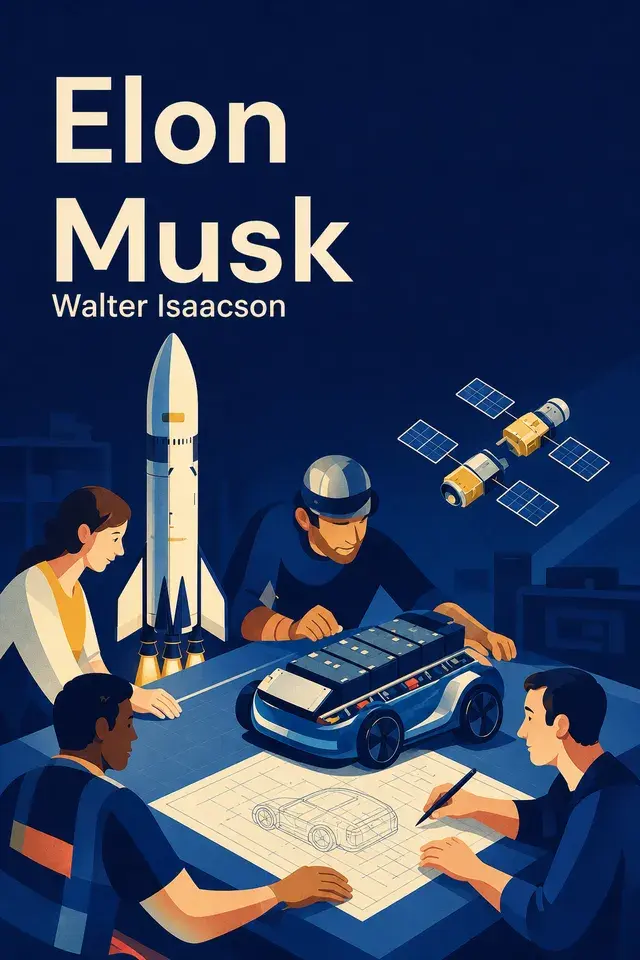
Elon Musk
Elon Musk’s biography asks how a childhood shaped by danger, isolation, and science fiction became a method for building companies around electric transport, spaceflight, and artificial intelligence—and what that method costs. This summary maps the recurring mechanisms, evidence, and trade-offs behind Musk’s breakthroughs, conflicts, and expanding public power.
15 chapters in Wiseley’s technology & ai catalog.
Employee to Entrepreneur
Steve Glaveski examines how technological change reshapes work and asks how employees can move toward more autonomous, meaningful livelihoods without making a blind leap. The book offers ways to assess purpose and alternatives, test business assumptions cheaply, choose funding, and build habits for sustained execution.
13 chapters in Wiseley’s technology & ai catalog.
Enshittification
Why do platforms often become worse after they become essential? Cory Doctorow traces how services first create value for users, then bind users and business partners, and eventually shift value toward platform owners. He explains the weakened constraints behind this pattern and examines practical ways to restore choice through policy, interoperability, repair, and worker power.
14 chapters in Wiseley’s technology & ai catalog.
Foundation
Isaac Asimov’s science-fiction story asks whether forecasting mass behavior can shorten the disorder after an empire falls. As a scientific enclave confronts successor kingdoms, it tests diplomacy, religious authority, and trade. The book traces how institutions gain influence and how dependence on their tools creates new political risks.
8 chapters in Wiseley’s technology & ai catalog.
Ghost in the Wires
Ghost in the Wires follows Kevin Mitnick from youthful curiosity about phone systems and persuasion through unauthorized intrusions, fugitive life, imprisonment, and later authorized security work. How did bypassing barriers become an obsession, and what changes when the same skills are used with permission? The memoir offers a case study in trust, risk, and accountability.
17 chapters in Wiseley’s technology & ai catalog.

Gödel, Escher, Bach
How can finite rules produce meaning, creativity, and a mind that seems to look back at itself? Gödel, Escher, Bach traces that question through formal systems, Bach’s music, Escher’s art, DNA, brains, and AI, giving readers a way to compare truth, interpretation, and consciousness across levels.
9 chapters in Wiseley’s technology & ai catalog.

Hidden Figures
Hidden Figures traces how Black women and other female computers entered Langley during wartime, turned mathematical labor into advances in aviation and spaceflight, and navigated segregation, gender hierarchy, and technological change. It asks who gets counted as an innovator—and shows how institutions, mentors, and preparation make technical achievement possible.
13 chapters in Wiseley’s technology & ai catalog.
Homo Deus
Homo Deus follows humanity’s shift from managing famine, plague, and war to pursuing longer life, happiness, and godlike capabilities. It explains how cooperation, stories, science, humanism, and economic growth organize society, then asks whether biotechnology, artificial intelligence, and data-driven systems may make human autonomy—and humans themselves—less central.
13 chapters in Wiseley’s technology & ai catalog.

How to Avoid a Climate Disaster
How can the world reach net-zero emissions while expanding access to affordable energy and better living standards? Bill Gates examines the technologies, costs, and policies involved across electricity, manufacturing, food, transport, and buildings, offering a framework for assessing solutions and connecting individual choices to systemic change.
11 chapters in Wiseley’s technology & ai catalog.
Human Compatible
Human Compatible asks how machines that may surpass human intelligence can remain beneficial rather than become dangerous. It explains why fixed objectives fail, surveys social and economic risks, and develops preference-learning, deference, corrigibility, governance, and human-autonomy ideas for keeping AI aligned with people.
10 chapters in Wiseley’s technology & ai catalog.
Impromptu
Impromptu examines what happens when people treat GPT-4 as a collaborator across learning, creative work, justice, journalism, careers, and public problem-solving. It asks how a fast, fluent but fallible system can extend human capacity while preserving judgment, accountability, and agency, and offers practical ways to experiment with AI and check its outputs.
12 chapters in Wiseley’s technology & ai catalog.
Indistractable
Indistractable asks why attention slips from chosen goals and how people can reclaim it. It explains the roles of internal discomfort, timeboxed values, external cues, and precommitments, then applies the framework to workplace culture, parenting, and intimate relationships—offering a practical way to protect attention in social settings.
8 chapters in Wiseley’s technology & ai catalog.

Inspired
How do technology teams discover products customers value while meeting business needs? Marty Cagan connects team organization, product strategy, and continuous discovery. The book explains how to frame problems, test ideas, interpret customer evidence, and build a culture accountable for results.
13 chapters in Wiseley’s technology & ai catalog.
Invisible Women
How does treating men as the default shape everyday life? Caroline Criado Perez examines gender data gaps in transport, work, technology, medicine, economics, and government. The book shows how missing evidence becomes unequal provision—and how better measurement, design, and participation can expose and correct these failures.
13 chapters in Wiseley’s technology & ai catalog.
Leonardo da Vinci
Leonardo da Vinci follows how an illegitimate, largely self-taught artist became a painter, engineer, anatomist, and natural philosopher. Its central question is how curiosity turns into discovery—and why the same imagination that generated cross-disciplinary connections also left works unfinished. The value is a model of observation, experimentation, and interdisciplinary thinking tempered by evidence.
10 chapters in Wiseley’s technology & ai catalog.
Life 3.0
Life 3.0 asks how increasingly capable artificial intelligence could alter work, power, war, human purpose, consciousness, and the long-term future of life. It explains why intelligence can arise in many physical substrates, compares possible post-AGI futures, and offers concepts for choosing safer, more flourishing outcomes.
11 chapters in Wiseley’s technology & ai catalog.
Loonshots
Loonshots examines why unconventional ideas are dismissed, mishandled, or transformed into breakthroughs. It asks how organizations can protect fragile product and strategy innovations while still executing established work. The book's value is a systems-based way to diagnose false failures, design incentives, and build conditions in which experimentation can survive and scale.
10 chapters in Wiseley’s technology & ai catalog.
Packing for Mars
Packing for Mars asks how humans can remain alive, capable, and psychologically intact beyond Earth. Mary Roach follows astronaut selection, confinement, weightlessness, motion sickness, impact survival, chronic bodily changes, reproduction, escape, toilets, and food to show that spaceflight is the redesign of ordinary needs under extreme constraints.
9 chapters in Wiseley’s technology & ai catalog.

Pegasus
An investigative account of Pegasus, spyware sold to governments, and the reporters and researchers who tested whether a leaked phone-number list could reveal its use. It asks how covert digital surveillance can be proved and challenged, following forensic methods, cross-border journalism, affected people, and the political interests that limit accountability.
9 chapters in Wiseley’s technology & ai catalog.
Quantum Supremacy
What could quantum computers reveal about nature that conventional machines struggle to calculate? Michio Kaku connects quantum physics to chemistry, medicine, energy, and cosmology. Follow the proposed mechanisms and research methods while distinguishing experimental achievements, engineering obstacles, and speculative futures.
13 chapters in Wiseley’s technology & ai catalog.
Radical Product Thinking
Radical Product Thinking asks how teams can create meaningful change without letting iteration, easy metrics, or short-term pressures choose their destination. R. Dutt offers a vision-to-execution method for designing products, priorities, and workplace culture, then extends that responsibility to technology’s social effects and to personal action.
11 chapters in Wiseley’s technology & ai catalog.
Steve Jobs
Walter Isaacson’s biography follows Steve Jobs from adoption, Silicon Valley, and counterculture through Apple, NeXT, Pixar, and the digital ecosystem. Its central question is how a demanding, often harmful personality joined technology, design, and the humanities to create enduring products—and what such intensity costs collaborators, users, and family.
8 chapters in Wiseley’s technology & ai catalog.

Stolen Focus
Stolen Focus asks why modern conditions make sustained attention difficult, and whether the problem is personal weakness or a damaged environment. Johann Hari connects distraction to speed, technology, exhaustion, stress, food, pollution, and constrained childhoods, then pairs practical habits with a case for collective change.
11 chapters in Wiseley’s technology & ai catalog.
Superintelligence
Superintelligence examines how machine intelligence might surpass humanity, how quickly that transition could unfold, and whether its goals can remain under human control. It connects technical pathways and strategic power to value specification, economic change, and the choices that could make a beneficial or catastrophic future more likely.
11 chapters in Wiseley’s technology & ai catalog.
The 22 Immutable Laws of Branding
The Rieses ask what makes a brand mean one clear thing to buyers and how companies can protect that meaning as markets expand. They connect category focus, names, publicity, and disciplined brand portfolios to Internet questions about business models, interactivity, online naming, and leadership, offering principles for evaluating brand choices.
11 chapters in Wiseley’s technology & ai catalog.
The Age of AI
The Age of AI examines how machines that learn, discover patterns, and act beyond explicit human rules could change knowledge, platforms, security, and human identity. It asks how people can remain responsible when AI expands capability while obscuring reasoning, and offers a framework for deciding when to partner with, oversee, or limit it.
6 chapters in Wiseley’s technology & ai catalog.
The Age of Surveillance Capitalism
Shoshana Zuboff asks how digital systems turned everyday experience into a privately owned source of behavioral prediction and influence. This summary follows the model from Google’s extraction of behavioral surplus through smart environments and behavior modification, then examines its effects on autonomy, sanctuary, democracy, and collective resistance.
11 chapters in Wiseley’s technology & ai catalog.
The Anxious Generation
Why did adolescent anxiety, depression, self-harm, and disconnection rise as childhood moved from free play toward smartphones? Jonathan Haidt examines the developmental tradeoffs behind that shift, distinguishes girls’ and boys’ pathways, and proposes coordinated ways for families, schools, governments, and technology companies to restore play, independence, community, and healthier digital boundaries.
11 chapters in Wiseley’s technology & ai catalog.

The Bomber Mafia
The Bomber Mafia follows the dream that aircraft and precision technology could make war faster, more selective, and less deadly. It asks what happens when that dream meets weather, machinery, institutions, and human judgment—and offers a way to think about the gains of precision alongside the conscience required to restrain power.
8 chapters in Wiseley’s technology & ai catalog.

The Chemistry Book
The Chemistry Book follows chemistry from ancient craft and alchemy to modern work on molecules, materials, and energy. How do atoms combine, reactions proceed, and hidden structures become knowable? Through cases and experimental methods, it shows how chemical ideas shape medicine, industry, and living systems, while clarifying the hazards and unresolved limits that accompany chemical progress.
13 chapters in Wiseley’s technology & ai catalog.
The Code Breaker
The Code Breaker traces how discoveries about DNA, RNA, and microbial immunity became CRISPR, a programmable system for editing genes and building diagnostics, therapies, and pandemic tools. It asks who should control a technology that can alter bodies, descendants, and society—and offers a way to think about evidence, limits, access, and collective responsibility.
9 chapters in Wiseley’s technology & ai catalog.
The Coming Wave
The Coming Wave examines AI, synthetic biology, and related technologies as they become more capable, cheaper, and easier to deploy. It asks how humanity can preserve their benefits while containing misuse, accidents, instability, and loss of control, offering a framework for understanding the technical, political, and institutional choices involved.
8 chapters in Wiseley’s technology & ai catalog.
The Disappearing Spoon
Sam Kean uses the periodic table to ask how atomic structure becomes the chemistry of stars, bodies, technologies, money, art, and war—and how human judgment shapes what science knows. The resulting map helps readers connect chemical effects to practical consequences while keeping disputed evidence, danger, and uncertainty in view.
12 chapters in Wiseley’s technology & ai catalog.
The Fabric of Reality
The Fabric of Reality asks how a unified account of quantum physics, computation, evolution, and knowledge can explain what is real, how understanding grows, and how time and life fit together. Its value is a cross-disciplinary framework for judging explanations, limits, possibilities, and human agency.
10 chapters in Wiseley’s technology & ai catalog.
The Gene
The Gene follows heredity from ancient theories and Mendel’s peas through chromosomes, DNA, genome sequencing, gene therapy, diagnosis, and genome editing. Its central question is how genetic information becomes a living person—and what changes when people can read, select, or rewrite it. It distinguishes genetic influence from environment, chance, and social judgment while keeping genetic power’s risks in view.
11 chapters in Wiseley’s technology & ai catalog.

The Horse
The Horse asks how a grassland animal became a partner in the making of civilization. Timothy C. Winegard traces the horse from evolutionary adaptation and steppe domestication through empires, Indigenous societies, mechanized war, and modern conservation and sport, showing how mobility and labor expanded human power while reshaping societies and landscapes.
14 chapters in Wiseley’s technology & ai catalog.
The Inevitable
Kevin Kelly asks how networked technology will reshape work, ownership, media, attention, creativity, identity, and collective life. Tracing forces from becoming and artificial intelligence through access, sharing, filtering, remixing, tracking, and questioning, he distinguishes directional momentum from fixed outcomes and considers how people can adapt with judgment and agency.
8 chapters in Wiseley’s technology & ai catalog.
The Innovator's Dilemma
Clayton Christensen examines why admired companies can lose industry leadership while listening to customers, investing aggressively, and managing well. He asks how sustaining and disruptive innovation differ, then uses disk drives and other industries to show how markets, incentives, capabilities, and organizational design shape strategic choices.
9 chapters in Wiseley’s technology & ai catalog.
The Innovators
Walter Isaacson’s history asks how programmable computing became a personal, networked world—and whether that transformation came from lone geniuses or collaborative ecosystems. It follows visionaries, engineers, programmers, entrepreneurs, hobbyists, institutions, and online communities, offering a framework for understanding how imagination, openness, and human judgment shape technology.
9 chapters in Wiseley’s technology & ai catalog.

The Long Tail
The Long Tail examines why business and culture once centered on hits, and what changes when digital tools make production, distribution, and discovery cheap. It asks whether millions of niche products can form a market comparable to blockbusters. The framework connects consumer taste, participation, recommendation, and marketing while treating hits as enduring but no longer exclusive.
19 chapters in Wiseley’s technology & ai catalog.
The Making of the Atomic Bomb
Richard Rhodes’s history asks how a chain of experiments about atoms became a weapon capable of destroying cities. It follows the scientists, refugees, institutions, and wartime decisions that made the bomb possible, then weighs what Hiroshima and Nagasaki revealed about power, responsibility, and the difference between scientific inevitability and political choice.
10 chapters in Wiseley’s technology & ai catalog.
The Master Algorithm
The Master Algorithm asks whether one learning procedure could turn data into useful knowledge across science, business, machines, and everyday decisions. It maps five traditions—symbolic, neural, evolutionary, Bayesian, and analogical—then tests their possible synthesis against generalization, scale, privacy, work, and human control.
11 chapters in Wiseley’s technology & ai catalog.
The Metaverse Handbook
The Metaverse Handbook asks what an immersive, user-owned internet could become and how people might participate in it. It traces the idea’s roots, explains shifts in identity, digital value, and immersion, surveys virtual worlds and digital assets, then examines portability problems and offers plans for brands, entertainers, and niche builders.
9 chapters in Wiseley’s technology & ai catalog.
The Prepared Leader
The Prepared Leader asks how leaders can prepare for crises they cannot precisely predict, protect people and organizations under pressure, and learn their way toward greater resilience. James and Wooten connect crisis phases, leadership judgment, team trust, global coordination, technology, and organizational learning to practical action before, during, and after disruption.
7 chapters in Wiseley’s technology & ai catalog.
The Second Machine Age
Why do digital technologies create both extraordinary abundance and widening inequality? This summary follows the book’s account of exponential computing, digitization, innovation, productivity, labor markets, and superstar firms, then examines how education, organizations, taxes, entrepreneurship, and public institutions can help people work with machines and share their gains.
9 chapters in Wiseley’s technology & ai catalog.
The Shallows
A source-grounded outline for an audio-first summary of Nicholas Carr’s The Shallows: how media technologies, especially the Internet, reshape attention, memory, reading, and judgment—and how to preserve depth while gaining digital efficiency.
8 chapters in Wiseley’s technology & ai catalog.
The Singularity Is Near
Ray Kurzweil asks what happens when exponential technological progress carries intelligence beyond biology. The book connects computing, brain reverse engineering, genetics, nanotechnology, and robotics to longer life, altered identity, cosmic expansion, and serious risks—offering a framework for judging both the promise and governance of a possible human-machine Singularity.
10 chapters in Wiseley’s technology & ai catalog.
The Singularity Is Nearer
Ray Kurzweil asks whether accelerating computation will bring human minds into partnership with AI, and what that change means for identity, work, health, prosperity, and safety. The book explains the mechanisms behind that forecast, tests its optimism against evidence and counterarguments, and considers how people might shape the transition.
10 chapters in Wiseley’s technology & ai catalog.
The Things We Make
Bill Hammack examines how engineers turn uncertain problems into workable things through practical rules, experiments, trade-offs, and the resources at hand. The book asks what makes a solution “best,” how science and mathematics support design without dictating it, and why understanding how technology is made helps people judge its effects and guide its use.
12 chapters in Wiseley’s technology & ai catalog.
The Thinking Machine
This account traces Nvidia’s shift from video-game graphics to the computing platform behind neural-network research and generative AI. It asks how the company sustained a costly technical bet before its uses were clear, then weighs the gains against platform dependence, rising energy needs, supply-chain exposure, and disagreement over AI’s risks.
15 chapters in Wiseley’s technology & ai catalog.
The Wright Brothers
David McCullough’s biography follows Wilbur and Orville Wright from a close, self-educating family and bicycle workshop to controlled flight, public proof, and a contested legacy. It asks how patient measurement, practical skill, and partnership overcame failed theories—and how invention changes when recognition, commerce, injury, and war reshape its meaning.
10 chapters in Wiseley’s technology & ai catalog.
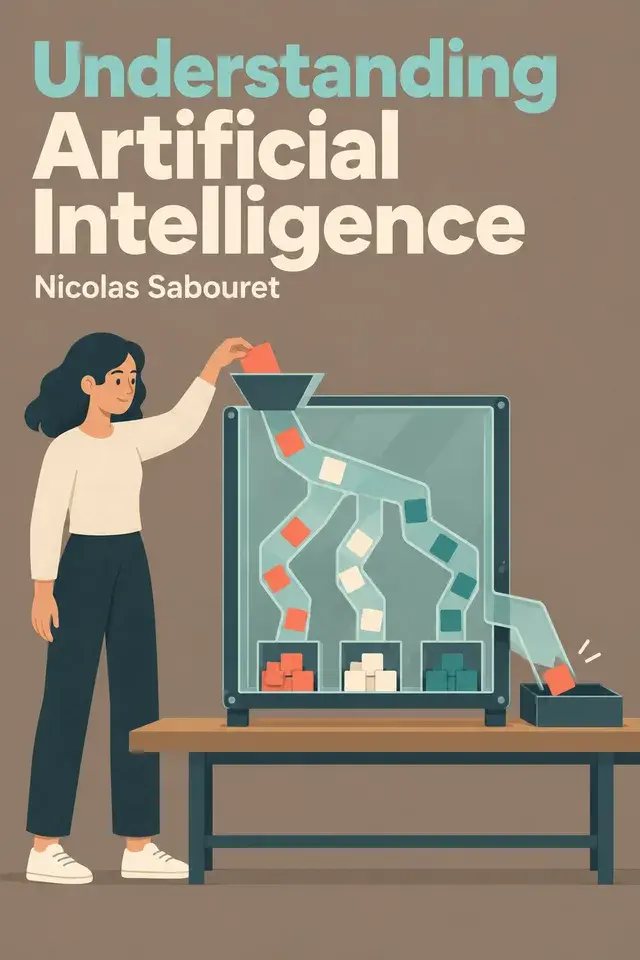
Understanding Artificial Intelligence
How do AI systems find routes, recognize patterns, and learn to play games? Nicolas Sabouret explains the algorithms, representations, and human choices behind these abilities. This summary connects search and machine learning with their practical limits, then examines the unresolved questions of intelligence, consciousness, and responsible use.
11 chapters in Wiseley’s technology & ai catalog.
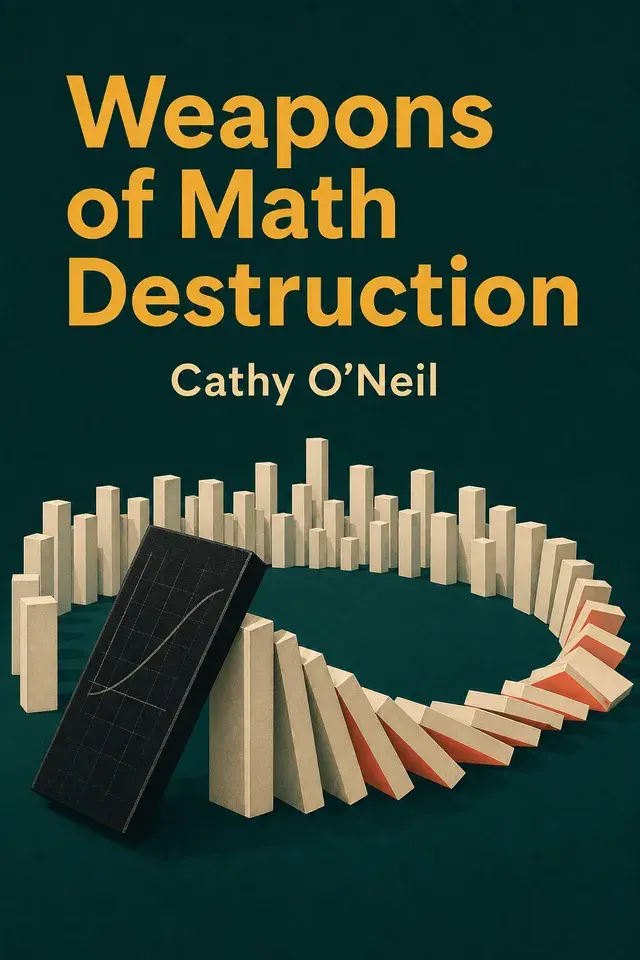
Weapons of Math Destruction
Weapons of Math Destruction examines how opaque models turn partial data and narrow goals into decisions about education, work, credit, policing, insurance, and politics. It asks when prediction becomes harm, and shows how feedback loops, secrecy, and weak accountability reproduce inequality—while transparency, contestability, and human judgment can redirect models toward public benefit.
12 chapters in Wiseley’s technology & ai catalog.
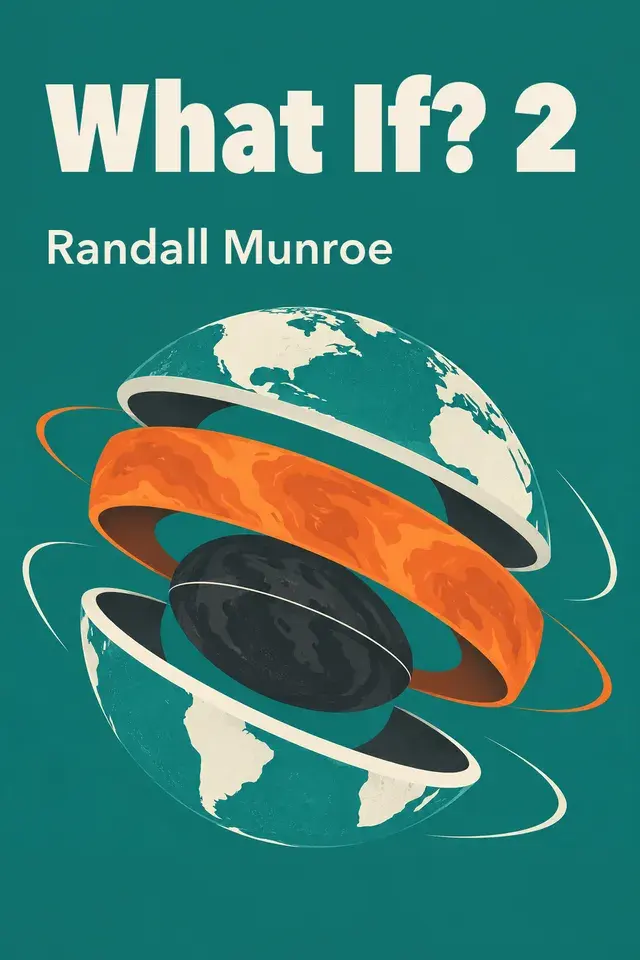
What If? 2
Randall Munroe tests absurd questions against physics, biology, engineering, and rough arithmetic. What happens when Earth spins once per second, Rome is built in a day, or candy replaces rain? The answers show how to state assumptions, estimate scale, follow consequences, and recognize when a scenario is uncertain or impossible.
11 chapters in Wiseley’s technology & ai catalog.
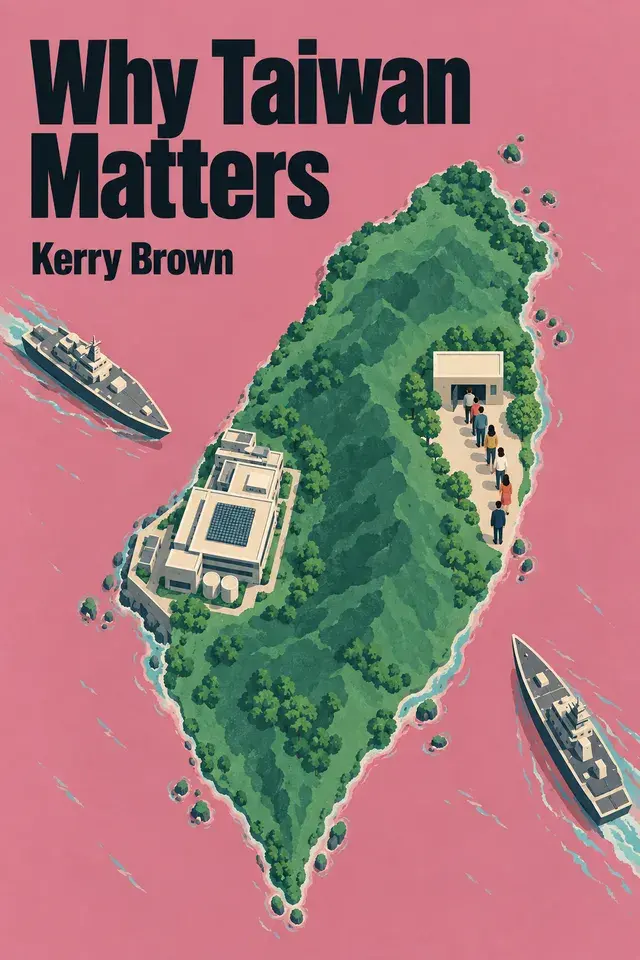
Why Taiwan Matters
Kerry Brown examines why Taiwan’s unresolved status matters to its people and to the world. He traces how layered history, democratic identity and semiconductor dependence shape the dispute, then weighs how Beijing, Taipei and Washington might restrain escalating pressure while keeping space for dialogue and a future settlement.
11 chapters in Wiseley’s technology & ai catalog.
Working Backwards
Working Backwards asks how Amazon could preserve customer obsession, long-term judgment, and invention as it scaled. It explains the mechanisms behind that effort—hiring, autonomous teams, narratives, PR/FAQs, and input metrics—then tests them through Kindle, Prime, digital video, and AWS, offering a practical way to connect principles with daily decisions.
10 chapters in Wiseley’s technology & ai catalog.
Zero to One
Zero to One asks how people can create genuinely new technology and durable businesses instead of copying what already exists. It connects contrarian thinking, monopoly, long-term planning, secrets, team design, distribution, and human–computer complementarity, then asks how deliberate creation can make the future better.
12 chapters in Wiseley’s technology & ai catalog.