What you'll learn
Key ideas from The Alchemist
These ideas compress the book's argument without treating the author's view as settled fact. Use them as an orientation before reading the full work or listening in Wiseley.
The dream and Melchizedek’s teaching frame destiny as a chosen purpose threatened by fear, convention, and postponed sacrifice.
Omens may guide Santiago, but signs remain aids to judgment rather than replacements for responsibility.
After robbery, Santiago rebuilds agency by choosing attentive work and adventure over bitterness and victimhood.
The caravan teaches that direction can remain steady while routes, tactics, and interpretations change under pressure.
The heart guides Santiago through fear, but its warnings do not remove danger or excuse him from acting.
The detour matters because direct certainty would have denied Santiago the experiences that prepared him to claim the treasure.
Wealth remains tied to reciprocity: Santiago remembers the old king, preserves the stones, and owes the Gypsy woman one-tenth.
How The Alchemist builds its case
Follow how the book develops its argument. Each note is a brief orientation, not a replacement for the chapter.
The Dream and Its Cost
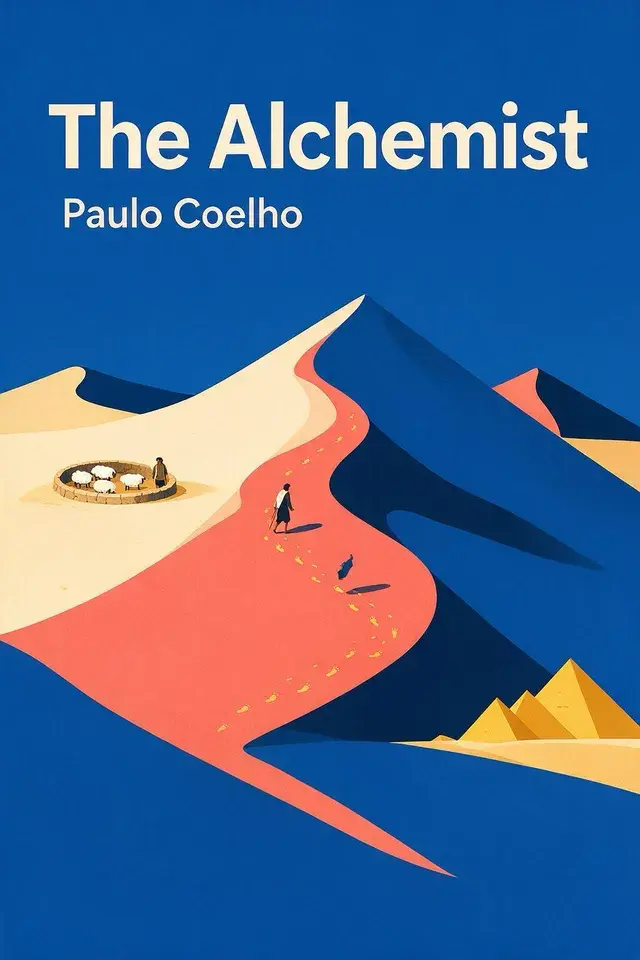
Santiago begins as an Andalusian shepherd whose life is shaped by movement and repetition. He shelters his flock in a ruined church, wakes when the sheep stir, guards them at night, and reads aloud to them.
Learning Through Work and Attention
After the robbery, Santiago’s immediate problem is not interpreting another sign. He has no money, cannot speak the local language, and no longer has the familiar role of shepherd.
Caravan Lessons, Love, and Omens
Once Santiago has enough money to return to Spain, buy sheep, and live securely, he still cannot settle. Returning would preserve the dream by leaving it untested.
The Heart Faces the Test
Once Santiago leaves the oasis with the alchemist, the journey becomes a practical examination. The alchemist says the Soul of the World tests a seeker just before a dream is fulfilled, so the seeker must master what the journey has taught.
Return, Treasure, and Reciprocity
The journey ends by returning to its beginning. At night, Santiago goes back to the abandoned church where his search first took shape.