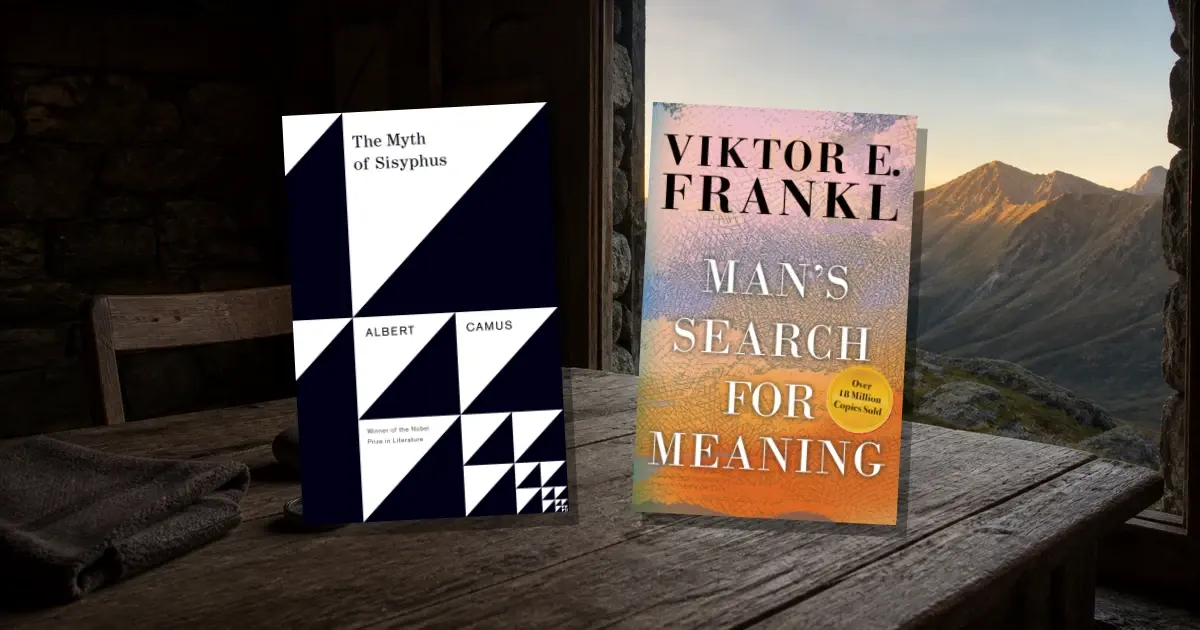
Two answers to a world that does not guarantee meaning
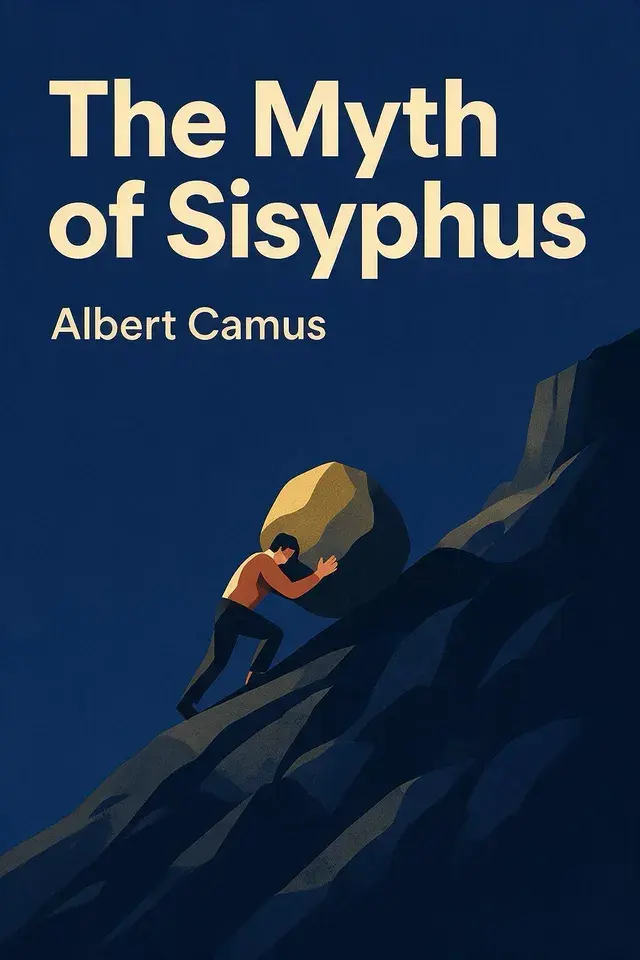
The Myth of Sisyphus begins with the absurd: human beings demand coherence while the world offers no final answer. Camus rejects both suicide and a philosophical leap beyond what can be known, proposing lucid revolt, freedom, and passionate living without ultimate consolation. Man’s Search for Meaning argues that meaning remains possible through worthwhile work, love, and the stance taken toward suffering that cannot be removed. Frankl joins this claim to testimony and an introduction to logotherapy.
- Live without a final metaphysical guarantee: Camus.
- Respond to the concrete meaning a situation asks of you: Frankl.
- Shared refusal: despair does not get the last word merely because control is limited.
Read both carefully around suffering
Neither book says pain is automatically valuable. Camus’s revolt opposes escape into false certainty; it does not require seeking misery. Frankl distinguishes unavoidable suffering from suffering that can be changed, and his camp account repeatedly acknowledges chance, deprivation, moral compromise, and death. Meaning or attitude never guarantees survival, cures illness, or transfers responsibility from an oppressor to the person harmed. That boundary is essential when either book is used as practical counsel.
- Remove preventable harm before asking what it means.
- Do not turn limited inner freedom into total control over outcomes.
- Keep philosophical interpretation separate from claims about another person’s experience.
Choose by the kind of encounter you need
Read Camus if you want a compact philosophical confrontation with mortality, absurdity, art, and the temptation of escape. Read Frankl if you want lived witness joined to a therapeutic vocabulary of purpose and responsibility. Reading them together sharpens a useful question: must meaning be discovered in something beyond the self, or can the act of lucid, committed living be enough? Hold the disagreement open instead of reducing both to motivational optimism.
- Name the claim about meaning before judging its emotional effect.
- Notice whether the author is describing, arguing, or prescribing.
- Translate one idea into a bounded action that does not deny material reality.
Sources and scope
Book ideas are attributed to their authors. External evidence is linked directly when a claim needs more than the source book.
- The Myth of Sisyphus: Primary source for Camus’s treatment of absurdity, suicide, philosophical escape, revolt, freedom, and passion.
- Man's Search for Meaning: Primary source for Frankl’s witness account, logotherapy, purpose, responsibility, and limits on claims about suffering.
To report a factual, attribution, rights, or accessibility concern, email hello@wiseley.app.
Questions readers ask
Do Camus and Frankl reach opposite conclusions?
They disagree about the status and source of meaning, yet both reject passive surrender and emphasize a response within limited freedom. The overlap should not erase their philosophical difference.
Which book is more practical?
Frankl states a more direct therapeutic framework. Camus offers fewer exercises but can be practical as a discipline of lucid attention. Neither should replace mental-health care during a crisis.