

What the score cannot tell you
Results compress the story of a sport into a number. Books can reopen what that number leaves out: the athlete’s relationship with the game, the work of a team, or the preparation behind a particular decision. These selections move between those scales. Three are sports biographies or memoirs: Andre Agassi’s Open, Kobe Bryant’s The Mamba Mentality, and The Boys in the Boat, a group portrait of an Olympic rowing crew. They are reading recommendations, not training or injury-prevention guidance.
Five views from inside the work
The memoir and historical accounts should be read differently from books that advocate a performance approach. Each offers a particular vantage point, not a general explanation of sporting success.

An athlete can excel at a game he resents
Open · Andre Agassi
Andre Agassi’s memoir complicates the assumption that achievement reveals an uncomplicated love of the work. His account of pressure, identity, relationships, and tennis makes the inner life of an athlete harder to summarize as determination alone.
- Read it for
- The tensions between sporting achievement and personal identity.
- Keep in mind
- A retrospective memoir gives one participant’s perspective on family and professional relationships.
Shift attention from the star to the crew
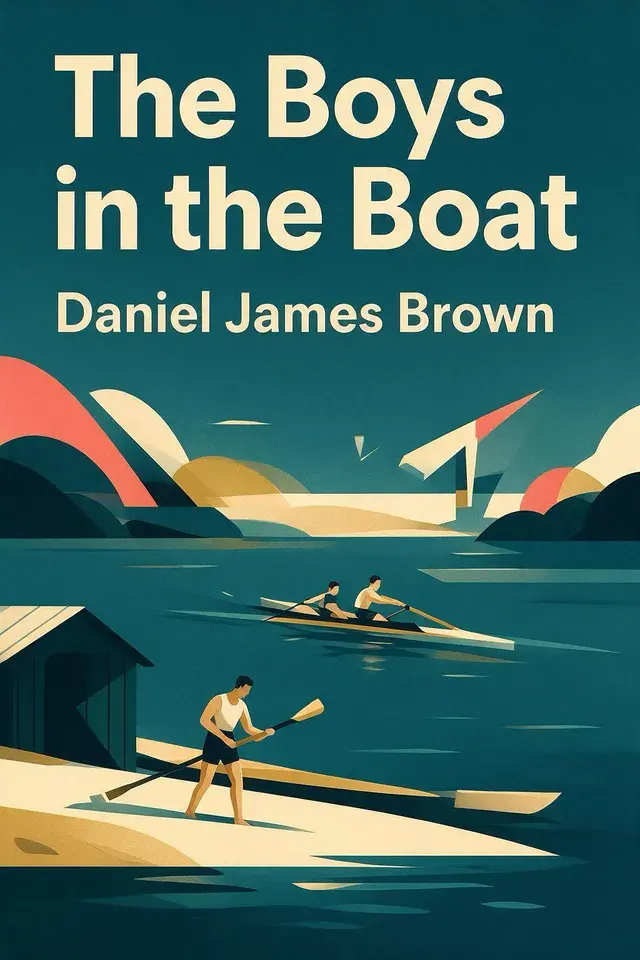
The Boys in the Boat · Daniel James Brown
Daniel James Brown reconstructs the American rowing crew that competed at the 1936 Olympics. The story connects individual lives with teamwork and historical circumstances. Read both the making of a crew and the wider political setting around its race.
- Read it for
- A team history in which coordination matters alongside individual effort.
- Keep in mind
- An absorbing historical narrative is not proof that one team’s path can be repeated.
Listen to the commentary around the action
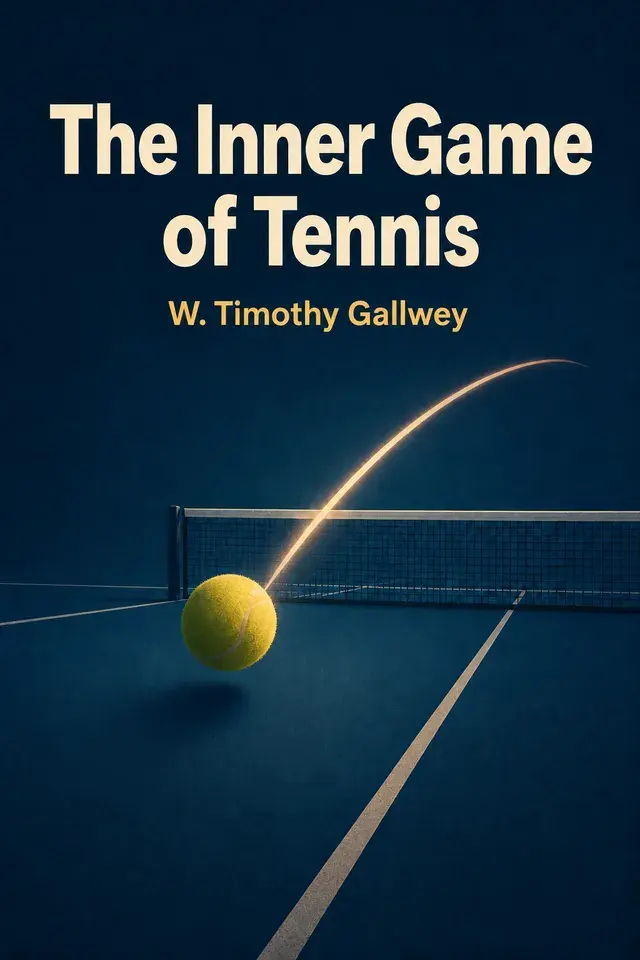
The Inner Game of Tennis · W. Timothy Gallwey
W. Timothy Gallwey examines attention, self-interference, and the relationship between observation and performance. The tennis setting makes his distinctions concrete. Readers interested in other activities should first understand the example before transferring the vocabulary.
- Read it for
- A compact account of attention and self-interference in performance.
- Keep in mind
- Its approach should not be treated as a universal explanation for performance difficulties.

Follow the reporting before borrowing the practice
Born to Run · Christopher McDougall
Christopher McDougall combines running narrative, reported encounters, and arguments about human endurance. Its energy can draw readers into a subject they know only through training plans. Distinguish the adventure story from any claim that a particular practice is right for you.
- Read it for
- A narrative exploration of running culture and endurance.
- Keep in mind
- A compelling story does not establish the safety of changing footwear, mileage, or training.

Look closely at the preparation
The Mamba Mentality · Kobe Bryant
Kobe Bryant’s account emphasizes technical study, preparation, adaptation, and opponent-specific decisions. The details are more interesting than the slogan the title became. Ask what knowledge makes a particular choice possible, rather than copying intensity in the abstract.
- Read it for
- A player’s account of the craft and preparation behind basketball decisions.
- Keep in mind
- Elite circumstances and resources differ from those of ordinary readers and young athletes.
Two useful pairings
Pair Open with The Mamba Mentality to examine different relationships between identity and professional practice. Pair The Boys in the Boat with The Inner Game of Tennis to compare coordination among people with attention inside a performer. The disagreement in scale is exactly what makes the pairing useful.
Sources and scope
Book ideas are attributed to their authors. External evidence is linked directly when a claim needs more than the source book.
- Open: Andre Agassi’s memoir complicates the assumption that achievement reveals an uncomplicated love of the work. His account of pressure, identity, relationships, and tennis makes the inner life of an athlete harder to summarize as determination alone. Scope: A retrospective memoir gives one participant’s perspective on family and professional relationships.
- The Boys in the Boat: Daniel James Brown reconstructs the American rowing crew that competed at the 1936 Olympics. The story connects individual lives with teamwork and historical circumstances. Read both the making of a crew and the wider political setting around its race. Scope: An absorbing historical narrative is not proof that one team’s path can be repeated.
- The Inner Game of Tennis: W. Timothy Gallwey examines attention, self-interference, and the relationship between observation and performance. The tennis setting makes his distinctions concrete. Readers interested in other activities should first understand the example before transferring the vocabulary. Scope: Its approach should not be treated as a universal explanation for performance difficulties.
- Born to Run: Christopher McDougall combines running narrative, reported encounters, and arguments about human endurance. Its energy can draw readers into a subject they know only through training plans. Distinguish the adventure story from any claim that a particular practice is right for you. Scope: A compelling story does not establish the safety of changing footwear, mileage, or training.
- The Mamba Mentality: Kobe Bryant’s account emphasizes technical study, preparation, adaptation, and opponent-specific decisions. The details are more interesting than the slogan the title became. Ask what knowledge makes a particular choice possible, rather than copying intensity in the abstract. Scope: Elite circumstances and resources differ from those of ordinary readers and young athletes.
To report a factual, attribution, rights, or accessibility concern, email hello@wiseley.app.