What you'll learn
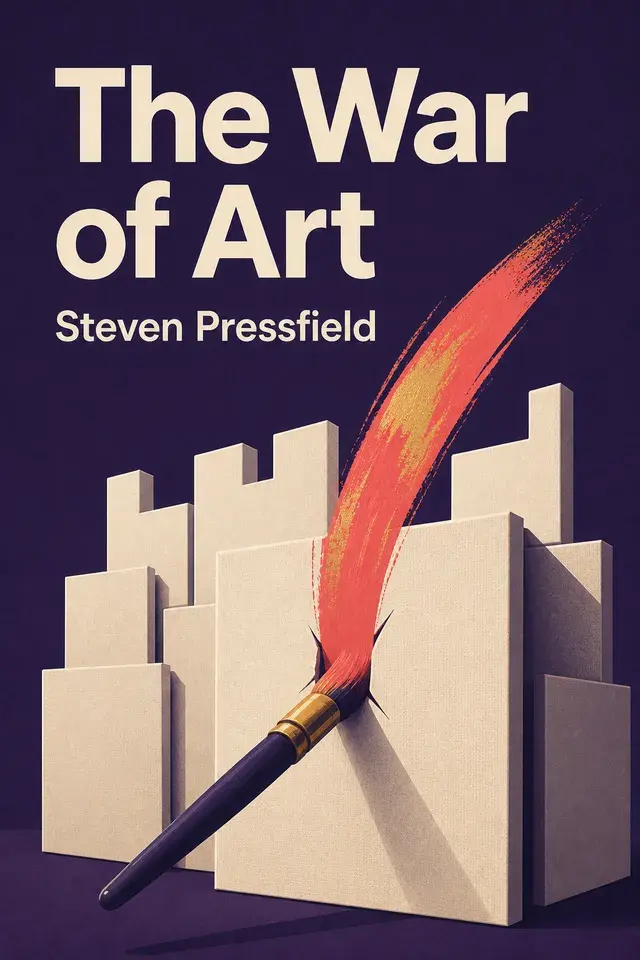
Key ideas from The War of Art
These ideas compress the book's argument without treating the author's view as settled fact. Use them as an orientation before reading the full work or listening in Wiseley.
Resistance separates a person’s lived life from an unlived life of unrealized potential.
Procrastination and immediate gratification preserve the intention to work while replacing uncertain effort with pleasure, relief, or counterfeit attention.
Turning pro is a chosen identity defined by regular commitment, real stakes, craft mastery, and endurance rather than occupation or income.
A schedule makes work precede mood, allowing sustained effort to summon inspiration instead of waiting for inspiration to begin.
A calling is discovered and answered through sustained work, not invented through status or speculation.
Authentic work accepts failure and releases control over results, including money, attention, and applause.
How The War of Art builds its case
Follow how the book develops its argument. Each note is a brief orientation, not a replacement for the chapter.
The Enemy Between Lives
The War of Art opens with a problem that is easy to misread. People may want to create, change, serve, learn, or live with greater integrity.
How Resistance Disguises Itself
Resistance recruits allies. As someone starts to change, close friends, partners, and family may unconsciously pull that person back.
The Professional’s Daily Practice
Once the book has exposed the disguises of Resistance, its practical answer is a change in identity. The aspiring artist stops treating the work as a private wish and turns professional.
The Forces That Answer
Book Three changes the question. Earlier, the emphasis was on meeting Resistance through professional commitment.
Work as a Gift
The closing argument turns from recognizing the call to the allegiance that can answer it. Pressfield says people do not arrive as blank slates.