Money and wealth book summaries
Mental models for earning, spending, saving, investing, and making financial choices under uncertainty.
Money decisions combine arithmetic with incentives, temperament, time, and risk. These books range from practical household rules to market theories, making it possible to compare what each author assumes about uncertainty and human behavior.
Personal finance and investing are distinct needs in this catalog, and professional wealth management is a different audience again.
Start with a focused list
This page is the complete wealth catalog. If you already know which question you are answering, these shorter selections narrow it down first.
- Personal finance books by money problem — Saving at all, escaping debt, holding a system together and spending what you built are separate struggles.
- Investing books by view of the market — Investing asks a different question from day-to-day personal finance: what you believe prices can be made to do.
- The Psychology of Money vs Rich Dad Poor Dad — Two frequently compared money books read side by side: behavior under uncertainty against a story about assets and ownership.
Books in this collection

Antifragile
Taleb’s Antifragile asks why some people, organisms, institutions, and ideas improve under stress, uncertainty, and disorder while others break. Taleb argues that rare consequential events resist reliable prediction, so the useful response is to redesign exposure through optionality, subtraction, bounded downside, and skin in the game.
13 chapters in Wiseley’s wealth catalog.
Capital in the Twenty-First Century
How do growth, saving, inheritance, and public policy determine who owns wealth? This summary follows Piketty’s historical framework from measuring income and capital through global concentration and the social state, clarifying why returns above growth can renew inherited power and why democratic institutions matter.
9 chapters in Wiseley’s wealth catalog.
Capitalism and Freedom
Capitalism and Freedom asks how a society can coordinate economic life without surrendering individual choice. Friedman links competitive markets to political liberty, then tests that relationship through money, trade, education, discrimination, monopoly, occupational licensing, taxation, welfare, and poverty relief. The result is a framework for judging when government protects freedom—and when it expands coercion.
11 chapters in Wiseley’s wealth catalog.

Die With Zero
Die With Zero asks how people can convert limited work, money, health, and time into a fuller life instead of postponing enjoyment until opportunities disappear. Bill Perkins’s framework covers experience timing, memory, spending down wealth, giving while alive, life seasons, and calculated risk, offering practical ways to make deliberate trade-offs.
8 chapters in Wiseley’s wealth catalog.
Freakonomics
Freakonomics asks how incentives, information gaps, and delayed causes shape cheating, crime, parenting, names, markets, and social behavior. Its intellectual value is a disciplined way to question conventional wisdom: compare stated beliefs with observed behavior, test correlation against causation, and separate empirical explanation from moral approval.
17 chapters in Wiseley’s wealth catalog.
I Will Teach You to Be Rich
Ramit Sethi’s framework for making money serve a personally defined rich life asks how readers can reduce costly debt, build low-fee accounts, automate saving and investing, spend deliberately, and handle major choices about work, relationships, cars, and homes. Its practical value is a repeatable system of small actions, trade-offs, and long-term habits.
13 chapters in Wiseley’s wealth catalog.

Misbehaving
Misbehaving asks what happens when economic models replace psychologically limited Humans with perfectly optimizing Econs. It follows Thaler from early anomalies through mental accounting, self-control, fairness, financial markets, behavioral policy, and nudges, showing how observed behavior can improve theory and decision design.
16 chapters in Wiseley’s wealth catalog.

Nudge
Nudge examines how defaults, framing, feedback, incentives, and social context shape decisions made by fallible people. It asks how governments and private institutions can improve saving, health, education, markets, and public life while preserving freedom of choice—and offers practical criteria for responsible influence.
9 chapters in Wiseley’s wealth catalog.

Poor Charlie's Almanack
Poor Charlie’s Almanack distills Charles T. Munger’s thinking on rationality, investing, psychology, incentives, ethics, and lifelong learning. It asks how people can make sound decisions in complex human systems, then offers practical value through mental models, checklists, inversion, disciplined avoidance, and patient action when favorable opportunities appear.
24 chapters in Wiseley’s wealth catalog.

Predictably Irrational
Predictably Irrational examines why people repeatedly misjudge value, choice, effort, risk, experience, and honesty. It asks how comparisons, prices, emotions, expectations, ownership, and social signals redirect behavior, then considers how awareness, precommitment, technology, and choice architecture can bring decisions closer to our goals.
15 chapters in Wiseley’s wealth catalog.

Rich Dad Poor Dad
Rich Dad Poor Dad contrasts two approaches to money: trading time for wages and building financial understanding, assets, and ownership. It asks why education and higher earnings can coexist with financial insecurity, then maps cash flow, risk, skills, and the conversion of earned income into portfolio or passive income.
14 chapters in Wiseley’s wealth catalog.

Same as Ever
Same as Ever asks what remains reliable when technology, markets, and politics change. Morgan Housel argues that recurring human motives, uncertainty, incentives, expectations, and compounding matter more than precise forecasts. This audio-first summary turns those ideas into practical ways to prepare, endure, adapt, and think clearly.
10 chapters in Wiseley’s wealth catalog.

The Affluent Society
Galbraith asks what an affluent society should value once private goods are abundant but public needs remain neglected. He traces how scarcity-era economics, manufactured wants, debt, inflation, and investment priorities preserve production as the main test of progress, then argues for poverty relief, education, humane work, public services, and survival.
9 chapters in Wiseley’s wealth catalog.

The Algebra of Wealth
Scott Galloway’s framework asks how people can turn work, restraint, time, and investment into economic security rather than endless consumption. It connects character, career fit, compounding, budgeting, diversification, and tax-aware choices, then returns to the purpose of wealth: preserving options and making more room for relationships and care.
8 chapters in Wiseley’s wealth catalog.

The Big Short
The Big Short traces how easy mortgage credit, opaque securitization, flawed ratings, and misaligned incentives turned a housing boom into a systemic financial gamble—and follows the few investors who recognized the danger early. It shows how to test consensus, models, collateral, incentives, and counterparties when apparent safety may be manufactured.
15 chapters in Wiseley’s wealth catalog.

The Black Swan
The Black Swan asks why rare, high-impact events dominate history, markets, careers, and knowledge while hindsight makes them seem predictable. It examines induction, narrative distortion, silent evidence, expert failure, and fragile models, then develops a practical response to opaque uncertainty: limit catastrophic downside, preserve room for favorable surprises, and act with calibrated humility.
25 chapters in Wiseley’s wealth catalog.
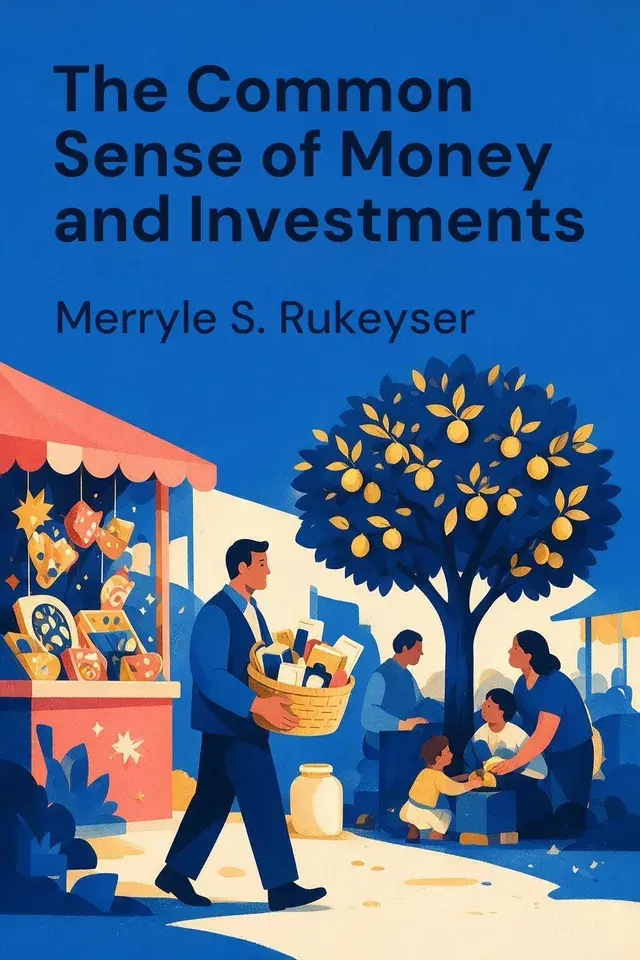
The Common Sense of Money and Investments
An accessible guide to making money serve ordinary life: how to save without mistaking stinginess for wisdom, choose securities by purpose and risk, protect dependents, read financial evidence, and resist seductive speculation. Its central question is how disciplined judgment can turn limited income into resilience without losing sight of human needs.
23 chapters in Wiseley’s wealth catalog.
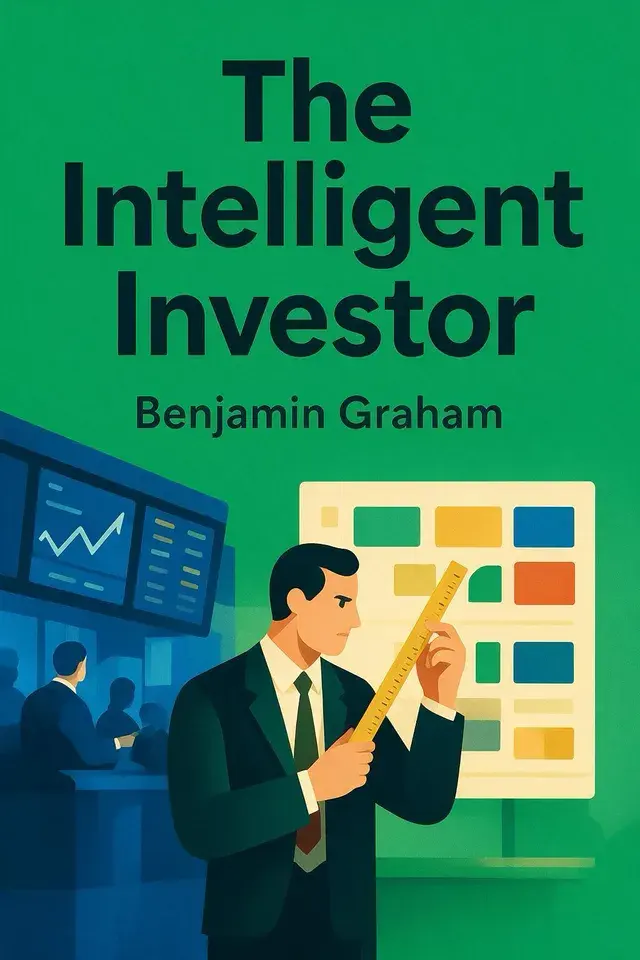
The Intelligent Investor
How can an ordinary person invest without mistaking market excitement for knowledge? Graham’s framework separates investing from speculation, relates price to business value, and builds decisions around diversification, margin of safety, costs, and behavior. The summary follows those principles through portfolio policy, security analysis, and corporate case histories.
10 chapters in Wiseley’s wealth catalog.
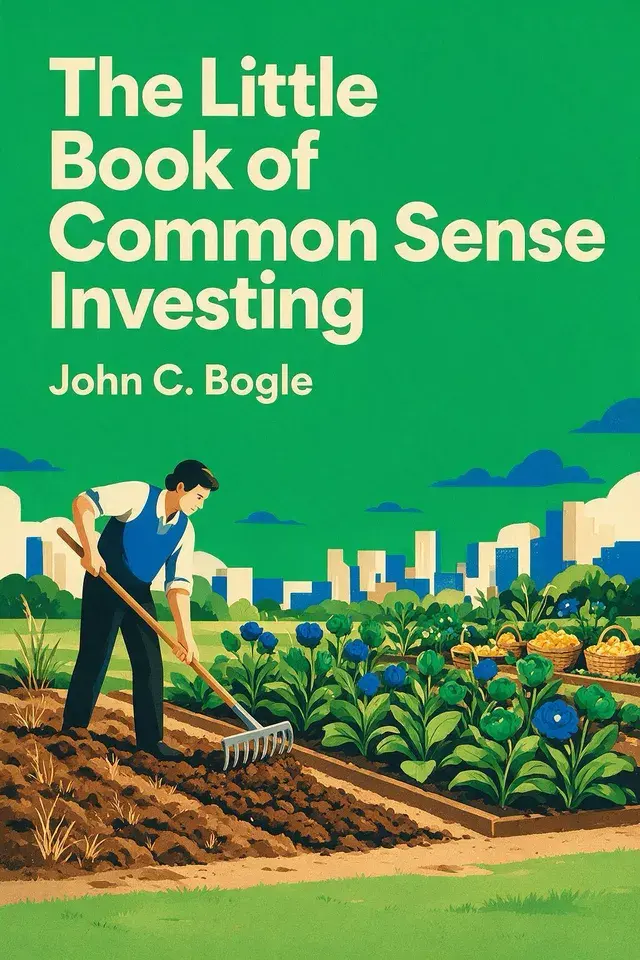
The Little Book of Common Sense Investing
John C. Bogle’s case for low-cost, broadly diversified, buy-and-hold investing asks whether ordinary investors should try to beat the market or simply capture the returns of businesses. It explains how fees, taxes, trading, fund selection, ETFs, bonds, and asset allocation shape net results, and offers practical principles for disciplined long-term ownership.
17 chapters in Wiseley’s wealth catalog.
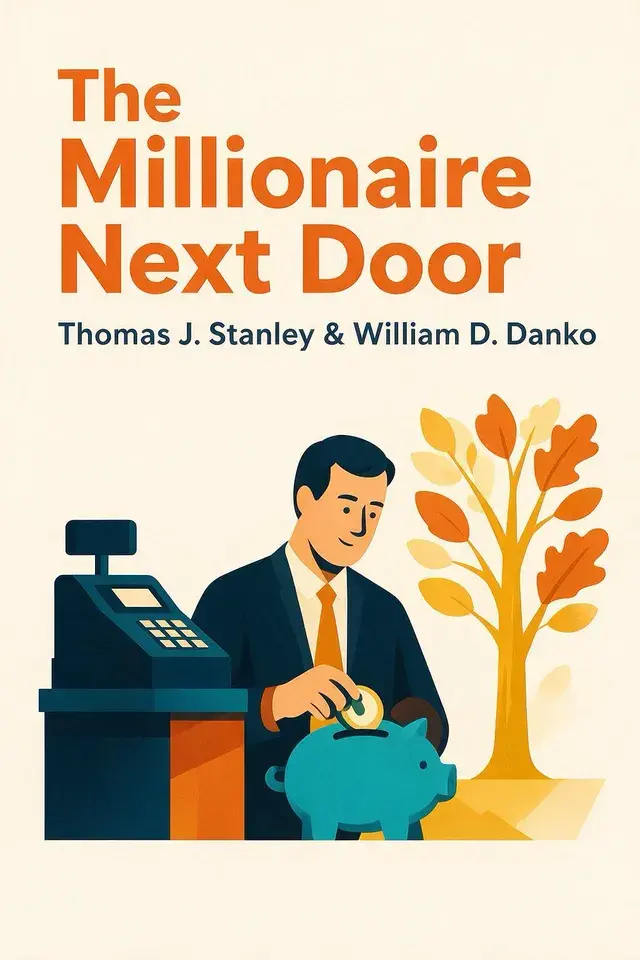
The Millionaire Next Door
The Millionaire Next Door asks why some American households build substantial net worth on ordinary incomes while higher earners remain financially fragile. Drawing on survey research and case studies, it examines frugality, planning, investing, consumption, work, and family transfers, offering a framework for distinguishing visible affluence from durable financial independence.
7 chapters in Wiseley’s wealth catalog.

The Psychology of Money
Why do people make money choices that seem irrational, and how can they build wealth without risking what matters most? Morgan Housel examines personal history, luck, compounding, saving, time autonomy, uncertainty, changing goals, and economic expectations, then turns those ideas into a framework for durable financial behavior.
12 chapters in Wiseley’s wealth catalog.

The Richest Man in Babylon
Through stories set in ancient Babylon, this book asks how people can acquire, protect, and grow wealth. It links saving, deliberate spending, productive investment, debt repayment, useful work, and decisive action into a practical study of financial self-command.
11 chapters in Wiseley’s wealth catalog.

The Shock Doctrine
Naomi Klein investigates how war, economic collapse, and natural disaster can become openings for rapid market reform, privatization, and corporate power. The summary asks how shock weakens democratic choice—and how historical memory, popular organization, and community-led reconstruction can help people regain control over markets and public life.
11 chapters in Wiseley’s wealth catalog.

The Snowball
The Snowball follows Warren Buffett from a Nebraska childhood of counting, saving, and small businesses to Berkshire Hathaway’s rise through value investing, insurance, and disciplined capital allocation. It asks how wealth compounds—and what that discipline costs in family life, public responsibility, and succession—offering a connected account of method, character, and consequence.
9 chapters in Wiseley’s wealth catalog.
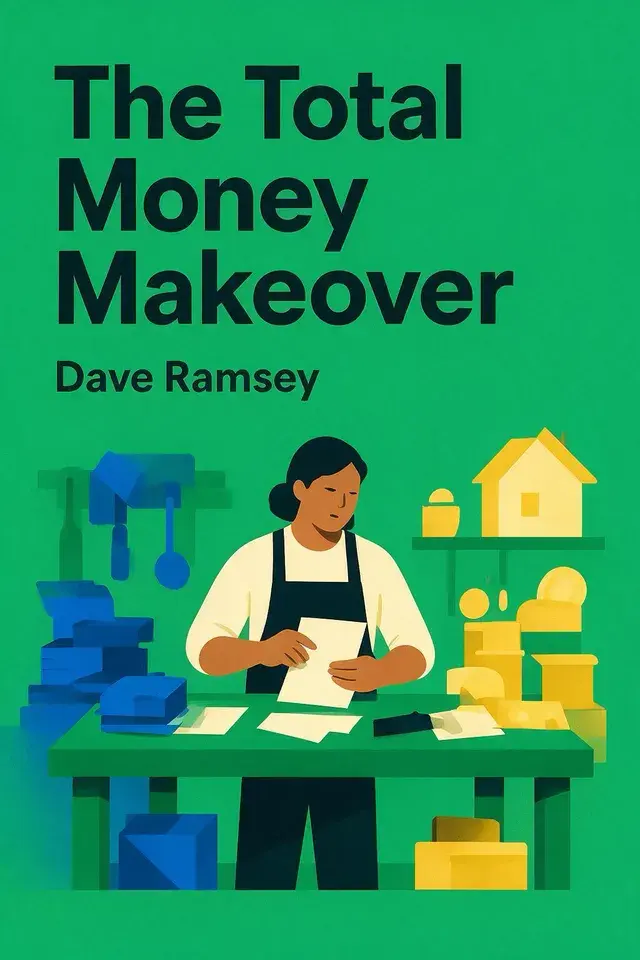
The Total Money Makeover
How can a household move from denial, debt, and paycheck-to-paycheck vulnerability to financial control? The book’s answer is a behavior-first sequence: face the numbers, budget, build emergency reserves, eliminate debt, invest, fund education, pay off the home, and use resulting wealth for enjoyment and giving.
15 chapters in Wiseley’s wealth catalog.

The Wealth of Nations
The Wealth of Nations asks how labor, exchange, land, and accumulated stock become broad material abundance. It traces division of labor, prices, wages, rent, banking, trade, and political institutions, showing how markets can support growth while privileges, insecure property, and misdirected capital obstruct it.
13 chapters in Wiseley’s wealth catalog.

Thinking, Fast and Slow
Why do quick impressions feel convincing, why do losses loom larger than gains, and why can memory misrepresent experience? Kahneman’s account traces the shortcuts, statistical errors, reference points, frames, and competing selves that shape judgment, then considers how measurement, deliberate checking, and institutional design can improve decisions.
10 chapters in Wiseley’s wealth catalog.
Keep exploring

Practical guide
How to Negotiate a Salary Offer Without Bluffing
Prepare evidence, surface the employer’s constraints, and make a precise request without inventing leverage you do not have.

Reading list
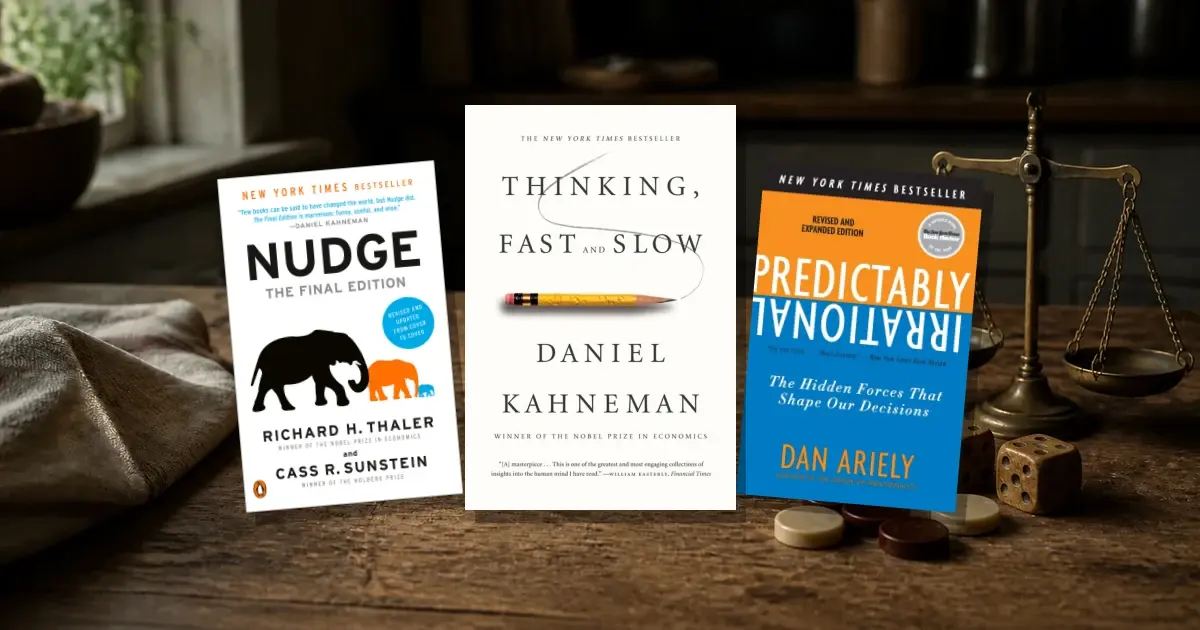
The Best Decision-Making Books for Different Judgment Failures
Bad decisions have different root causes: faulty intuition, badly designed options, mispriced value, inherited theory, or noisy feedback. Match the book to the failure you actually have.